Artwork
Talia (Thalia)
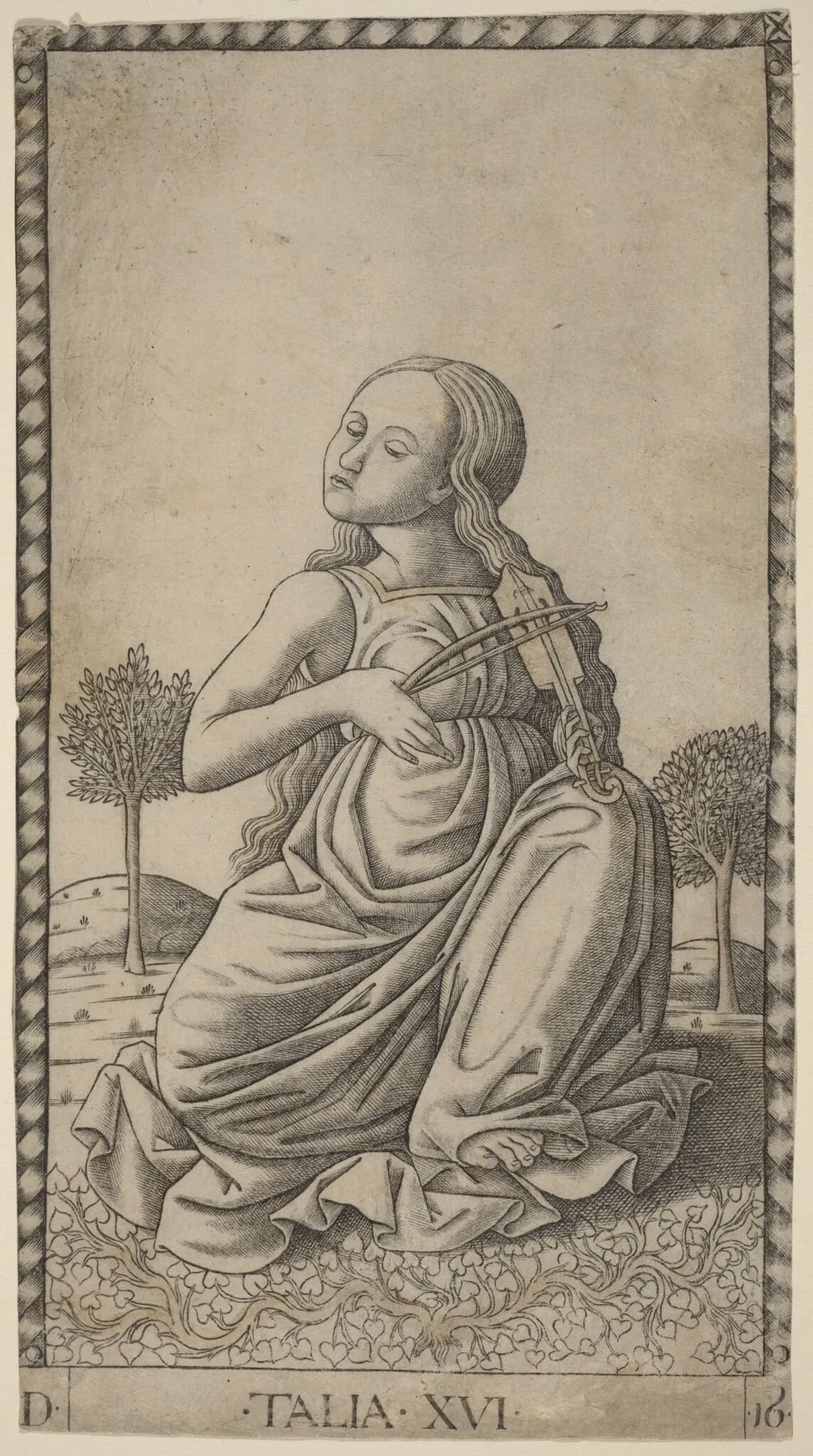
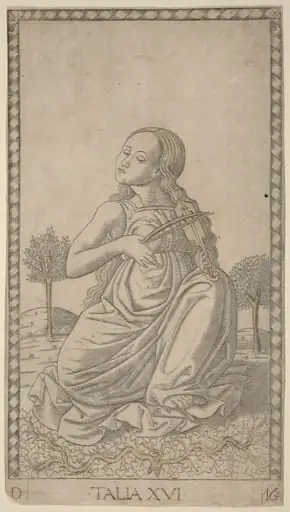
Talia (Thalia) is an ink print by the Renaissance artist Master of the E-Series Tarocchi. It dates from 1465 and is held in the collection of the National Gallery of Art.
About this work
Overview
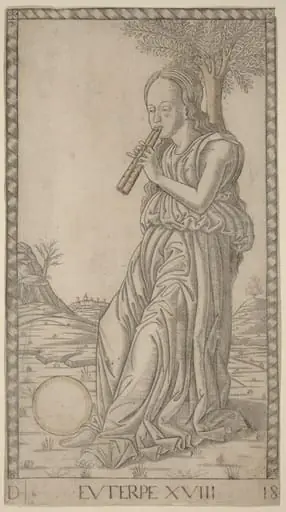
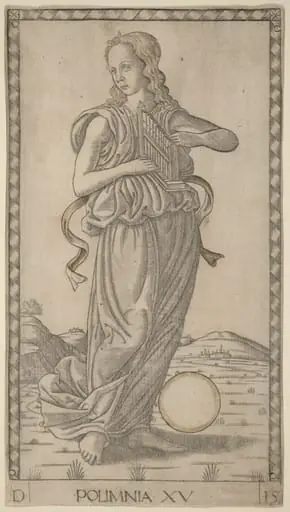
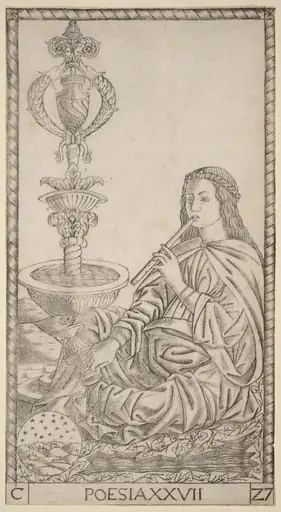
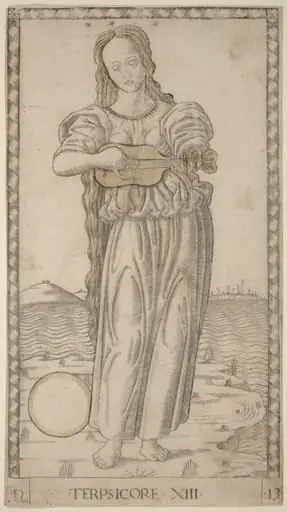
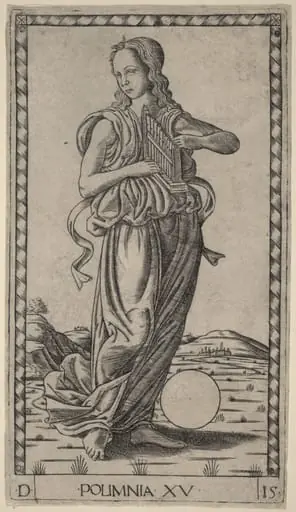
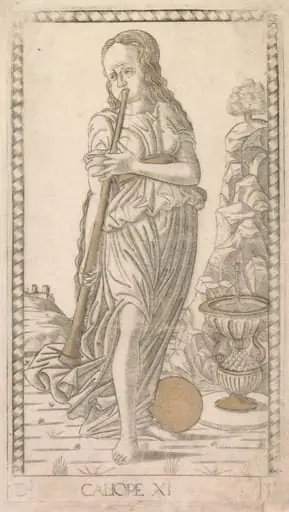
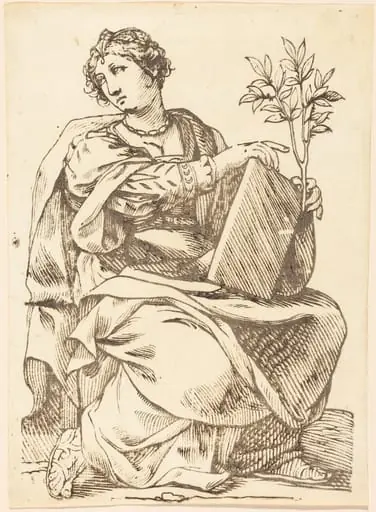
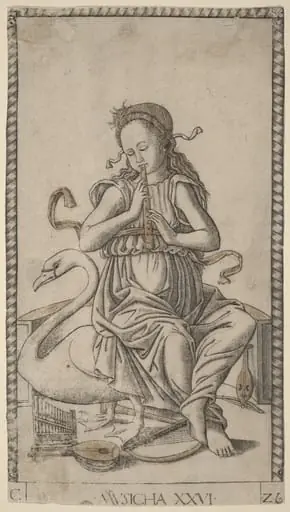
Created around 1465, the engraving titled Talia (Thalia) is attributed to the anonymous Master of the E‑Series Tarocchi. Executed on a metal plate and later printed, the work incorporates faint gilded accents that catch the light. The composition presents a solitary female figure seated on a ledge, engaged in playing a stringed instrument, set against a minimalistic, distant landscape.
Subject & Meaning
The central figure is identified as Thalia, one of the classical Muses associated with comedy and pastoral poetry. She is depicted in a relaxed pose, her hair loose and her robe simple, emphasizing a natural, unadorned presence. The act of music-making suggests themes of artistic inspiration and the harmonious relationship between the muse and creative expression.
Technique & Style
The overall style reflects the meticulous precision characteristic of mid‑15th‑century Northern European printmaking.
The image is rendered through fine incised lines, employing dense cross‑hatching to model volume and convey shadow. Subtle variations in line density create a sense of depth, while the occasional gilded touches highlight specific areas, perhaps the instrument or decorative elements. The overall style reflects the meticulous precision characteristic of mid‑15th‑century Northern European printmaking.
History & Provenance
Attributed to the Master of the E‑Series Tarocchi, an anonymous workshop active in the mid‑1400s, the print forms part of a series of allegorical images linked to early tarot cards. Though the original metal plate is lost, surviving impressions have passed through private collections and are now held in several European museum holdings, providing insight into the period’s print culture.
Artist & collection
Artist
Master of the E-Series Tarocchi
Master of the E-Series Tarocchi (b. 1400) was an Italian artist.