Artwork
Musicha (Music)
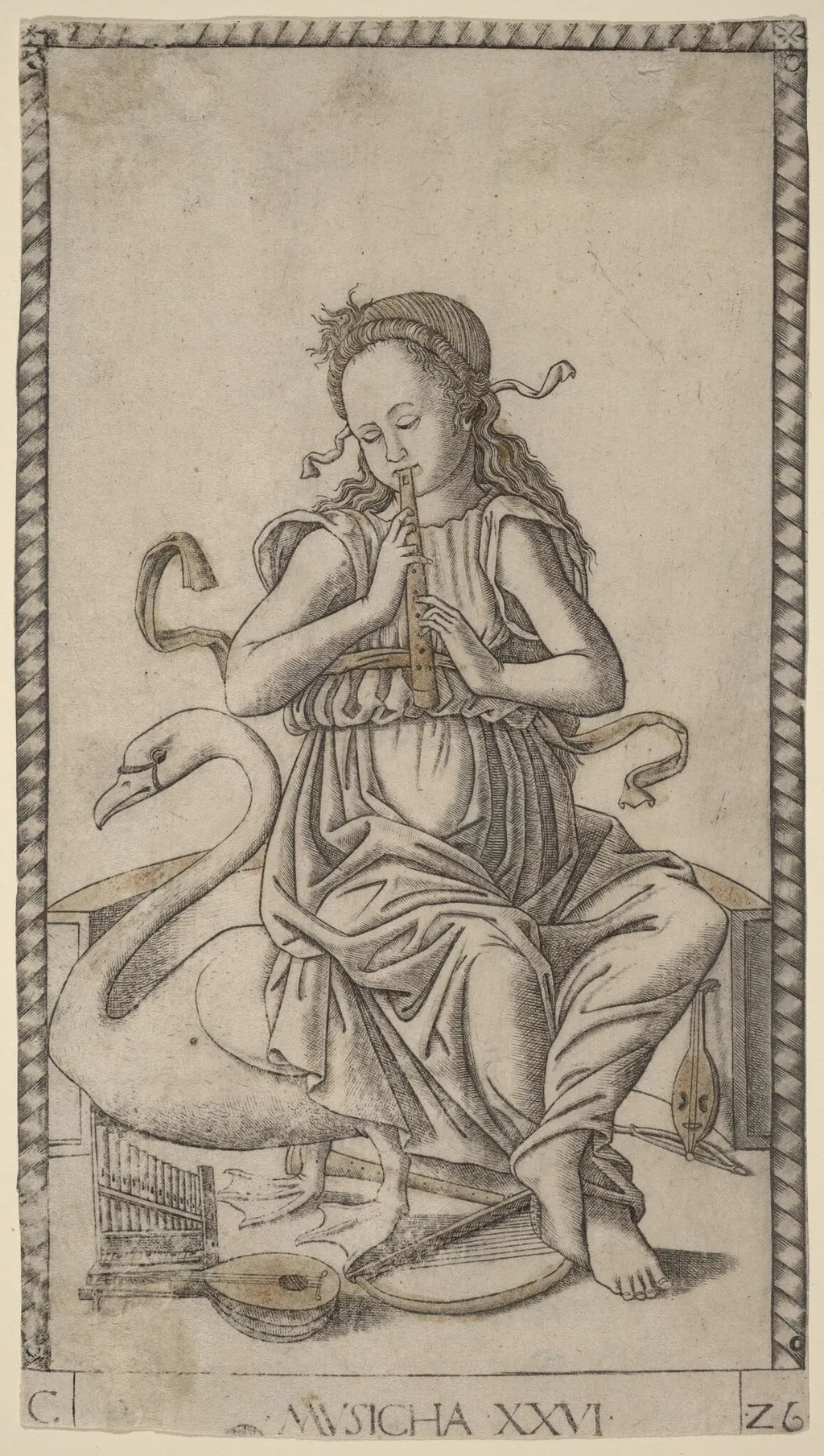
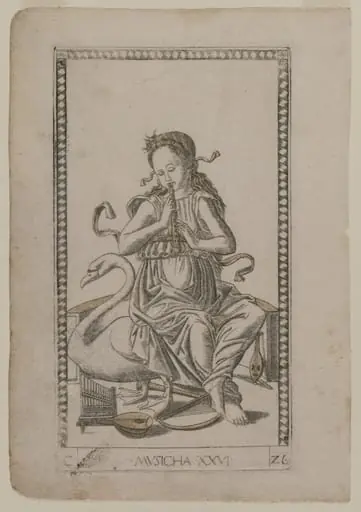
Musicha (Music) is an ink print by the Renaissance artist Master of the E-Series Tarocchi. It dates from 1465 and is held in the collection of the National Gallery of Art.
About this work
Overview
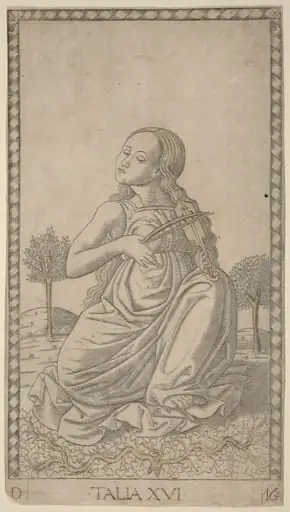
Created around 1465, Musicha (Music) is an engraved print with gilded accents attributed to the anonymous Master of the E‑Series Tarocchi. Executed on a metal plate, the work measures a modest size typical of devotional or instructional prints of the period. Its subject is a solitary female figure engaged in playing a flute, accompanied by a swan that rests its head on her shoulder.
Subject & Meaning
The composition presents a barefoot woman seated on a low stool, her hair loosely tied and her draped garment falling in soft folds. She holds a flute with both hands, while a swan, depicted with a serene demeanor, leans against her. The presence of the swan, a traditional emblem of harmony and purity, may allude to the ideal of music’s soothing power, though the narrative remains ambiguous.
Technique & Style
The image is rendered through fine engraving lines that create a crisp, textured surface, enhanced by selective gilding that highlights ornamental details. The artist’s handling of line conveys the delicate folds of the dress and the feathered plumage of the swan with precision, while the contrast between the dark incised areas and the gold accents adds depth and visual interest.
Context
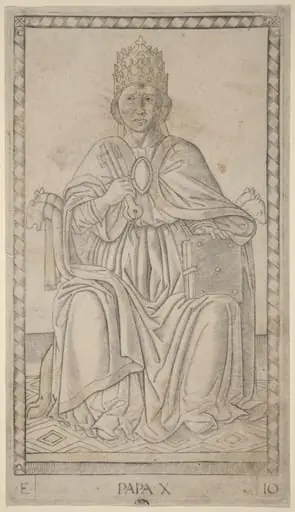
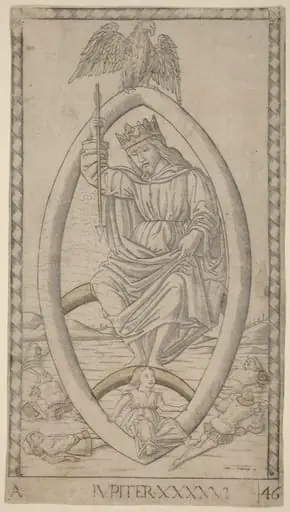
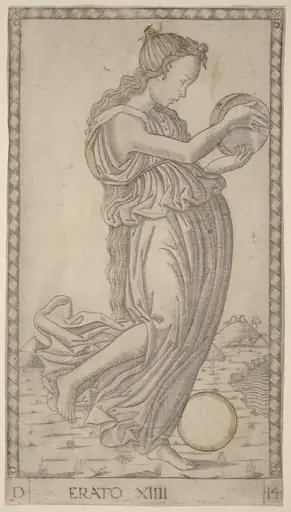
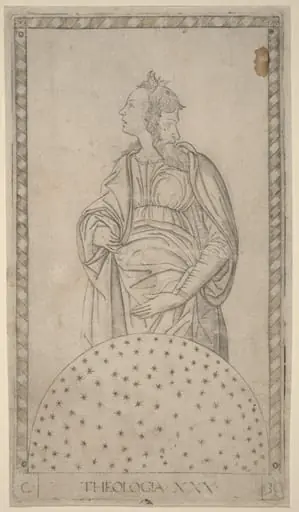
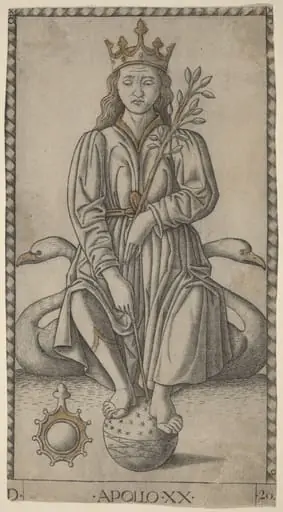
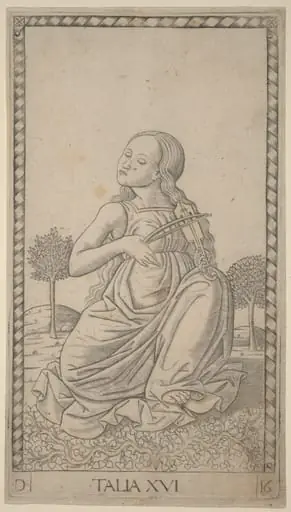
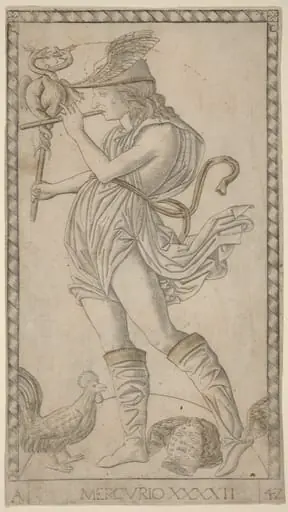
The work belongs to a series of allegorical prints associated with the E‑Series Tarocchi, a set of medieval cards used for moral and educational purposes.
The work belongs to a series of allegorical prints associated with the E‑Series Tarocchi, a set of medieval cards used for moral and educational purposes. Within this framework, Musicha represents the virtue of music, aligning with contemporary iconography that linked artistic pursuits to moral refinement. The print reflects the late Gothic interest in combining didactic content with refined visual execution.
Artist & collection
Artist
Master of the E-Series Tarocchi
Master of the E-Series Tarocchi (b. 1400) was an Italian artist.