Artwork
Head of a Man
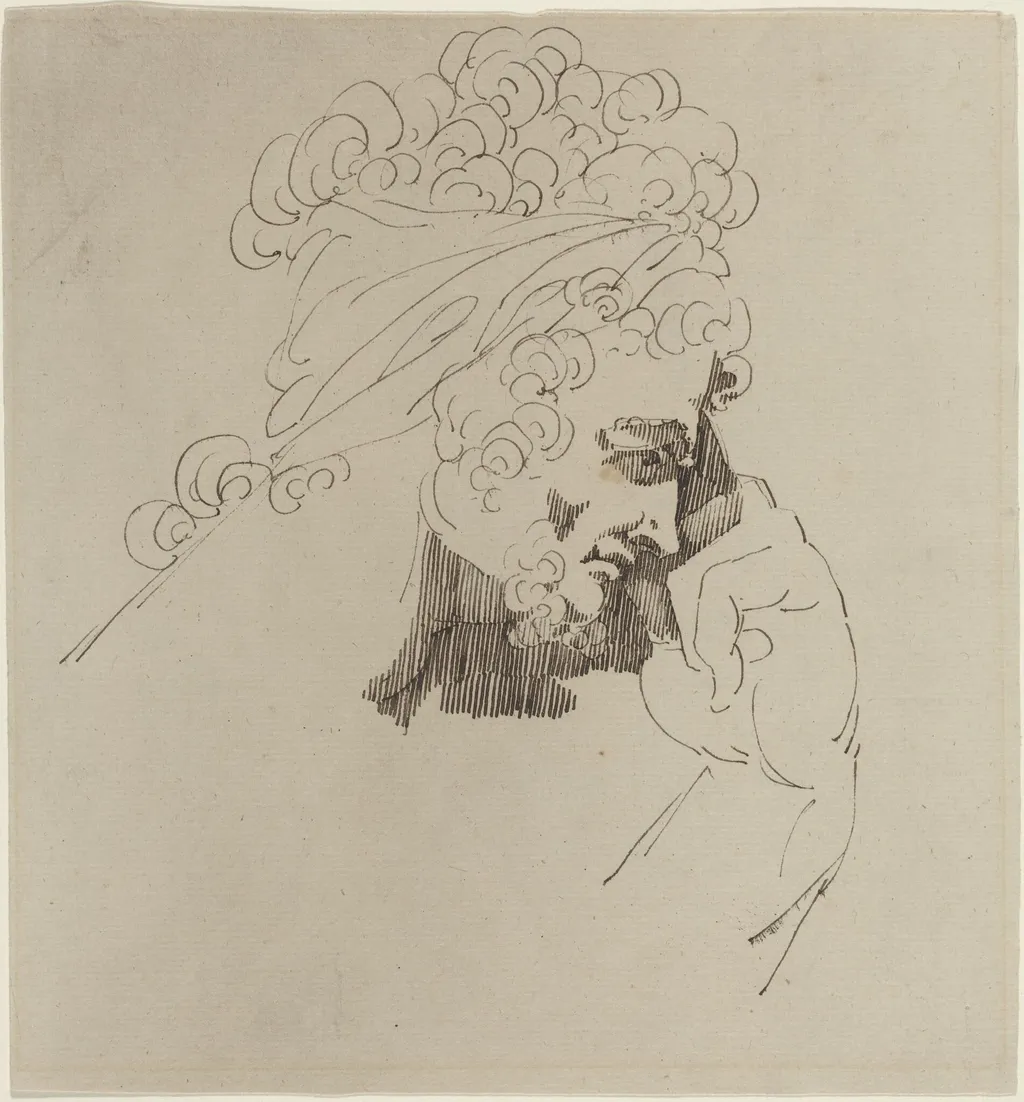
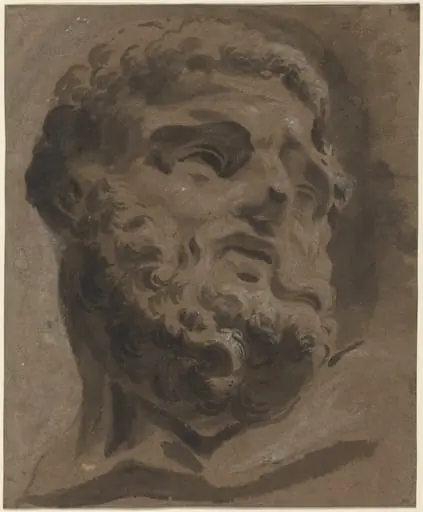
Head of a Man is an ink drawing by the Romanticist artist Master of the Giants. It dates from 1779 and is held in the collection of the National Gallery of Art.
About this work
Overview
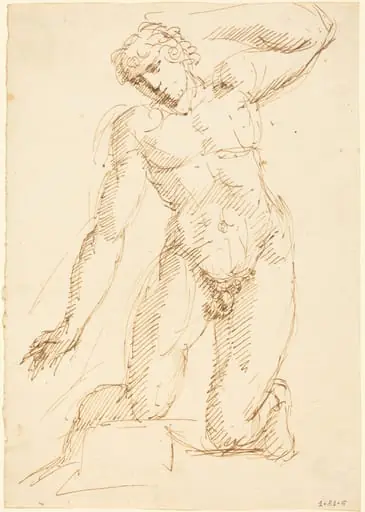
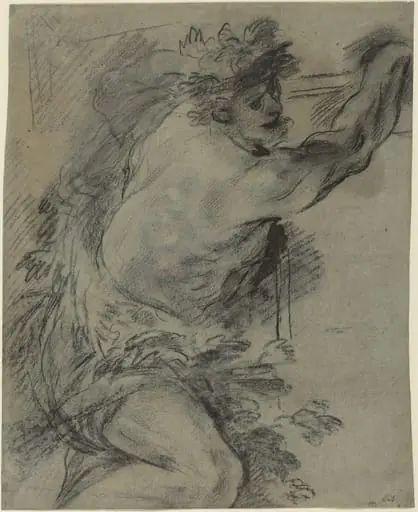
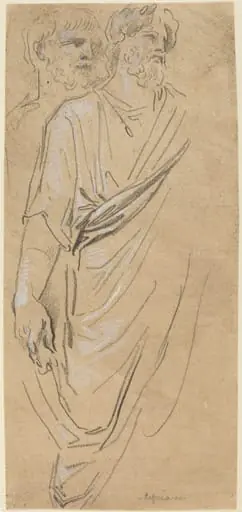
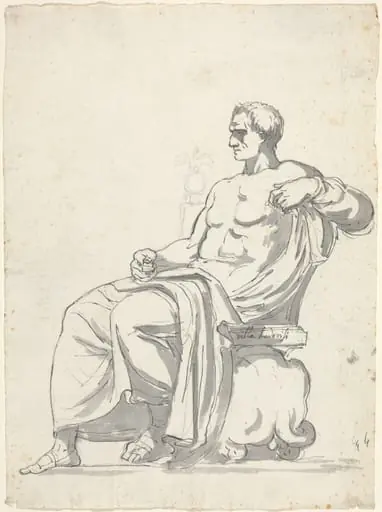
Head of a Man is a pen-and-ink drawing on brown wove paper, attributed to the anonymous figure known as the Master of the Giants and dated to around 1779. The work presents a profile view of a male head and shoulders, rendered in a brisk, gestural hand that emphasizes movement over precise detail.
Subject & Meaning
The composition isolates the sitter’s profile, with the hair rendered in loose, curling strokes and the facial features largely obscured by deep shadow. This selective concealment suggests an interest in the play of light and form rather than a narrative portrait, inviting viewers to consider the figure as a study of expression and silhouette.
Technique & Style
The artist employed warm brown ink, applying dense parallel hatching to create the darkest areas while allowing the paper’s tone to serve as a mid‑range value. The quick, sketch‑like lines convey a sense of immediacy, and the cross‑hatching technique builds volume through layered strokes, a common practice in late‑18th‑century draftsmanship.
History & Provenance
Created circa 1779, the drawing remains attributed to the Master of the Giants, a name assigned to a group of works sharing stylistic traits rather than a documented individual. Its provenance is limited to museum collections, with no recorded ownership changes, reflecting the typical trajectory of anonymous drawings from the period.
Context
The piece belongs to a broader tradition of preparatory studies used by artists to explore facial anatomy and light effects. In the late eighteenth century, such sketches were often produced as exercises or as part of larger compositions, illustrating the artist’s skill in rendering form with minimal means.
Artist & collection