Artwork
Dies VI (Sixth Day)
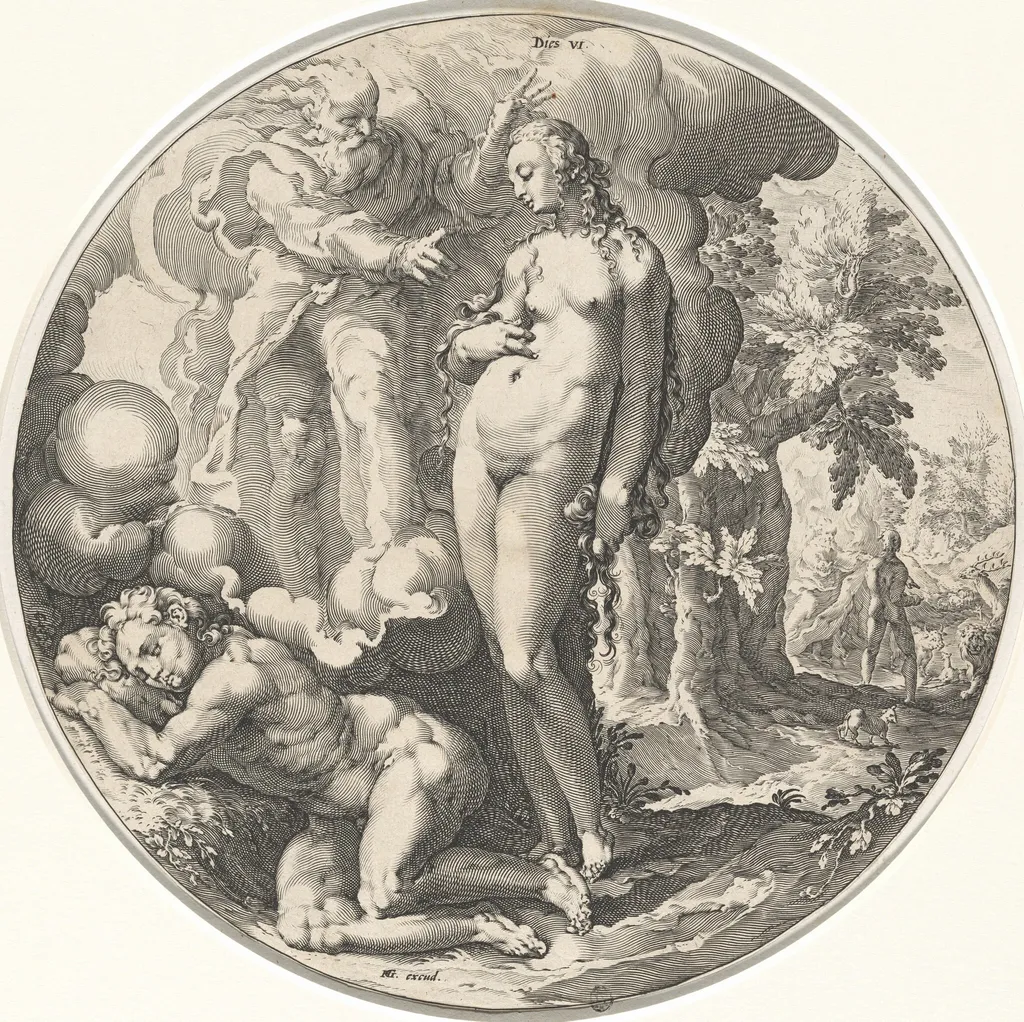
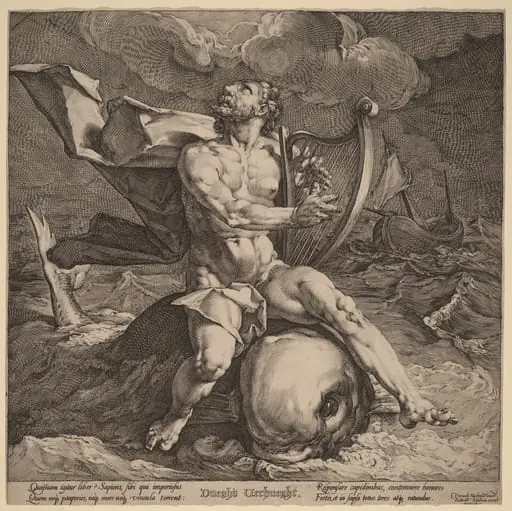
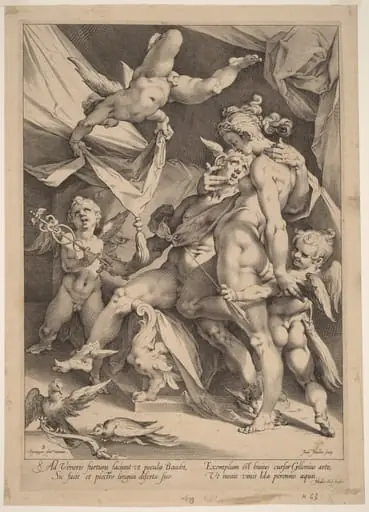
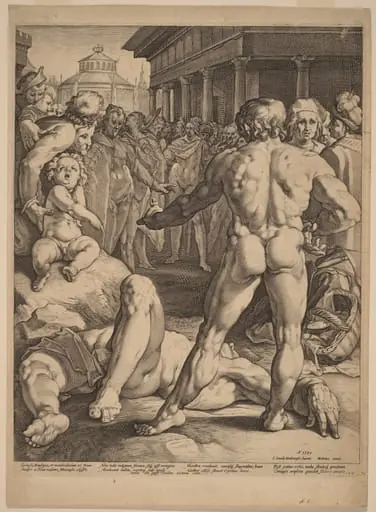
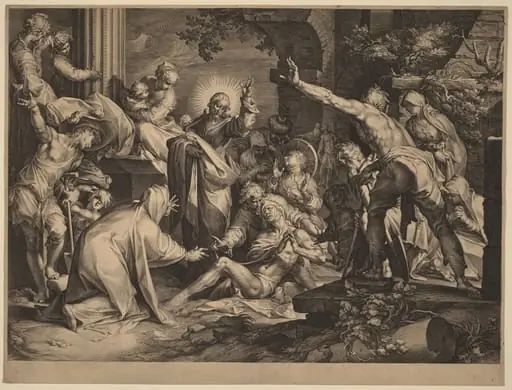
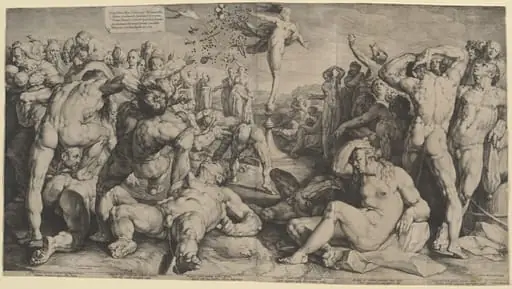
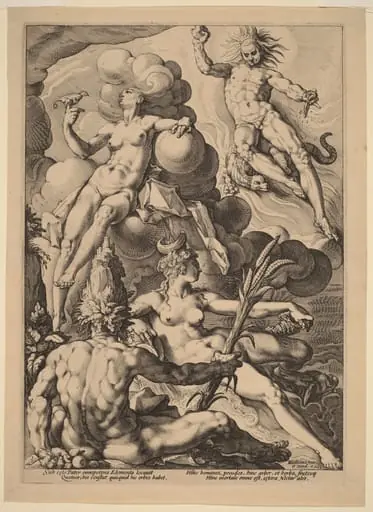
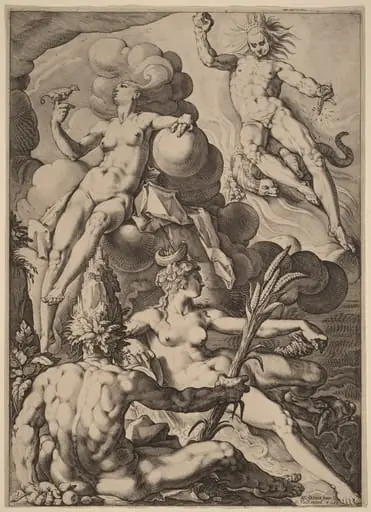
Dies VI (Sixth Day) is an ink print by the Renaissance artist Jan Muller. It dates from 1589 and is held in the collection of the National Gallery of Art.
About this work
Overview
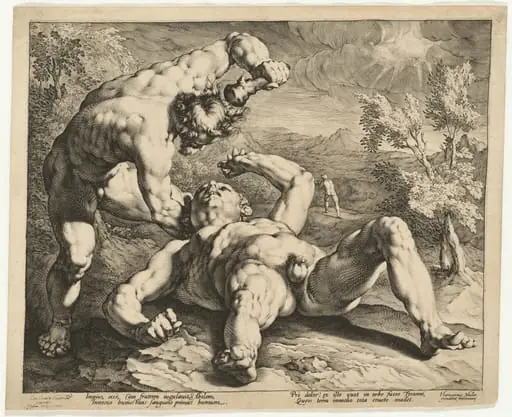
Dies VI (Sixth Day) is an engraving on laid paper created by Dutch artist Jan Harmensz. Muller in 1589. The work depicts a dramatic scene with two figures in a rocky landscape, characterized by intricate details and textures achieved through fine line work.
Subject & Meaning
The engraving features two figures in a dynamic pose: one standing with a staff, gazing upward, and another kneeling, gesturing towards the sky. The subject's identity and exact narrative context are not explicitly stated in the provided information, leaving interpretation open.
Technique & Style
Muller employed fine lines to build up shadows and textures, notably in the figures' clothing and the rocky terrain. This technique imbues the scene with a near three-dimensional quality, highlighting the artist's skill in engraving.
History & Provenance
Created in 1589, Dies VI (Sixth Day) was produced after Muller's return to Amsterdam from Italy, where he had traveled after learning engraving in his father's workshop. The work is part of the output from the family business he later inherited.
Context
As a Dutch engraver influenced by his time in Italy, Muller's work reflects a blend of Northern European attention to detail and Italianate compositional drama, as seen in the juxtaposition of figures against sweeping, jagged landscapes.
Legacy
While specific legacy details of *Dies VI (Sixth Day)* are not provided, Muller's contributions to Dutch printmaking and his technique's influence can be inferred as part of the broader impact of 16th-century Dutch engraving on European art practices.
Artist & collection

Artist
Jan Harmensz. Muller (1571–1628) was a Dutch engraver and painter. Muller was born in Amsterdam. His father was a book printer, engraver and publisher. He learned the engraving trade while working in the family…