Artwork
Aprilis (April)
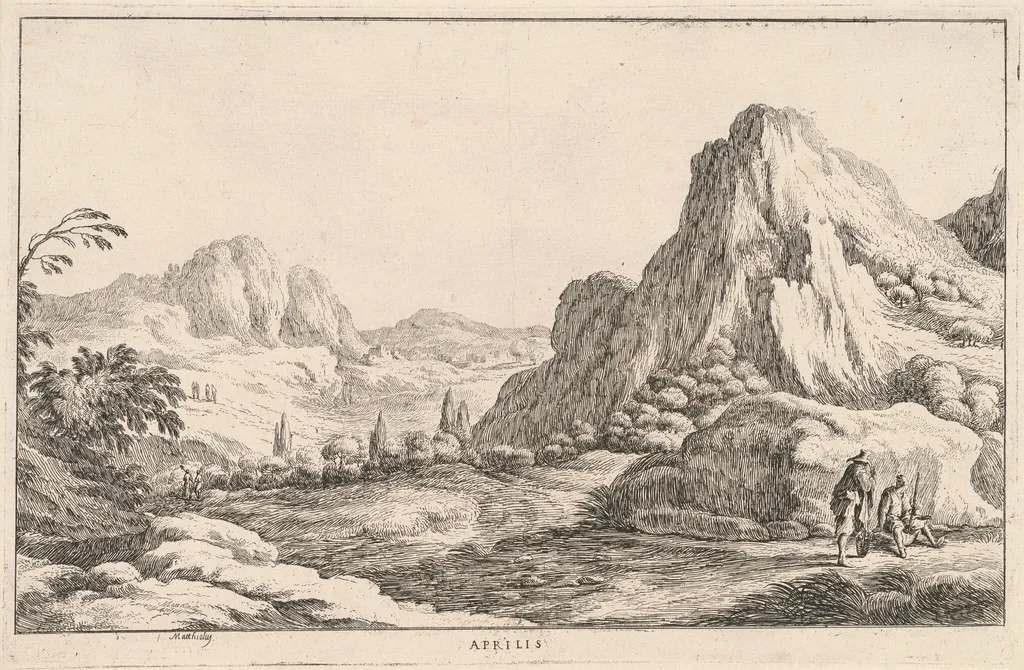
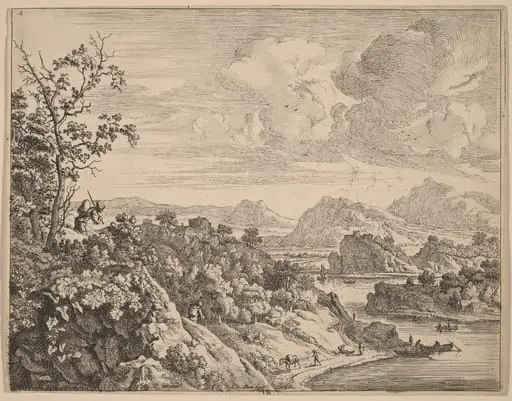
Aprilis (April) is an ink print by the Baroque artist Ludovico Mattioli. It dates from 1601 and is held in the collection of the National Gallery of Art.
About this work
Overview
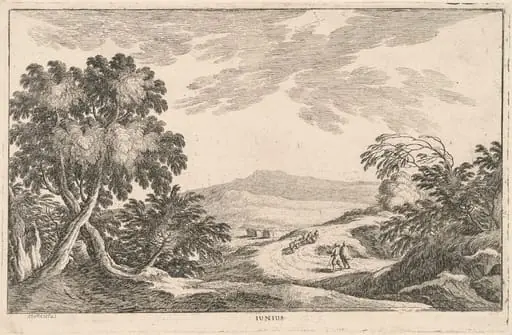
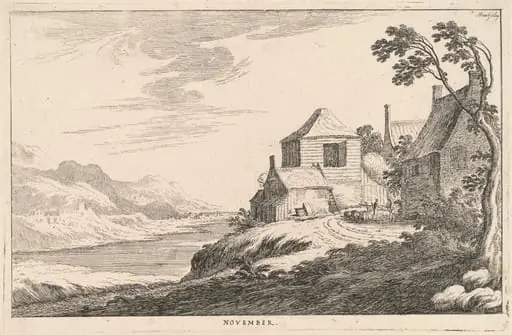
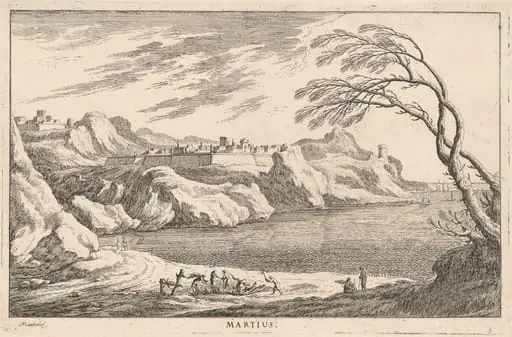
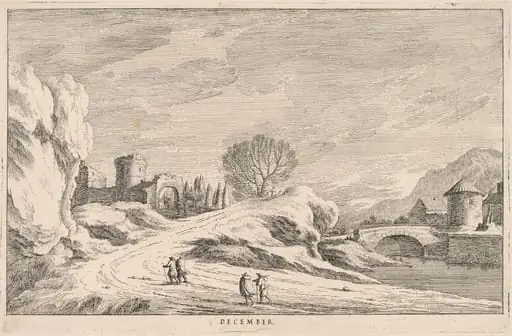
Aprilis, an etching executed on laid paper in 1601, is attributed to the Italian printmaker Ludovico Mattioli. The work measures a modest size typical of early‑17th‑century prints and presents a tranquil, mist‑shrouded landscape. Its muted palette of line work conveys a soft horizon where hills recede and a river winds through the foreground.
Subject & Meaning
The composition depicts a gently rolling countryside under a faint sky, with a river tracing a serpentine path between hills. Two diminutive figures traverse the riverbank; one bears a bundled load, suggesting a pastoral activity. The title, Aprilis, implies an association with the month of April, hinting that the image may belong to a broader series representing the seasons.
Technique & Style
Mattioli employed the etching process, incising fine, delicate lines into a copper plate before transferring the image onto laid paper.
Mattioli employed the etching process, incising fine, delicate lines into a copper plate before transferring the image onto laid paper. The artist’s handling of line creates subtle textures: rippling water is rendered through closely spaced hatching, while foliage and rock surfaces gain depth via varied cross‑hatching. The overall effect is a nuanced tonal gradation that conveys atmosphere without reliance on heavy shading.
Context
Produced at the turn of the 17th century, the print reflects the period’s growing interest in landscape as an independent subject. Italian printmakers of the time often explored seasonal motifs, and Aprilis fits within this tradition. While specific documentation of its commission is lacking, the work aligns with contemporary trends toward naturalistic observation and the dissemination of images through affordable prints.
Artist & collection


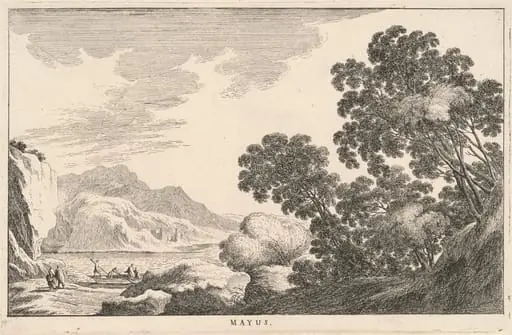
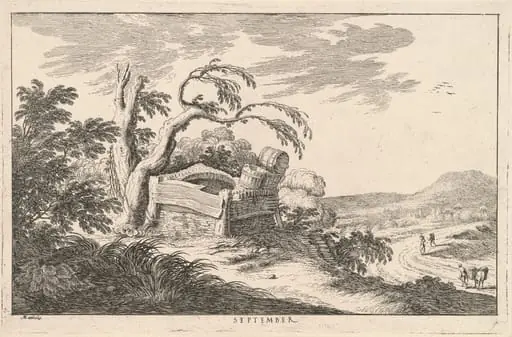
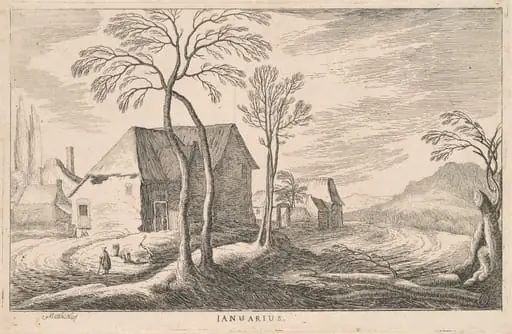
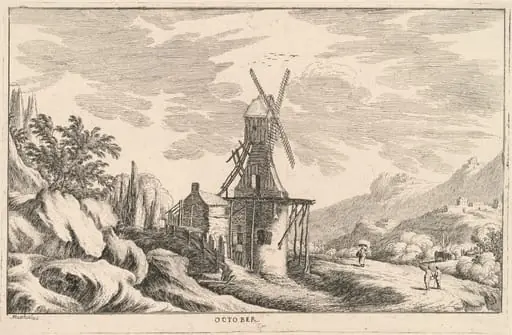
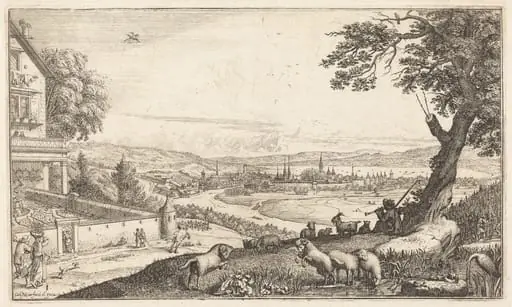 Spring
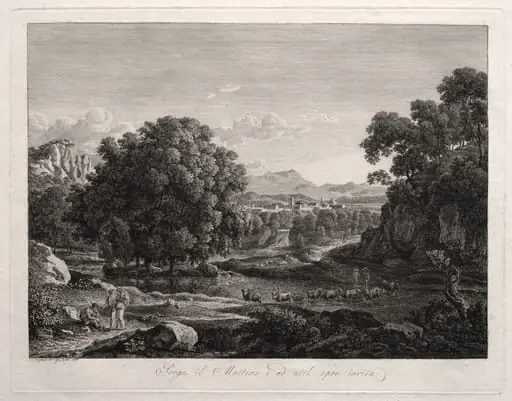 Heroic Landscape: Cattle Crossing the River
 Heroic Landscape
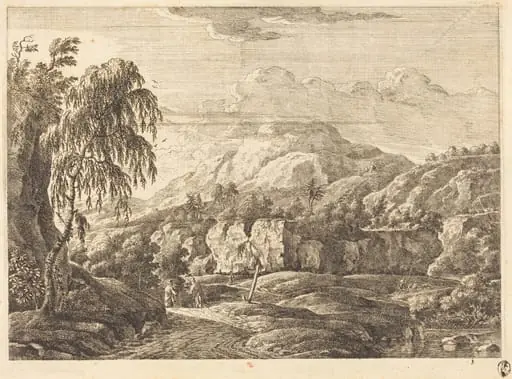 Landscape with Cross and Figures
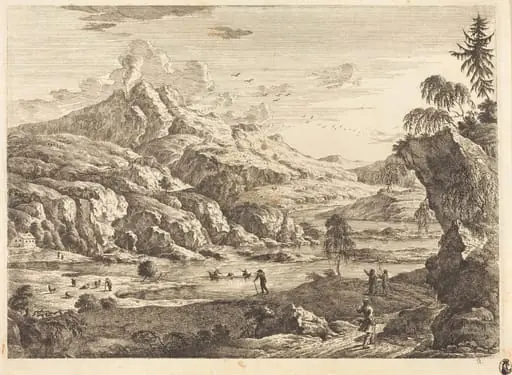 Mountainous Riverscape with Figures
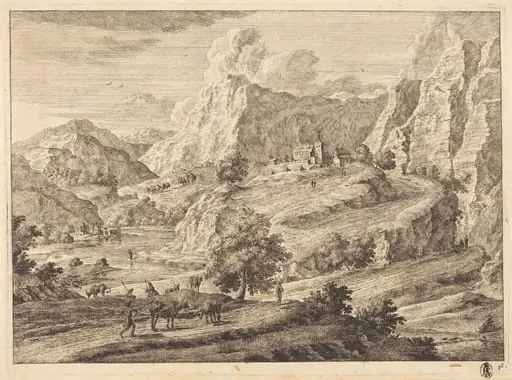 Mountainous Landscape with Figures and a Monastary
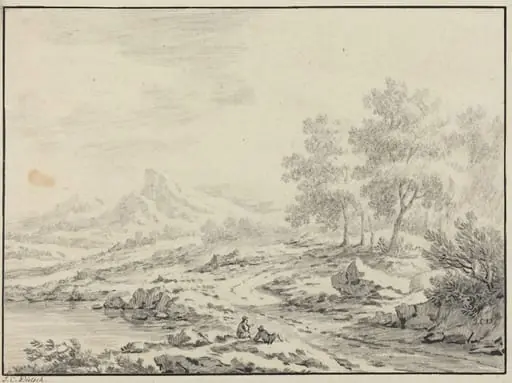 Two Men Resting near a Lake
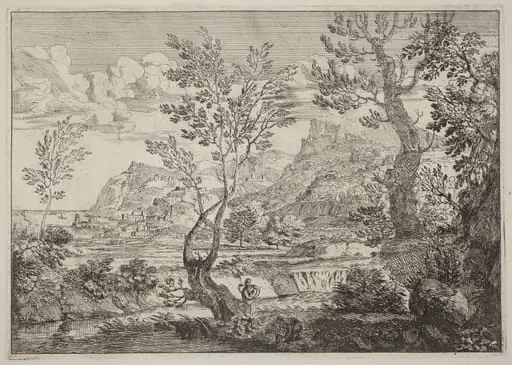 A Waterfall
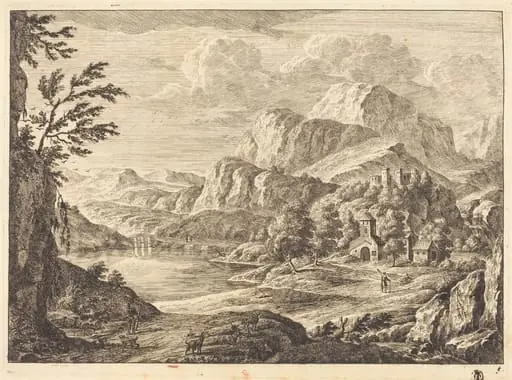 Mountainous Landscape with a Ruined Castle and an Arched Bridge in the Distance
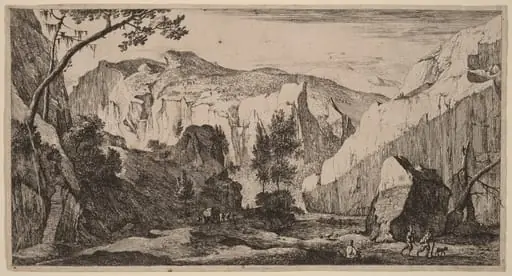 Rocky Landscape: pl.2
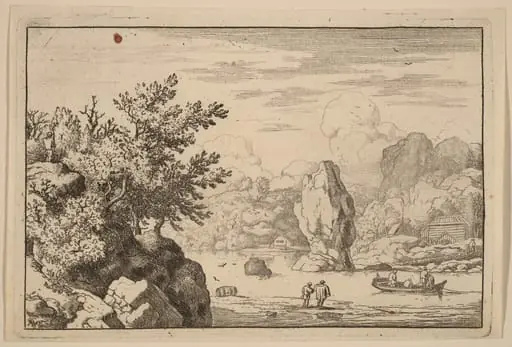 Rock in the Middle of a River
 View of the River Rhine