Artwork
Sibylla Libyca
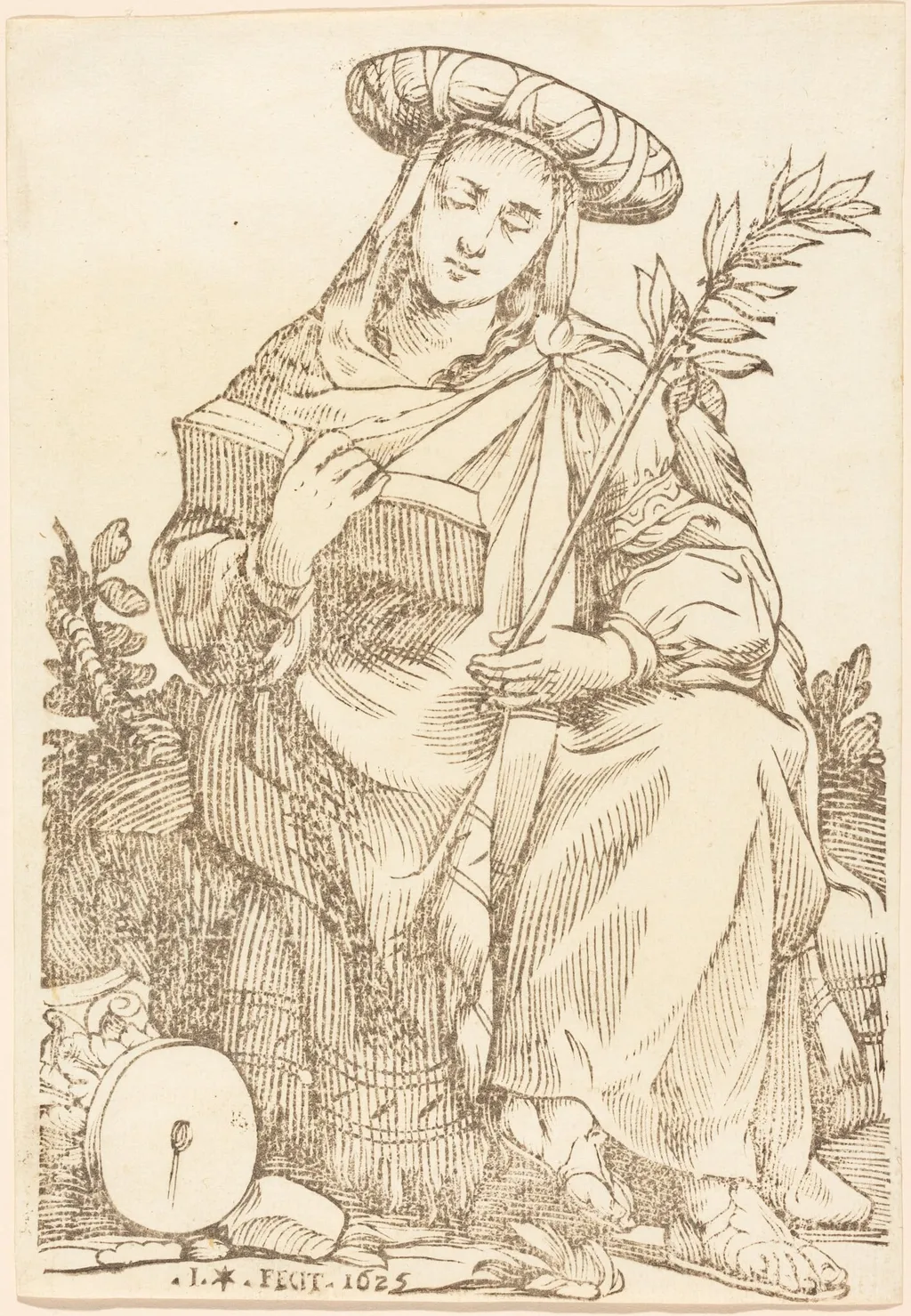
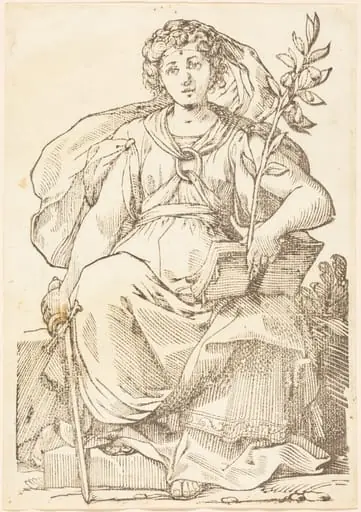
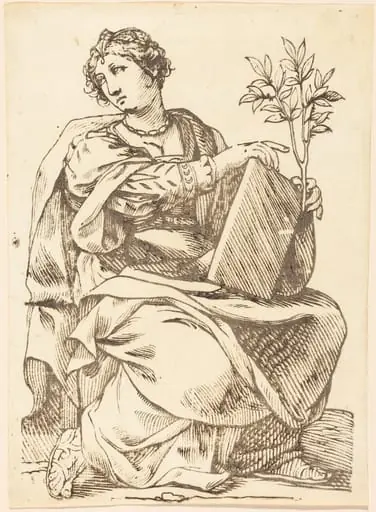
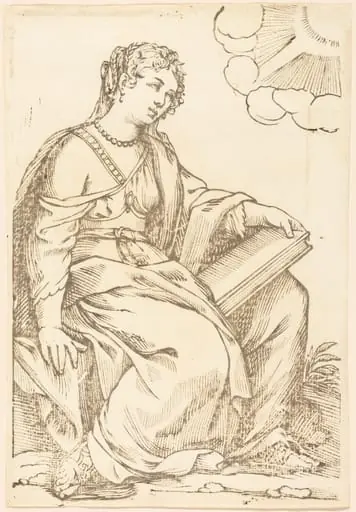
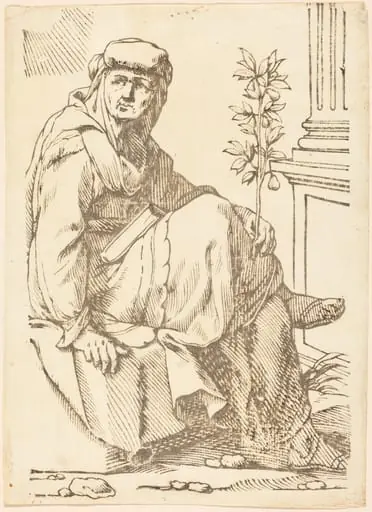
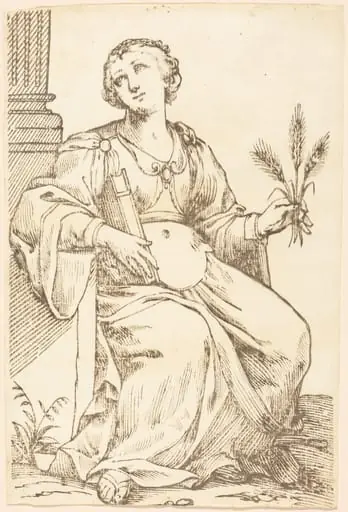
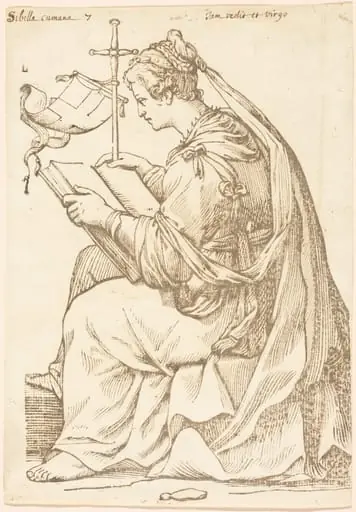
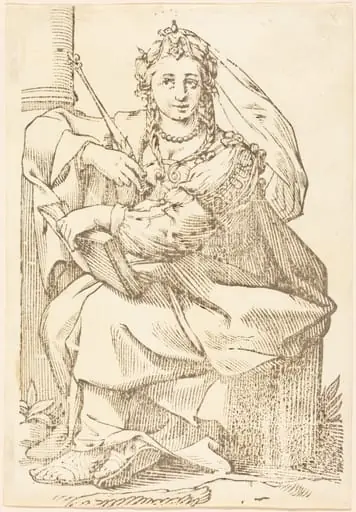
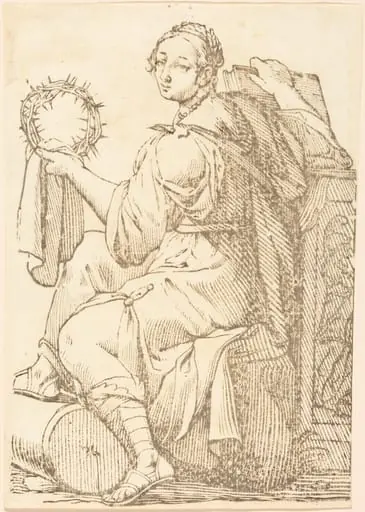
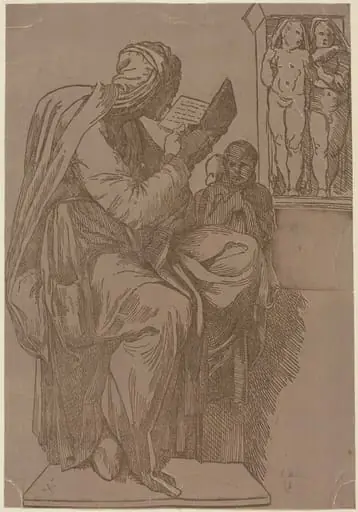
Sibylla Libyca is an ink print by the Baroque artist Paul Maupin. It dates from 1625 and is held in the collection of the National Gallery of Art.
About this work
Overview
Paul Maupin’s 1625 woodcut, titled Sibylla Libyca, presents a solitary female figure rendered in stark black-and-white on laid paper. She is dressed in draped garments and a tall, conical hat, holding a palm frond in one hand and a scroll in the other, while a small circular mirror rests at her feet.
Subject & Meaning
The depicted woman is identified as a sibyl, a prophetic figure from classical mythology. The inclusion of a mirror—a traditional symbol of reflection and foresight—alongside the scroll and palm suggests an emphasis on her role as a seer, linking visual elements to the concept of divination.
Technique & Style
Executed as a woodcut, the image relies on sharp, incised lines to delineate folds in the robes and the intricate details of the hat and accessories. The contrast between deep black areas and the white of the paper creates a clear, graphic quality typical of early 17th‑century printmaking.
History & Provenance
Created in 1625, the print is attributed to French artist Paul Maupin, known for his work in the print workshop tradition of the period. The piece survives on laid paper, a common support for woodcuts of the era, and is documented in collections that focus on early modern European graphic art.
Artist & collection