Artwork
Sibylla Samia
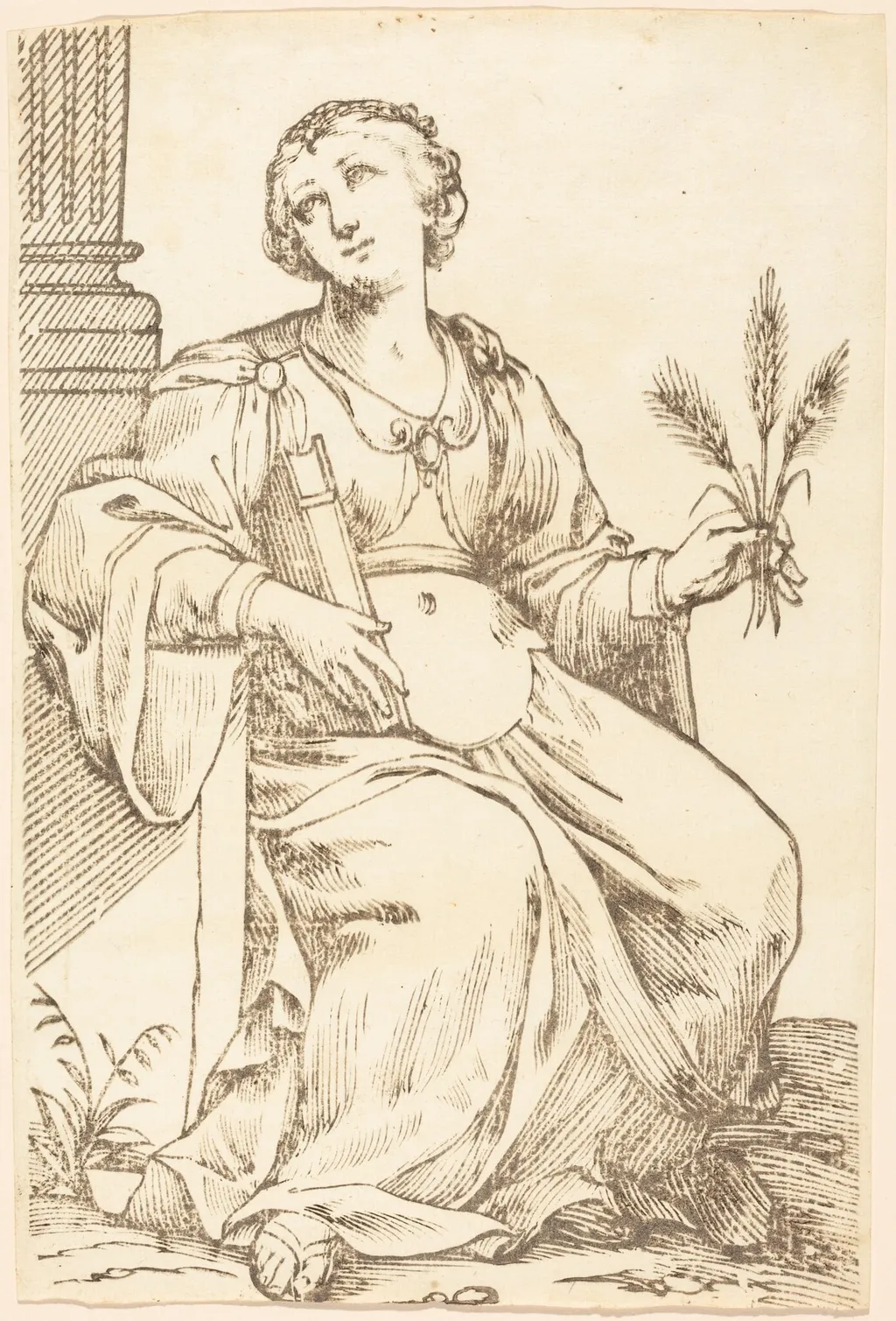
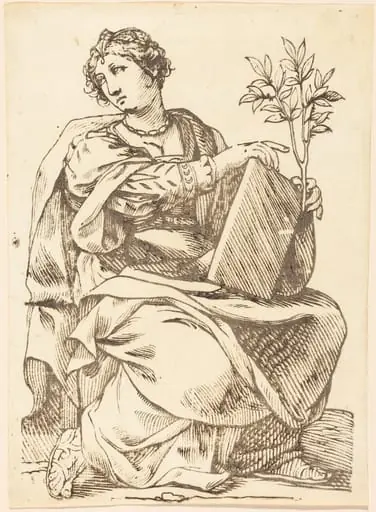
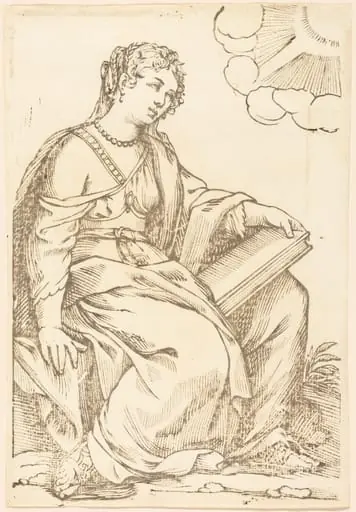
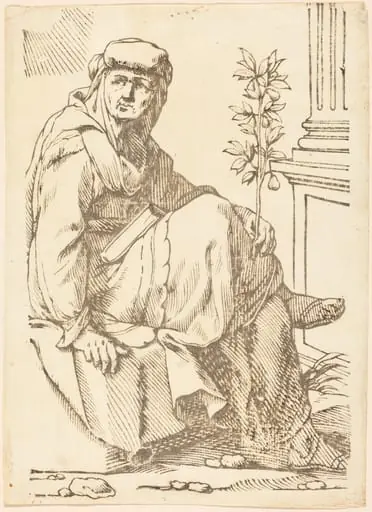
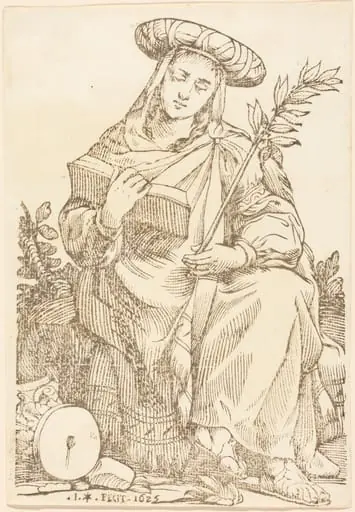
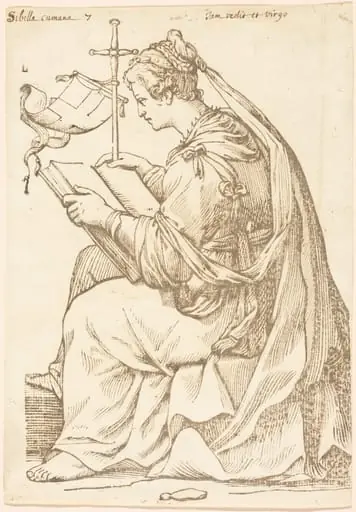
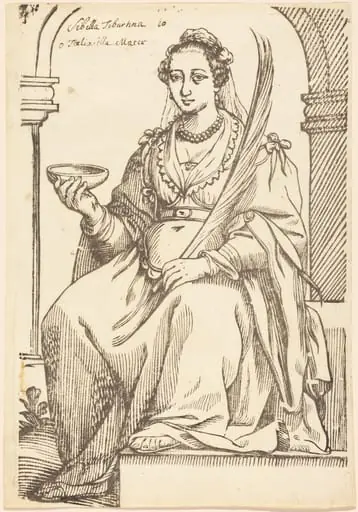
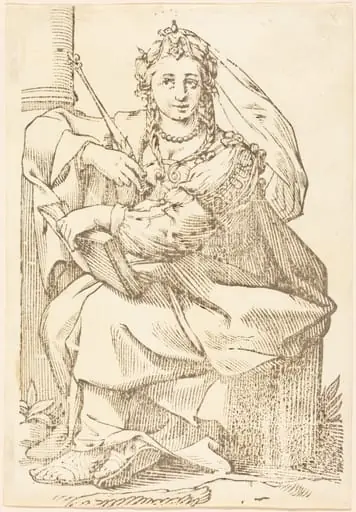
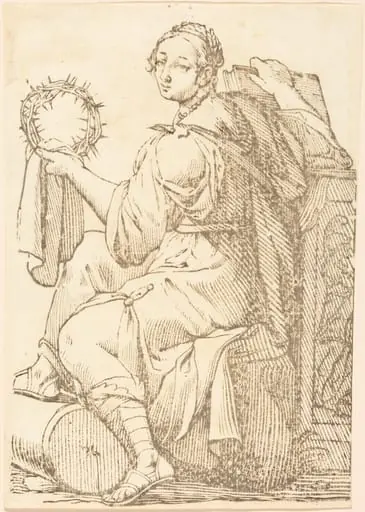
Sibylla Samia is an ink print by the Baroque artist Paul Maupin. It dates from 1625 and is held in the collection of the National Gallery of Art.
About this work
Overview
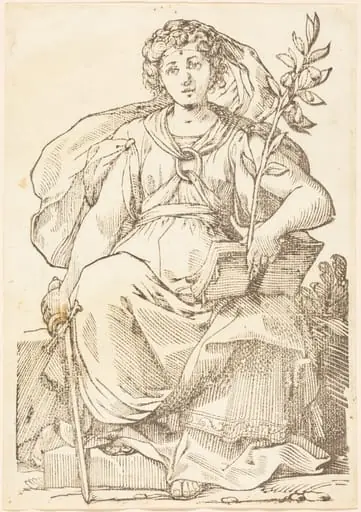
Paul Maupin’s woodcut Sibylla Samia, executed around 1625, presents a solitary female figure seated on the ground. Rendered on laid paper, the print showcases Maupin’s characteristic Baroque allegorical style, focusing on a calm, contemplative woman surrounded by an unadorned background.
Subject & Meaning
The figure wears a long robe, her short, curly hair framed by a simple necklace. In her right hand she holds a stalk of grain, a conventional emblem of fertility or abundance, while her left hand cradles an open book, suggesting the pursuit of knowledge or wisdom. Her serene expression and crossed‑leg posture reinforce a meditative mood.
Technique & Style
Maupin employed the woodcut method, carving the image in relief on a wooden block and printing it onto laid paper. The stark contrasts of line and tone typical of early 17th‑century prints emphasize the figure’s form and the symbolic objects, while the plain background directs attention to the central allegory.
History & Provenance
Created circa 1625, Sibylla Samia belongs to a series of allegorical prints for which Maupin was known. The work has survived in several collections of early modern prints, reflecting its circulation among collectors of Baroque graphic art.
Context
Maupin’s prints often merged classical motifs with contemporary moral themes. In this period, allegorical representations of women as personifications of virtues or intellectual pursuits were common, aligning the work with broader European trends in didactic visual culture.
Artist & collection