Artwork
Eva
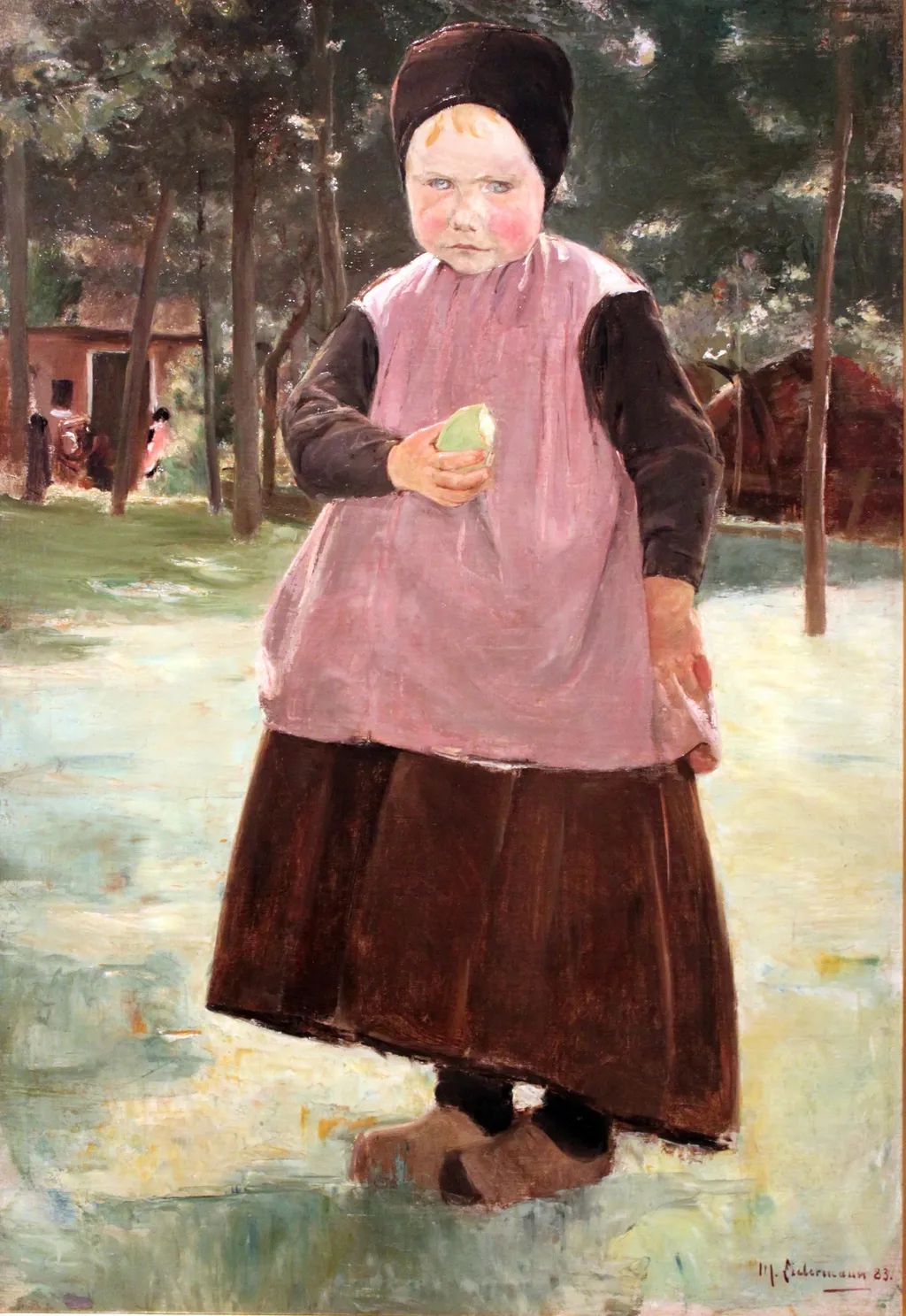
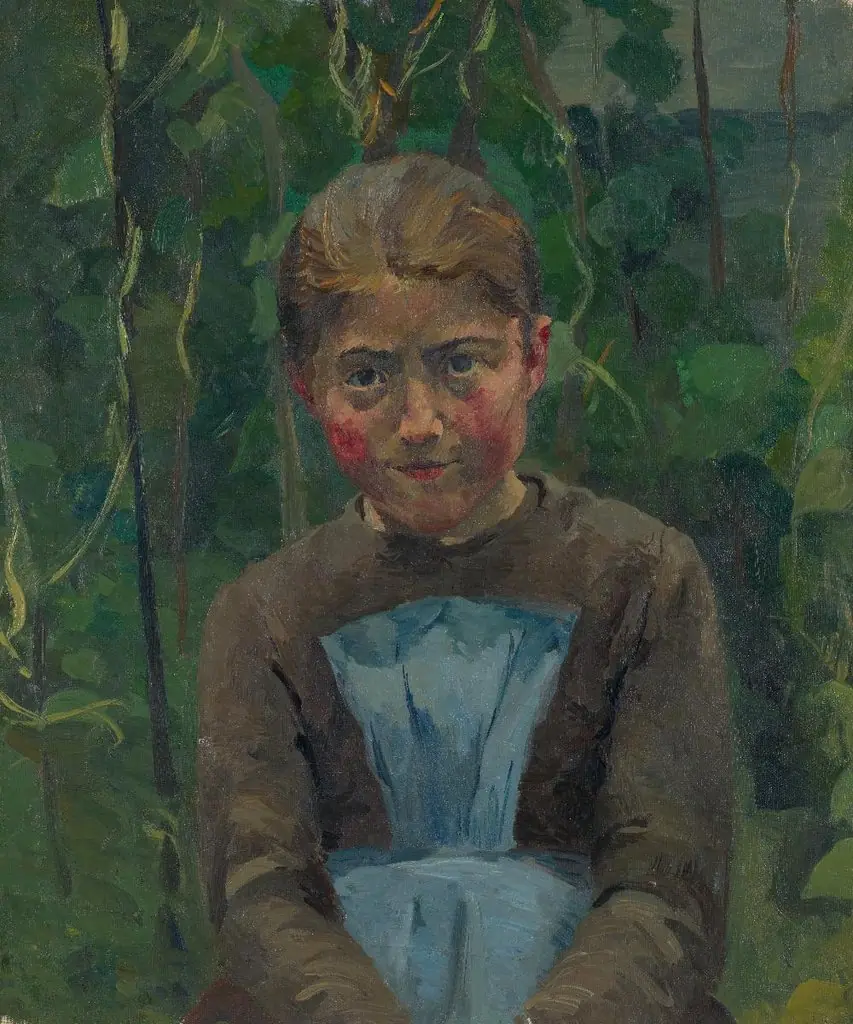
Eva is an oil painting by the Impressionist artist Max Liebermann. It dates from 1892 and is held in the collection of the Hamburger Kunsthalle.
About this work
Overview
Though rooted in realism, the painting’s loose brushwork and atmospheric tone reflect his time studying in Paris and the Netherlands.
Painted in 1892, *Eva* is an oil portrait by German artist Max Liebermann, depicting a young girl in a garden setting. The work exemplifies Liebermann’s engagement with Impressionist principles, emphasizing natural light and everyday subjects. Though rooted in realism, the painting’s loose brushwork and atmospheric tone reflect his time studying in Paris and the Netherlands. It remains part of the Hamburger Kunsthalle’s permanent collection.
Subject & Meaning
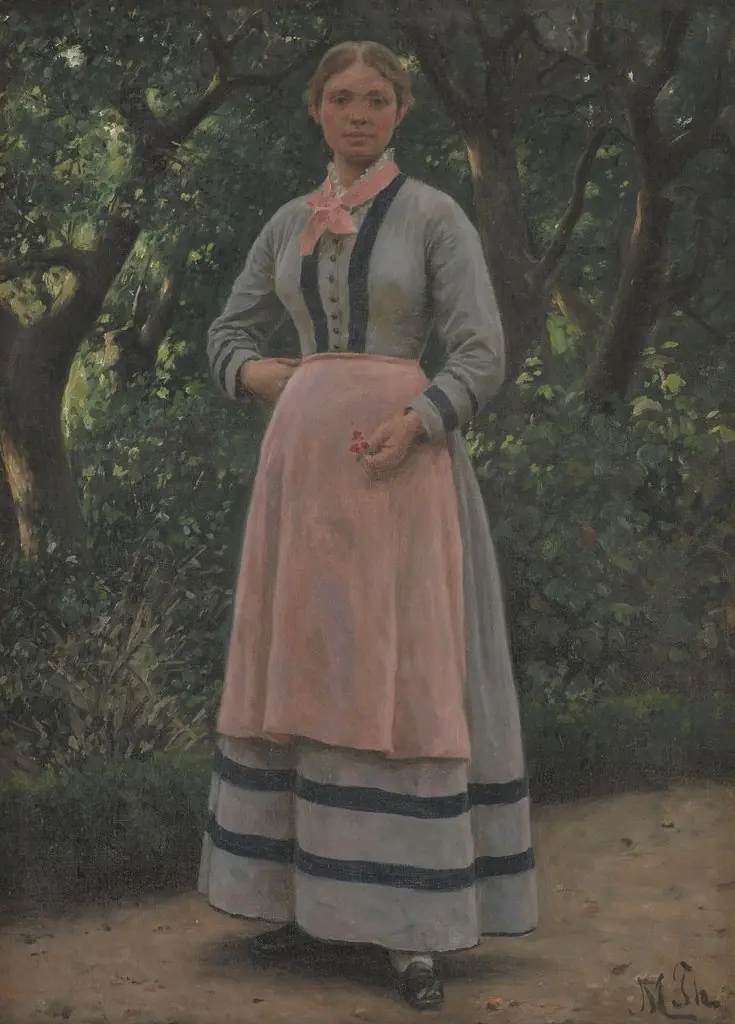
The subject is a young girl, identified as Eva, standing rigidly in a domestic garden, holding an apple. Her direct gaze and solemn expression suggest introspection or moral weight, possibly alluding to biblical or symbolic narratives of innocence and knowledge. Dressed in a dark dress with a pink apron and black cap, her attire reflects bourgeois modesty. The setting, neither idealized nor overtly narrative, grounds the figure in ordinary life, consistent with Liebermann’s interest in contemporary domesticity.
Technique & Style
Liebermann employed a restrained palette of greens, browns, and soft pinks, using subtle tonal shifts to model form and space. His brushwork is fluid yet controlled, capturing texture in fabric and foliage without overt detail. Light falls diagonally across the figure, enhancing volume through chiaroscuro, while the background dissolves into hazy foliage, creating depth without sharp definition. The technique avoids academic polish, favoring observational immediacy over idealization.
History & Provenance
Created during Liebermann’s mature period in Berlin, *Eva* was painted after his formative years in Weimar, Paris, and the Netherlands. It entered the Hamburger Kunsthalle’s collection in the early 20th century, likely through direct acquisition or donation. The painting has remained in public ownership since, with no documented changes in provenance. Its preservation reflects its recognition as a representative work of German Impressionism.
Context
In late 19th-century Germany, Liebermann championed modern subject matter over historical or mythological themes. *Eva* aligns with a broader shift toward depicting middle-class life with psychological nuance. While French Impressionism influenced his technique, Liebermann’s approach retained a quieter, more reserved tone. The painting reflects the cultural tensions of the era—secularism, urbanization, and the evolving role of women and children in bourgeois society.
Legacy
Though not among Liebermann’s most widely reproduced works, *Eva* exemplifies his contribution to German Impressionism’s distinct character: intimate, untheatrical, and grounded in observation. It influenced later generations of German realists who sought to portray everyday life with emotional restraint. The painting continues to be studied for its synthesis of international style and local sensibility, standing as a quiet testament to Liebermann’s artistic philosophy.
Own this work as a print
Artist & collection
Artist
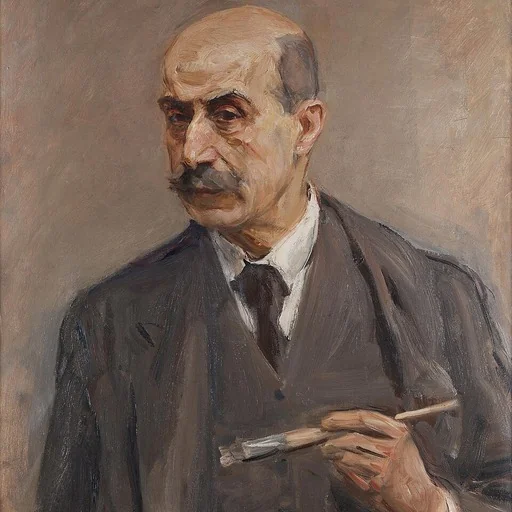
Max Liebermann (20 July 1847 – 8 February 1935) was a German painter and printmaker, and one of the leading proponents of Impressionism in Germany and continental Europe.