Artwork
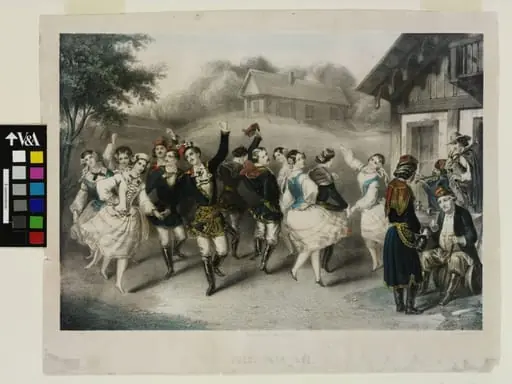
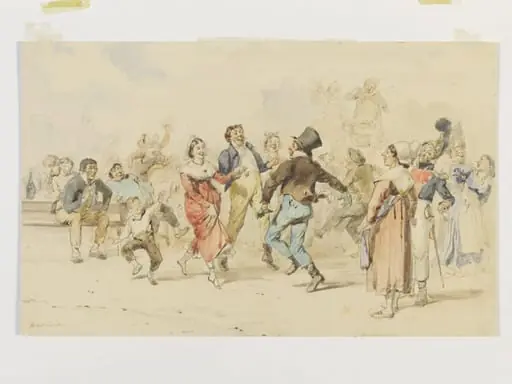
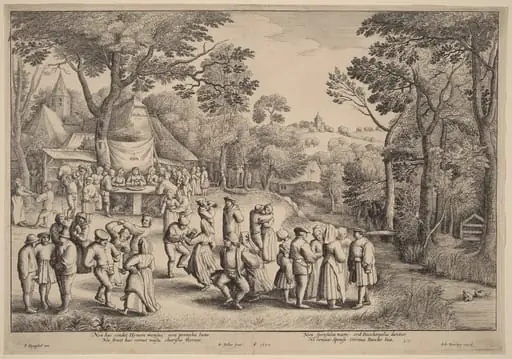
Dance of Peasants [possibly in Belgrade near Constantinople]
![Dance of Peasants [possibly in Belgrade near Constantinople], by Luigi Mayer, watercolor, 1800](https://artifactworldgallery.com/img/luigi-mayer--dance-of-peasants-possibly-in-belgrade-near-constantinople--e0530a0b87d5c4c1-w1024.webp)
Dance of Peasants [possibly in Belgrade near Constantinople] is a watercolor work on paper by the Biedermeier artist Luigi Mayer. It dates from 1800 and is held in the collection of the Victoria and Albert Museum.
About this work
Overview
Created around 1800 by Luigi Mayer, this watercolour depicts a rural dance scene possibly set in the Belgrade forest near Constantinople. Part of a larger series documenting regional customs, the work captures everyday life through delicate washes and loose brushwork. Its intimate scale and observational tone reflect Mayer’s interest in ethnographic detail rather than grand narrative.
Subject & Meaning
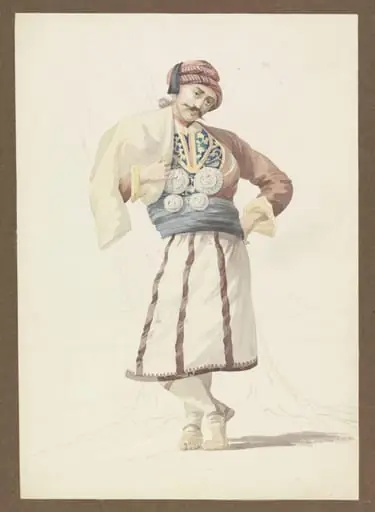
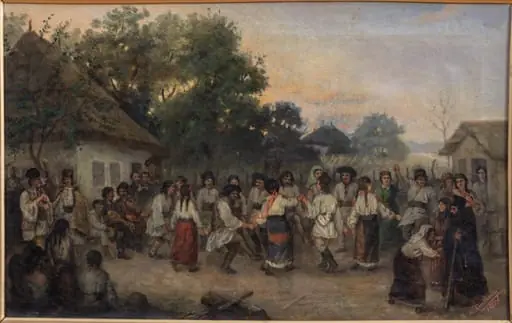
The image portrays a circle dance among peasants, likely associated with a wedding celebration in a Greek-speaking community. Figures, dressed in regional attire—men in loose trousers and tunics, women in long skirts—hold hands in rhythmic motion. The setting, framed by trees and rolling hills, suggests a seasonal gathering in a pastoral retreat, emphasizing communal joy over individual identity.
Technique & Style
Mayer employed transparent watercolour to achieve a light, atmospheric quality. Soft washes define forms without sharp outlines, while muted tones evoke the natural light of an outdoor setting. The composition is unstructured yet balanced, with figures arranged in a loose arc that guides the eye through the scene, reinforcing the sense of spontaneous movement.
History & Provenance
The watercolour was acquired by W.T. Spencer in June 1965. It belongs to a body of work Mayer produced during his travels in the Ottoman Empire, commissioned to record local customs. Related compositions, such as *Ceremonia D'Un Spozalizio Greco* (1797), suggest a recurring thematic focus on Greek wedding rituals in the region.
Context
Mayer’s drawings emerged during a period of heightened European interest in Eastern Mediterranean cultures. His works were often used as visual records by travelers and scholars, bridging ethnography and topographical art. Though not overtly political, these images subtly documented the diversity of life under Ottoman rule, countering exoticized stereotypes with quiet observation.
Legacy
Though not widely exhibited, Mayer’s watercolours contributed to 19th-century visual archives of the Eastern Mediterranean. His approach influenced later ethnographic illustrators who prioritized authenticity over romantic embellishment. These works remain valuable as historical documents, offering glimpses into folk traditions before widespread modernization.
Artist & collection

Artist
Luigi Mayer (1755–1803) was an Italian-German artist and one of the earliest and most important late 18th-century European painters of the Ottoman Empire.

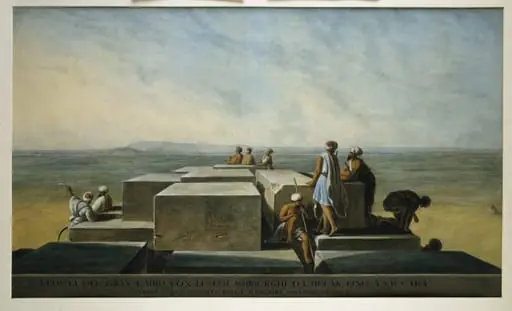 View of Grand Cairo from the Summit of the Great Pyramid of Giza
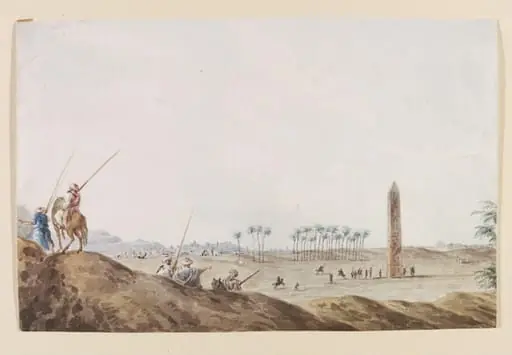 An Ancient Obelisk At Matarea, Formerly Heliopolis
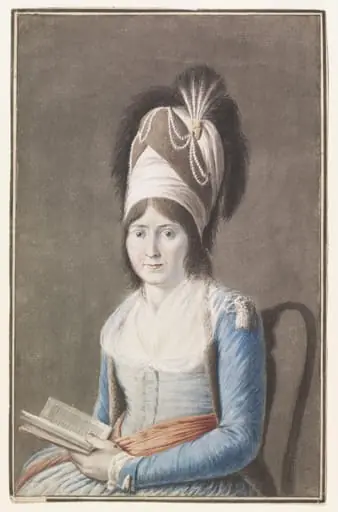 Portrait of Clara Mayer
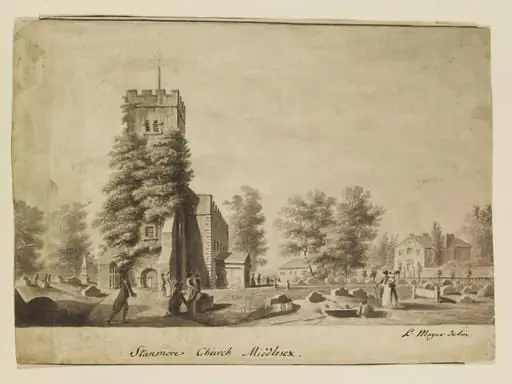 Stanmore Church Middlesex
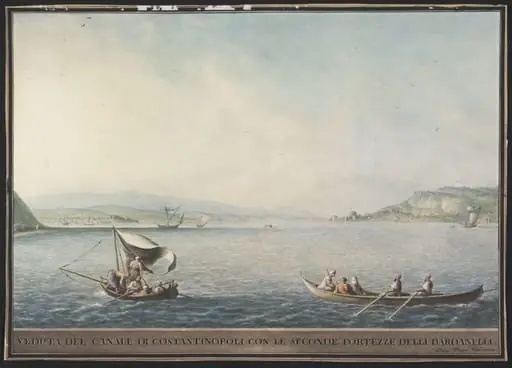 View of the Straits with the Second Fortress of the Dardanelles
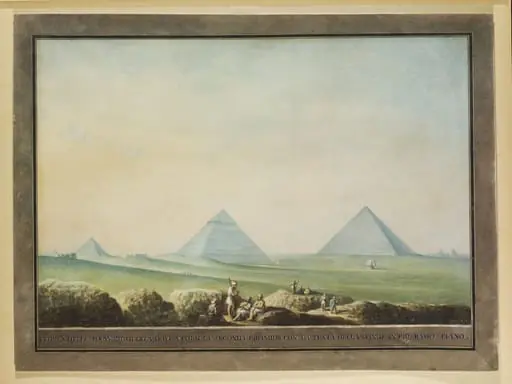 The Pyramids of Giza
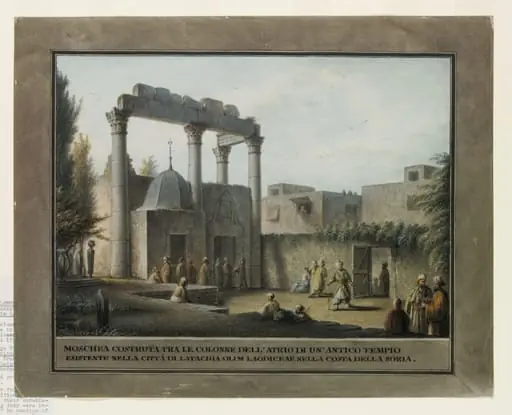 Mosque built between the columns of an ancient temple in Latakia on the coast of Syria, about 1800
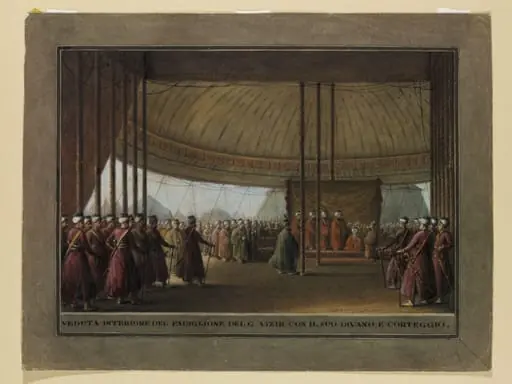 Interior of the Pavilion of the Grand Vizir with his Divan and Retinue