Artwork
An Ancient Obelisk At Matarea, Formerly Heliopolis
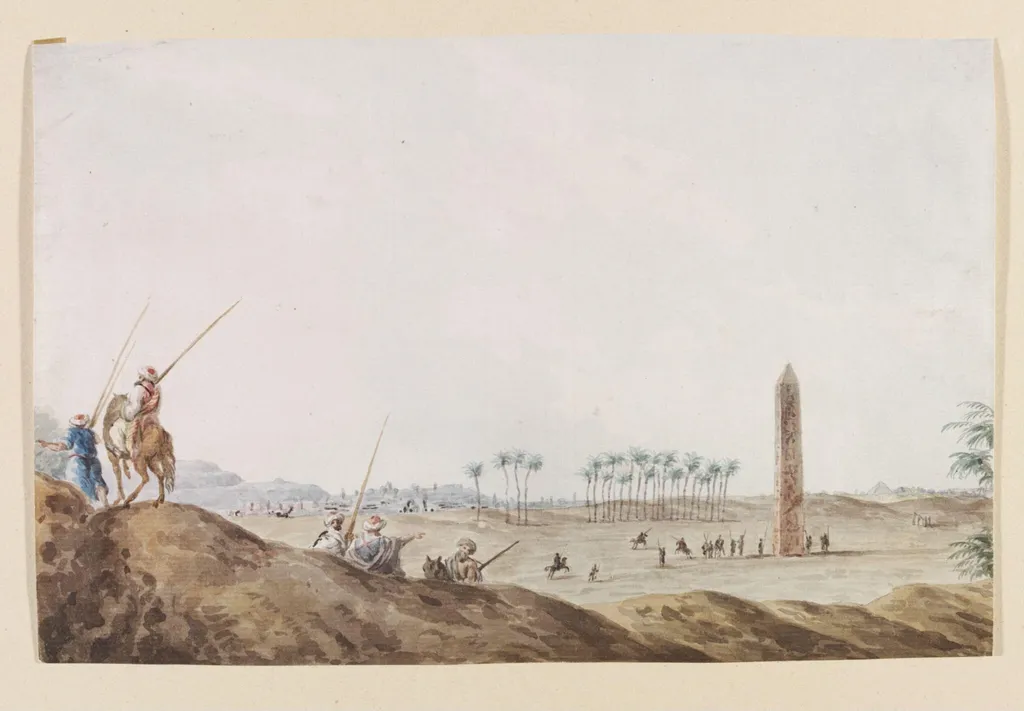
An Ancient Obelisk At Matarea, Formerly Heliopolis is a watercolor work on paper by the Neoclassicist artist Luigi Mayer. It dates from 1792 and is held in the collection of the Victoria and Albert Museum.
About this work
A few people on foot and horseback move around the dry, rocky ground, some pointing or gesturing.
This watercolor shows a desert scene with a tall, carved obelisk standing alone in the distance. A few people on foot and horseback move around the dry, rocky ground, some pointing or gesturing. Palm trees line the horizon, and the sky is pale and flat, with distant hills barely visible.
The artist focused on the contrast between the rough, textured ground and the smooth obelisk. This was made in 1792, when artists often traveled to document ancient sites.
Check out the Victoria and Albert Museum to see more works like this.
Overview
Created in 1792 during Luigi Mayer’s journey through Egypt and Syria, this watercolour captures a solitary obelisk near Matarea, the modern site of ancient Heliopolis. Executed in delicate washes, the work belongs to a tradition of topographical recording undertaken by European artists documenting antiquities. It later informed an aquatint published in 1802, extending its reach beyond the sketchbook into printed circulation.
Subject & Meaning
The obelisk, originally erected by Senusert I, stands as the last major remnant of Heliopolis, a once-vast religious center dedicated to the sun god Ra. Surrounded by barren terrain and sparse human figures, the monument conveys the erosion of its former sacred landscape. Its isolation underscores the passage of time and the fading memory of the city it once anchored.
Technique & Style
Mayer employed fine, controlled watercolour washes to render the obelisk’s smooth, polished surface in contrast with the rough, granular texture of the desert floor. Subtle tonal gradations define the pale sky and distant hills, while minimal figures—on foot and horseback—add scale without narrative intrusion. The composition emphasizes spatial emptiness, reinforcing the monument’s quiet endurance.
History & Provenance
The watercolour was produced during Mayer’s 1792 expedition, part of a broader 18th-century effort to visually catalog Egypt’s antiquities. Likely drawn on location, it was later adapted into an aquatint for inclusion in a published volume of Oriental views. The work entered the Victoria and Albert Museum’s collection, where it remains as part of a significant archive of early Egyptological documentation.
Context
In the late 18th century, European travelers increasingly sought to record ancient sites before they were further altered or lost. Mayer’s work aligns with this scholarly impulse, preceding the more systematic excavations of the 19th century. His focus on architectural remnants amid desolation reflects both archaeological interest and a Romantic sensibility toward ruins.
Legacy
This watercolour contributes to the visual record of Egypt’s monuments prior to modern intervention. As one of the earliest detailed depictions of the Senusert obelisk in its original setting, it preserves a moment before increased tourism and excavation reshaped the landscape. Its archival value lies in its unembellished observation, offering insight into the site’s condition at the close of the 18th century.
Artist & collection

Artist
Luigi Mayer (1755–1803) was an Italian-German artist and one of the earliest and most important late 18th-century European painters of the Ottoman Empire.

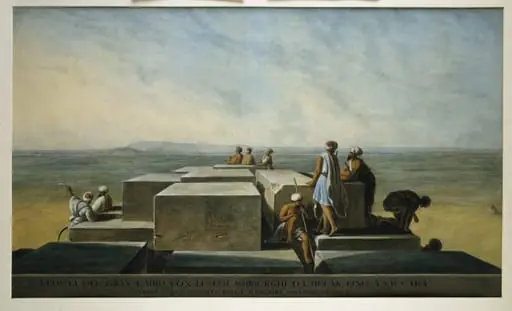 View of Grand Cairo from the Summit of the Great Pyramid of Giza
 Portrait of Clara Mayer
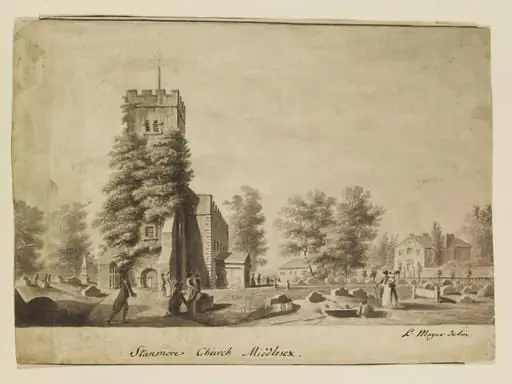 Stanmore Church Middlesex
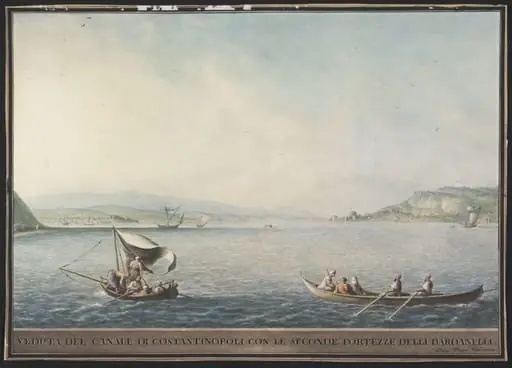 View of the Straits with the Second Fortress of the Dardanelles
![Dance of Peasants [possibly in Belgrade near Constantinople], by Luigi Mayer](https://artifactworldgallery.com/img/luigi-mayer--dance-of-peasants-possibly-in-belgrade-near-constantinople--e0530a0b87d5c4c1-w320.webp) Dance of Peasants [possibly in Belgrade near Constantinople]
Dance of Peasants [possibly in Belgrade near Constantinople]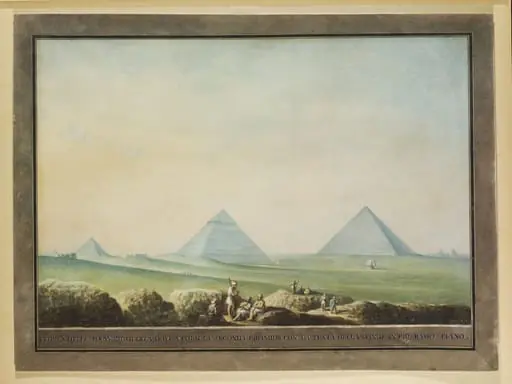 The Pyramids of Giza
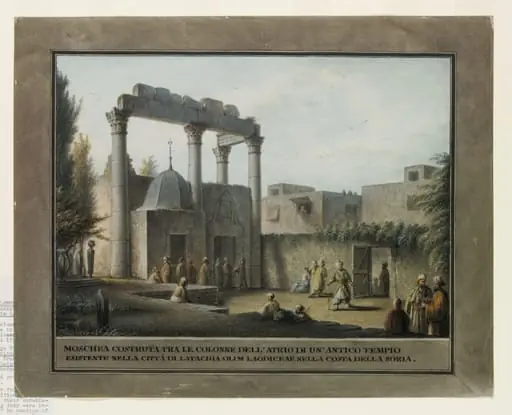 Mosque built between the columns of an ancient temple in Latakia on the coast of Syria, about 1800
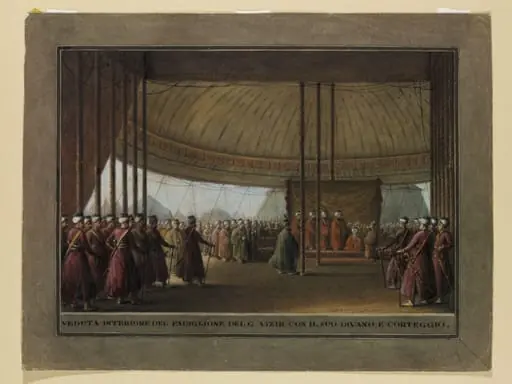 Interior of the Pavilion of the Grand Vizir with his Divan and Retinue
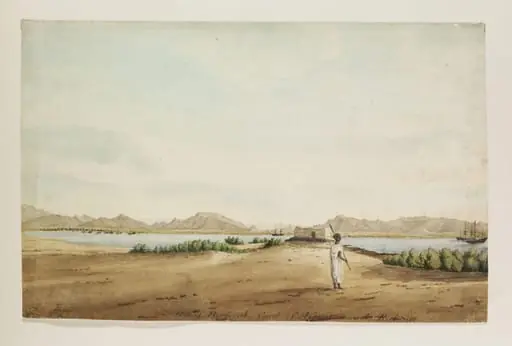 Port of Berberah. Coast of Africa near the Red Sea
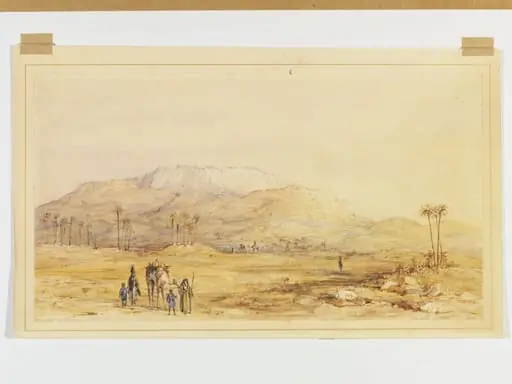 Pyramid of Abu Roash from the Village of Kerdassy
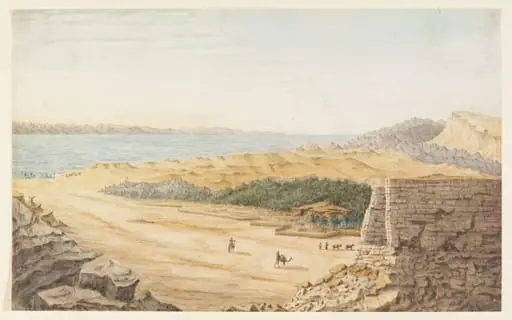 Ancient Ruins in the land of Edom above the bed of a valley and Arab Date gardens
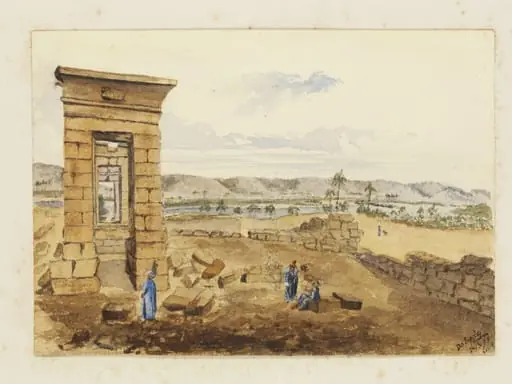 `Dabode Nubia '
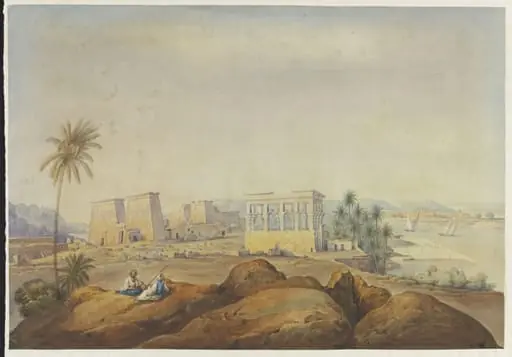 The Temple of Isis and Kiosk of Trajan on the Island of Philae
![Cairo, the Nile, and the Pyramids of Gizeh. from the Moccat[e]m, by Unknown](https://artifactworldgallery.com/img/unknown--cairo-the-nile-and-the-pyramids-of-gizeh-from-the-moccat-e-m--6e7774624f6a7e54-w320.webp) Cairo, the Nile, and the Pyramids of Gizeh. from the Moccat[e]m
Cairo, the Nile, and the Pyramids of Gizeh. from the Moccat[e]m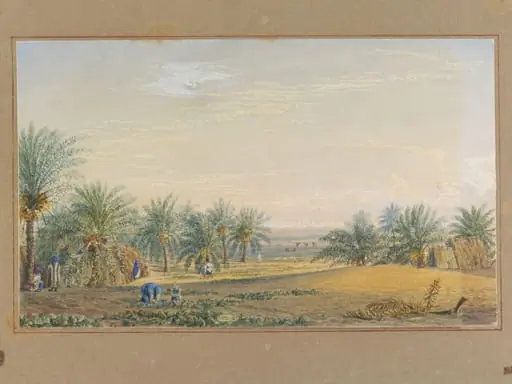 Distant View of Bushire in the Persian Gulf
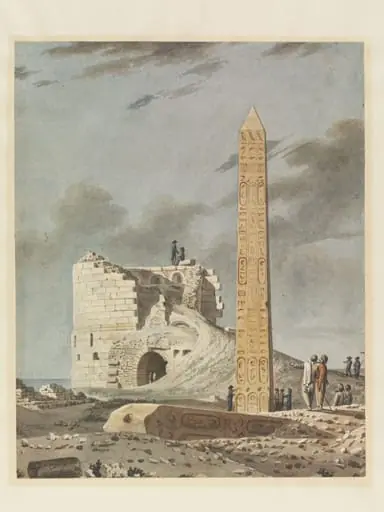 Vue de Obélisque dite de Cléopatre à Alexandrie
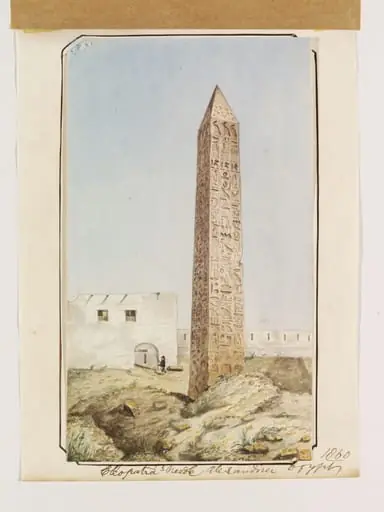 Cleopatra's Needle, Alexandria, Egypt
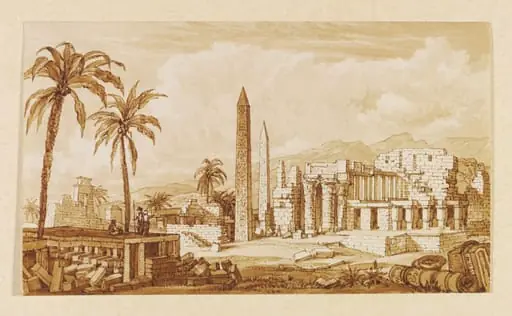 General View of the Ruins of the Palace of Sesostris or Osymandias