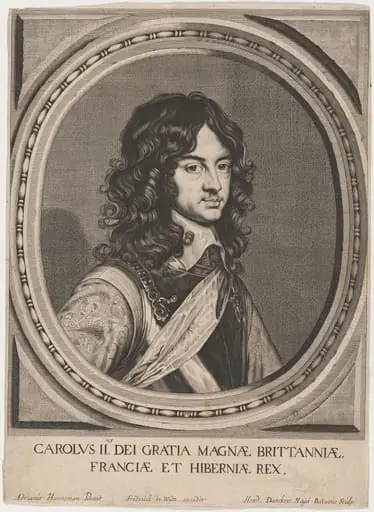
Artwork
Charles II as Prince of Wales
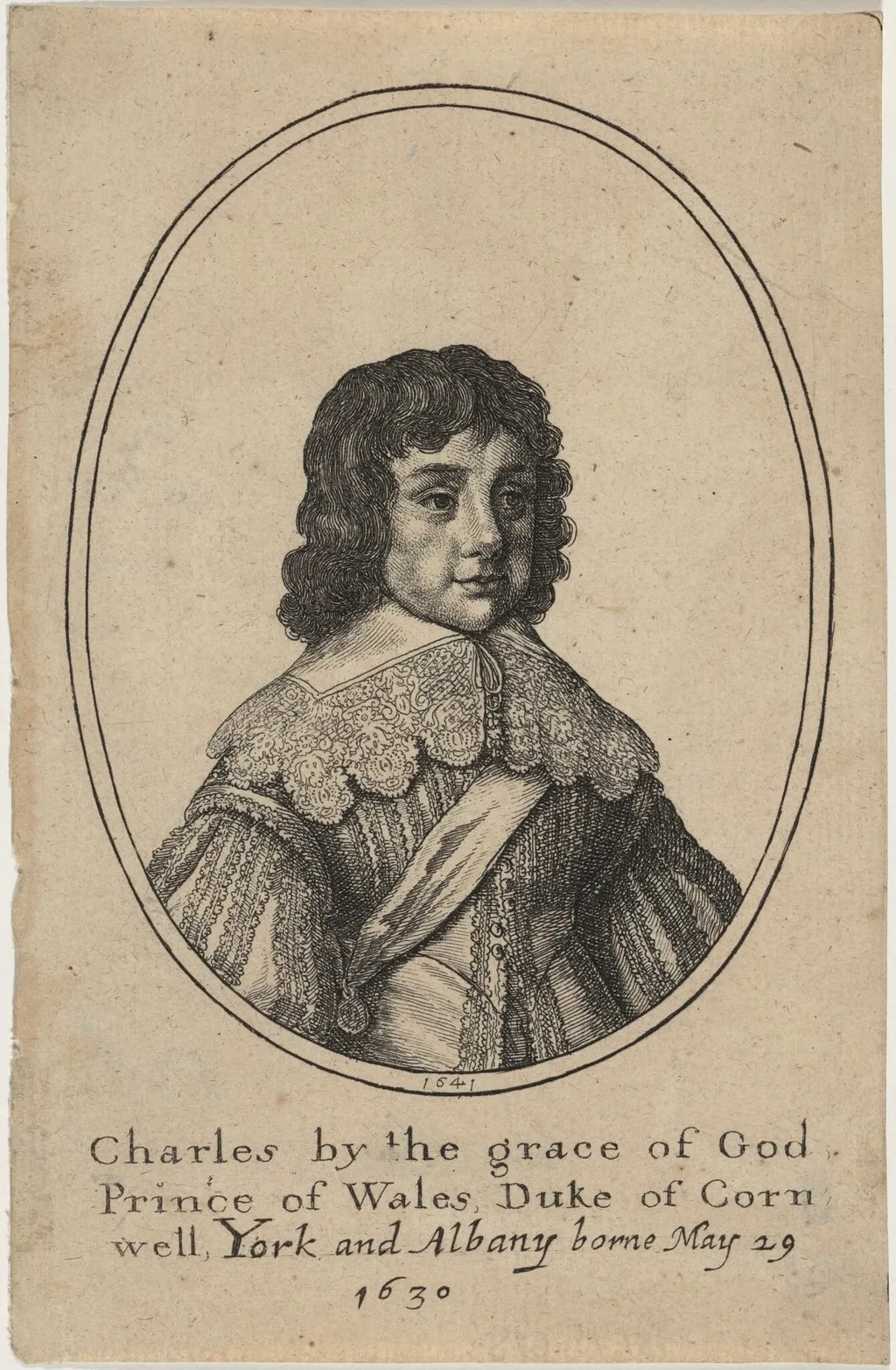
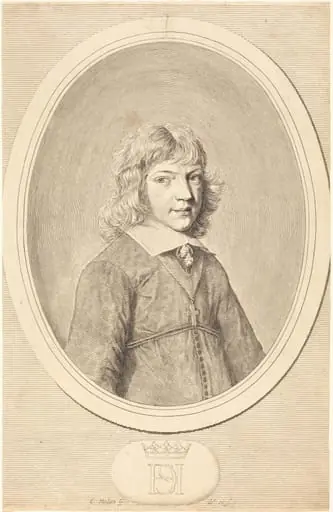
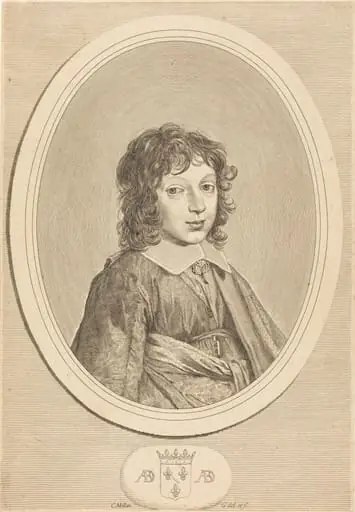
Charles II as Prince of Wales is an ink print by the Baroque artist Wenceslaus Hollar. It dates from 1641 and is held in the collection of the National Gallery of Art.
About this work
The text below says *"Charles by the grace of God, Prince of Wales"* and notes he was born in 1630.
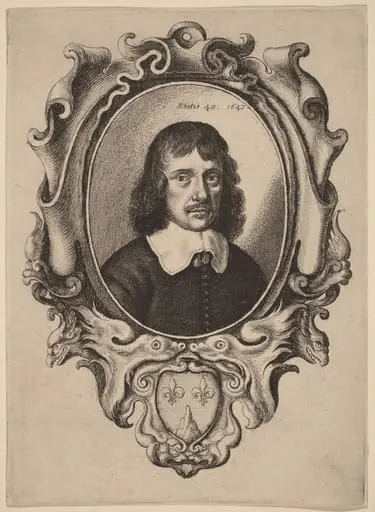
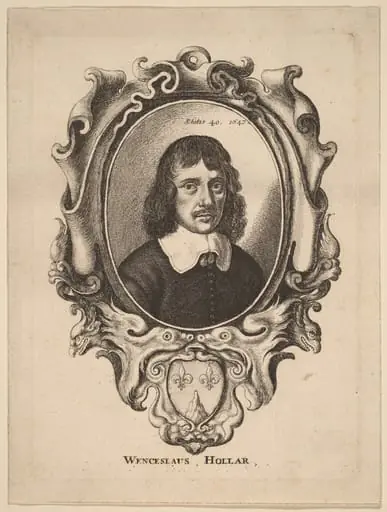
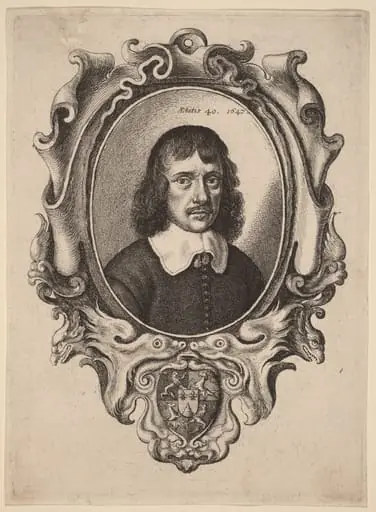
This is a black-and-white portrait of a young man with wavy hair and a serious expression. He’s wearing a fancy lace collar and a dark, patterned jacket. The edges of the image are rounded, like a frame within a frame.
The text below says *"Charles by the grace of God, Prince of Wales"* and notes he was born in 1630. This was made in 1641, so it’s a young Charles II before he became king.
Want to know more? Look up the technique: etching.
Overview
Created in 1641 by Wenceslaus Hollar, this etching portrays Charles II during his time as Prince of Wales, aged eleven. Hollar, a Czech artist active in England, specialized in precise graphic work and used etching to produce widely circulated images. The portrait is one of many prints made to disseminate royal imagery during a politically volatile era, serving both as documentation and symbolic representation of the monarchy’s continuity.
Subject & Meaning
The image presents a youthful Charles II in formal attire, his expression composed and solemn, befitting his royal status. The lace collar and textured dark jacket signify aristocratic dress, while the Latin inscription affirms his title by divine right. Rendered before the English Civil War, the portrait anticipates his future reign, subtly reinforcing legitimacy during a time when the monarchy’s authority was increasingly contested.
Technique & Style
Hollar employed etching, a method involving acid-bitten lines on a metal plate, to achieve fine detail and tonal variation. The rounded border mimics a pictorial frame, directing focus to the figure. Delicate hatching defines the lace and fabric patterns, while the flat background isolates the subject. The monochrome palette enhances clarity and reproducibility, typical of prints intended for broad distribution among the educated elite.
History & Provenance
Made in 1641, the print was produced during Charles’s early years as heir, before his father’s execution and his own exile. Hollar, who remained in England through the Interregnum, likely created this image for royalist supporters. Surviving impressions are held in major print collections, including the British Museum and the Victoria and Albert Museum, attesting to its enduring role in royal iconography.
Context
In the early 1640s, printed portraits functioned as political tools, circulating among nobility and civic leaders to affirm dynastic continuity. Hollar’s work aligned with a broader trend of using print to shape public perception of royalty. As tensions mounted between Crown and Parliament, such images offered visual reassurance of the Stuart line’s permanence, even amid impending conflict.
Legacy
This etching remains a key example of 17th-century British print culture and royal portraiture. Hollar’s technical precision and the image’s restrained elegance influenced later generations of engravers. Though Charles II’s reign would later be marked by restoration and cultural revival, this early portrait endures as a quiet testament to the prince’s formative years and the power of print in shaping political identity.
Artist & collection
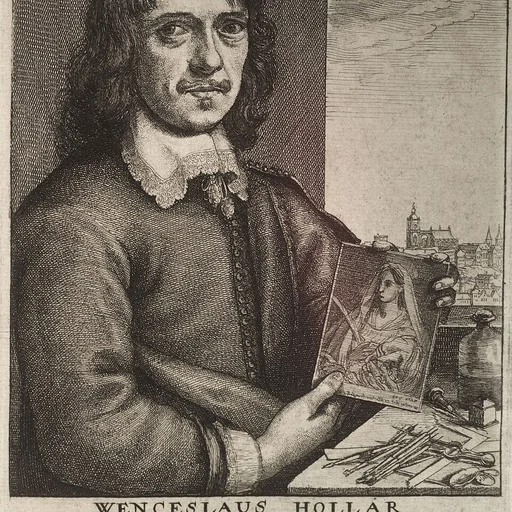
Artist
Wenceslaus Hollar (Czech: Václav Hollar (Czech pronunciation: ), German: Wenzel Hollar; 23 July 1607 – 25 March 1677) was a Czech engraver, etcher and painter.