Artwork
Louis XIV
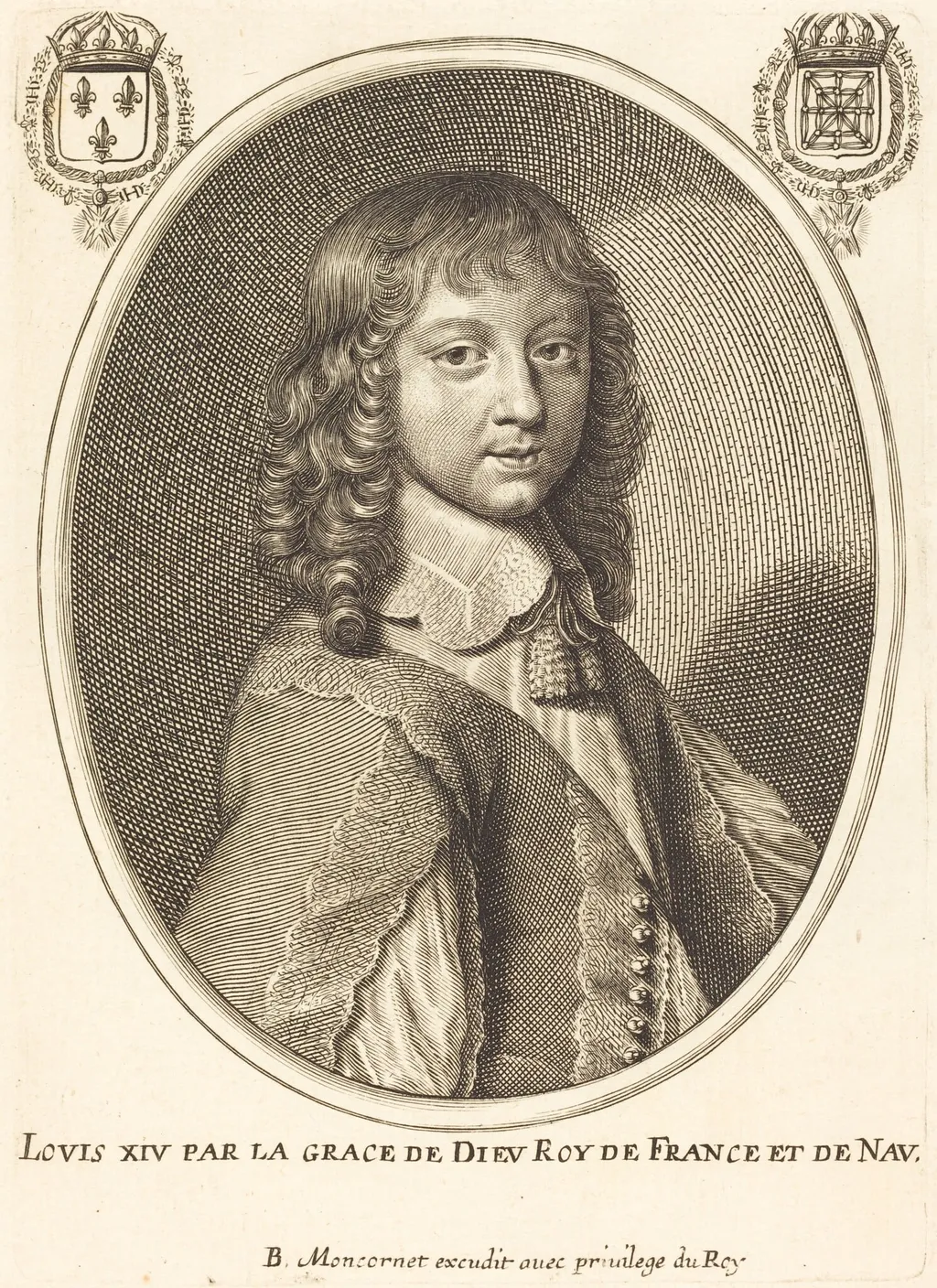
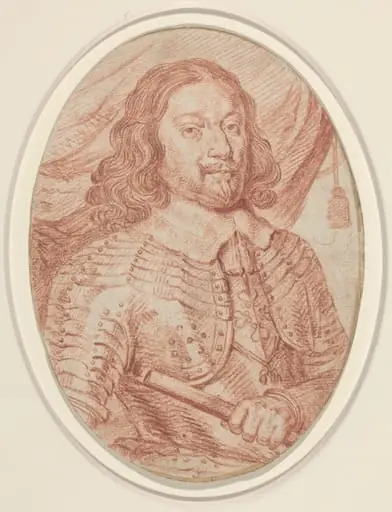
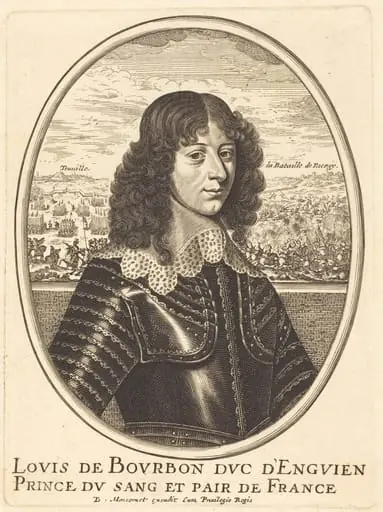
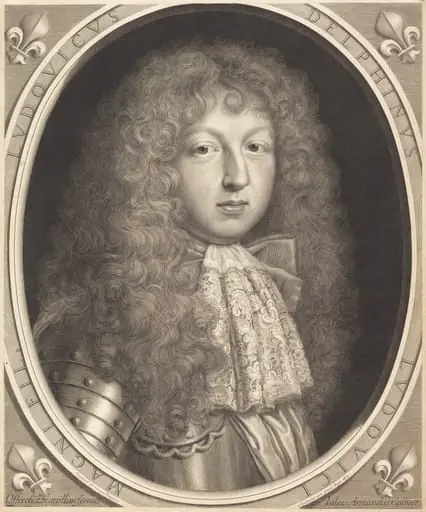
Louis XIV is an ink print by the Baroque artist Balthasar Moncornet. It dates from 1634 and is held in the collection of the National Gallery of Art.
About this work
Overview
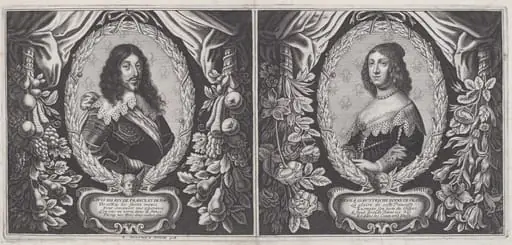
Balthasar Moncornet’s 1634 engraving portrays the young Louis XIV, who would later become one of France’s longest‑reigning sovereigns. Executed on laid paper, the print presents a formal, black‑and‑white likeness that follows the conventions of 17th‑century French portraiture.
Subject & Meaning
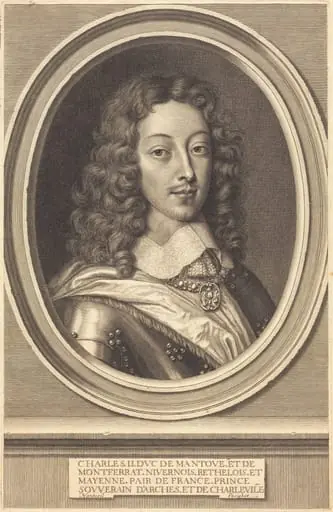
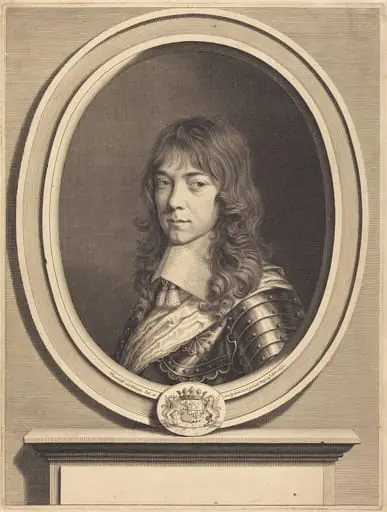
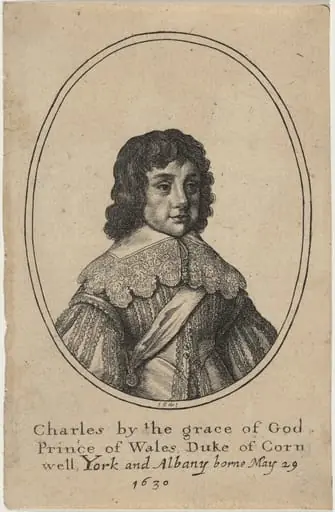
The portrait shows a serious‑looking monarch with curly hair, a high collar, and an ornate lace cuff, flanked by two crowned crests bearing fleur‑de‑lis. An inscription below reads “Louis XIV par la grâce de Dieu Roy de France et de Nav,” asserting his divine right to rule over France and Navarre.
Technique & Style
Moncornet employed fine line engraving to render delicate details such as the hair curls, lace texture, and heraldic symbols. The use of laid paper provides a subtle tooth pattern that enhances the tonal contrast typical of early modern French prints.
History & Provenance
Moncornet, active as a painter, engraver, and tapestry designer in the 1600s, was known for creating images of notable contemporaries. This particular print reflects his role in disseminating royal imagery during the early reign of Louis XIV, contributing to the visual propaganda of the era.
Context
In the 1630s, portrait engravings served both as personal likenesses and as political tools, reinforcing the monarch’s authority across a largely illiterate population. The inclusion of royal insignia and the phrase invoking divine grace aligns with the absolutist narrative that would later define Louis XIV’s rule.
Artist & collection
Artist
Balthasar Moncornet (1600, Rouen – 1668, Paris) was a French painter, engraver, and tapissier revered for his depictions of around 45 different prominent figures of the 17th century.