Artwork
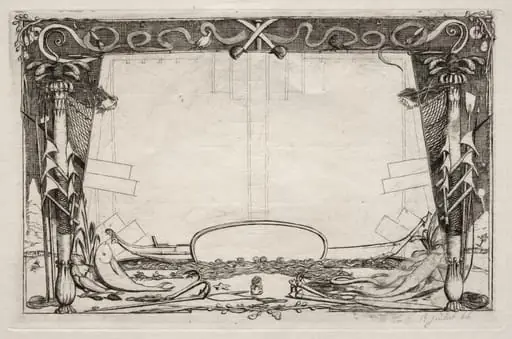
Couverture du "Voyage à la nouvelle Zélande" (Cover for the Set of Etchings Entitled "A Voyage to New Zealand")
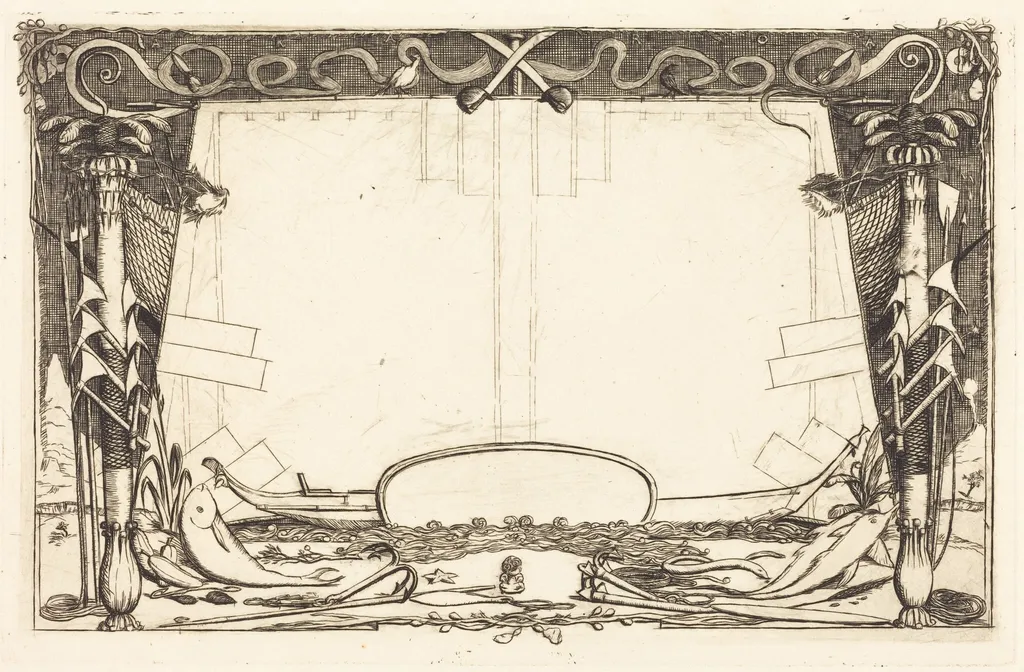
Couverture du "Voyage à la nouvelle Zélande" (Cover for the Set of Etchings Entitled "A Voyage to New Zealand") is an ink print by the Impressionist artist Charles Meryon. It dates from 1866 and is held in the collection of the National Gallery of Art.
About this work
Overview
Created in 1866, this etching by Charles Meryon served as the cover for a set of prints documenting a journey to New Zealand.
Created in 1866, this etching by Charles Meryon served as the cover for a set of prints documenting a journey to New Zealand. Executed on Hudelist laid paper, it diverges from his better-known depictions of Parisian architecture. Meryon, who worked almost exclusively in etching due to his color blindness, produced this piece during a period of personal instability, yet it remains a rare example of his engagement with themes beyond urban landscapes.
Subject & Meaning
The image depicts a solitary figure on a shore, accompanied by a small dog, facing a sailing vessel on undulating water. Two ornate, twisted columns frame the scene, suggesting a portal or threshold. The composition evokes isolation and transition, aligning with the broader theme of exploration. The emptiness of the background emphasizes the vulnerability of the traveler, hinting at the psychological weight of distant voyages rather than celebrating discovery.
Technique & Style
Meryon employed fine, controlled lines to render texture in the waves and intricate scrollwork of the columns. The etching’s monochrome palette and precise cross-hatching reflect his mastery of tonal gradation without color. The stark contrast between the detailed foreground elements and the minimal background creates a sense of spatial ambiguity, characteristic of his atmospheric approach. His technique prioritizes mood over realism, using line to suggest motion and solitude.
History & Provenance
This cover was produced as part of a limited set of etchings titled 'A Voyage to New Zealand,' likely commissioned for a private or specialized audience. Unlike his Parisian series, this work received little public attention during Meryon’s lifetime. It remained largely obscure until later scholarly interest in his lesser-known projects. The print’s survival reflects its role as a functional cover rather than a standalone artwork, making its preservation somewhat unusual.
Context
In the mid-19th century, European interest in Pacific exploration was growing, fueled by colonial expansion and scientific curiosity. Meryon’s etching, though not based on firsthand experience, responds to this cultural moment through symbolic imagery. His departure from Parisian subjects suggests a personal search for new themes amid deteriorating mental health. The work stands as a quiet counterpoint to the era’s more triumphant narratives of exploration.
Legacy
Though overshadowed by his Parisian etchings, this cover reveals Meryon’s capacity to adapt his visual language to unfamiliar subjects. Its restrained symbolism and emotional depth have drawn attention from scholars examining the intersection of mental state and artistic output. While never widely circulated, it contributes to a fuller understanding of his oeuvre and the quiet, introspective nature of his later work.
Artist & collection
Artist
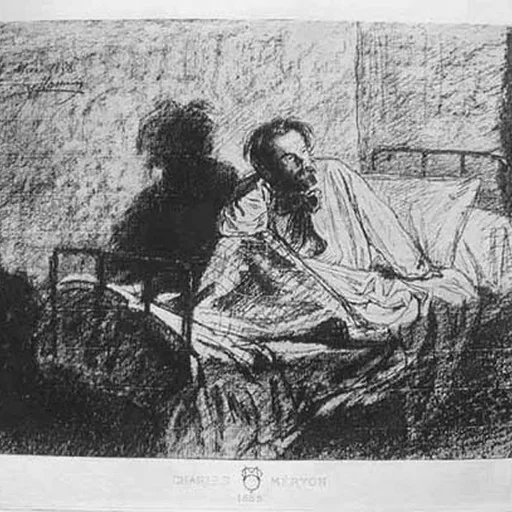
Charles Meryon (sometimes Méryon, 23 November 1821 – 14 February 1868) was a French artist who worked almost entirely in etching, as he had colour blindness.

 History of the Corcoran Gallery of Art
 Studies for Dorchester House
 Title-Border with Putti Holding the Pirckheimer Arms
 Ornament for a lunette
 Belgian Border, Bill of Disorder (Frontiere de Belgique. Billet a Desordre)
 Palette
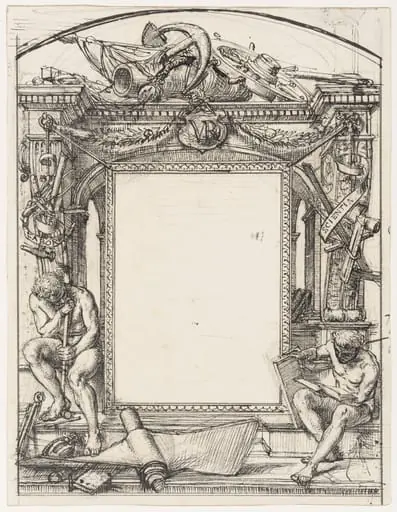 Studies for the Diploma of the International Exhibition, 1868
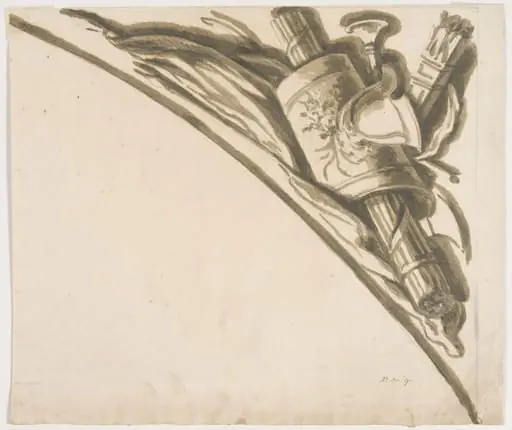 Design for an illusionistic panel in the Great Hall at Blenheim Palace
 Untitled
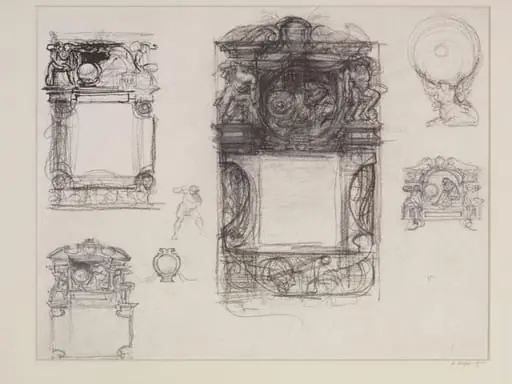 Design for a Science Certificate, Department of Science and Art
 The Bookplate of the Printer's Devil
 A Voyage to New Zealand (1842-1846): Cover