Artwork
A Voyage to New Zealand (1842-1846): Cover
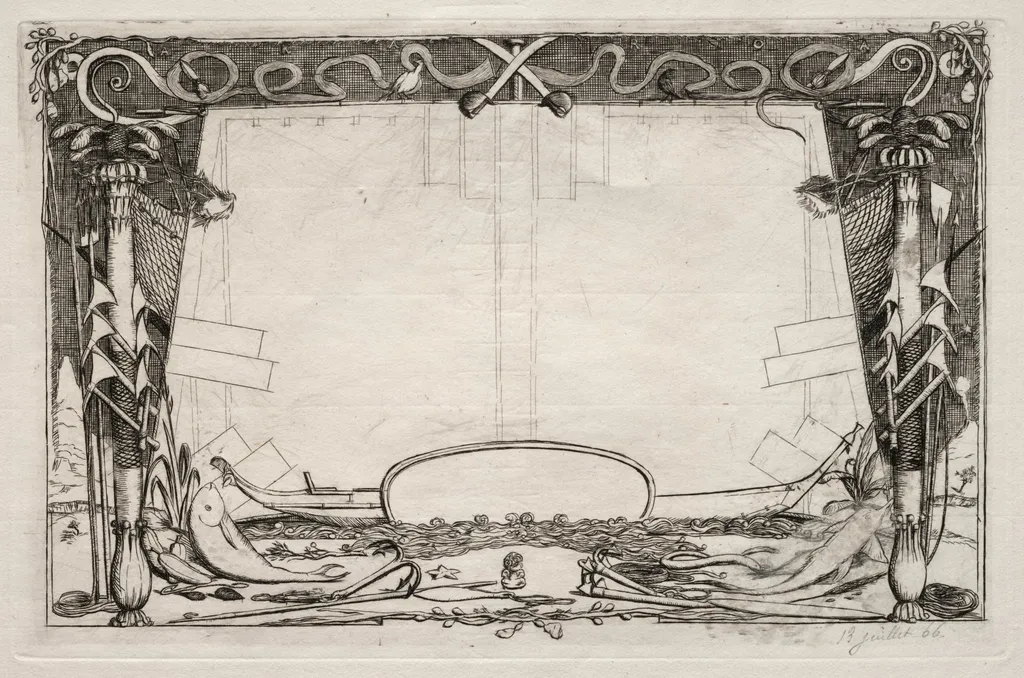
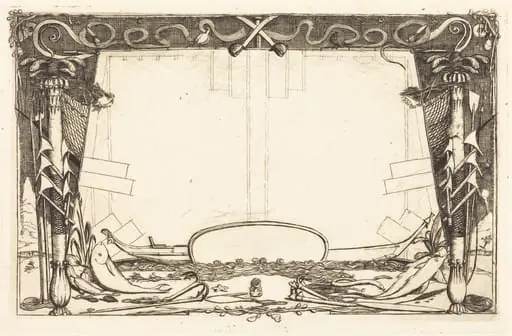
A Voyage to New Zealand (1842-1846): Cover is a print by the Impressionist artist Charles Meryon. It dates from 1866 and is held in the collection of the Cleveland Museum of Art.
About this work
Tall, twisted trees frame the scene, and a wavy line at the bottom looks like crashing waves.
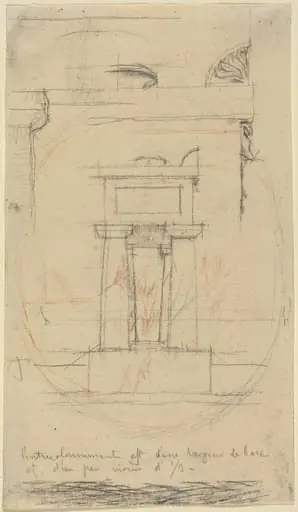
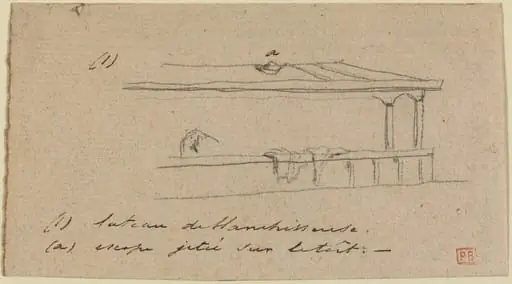
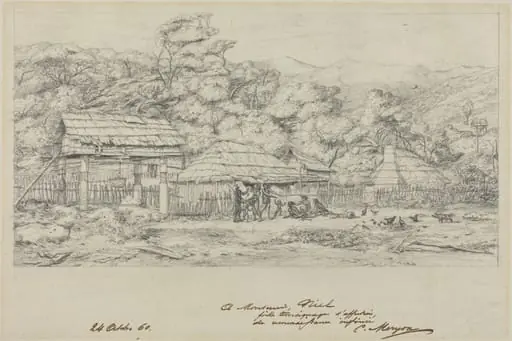
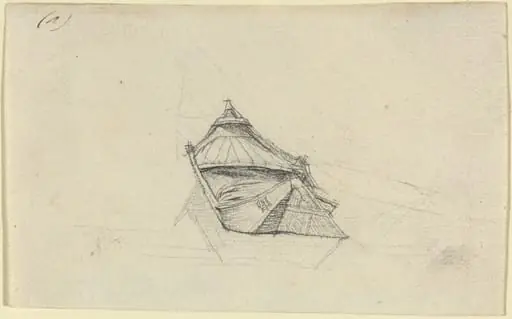
This sketch shows a small boat in rough water, with a person at the front. Tall, twisted trees frame the scene, and a wavy line at the bottom looks like crashing waves. The edges have fancy, swirling designs that almost look like vines.
The drawing feels unfinished, with light pencil marks everywhere. It’s like the artist was still figuring things out. The year 1866 is written in the corner, but the scene looks like it’s from an earlier time.
If you like this style, check out Realism for more works that focus on everyday details.
Overview
Created in 1866, this etching by Charles Meryon is one of several works inspired by his earlier voyage to New Zealand between 1842 and 1846. Though executed decades after the journey, the piece reflects his enduring engagement with the landscapes he encountered. Meryon, primarily known for his atmospheric Parisian etchings, used this medium to explore distant places through memory and imagination, rather than direct observation.
Subject & Meaning
The scene depicts a small vessel struggling in turbulent seas, with a solitary figure at the bow. Framed by gnarled, towering trees, the composition evokes isolation and the raw power of nature. The unfinished quality—evident in layered pencil lines and tentative strokes—suggests a working sketch, perhaps intended as a preparatory study. The decorative border, resembling entwined vines, introduces a stylized contrast to the naturalistic core.
Technique & Style
Meryon employed etching, a medium suited to his color blindness, relying on tonal contrast and line to convey depth and mood. The work’s sketch-like appearance, with visible underdrawings and sparse ink, reveals his process-oriented approach. The swirling border demonstrates his interest in ornamental framing, a trait seen in some of his published prints, though here it remains unpolished, emphasizing the piece’s provisional nature.
History & Provenance
Meryon produced this work in 1866, near the end of his life, while institutionalized due to mental illness. It belongs to a series of prints and drawings revisiting his South Pacific travels, undertaken during his youth as a naval officer. Though never widely exhibited in his lifetime, the piece entered private collections after his death in 1868 and later found its way into institutional holdings focused on 19th-century printmaking.
Context
Meryon’s New Zealand imagery emerged during a period of heightened European interest in Pacific exploration, though his depictions diverged from documentary aims. Rather than recording ethnographic detail, he filtered memory through a romantic, introspective lens. His work stood apart from contemporaneous Realist trends, favoring psychological atmosphere over precise representation, aligning more closely with emerging Symbolist sensibilities.
Legacy
Though largely overlooked in English-speaking circles during his lifetime, Meryon’s etchings gained critical reassessment in the late 19th and early 20th centuries. This piece exemplifies his unique ability to merge personal experience with imaginative reconstruction. Today, it is studied for its emotional resonance and technical restraint, contributing to his recognition as a pivotal figure in French graphic art.
Artist & collection
Artist
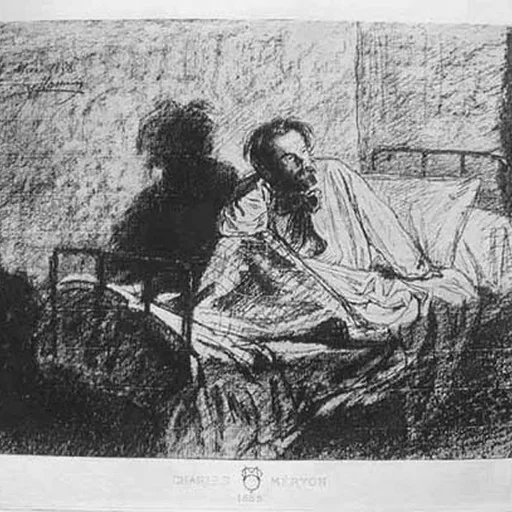
Charles Meryon (sometimes Méryon, 23 November 1821 – 14 February 1868) was a French artist who worked almost entirely in etching, as he had colour blindness.

 Canal la Calica
 Păcală
 Title-Border with Putti Holding the Pirckheimer Arms
 One of twenty-seven paintings, mainly depicting hunting scenes.
 Untitled
 Convoi spre ghilotină
 S 18 - Peisaj la Sulina (Răsărit de soare pe Dunăre)
 Design for ornament
 Geneză
 Study of a Helmet, Breastplate, and Rapier
 Personaje și animale de circ
 Couverture du "Voyage à la nouvelle Zélande" (Cover for the Set of Etchings Entitled "A Voyage to New Zealand")