Artwork
L.J.-Marie Bizeul, a Breton Archaeologist
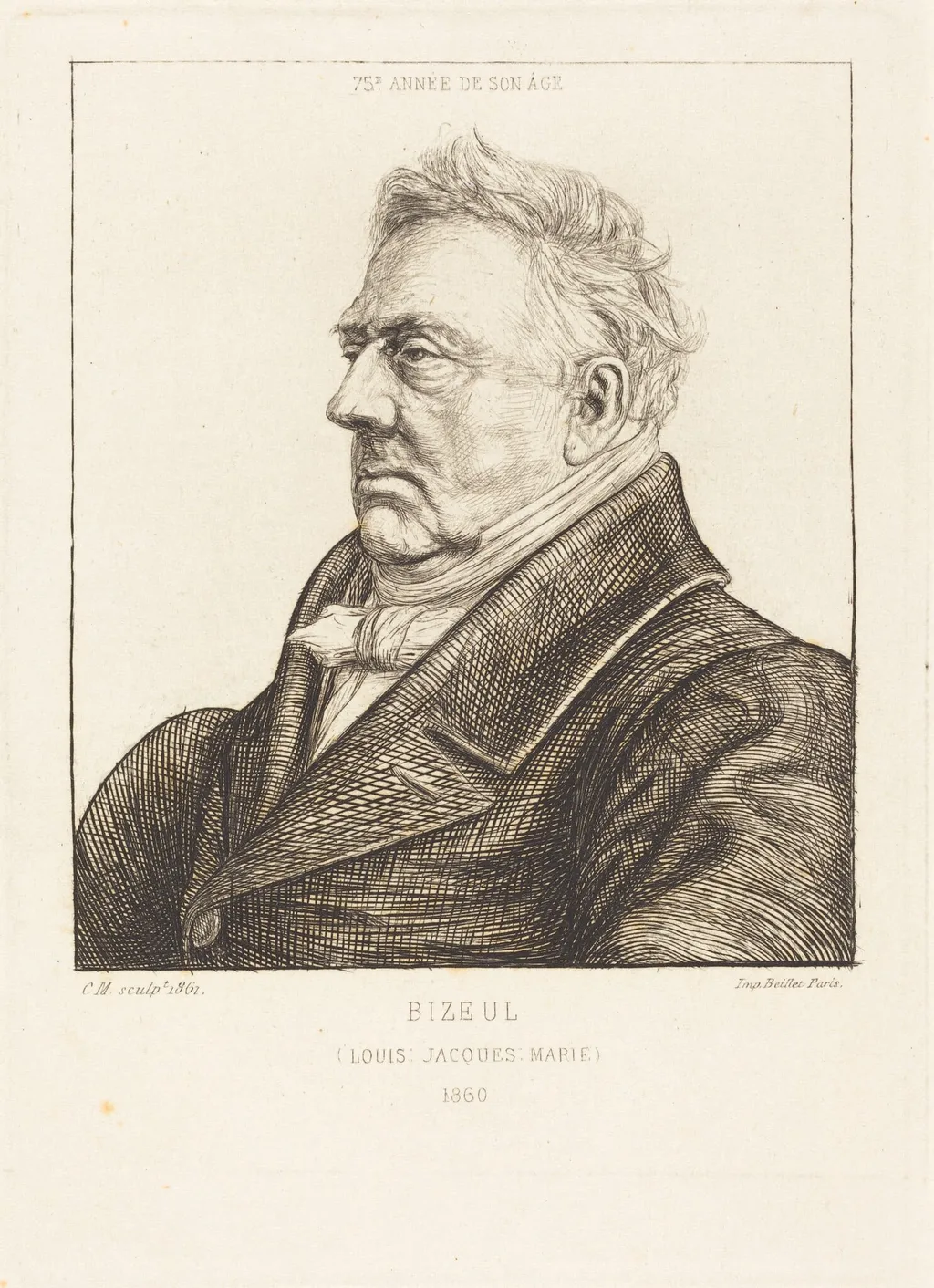
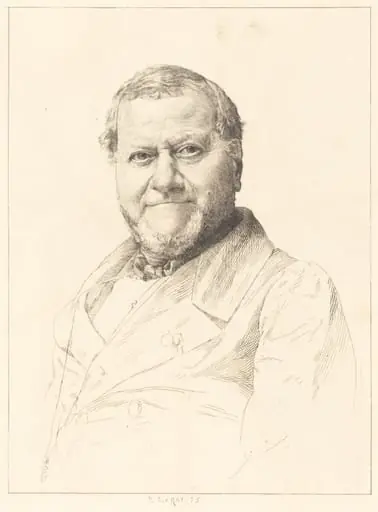
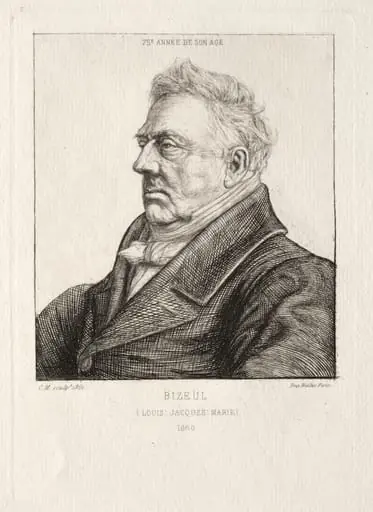
L.J.-Marie Bizeul, a Breton Archaeologist is an ink print by the Impressionist artist Charles Meryon. It dates from 1861 and is held in the collection of the National Gallery of Art. Created in 1861, this print portrays L.
About this work
You can learn more about this style by looking into the technique of etching.
You see a portrait of a man, L.J.-Marie Bizeul, who was a Breton archaeologist.
He's dressed in old-fashioned clothes and has a serious look on his face.
The artist, Charles Meryon, made this etching in 1861, and it's interesting because Meryon was actually a French artist who often drew landscapes, but here he's trying something different with a portrait.
You can learn more about this style by looking into the technique of etching.
Overview
Created in 1861, this print portrays L.J.-Marie Bizeul, a noted archaeologist from Brittany. The work combines etching, engraving, and dry‑point on wove paper, reflecting the artist’s preference for monochrome media. It stands as a rare example of a portrait by Charles Meryon, who is otherwise celebrated for his urban and landscape prints.
Subject & Meaning
The sitter, L.J.-Marie Bizeur, appears in period attire with a solemn expression, emphasizing his scholarly demeanor. The composition focuses on his face and upper body, conveying a sense of intellectual gravitas appropriate to his archaeological pursuits.
Technique & Style
Meryon employed a layered approach: a primary etched line, reinforced by engraved passages, and delicate dry‑point accents that yield soft, velvety shadows. This mixture of methods produces a richly textured surface, characteristic of Meryon’s precise, graphic handling of line and tone.
History & Provenance
The print emerged during a prolific phase of Meryon’s career, when his color blindness directed him toward exclusively black‑and‑white media. Though widely acknowledged in French art circles as a pre‑eminent 19th‑century etcher, his reputation remains comparatively modest in Anglophone scholarship.
Context
Meryon’s oeuvre is dominated by topographical views of Paris, making this portrait an unusual departure into portraiture. The work reflects the broader 19th‑century French interest in documenting regional scholars and the growing professionalization of archaeology in Brittany.
Artist & collection
Artist
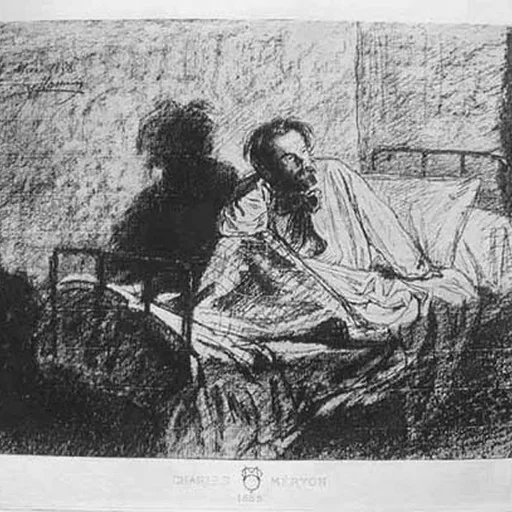
Charles Meryon (sometimes Méryon, 23 November 1821 – 14 February 1868) was a French artist who worked almost entirely in etching, as he had colour blindness.