Artwork
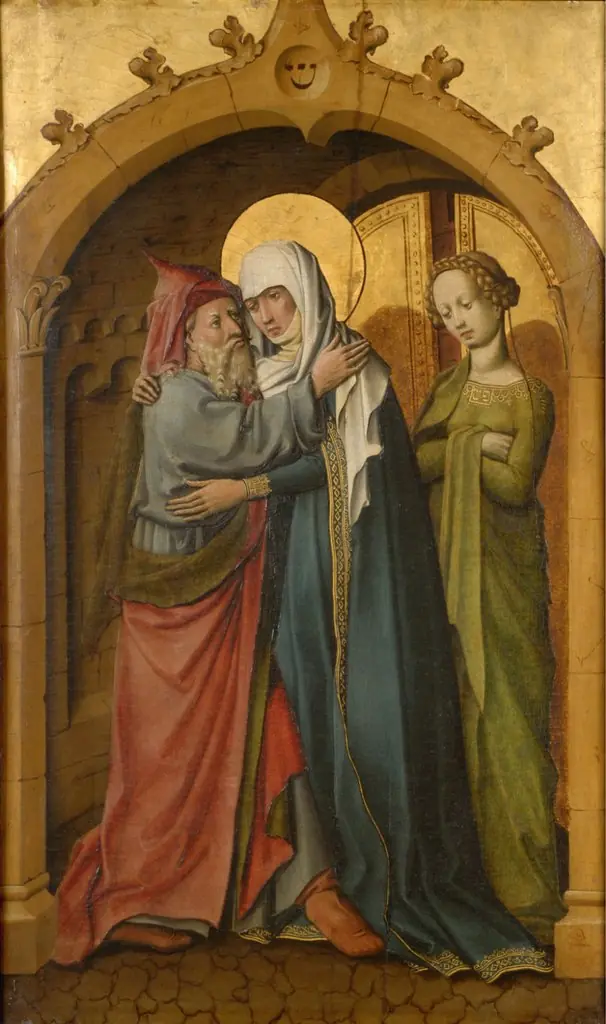
Embrace at the Golden Gate
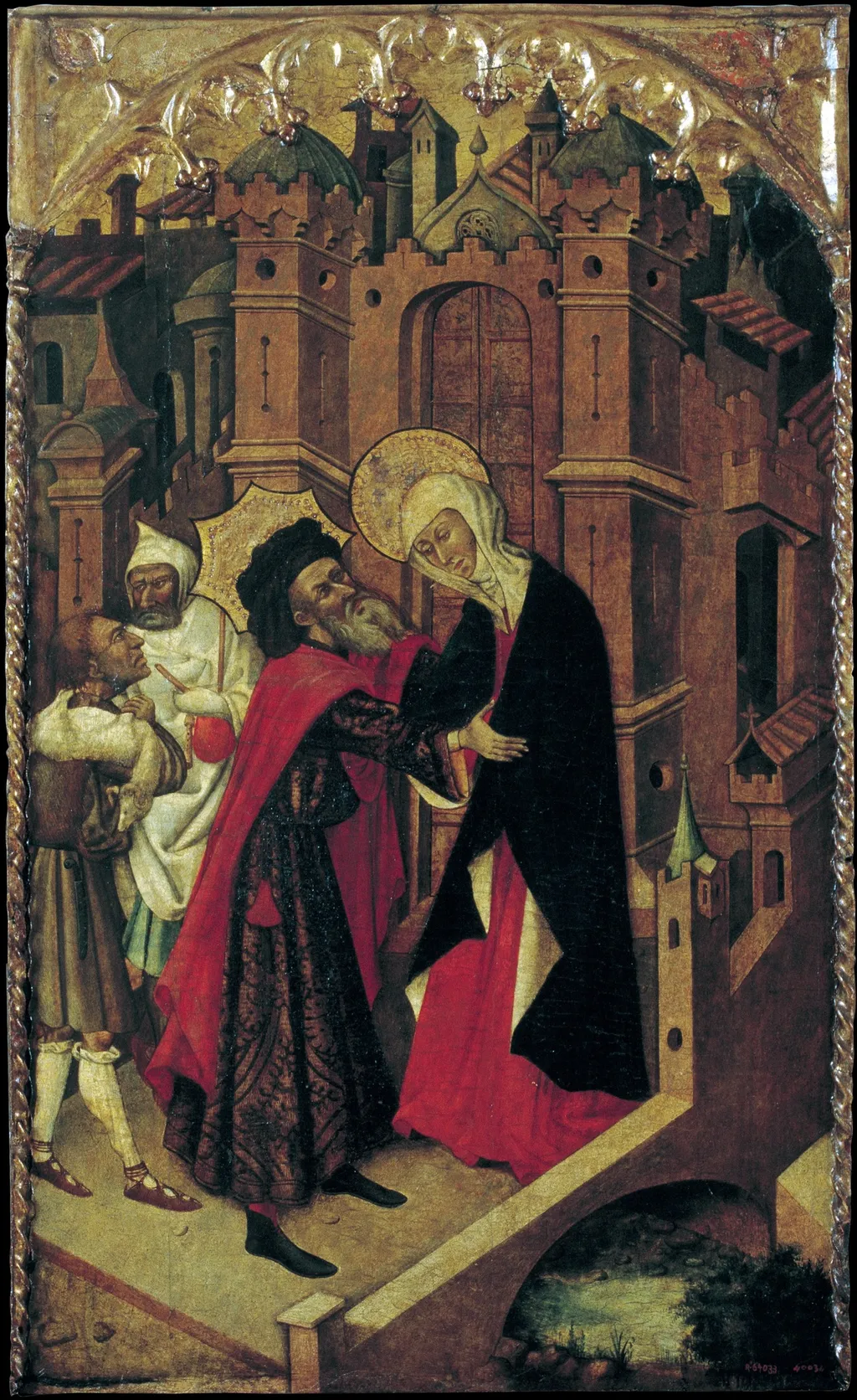
Embrace at the Golden Gate is an unspecified painting by Mestre de Retascón. It dates from 1417 and is held in the collection of the Museu Nacional d'Art de Catalunya.
About this work
Overview
Embrace at the Golden Gate, executed in 1417 by the Spanish painter known as Mestre de Retascón, is a religious panel that portrays the biblical meeting of Joachim and Anne at the famed city gate. The work is part of the collection of the Museu Nacional d'Art de Catalunya, where it is displayed among other medieval pieces.
Subject & Meaning
The composition captures the moment Joachim and Anne embrace before a richly decorated gate, symbolising the fulfillment of divine promise. Their attire—a red cloak for the man and a black robe with a white veil for the woman—highlights their distinct roles while the surrounding onlookers suggest communal celebration of the couple’s reunion.
Technique & Style
Retascón employs a layered arrangement of figures against a cityscape of towers and a bridge spanning water, creating spatial depth through overlapping forms and graduated color tones. The use of vivid reds against darker garments, together with careful modeling of drapery, conveys both emotional intensity and a sense of three‑dimensional space.
History & Provenance
Created in the early 15th century, the panel entered the Museu Nacional d'Art de Catalunya’s holdings during the museum’s formative acquisitions of Catalan medieval art. Its provenance prior to museum acquisition remains undocumented, but the work has been recognized as a representative example of Iberian devotional painting from the period.
Context
The painting reflects the medieval tradition of illustrating episodes from the lives of the Virgin’s parents, a theme popular in liturgical settings. The Golden Gate, a symbolic threshold, underscores the transition from anticipation to fulfillment, resonating with contemporary devotional practices that emphasized personal piety and communal rejoicing.
Own this work as a print
Artist & collection
Artist
This anonymous painter from the early 1400s made vivid altar panels full of dramatic faces and deep folds of fabric.

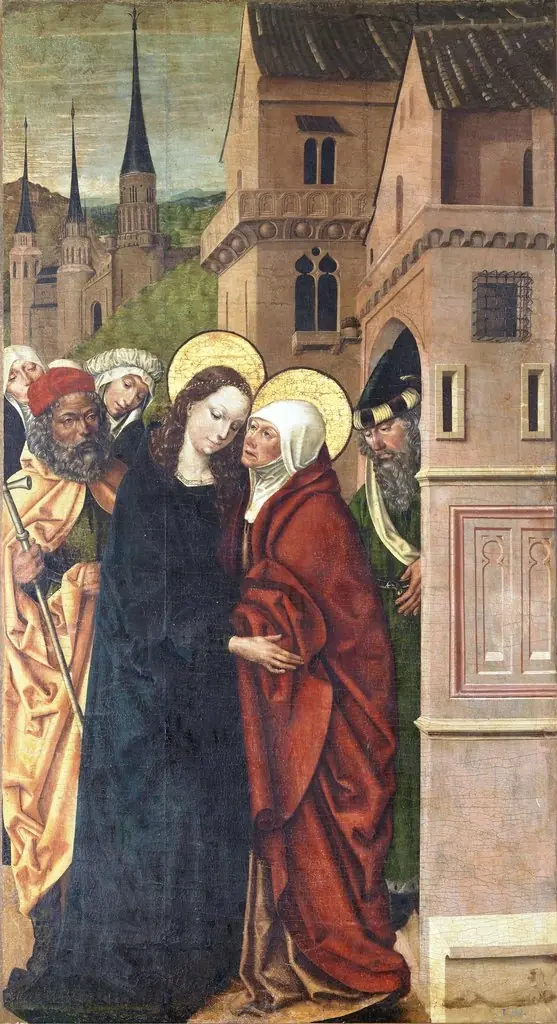 The Visitation
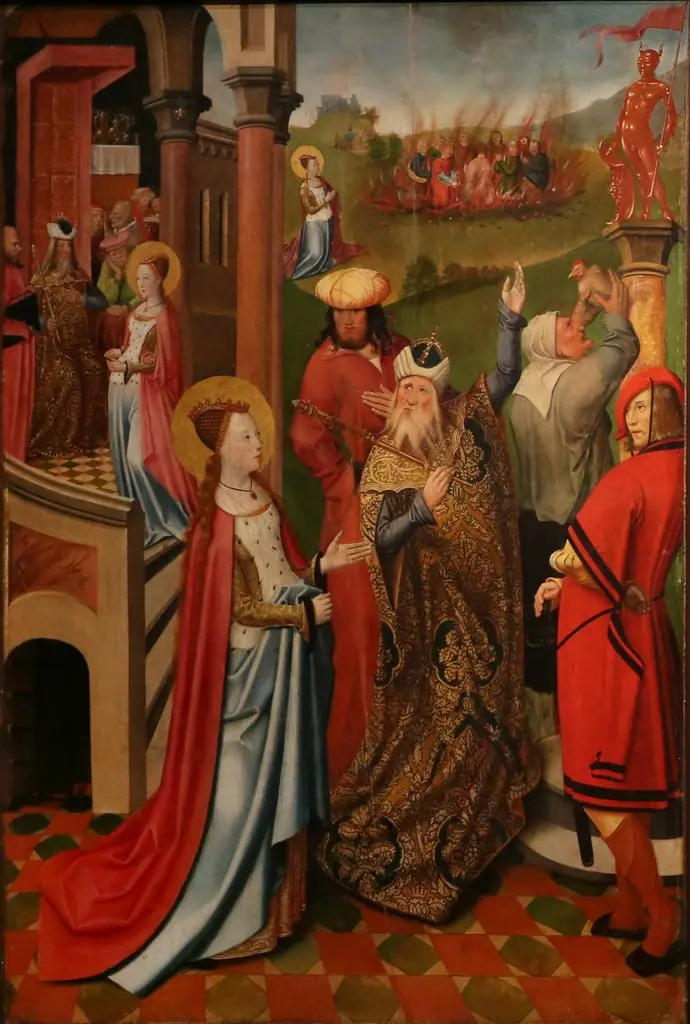 Saint Catherine refuses idolatry
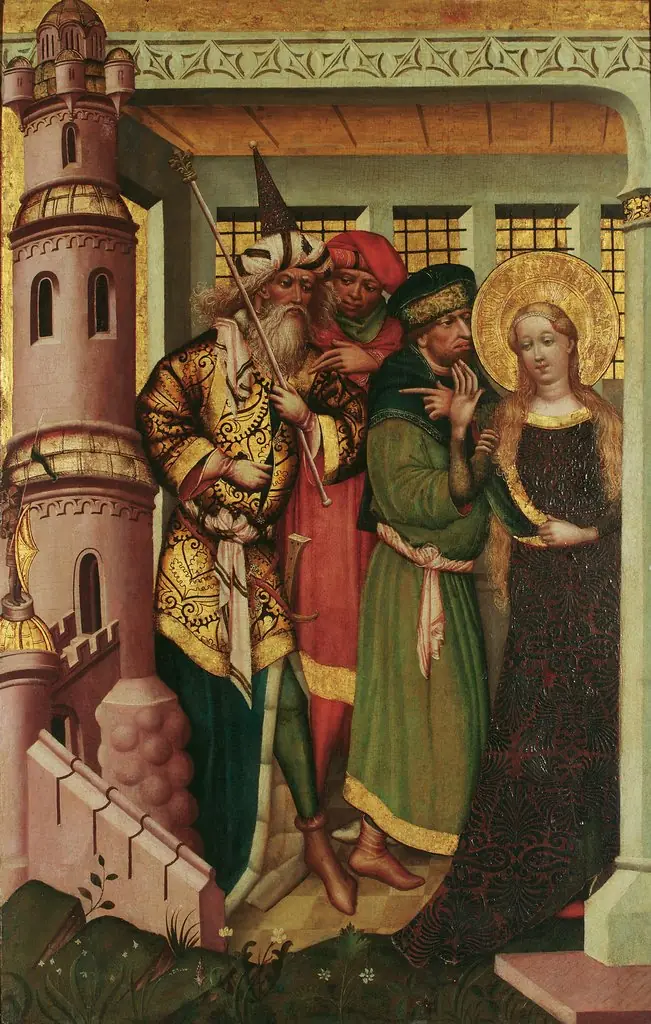 St. Barbara is led into the tower
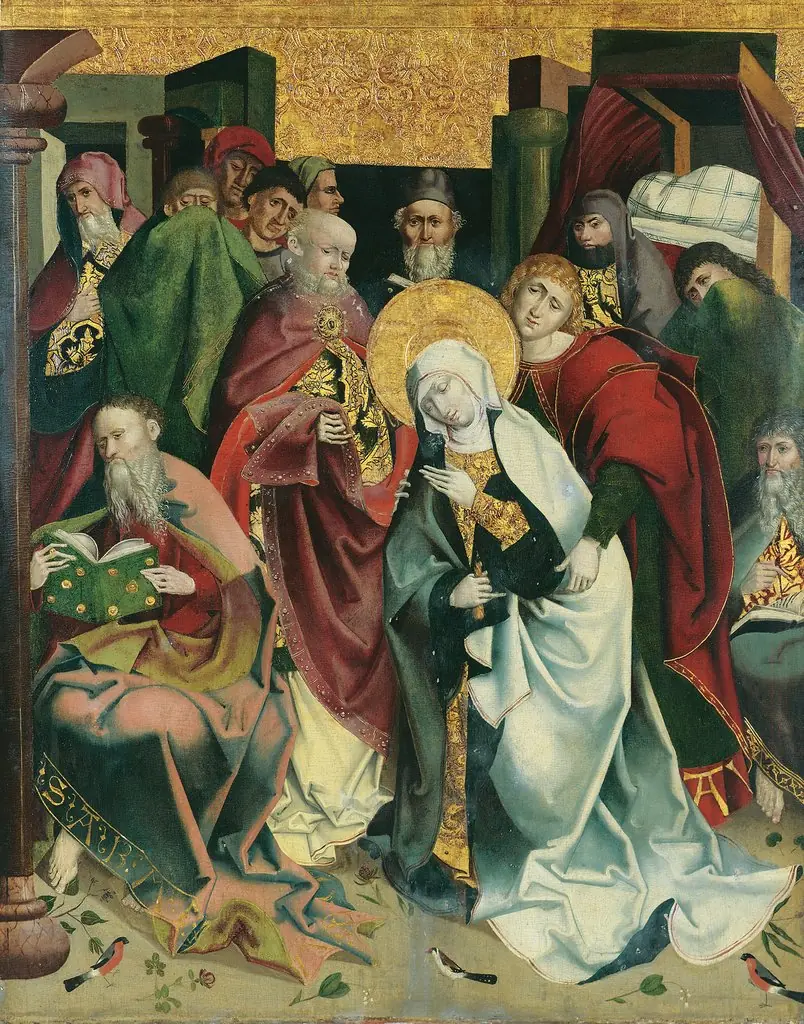 Tod Mariens
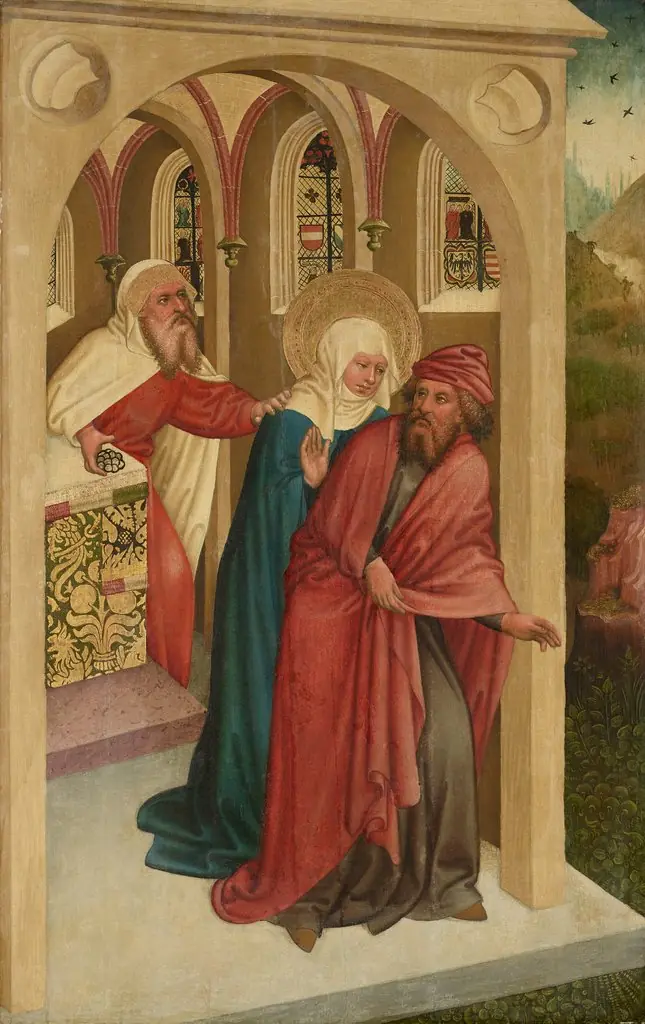 Zurückweisung des Opfers Joachims und Annas
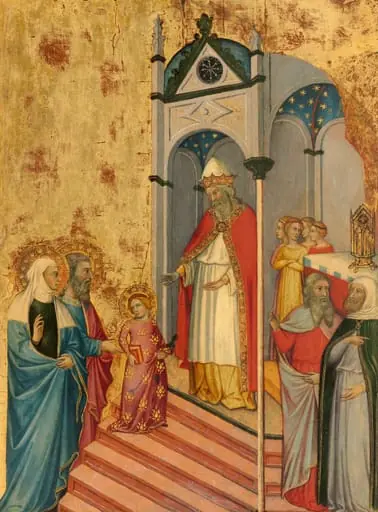 The Presentation of the Virgin in the Temple
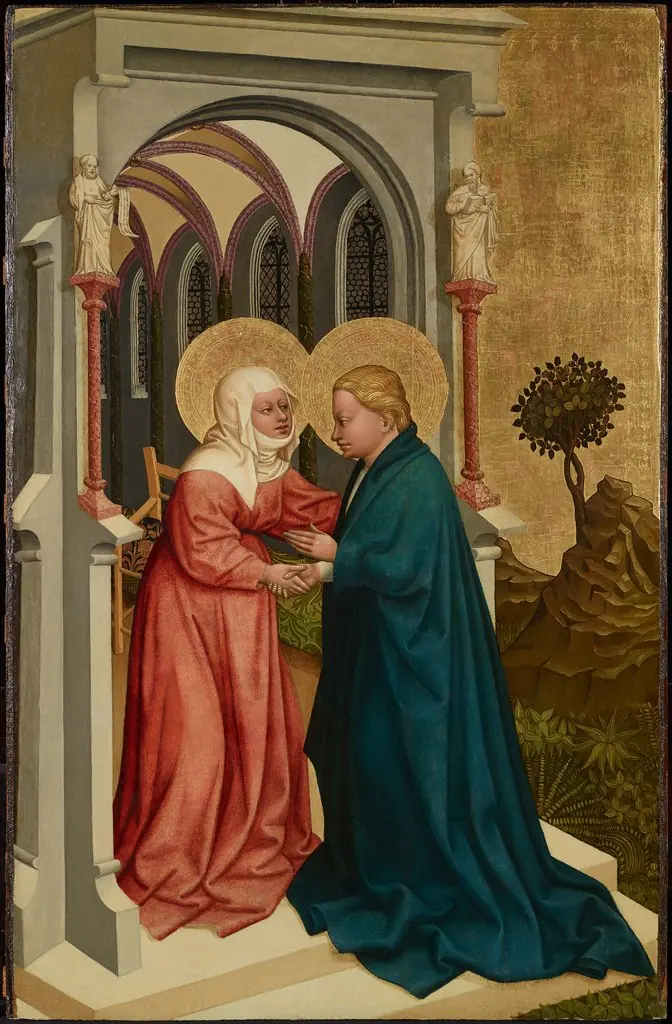 Heimsuchung Mariens
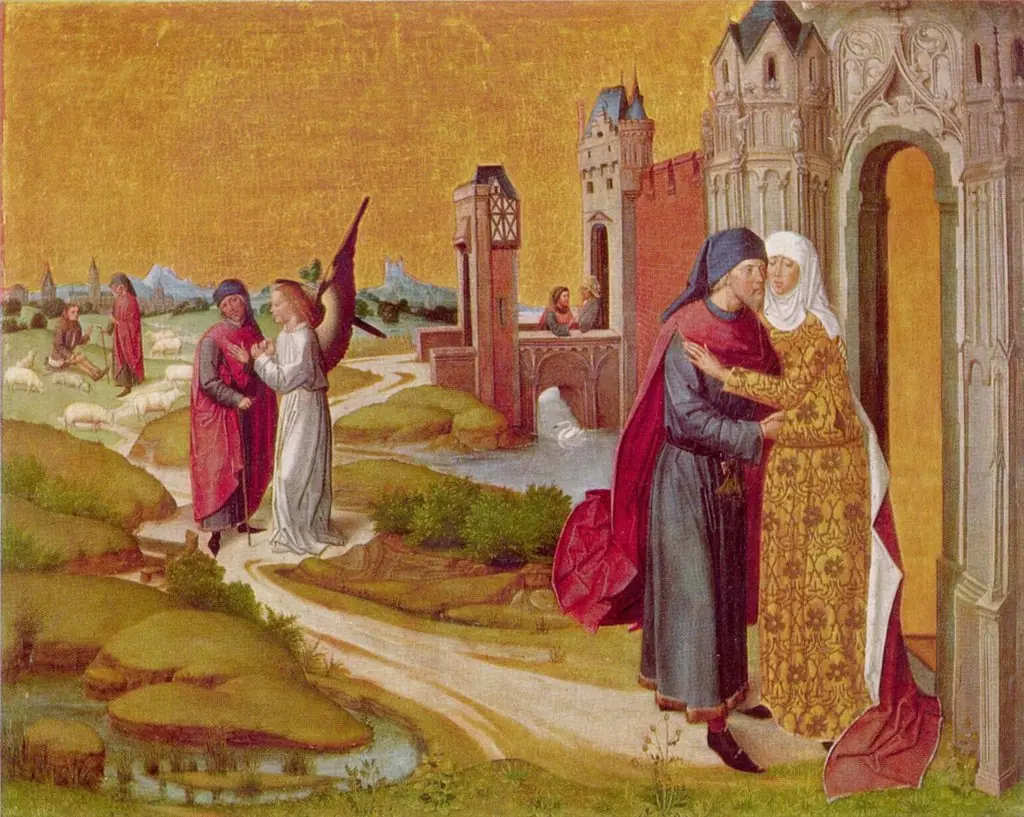 The Life of Mary: Joachim meets Anna at the Golden Gate; in the background the Annunciation of the birth of Mary to Joachim by an angel (verso: upper half of the Crucifixion of Christ)
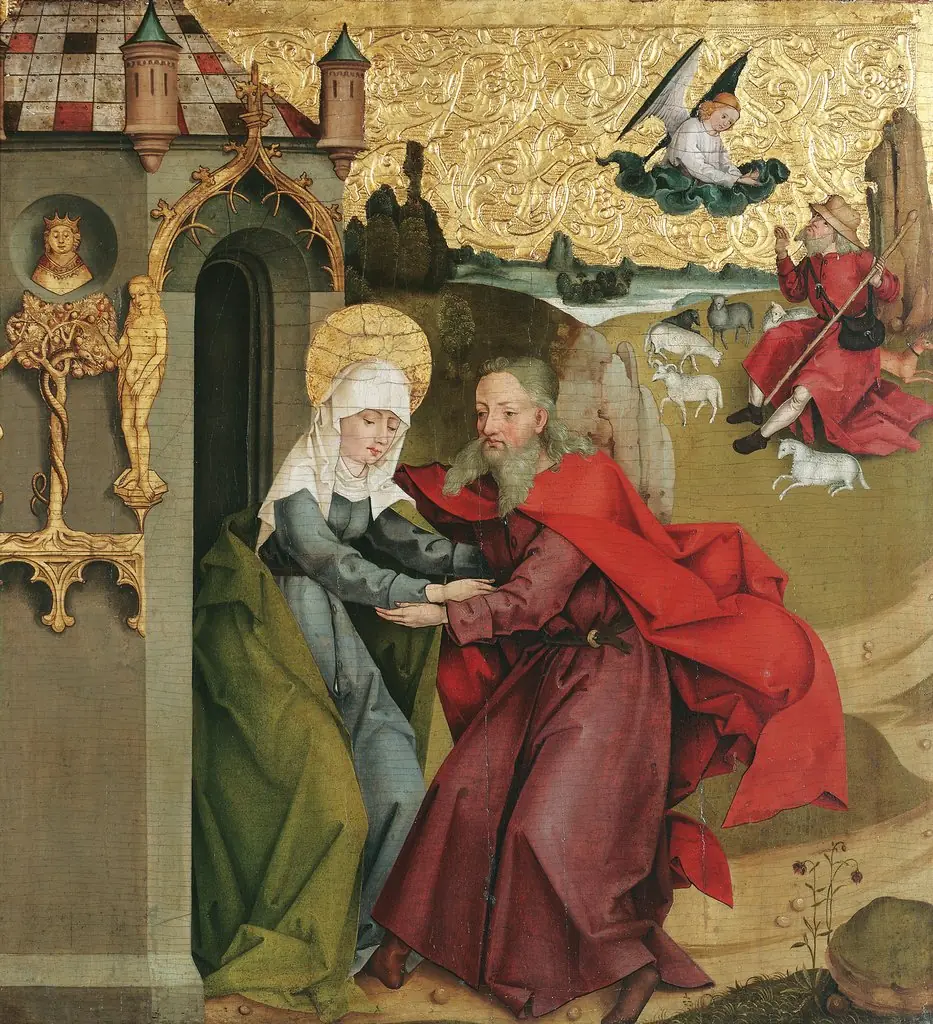 Begegnung Joachims und Annas an der Goldenen Pforte
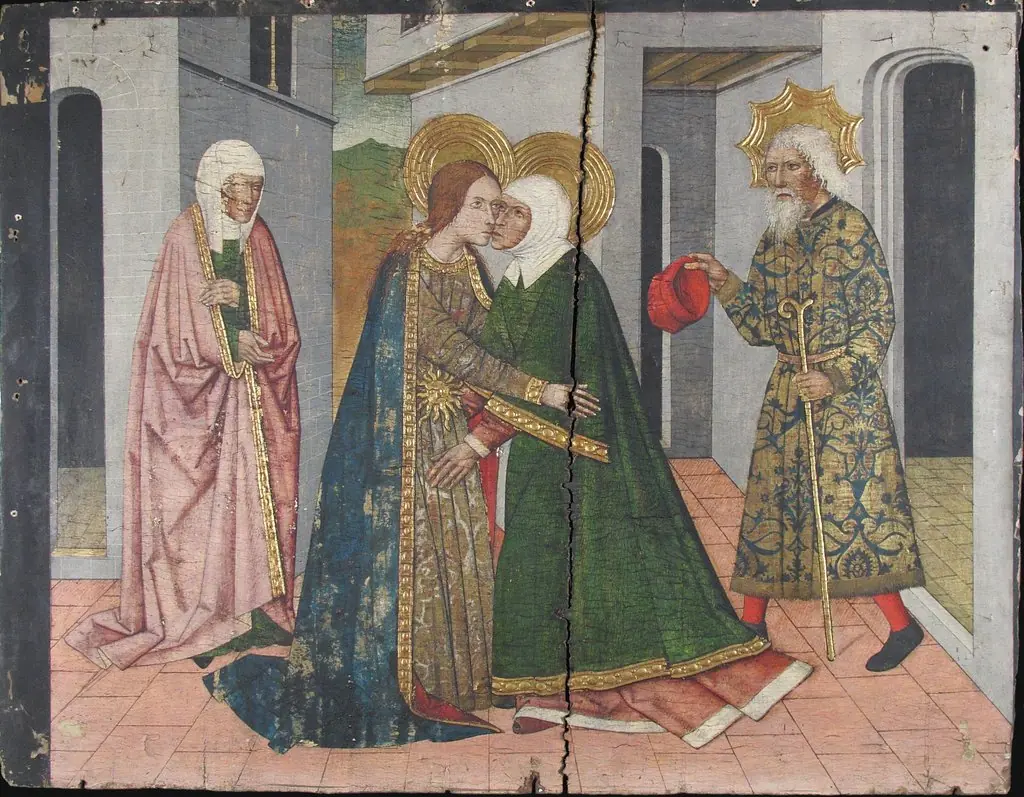 The Visitation Panel from Saint John Retable
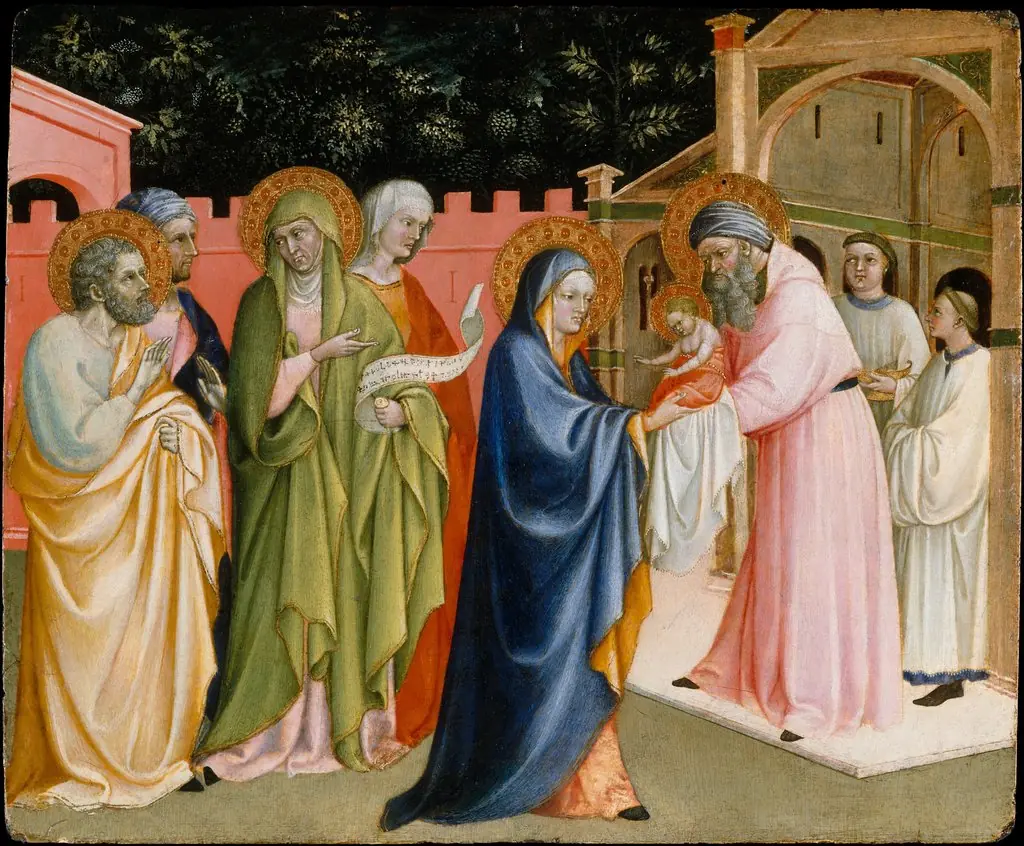 The Presentation in the Temple
 The Meeting at the Golden Gate