Artwork
Ruined Abbey
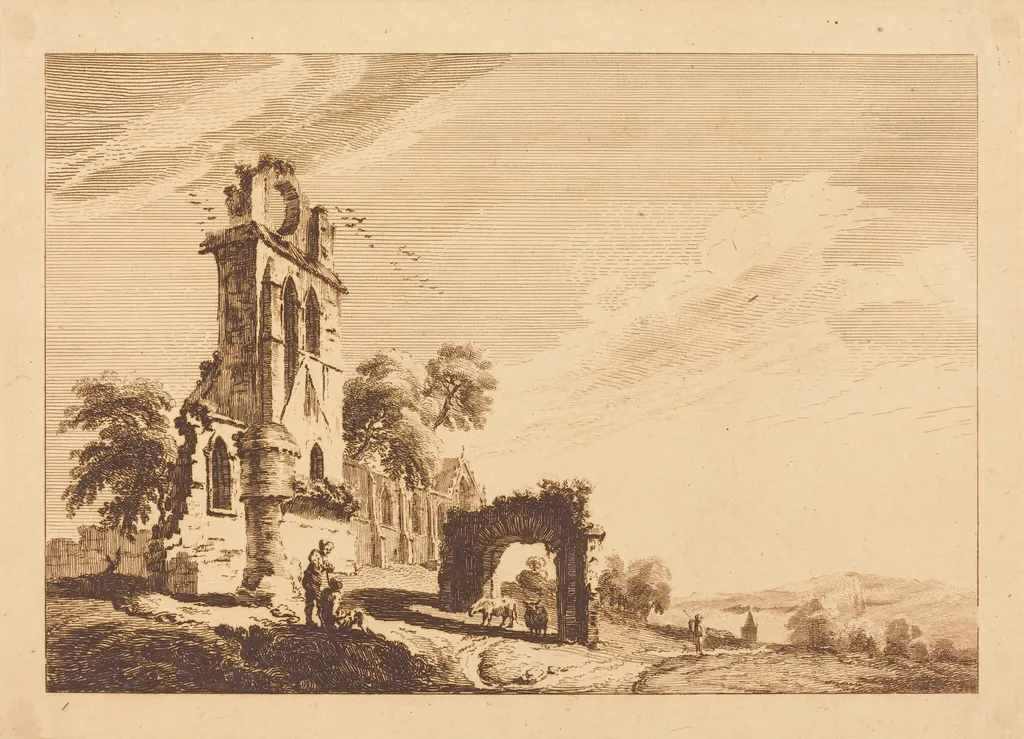
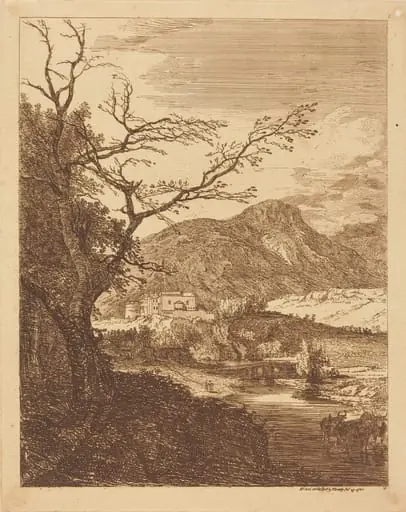
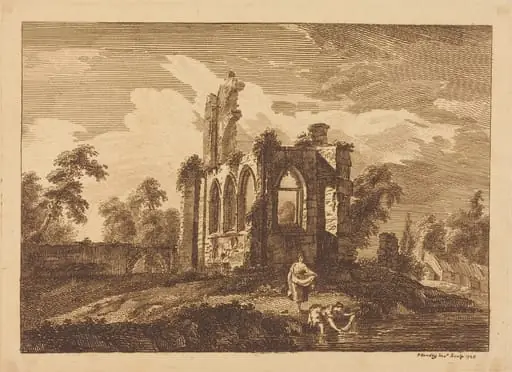
Ruined Abbey is an ink print by the Romanticist artist Paul Sandby. It dates from 1758 and is held in the collection of the National Gallery of Art.
About this work
A few small figures walk around the ruins, and a bridge arches over the water in the background.
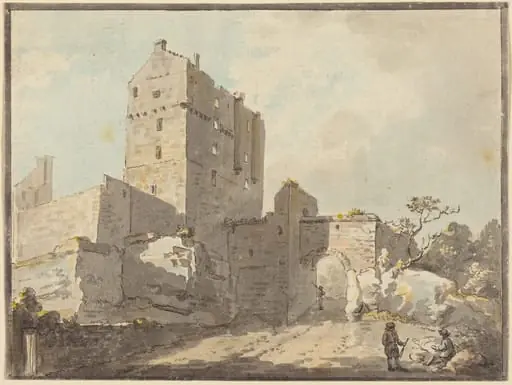
This sketch shows a tall, broken tower with a cross on top, standing alone near a river. A few small figures walk around the ruins, and a bridge arches over the water in the background. Trees and distant buildings frame the scene, but everything looks worn and quiet.
The artist used a rough, scratchy style to show decay—like the tower’s crumbling stones. This was made as a single etching in 1758, not painted.
Next, look up etching to see how artists like this carved lines into metal plates.
Overview
Paul Sandby’s *Ruined Abbey* is an etching produced in 1758. The work presents a solitary, weather‑worn tower topped with a cross, set beside a river that is crossed by an arched bridge. Small figures wander among the broken stones, while trees and distant structures outline the composition, creating a quiet, melancholic atmosphere.
Subject & Meaning
The image captures the remnants of a Gothic abbey, emphasizing its decay and the romantic allure of ruins that fascinated eighteenth‑century viewers. By focusing on the crumbling architecture, Sandby invites contemplation of the passage of time and the transient nature of human achievement, themes common in the picturesque aesthetic of the period.
Technique & Style
Executed as a single copper plate etching, the work employs a deliberately rough, scratchy line that accentuates the texture of broken masonry. Sandby’s hand‑incised marks convey the irregularity of the stonework and the surrounding foliage, reinforcing the sense of abandonment while demonstrating his skill in manipulating line for atmospheric effect.
History & Provenance
Created by Sandby, an English artist noted for his landscape drawings and cartographic work, the print predates his involvement in founding the Royal Academy in 1768. It reflects his early engagement with the emerging British landscape tradition, marking a transitional moment before his later institutional contributions.
Context
The etching aligns with a broader eighteenth‑century fascination with ruinous sites, which were seen as exemplars of the picturesque. Such subjects were popular among travelers and antiquarians, and Sandby’s depiction contributes to the visual discourse that linked natural decay with aesthetic appreciation in British art.
Artist & collection
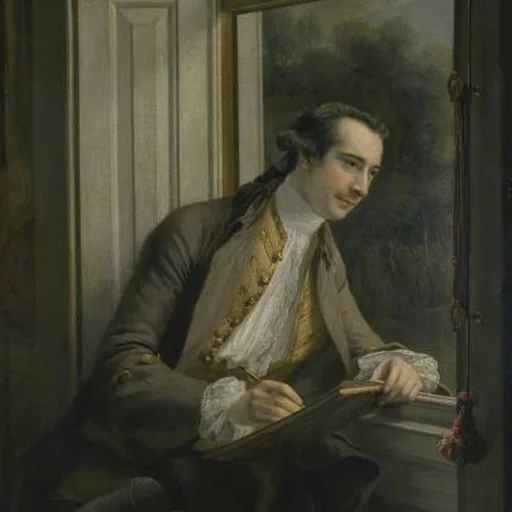
Artist
Paul Sandby, (1731 – 7 November 1809) was an English mapmaker and painter who specialised in landscape art. Along with his older brother Thomas Sandby, he was one of the founding members of the Royal Academy in 1768.