Artwork
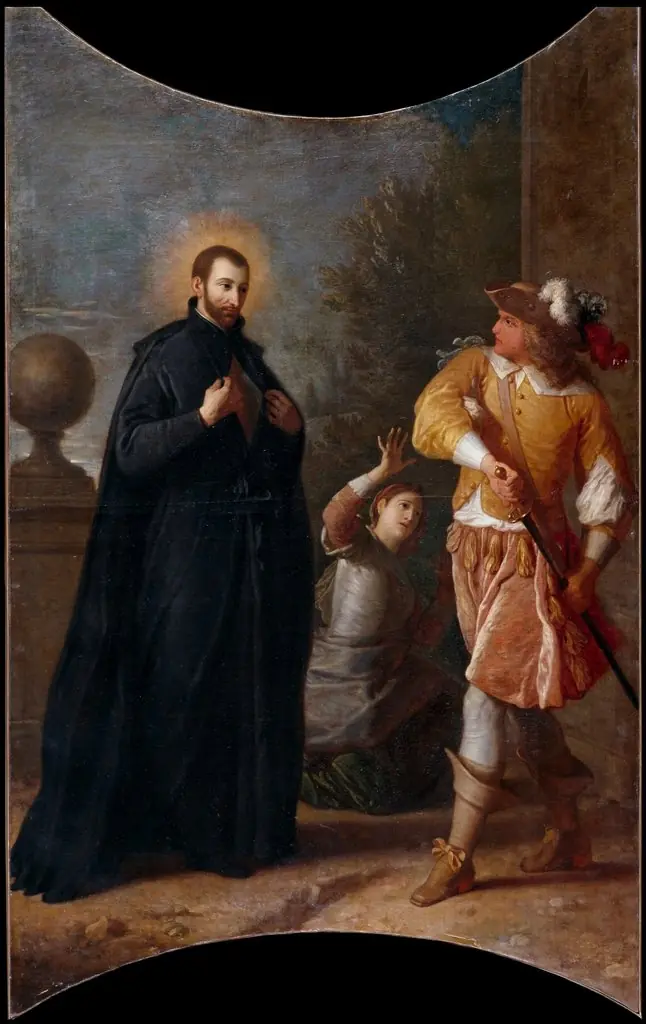
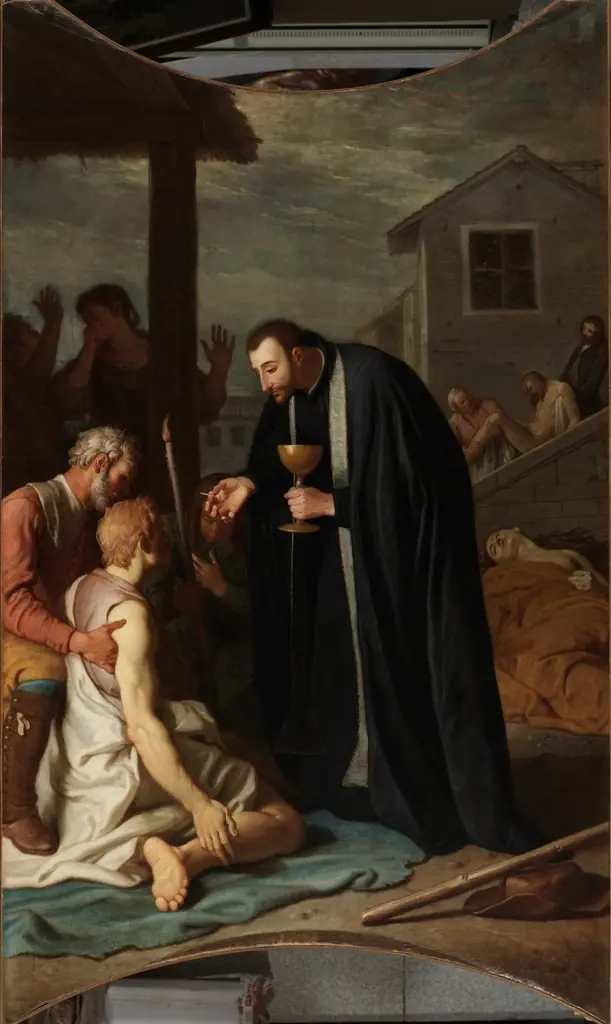
Multiplicación del trigo en la ciudad de Puy por san Francisco de Regis
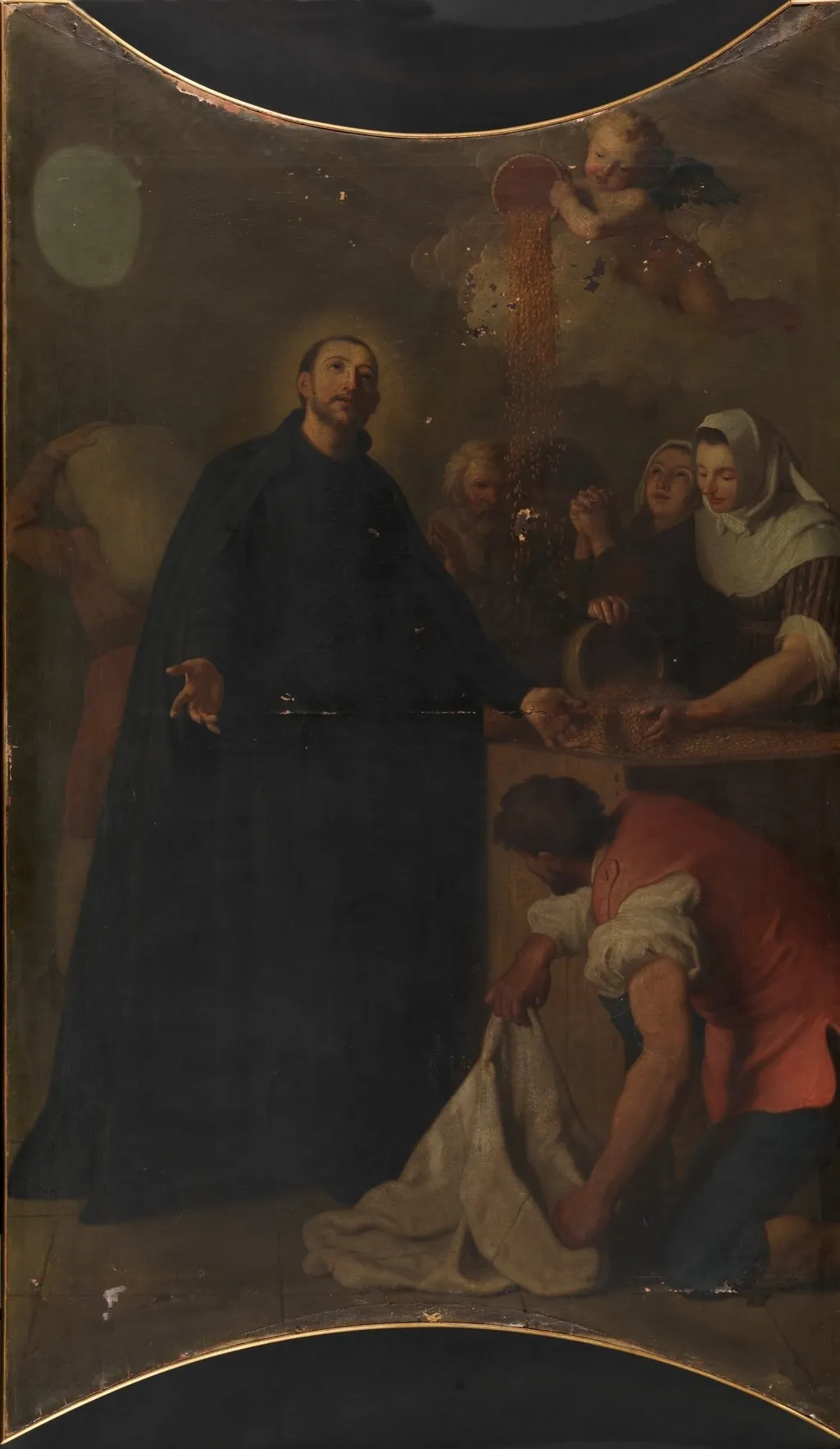
Multiplicación del trigo en la ciudad de Puy por san Francisco de Regis is an oil painting by the French Classical Baroque artist Michel Ange Houasse. It dates from 1702 and is held in the collection of the Museo del Prado.
About this work
Overview
Created in 1702 by French artist Michel Ange Houasse, this oil painting portrays a miraculous episode of wheat multiplication linked to Saint Francis Regis in the town of Le Puy. The work is part of the Museo del Prado’s collection and exemplifies the artist’s early output before his later service at the Spanish court.
Subject & Meaning
At the centre stands a robed figure, identified as Saint Francis Regis, gazing upward toward a cherubic attendant who pours a liquid from a jug in the upper‑right corner. Surrounding the saint are townspeople gathered around a table, with one individual kneeling, suggesting a communal gratitude for the divine provision of grain.
Technique & Style
Houasse employs a pronounced chiaroscuro, using strong contrasts of light and shadow to model forms and convey depth. The composition merges the ordered dynamism of French classical Baroque with a pastoral sensibility reminiscent of Flemish genre scenes, evident in the detailed rendering of everyday figures and the naturalistic setting.
History & Provenance
Trained in his father’s workshop, Houasse later entered the service of Philip V of Spain after 1715, though this painting predates his court appointment. It entered the Prado’s holdings through the museum’s acquisitions of early 18th‑century French works, where it remains on display.
Context
The narrative of wheat multiplication reflects Counter‑Reformation themes of divine intervention and charity, popular in early‑modern religious art. By situating the miracle in a recognizable French locale, Houasse connects local devotion to broader Catholic iconography.
Artist & collection
Artist
Michel Ange Houasse (1680–1730) was a French painter, most of whose career was spent at the court of Philip V of Spain, who summoned him to the court in Madrid in 1715 whilst he was still Philip of Anjou.

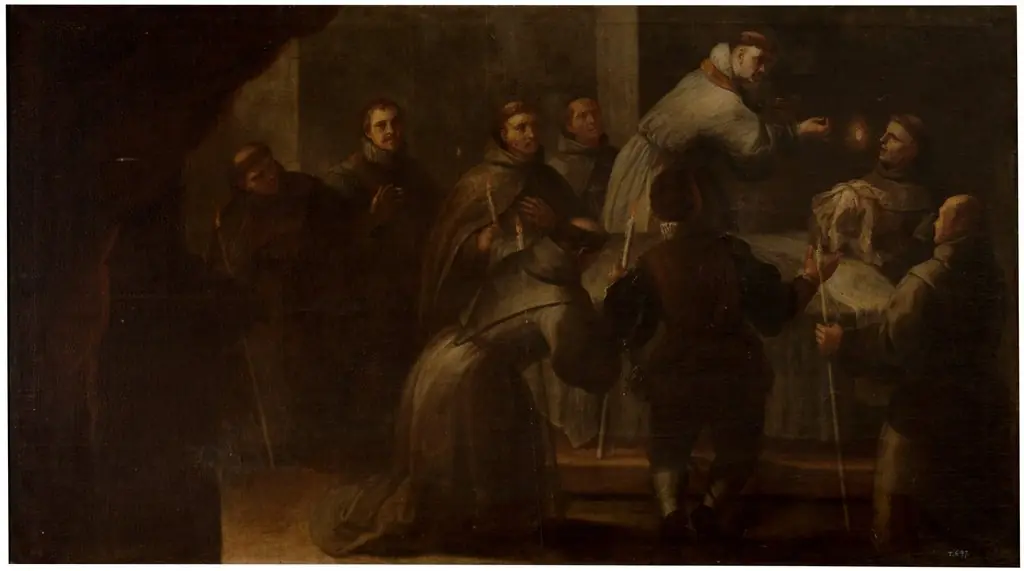 La última comunión de San Diego de Alcalá
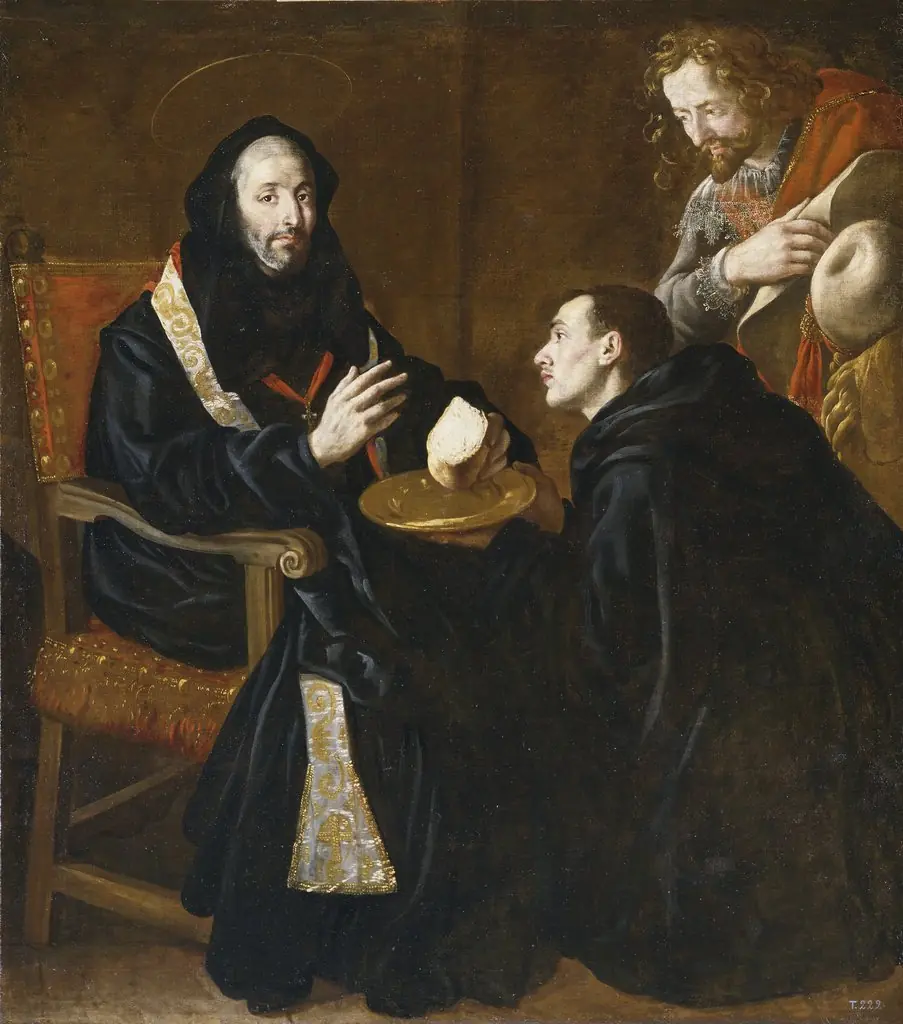 Saint Benedict blessing the Bread
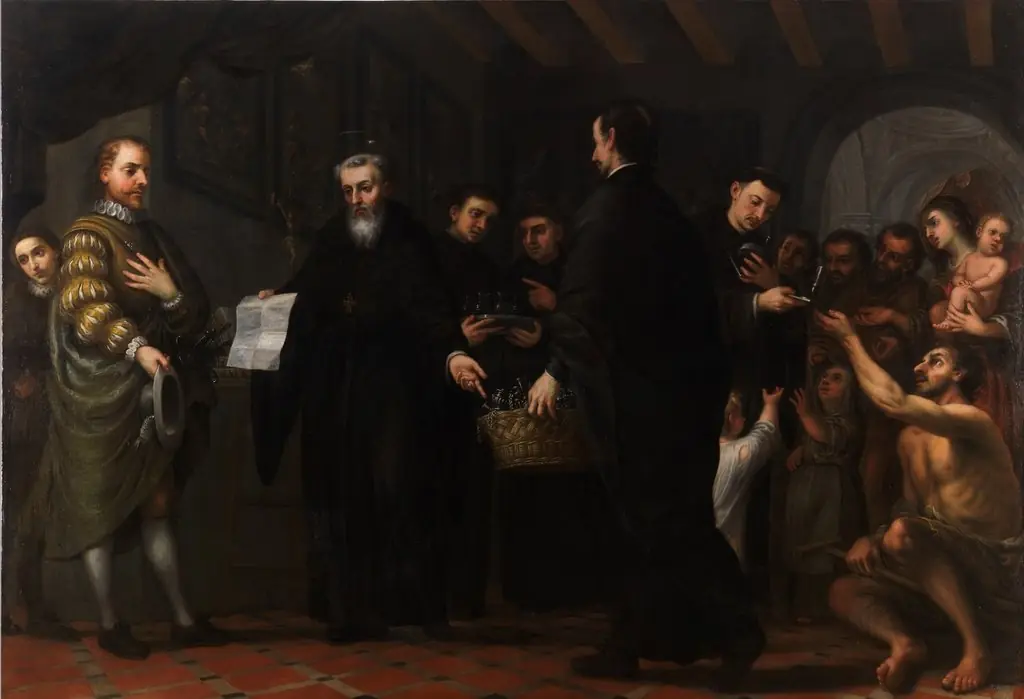 San Agustín repartiendo los bienes de los ricos entre los pobres
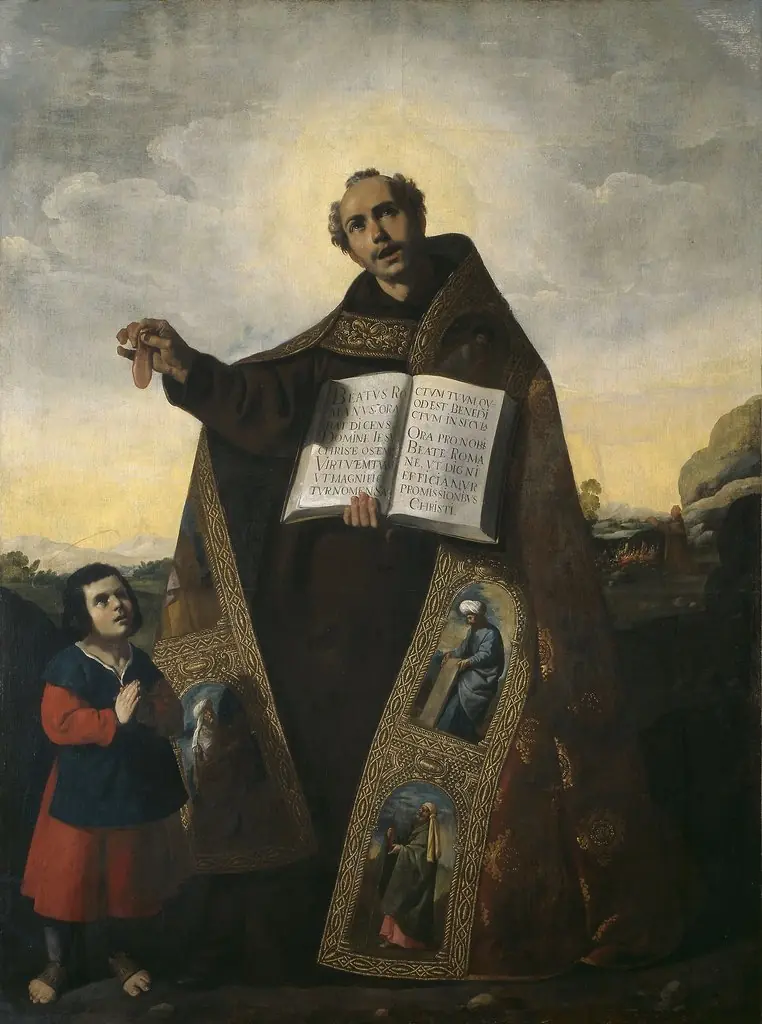 Saint Romanus of Antioch and Saint Barulas
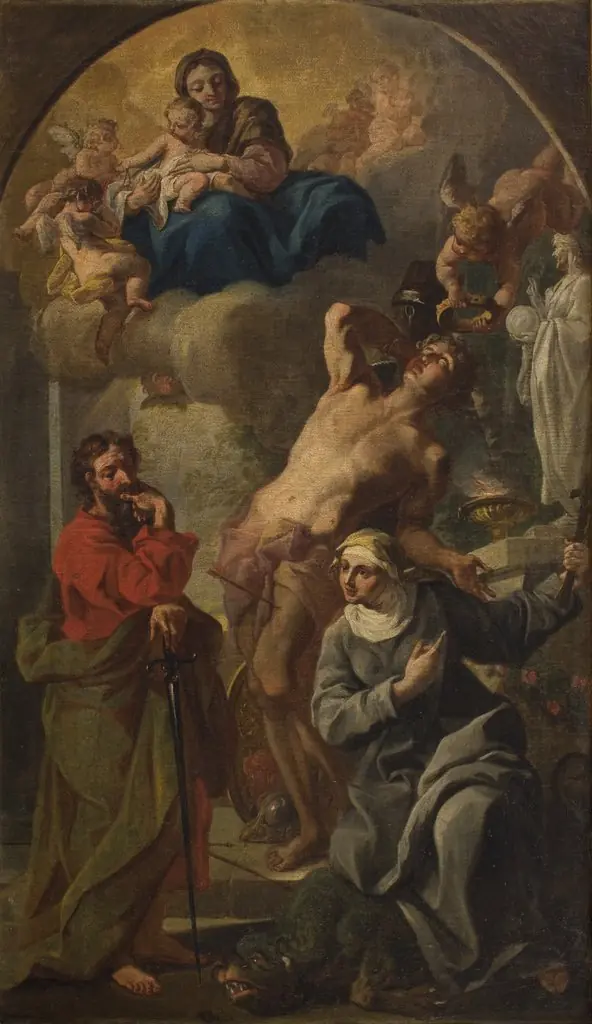 Madonna and Child with Saints Sebastian, Paul and Martha (Acceptance of Saint Sebastian Into the Group of Holy Martyrs)
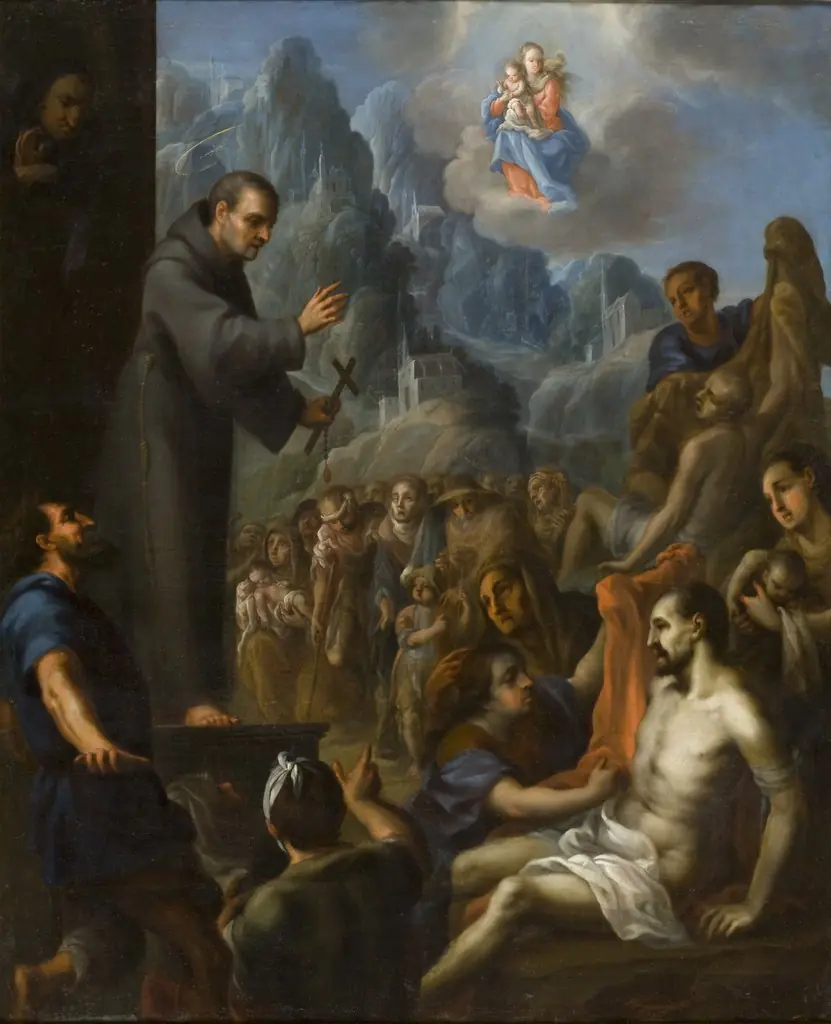 Miracles of Saint Salvador de Horta (Milagros del beato Salvador de Horta)
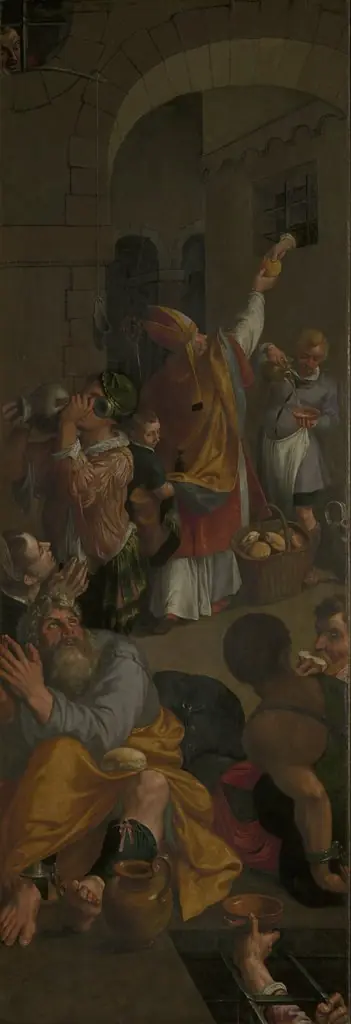 Saint Eligius visits the prisoners
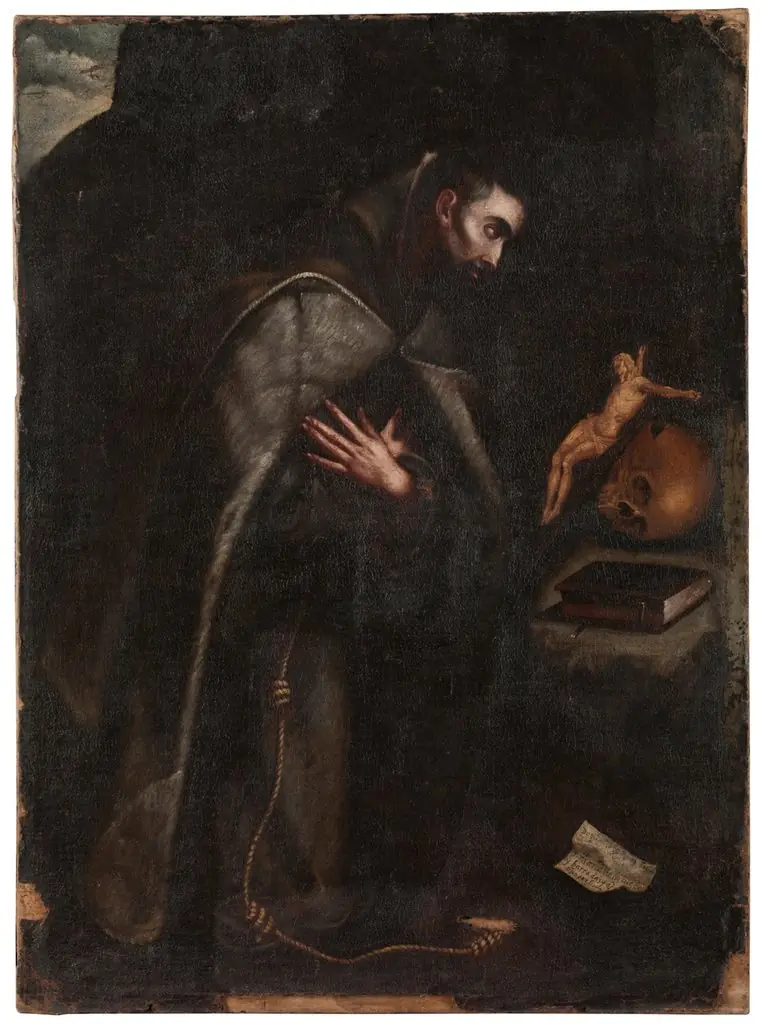 Saint Francis of Assisi kneeling in meditation