Artwork
Figure Studies for the Sistine Ceiling (verso)
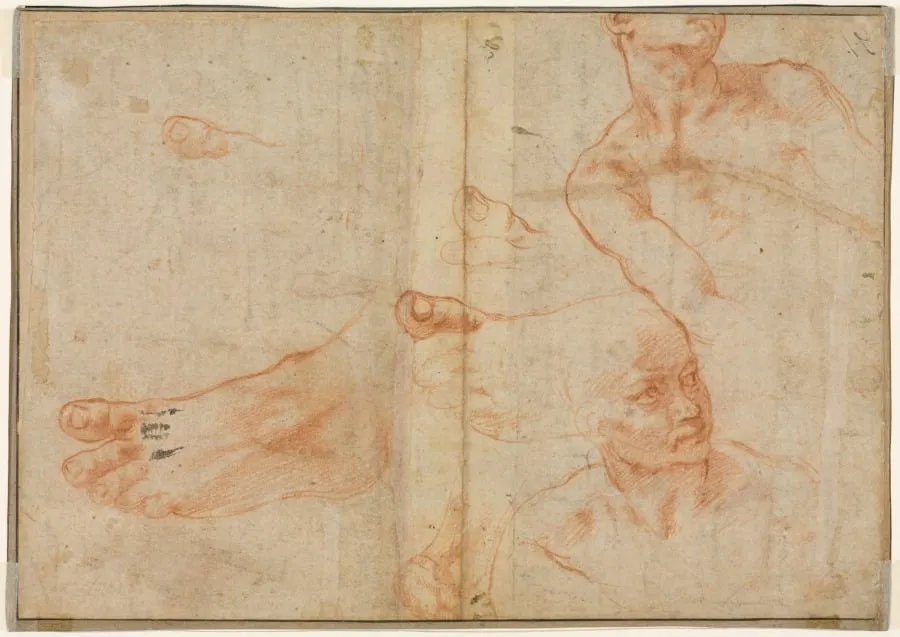
Figure Studies for the Sistine Ceiling (verso) is a drawing by the Renaissance artist Michelangelo. It dates from 1510 and is held in the collection of the Cleveland Museum of Art.
About this work
Overview
This red chalk drawing is one of many preparatory studies Michelangelo made for the Sistine Chapel ceiling.
This red chalk drawing is one of many preparatory studies Michelangelo made for the Sistine Chapel ceiling. Created during the early 1510s, it captures a dynamic male nude in motion, likely intended as a model for one of the twenty ignudi positioned at the corners of the ceiling’s narrative panels. The drawing was never meant for public display, serving only as a working tool in the artist’s process.
Subject & Meaning
The figure represents an ignudo, a nude male form that frames the biblical scenes along the ceiling’s central axis. These figures do not illustrate a specific story but function as architectural and symbolic supports, embodying idealized human strength. Their poses, often contorted or suspended, suggest movement and vitality, reinforcing the theme of human potential central to the chapel’s overall design.
Technique & Style
Michelangelo used red chalk with rapid, confident strokes to define musculature and spatial depth. The figure extends beyond the paper’s edge, implying motion and physical presence beyond the page. The medium’s warmth and fluidity allowed quick adjustments, enabling the artist to explore posture and balance before committing to fresco. The drawing’s energy reflects his sculptural approach to the human form.
History & Provenance
The drawing was likely created between 1508 and 1512 during the initial phase of the Sistine ceiling project. It remained in Michelangelo’s possession and later entered the collection of the British Museum, where it is now held among his extensive corpus of preparatory sketches. Its survival is rare, as most such studies were discarded after serving their purpose.
Context
Michelangelo was primarily a sculptor when commissioned to paint the ceiling, and he approached the task with a three-dimensional mindset. The ignudi reflect his fascination with the classical nude and his desire to elevate fresco painting through sculptural form. These studies were essential in translating his vision from marble to plaster, bridging his earlier work with the monumental frescoes above.
Legacy
Though created as functional sketches, these drawings became vital records of Michelangelo’s creative process. They influenced later artists studying anatomy and composition, and today they offer insight into how monumental works were conceived in stages. Their raw immediacy contrasts with the polished final frescoes, revealing the labor behind Renaissance grandeur.
Artist & collection

Artist
Michelangelo di Lodovico Buonarroti Simoni (6 March 1475 – 18 February 1564), known mononymously as Michelangelo, was an Italian sculptor, painter, architect, and poet of the High Renaissance.

![Male Nude [recto], by Michelangelo](https://artifactworldgallery.com/img/michelangelo--male-nude-recto--8c3354d89884753a-w320.webp)
![Male Nude [verso], by Michelangelo](https://artifactworldgallery.com/img/michelangelo--male-nude-verso--d48a81b2ad2bdbb8-w320.webp)
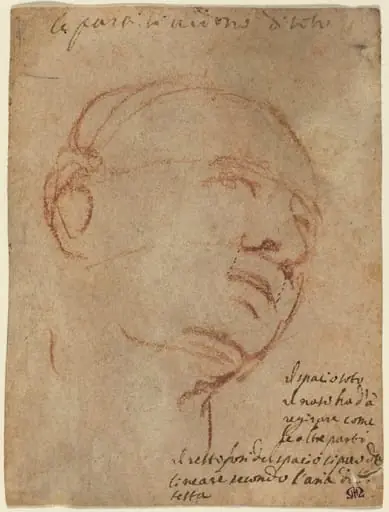
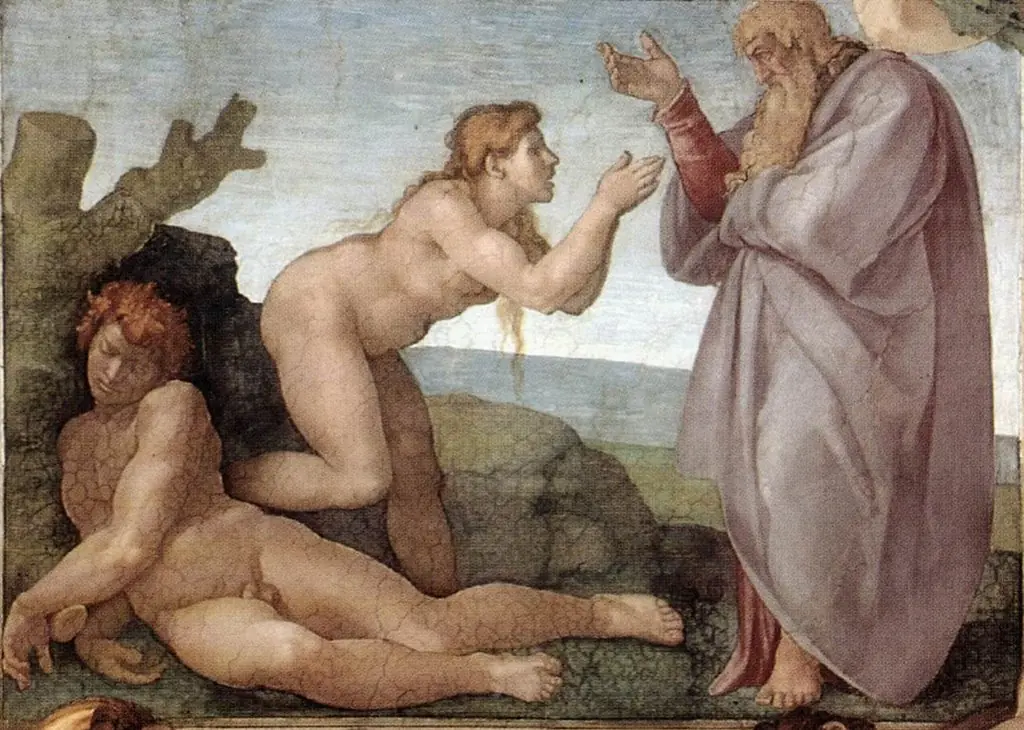
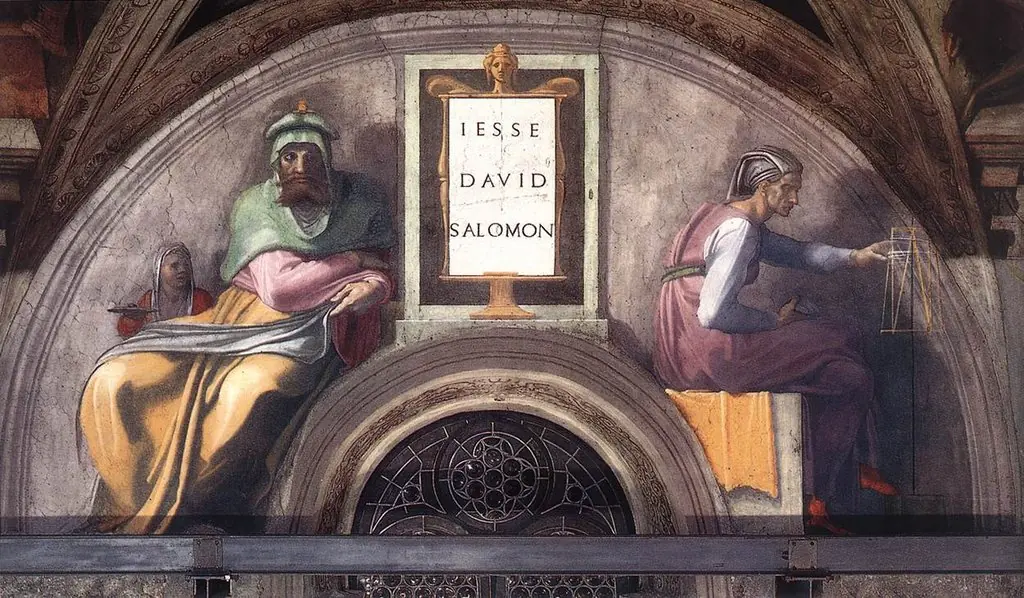
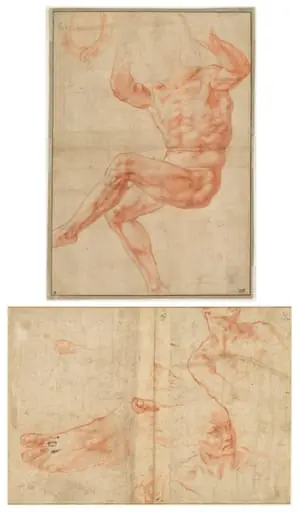 Study for the Nude Youth over the Prophet Daniel (recto); Figure Studies for the Sistine Ceiling (verso)
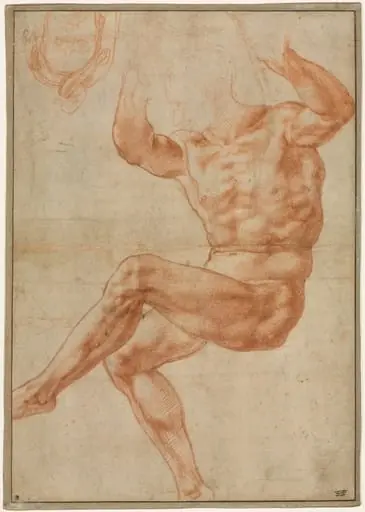 Study for the Nude Youth over the Prophet Daniel (recto)
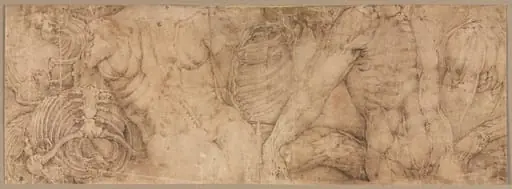 Torsos with Rib Cages
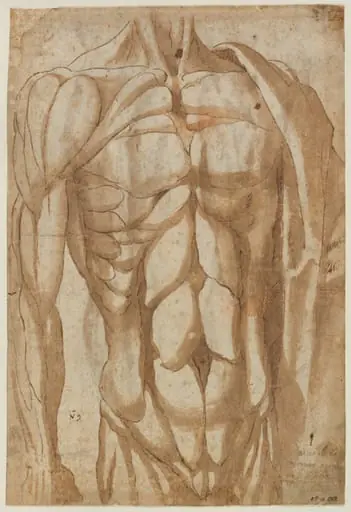 Study of a Flayed Torso (verso)
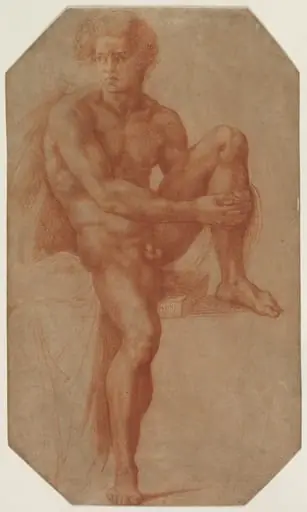 Seated Male Nude
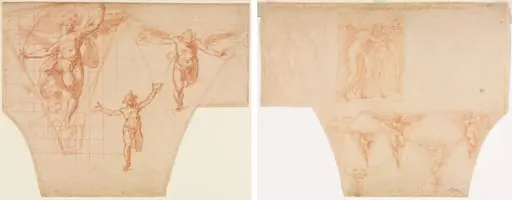 Three Studies of Angels for a Pendentive (recto); Studies for Christ Meeting His Mother on the Road to Calvary, Studies of an Angel in a Pendentive (verso)