Artwork
Zerubbabel, Abiud and Eliakim
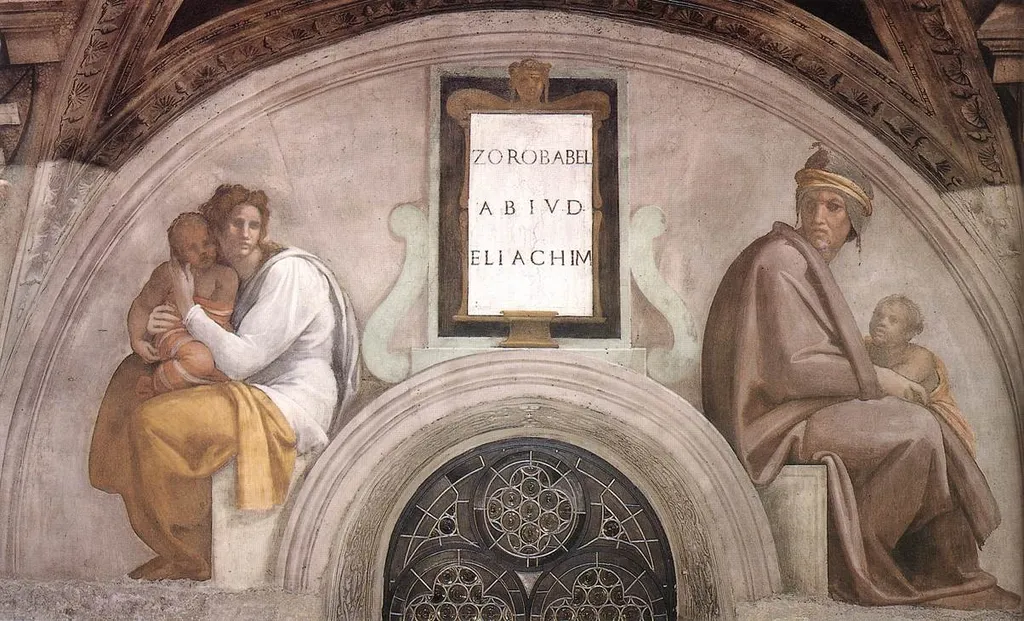
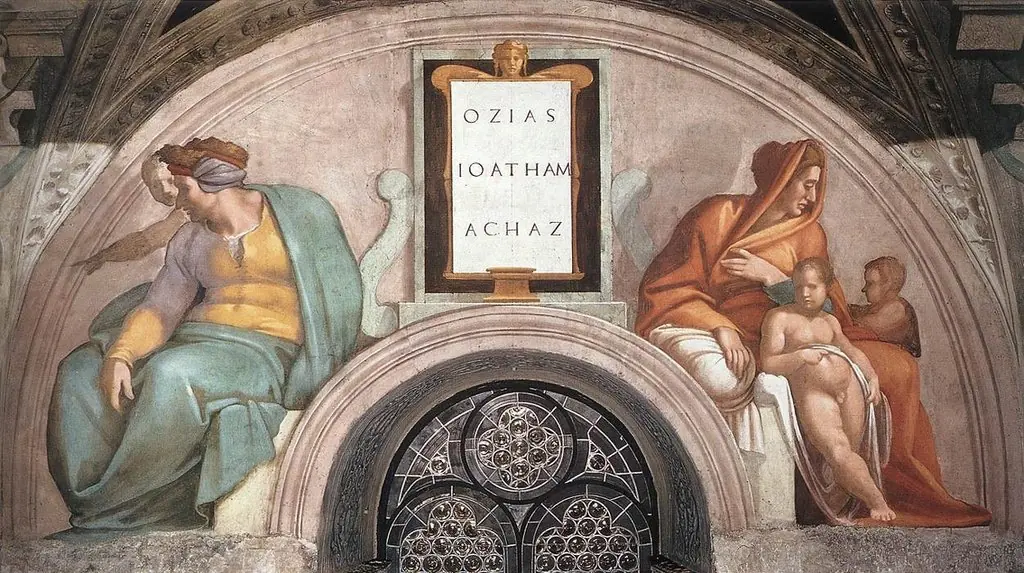
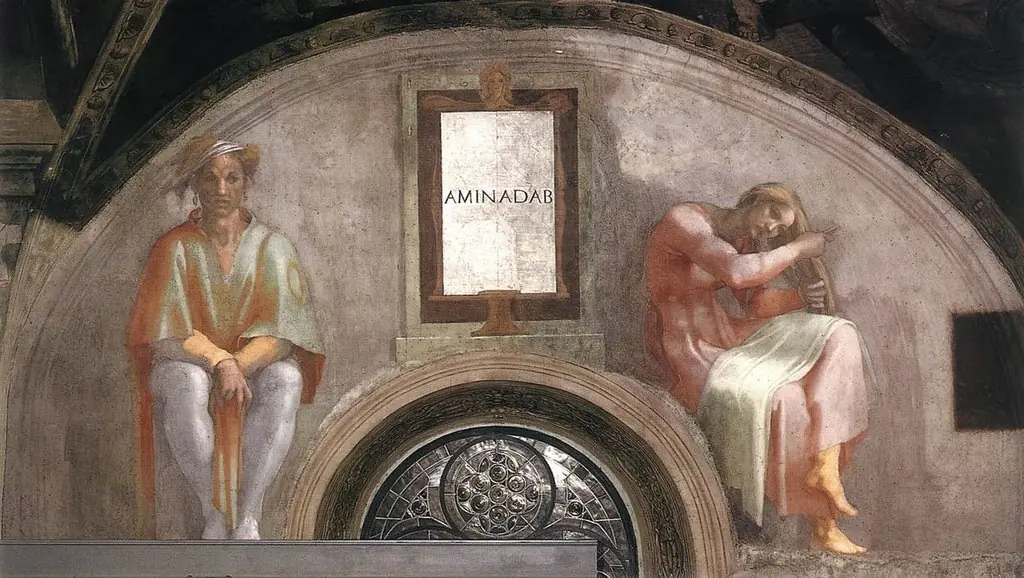
Zerubbabel, Abiud and Eliakim is a fresco painting by the High Renaissance artist Michelangelo. It dates from 1508 and is held in the collection of the Vatican Museums.
About this work
Overview
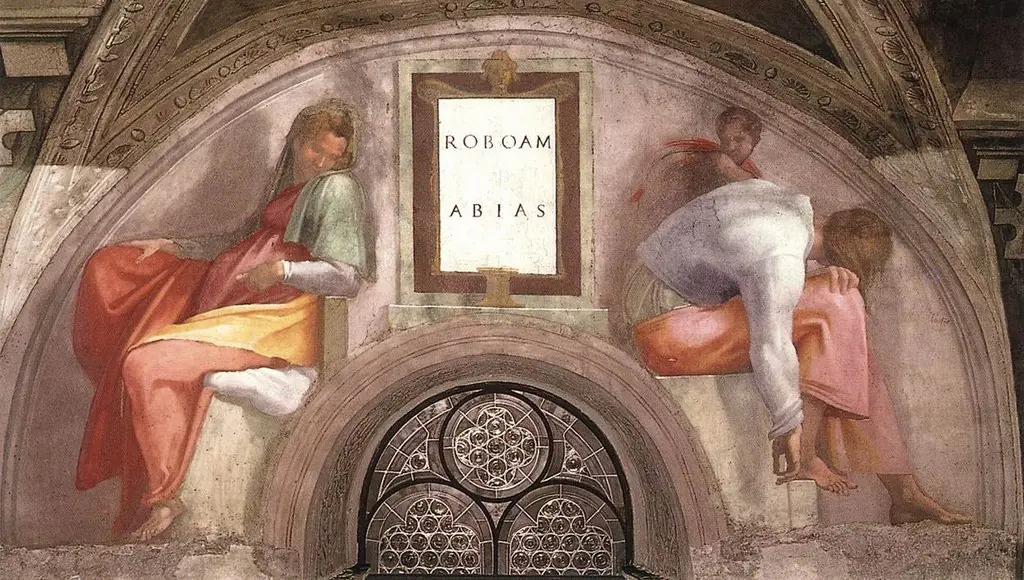
Created in 1508, this fresco forms part of Michelangelo’s decorative program for the Sistine Chapel. Executed on a wall in the Vatican Museums, the composition presents three male figures identified by an inscription as Zerubbabel, Abiud and Eliakim, each accompanied by an infant. The work exemplifies the High Renaissance emphasis on balanced arrangement and clear narrative content.
Subject & Meaning
The three men represent successive ancestors in the genealogy leading to Jesus, a theme drawn from the New Testament. By pairing each adult with a naked child, the scene underscores the continuity of lineage and the transmission of divine promise across generations, a visual reinforcement of the theological program of the chapel.
Technique & Style
Michelangelo employed the true fresco method, applying pigment to wet plaster so that the colors become integral to the wall surface. The figures are rendered with muscular solidity and careful modeling, while the drapery displays a restrained palette of whites, browns and muted yellows, reflecting the artist’s study of classical sculpture and his interest in anatomical precision.
History & Provenance
Commissioned as part of the papal decoration of the Sistine Chapel, the fresco has remained in situ since its completion. It was never removed from the Vatican walls, and its preservation benefits from the controlled environment of the museum complex that now houses the chapel’s artworks.
Context
At the time of its execution, Michelangelo was at the height of his Roman career, drawing on ancient Roman models and contemporary theological concerns. The genealogical figures complement adjacent scenes that depict biblical narratives, together forming a visual link between Old Testament forebears and the New Testament fulfillment.
Artist & collection

Artist
Michelangelo di Lodovico Buonarroti Simoni (6 March 1475 – 18 February 1564), known mononymously as Michelangelo, was an Italian sculptor, painter, architect, and poet of the High Renaissance.

![Male Nude [recto], by Michelangelo](https://artifactworldgallery.com/img/michelangelo--male-nude-recto--8c3354d89884753a-w320.webp)
![Male Nude [verso], by Michelangelo](https://artifactworldgallery.com/img/michelangelo--male-nude-verso--d48a81b2ad2bdbb8-w320.webp)