Artwork
Sistine Chapel lunettes - Rehoboam, Abijah
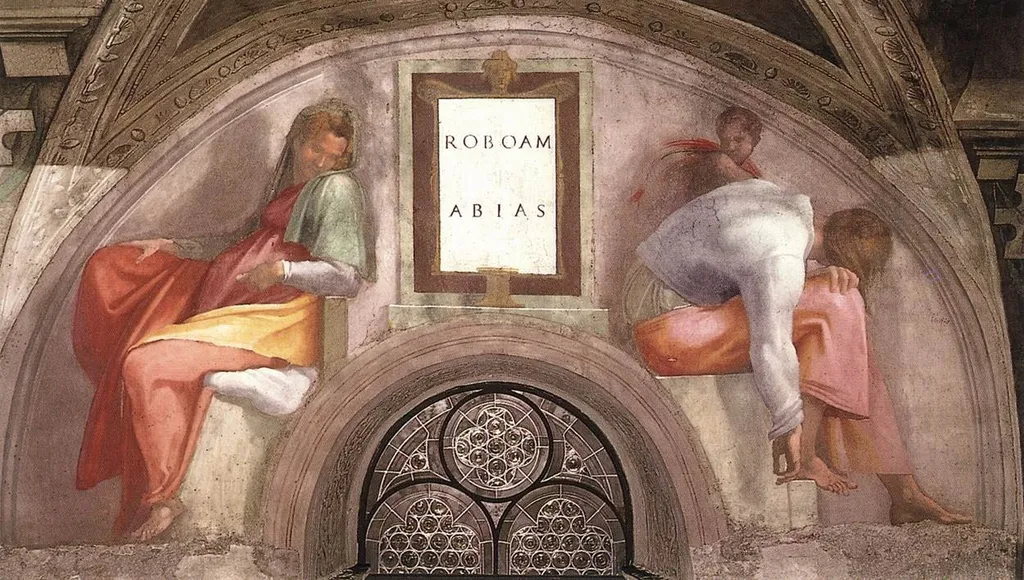
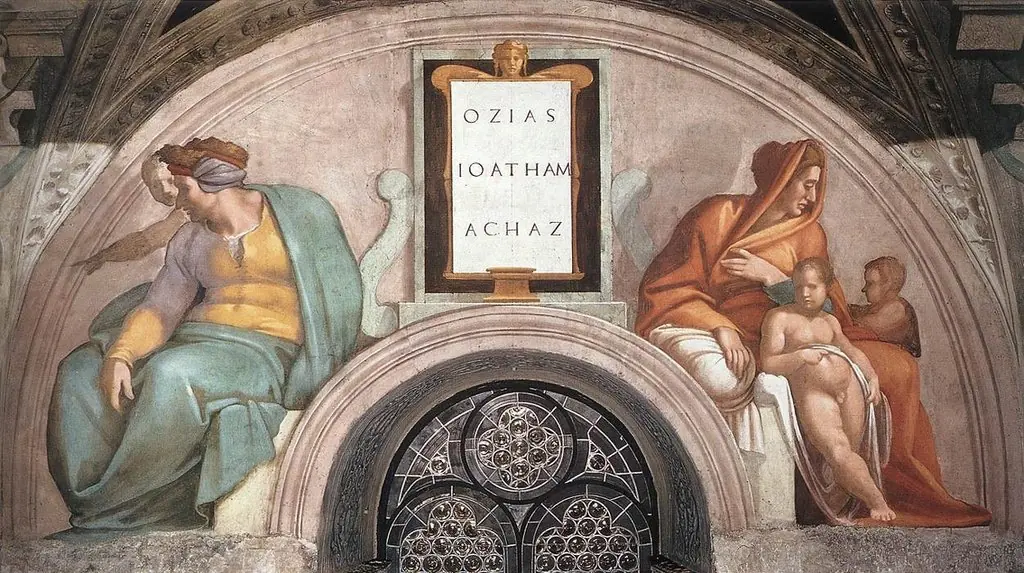
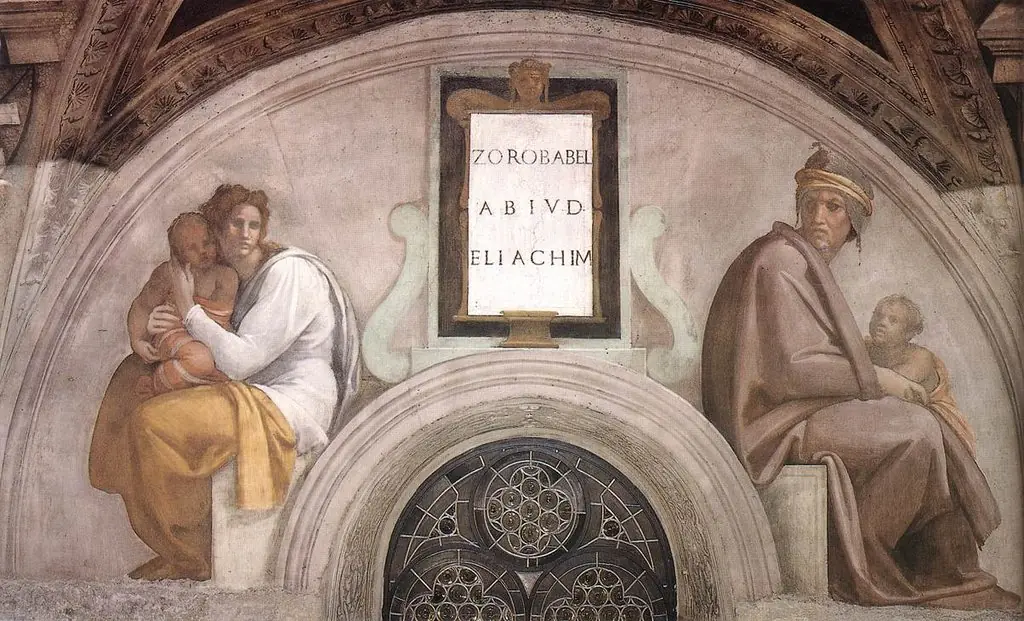
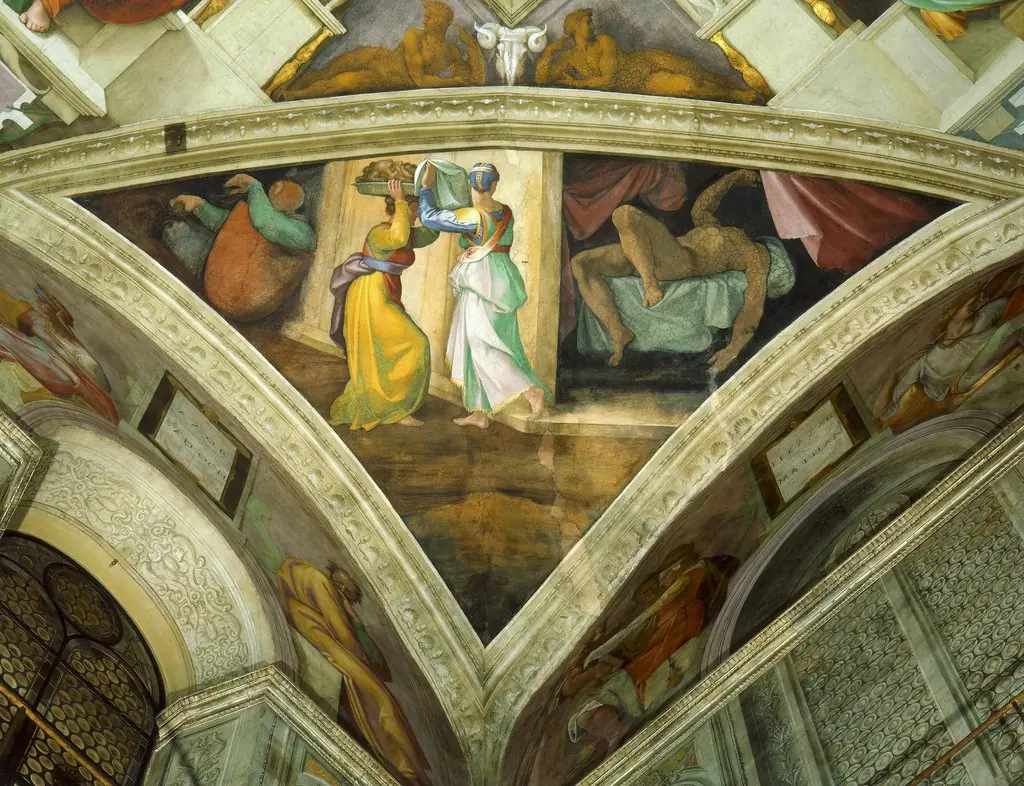
Sistine Chapel lunettes - Rehoboam, Abijah is a fresco painting by the High Renaissance artist Michelangelo. It dates from 1511 and is held in the collection of the Vatican Museums.
About this work
Overview
The lunettes above the Sistine Chapel’s windows, painted by Michelangelo in 1511, form part of a larger program illustrating the ancestral line of Christ.
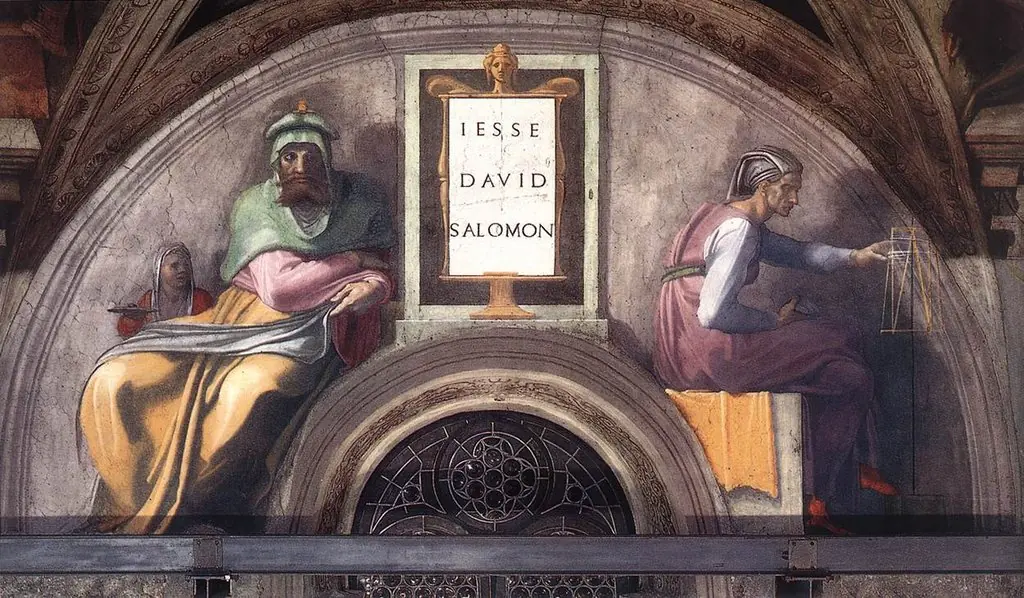
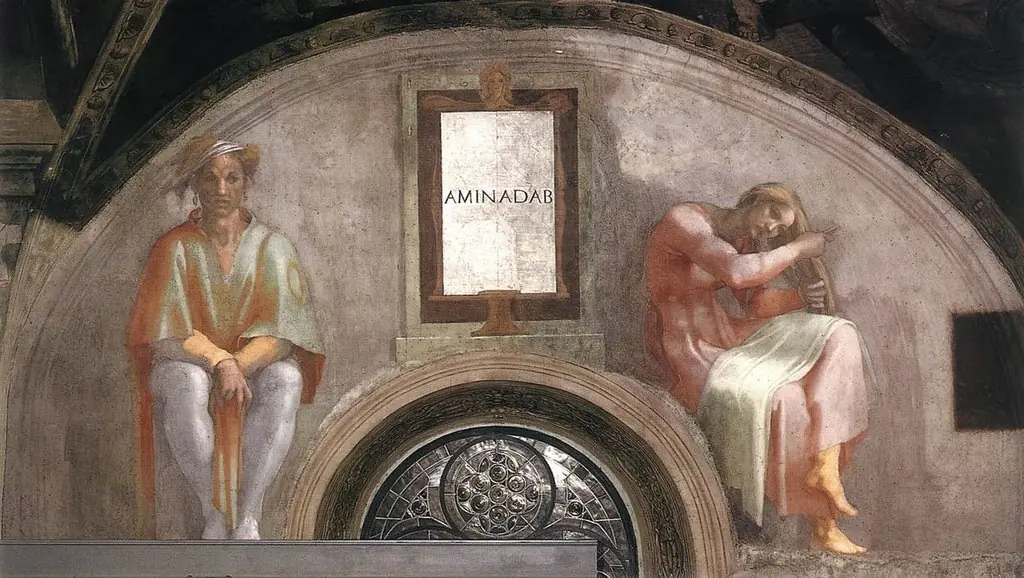
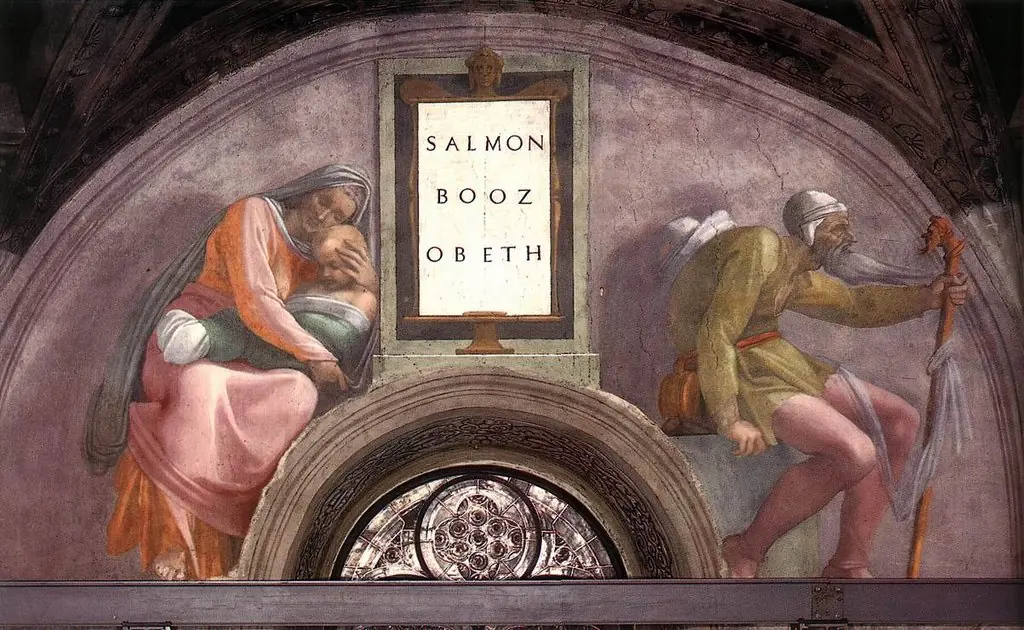
The lunettes above the Sistine Chapel’s windows, painted by Michelangelo in 1511, form part of a larger program illustrating the ancestral line of Christ. These frescoes, executed in the traditional buon fresco technique, depict seated figures of biblical patriarchs and matriarchs. Rehoboam and Abijah are two among the fourteen such figures lining the chapel’s upper walls, each identified by an inscription above them. The work was completed during Michelangelo’s second major phase in Rome, following his initial ceiling frescoes.
Subject & Meaning
Rehoboam and Abijah represent successive kings of Judah, sons of Solomon and Rehoboam respectively, as recorded in the Old Testament. Their inclusion in the lunette series underscores the theological emphasis on Christ’s Davidic lineage. The figures are not portrayed in narrative scenes but as solemn, static ancestors, their identities marked by inscriptions. Their presence reinforces the continuity between the Hebrew scriptures and the Christian narrative, anchoring the chapel’s iconography in genealogical authority.
Technique & Style
Michelangelo applied pigment to wet plaster, a method requiring swift, precise execution. The figures are rendered with sculptural solidity, their drapery folded with a sense of weight and volume that echoes classical statuary. Facial features are subtly modeled, and garments are rendered in muted, earth-toned hues—red, pink, yellow—against a pale background. The arched window beneath each lunette integrates the architectural frame, enhancing the illusion of depth without distracting from the figures’ stillness.
History & Provenance
Commissioned by Pope Julius II, the lunettes were painted between 1510 and 1512 as part of the Sistine Chapel’s decorative program. Michelangelo, primarily known as a sculptor, undertook the frescoes after completing the ceiling. The lunettes were among the last elements finished before the chapel’s consecration. They have remained in situ since their completion, preserved under the Vatican’s stewardship and subject to periodic restoration, most notably in the late 20th century.
Context
The lunettes were conceived as a visual genealogy linking the Old Testament to the New, complementing the ceiling’s Genesis scenes and the altar’s Last Judgment. Their placement above the chapel’s windows aligns them with the architectural rhythm of the space, creating a continuous band of ancestral figures. Unlike the dynamic narratives of the ceiling, these figures are contemplative, reflecting a shift toward introspective representation in Michelangelo’s work during this period.
Legacy
Though less celebrated than the ceiling or Last Judgment, the lunettes exemplify Michelangelo’s ability to convey spiritual gravity through restrained form. Their influence extended to later Renaissance artists studying the integration of classical ideals with biblical themes. As part of the Sistine Chapel’s unified program, they remain a key reference in understanding how Renaissance humanism was applied to ecclesiastical narrative, shaping the visual language of sacred art for centuries.
Artist & collection

Artist
Michelangelo di Lodovico Buonarroti Simoni (6 March 1475 – 18 February 1564), known mononymously as Michelangelo, was an Italian sculptor, painter, architect, and poet of the High Renaissance.

![Male Nude [recto], by Michelangelo](https://artifactworldgallery.com/img/michelangelo--male-nude-recto--8c3354d89884753a-w320.webp)
![Male Nude [verso], by Michelangelo](https://artifactworldgallery.com/img/michelangelo--male-nude-verso--d48a81b2ad2bdbb8-w320.webp)