Artwork
Saint Augustine vanquishing the Plague of Locusts
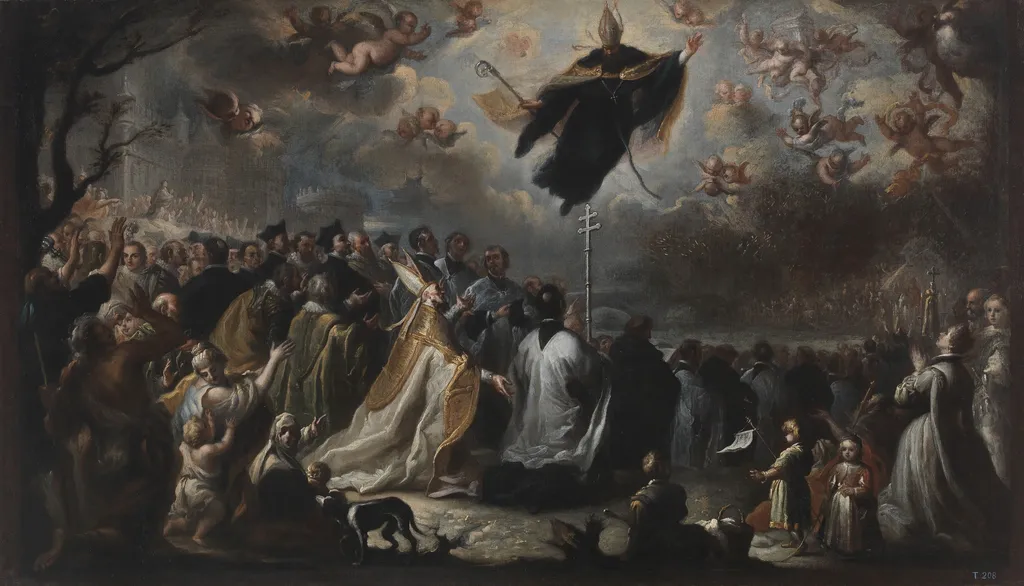
Saint Augustine vanquishing the Plague of Locusts is an oil painting by the Rococo painting artist Miguel Jacinto Meléndez. It dates from 1734 and is held in the collection of the Museo del Prado. Executed in 1734, this oil on canvas portrays Saint Augustine confronting a devastating swarm of locusts.
About this work
Overview
Executed in 1734, this oil on canvas portrays Saint Augustine confronting a devastating swarm of locusts. The composition centers the bishop‑theologian in solemn attire, his staff and book poised as symbols of authority and learning, while the insects descend in a chaotic mass behind him. The work is part of the Prado Museum’s collection in Madrid.
Subject & Meaning
The painting visualizes a legendary episode in which Augustine intercedes to halt a locust plague, reflecting themes of divine intervention and the power of faith. By placing the saint amid a terrified crowd, the artist underscores the communal relief that follows his miraculous act, linking theological virtue with tangible salvation.
Technique & Style
Meléndez employs strong chiaroscuro, casting the saint in illuminated relief against a tenebrous backdrop. The contrast accentuates the figure’s three‑dimensionality and heightens the drama of the descending insects. Loose, expressive brushwork conveys the movement of the locusts, while the careful rendering of fabric and facial expressions grounds the scene in realistic detail.
History & Provenance
Created by Spanish Baroque painter Miguel Jacinto Meléndez, the canvas entered the national collection during the 19th century and has remained in the Museo del Prado. Documentation traces its acquisition to the museum’s efforts to assemble works illustrating religious narratives from the Spanish Enlightenment period.
Artist & collection

 Recognition of the Carthusian Saint Cardinal Niccolò Albergati
 The Apotheosis of St. Thomas of Aquino
 Triumph of St Norbert
 Miracle of Saint Ignatius of Loyola
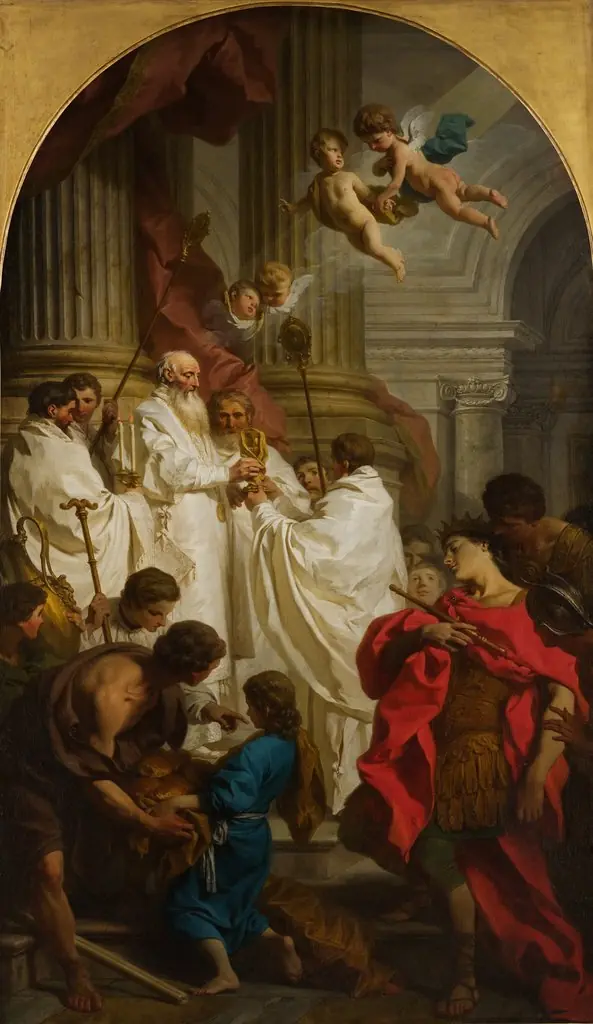 The Mass of Saint Basil
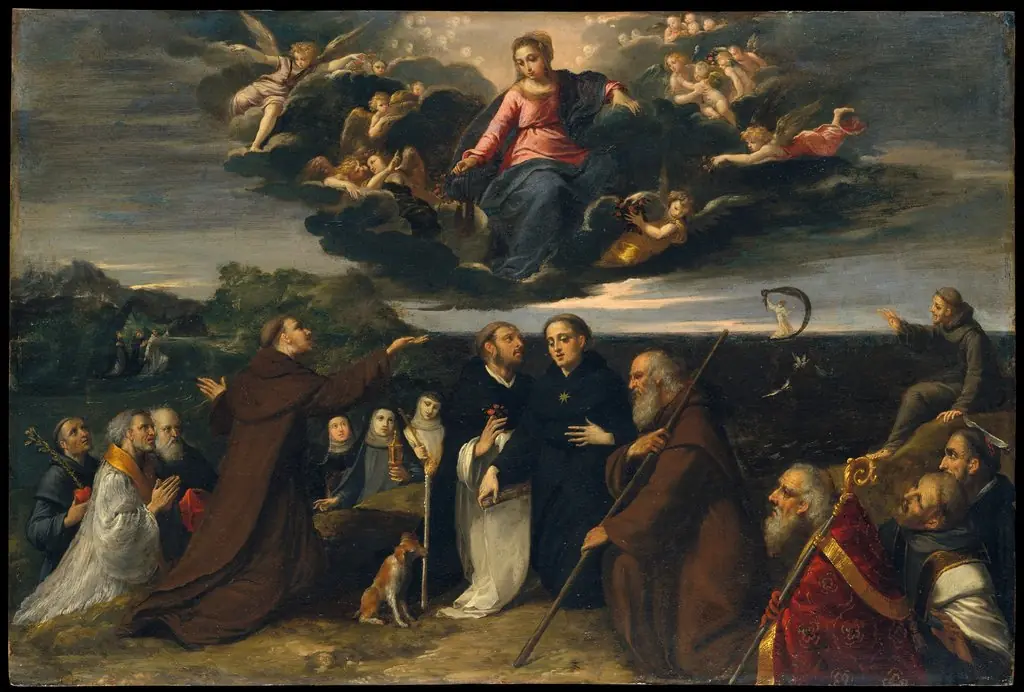 The Virgin Adored by Saints
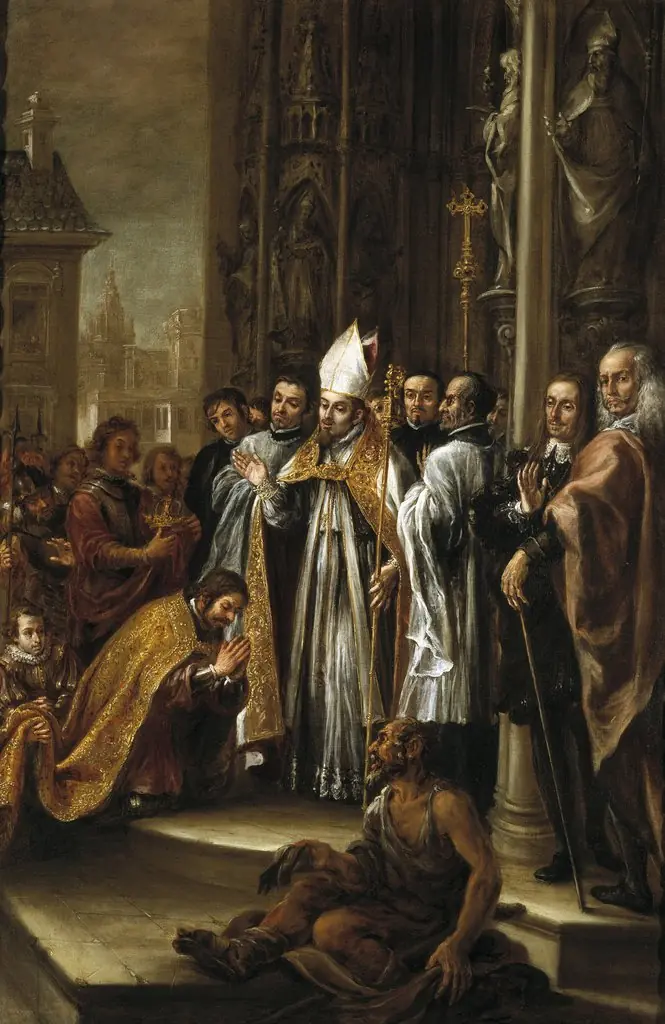 Saint Ambrose absolves the Emperor Theodosius
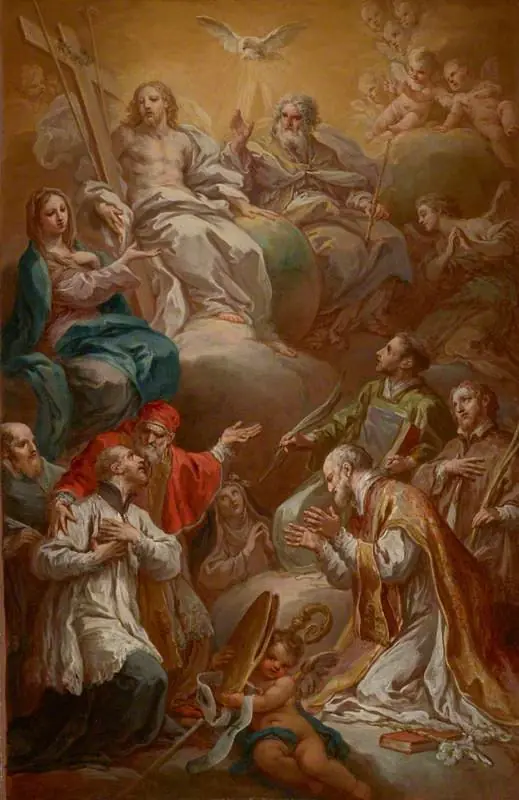 The Virgin recommending a group of Saints to the Holy Trinity
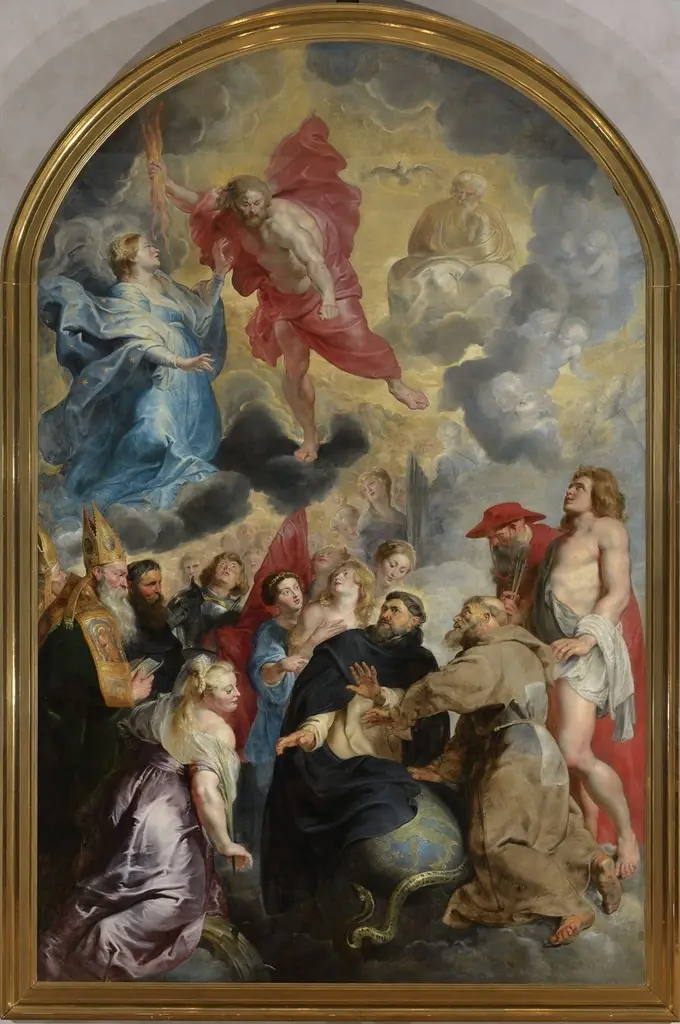 Saint Dominic and Saint Francis Protecting the World from the Wrath of Christ