Artwork
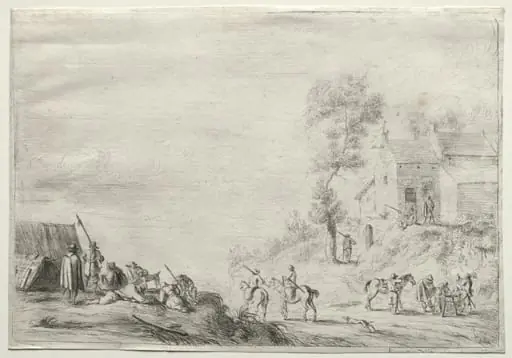
Landscape with Soldiers
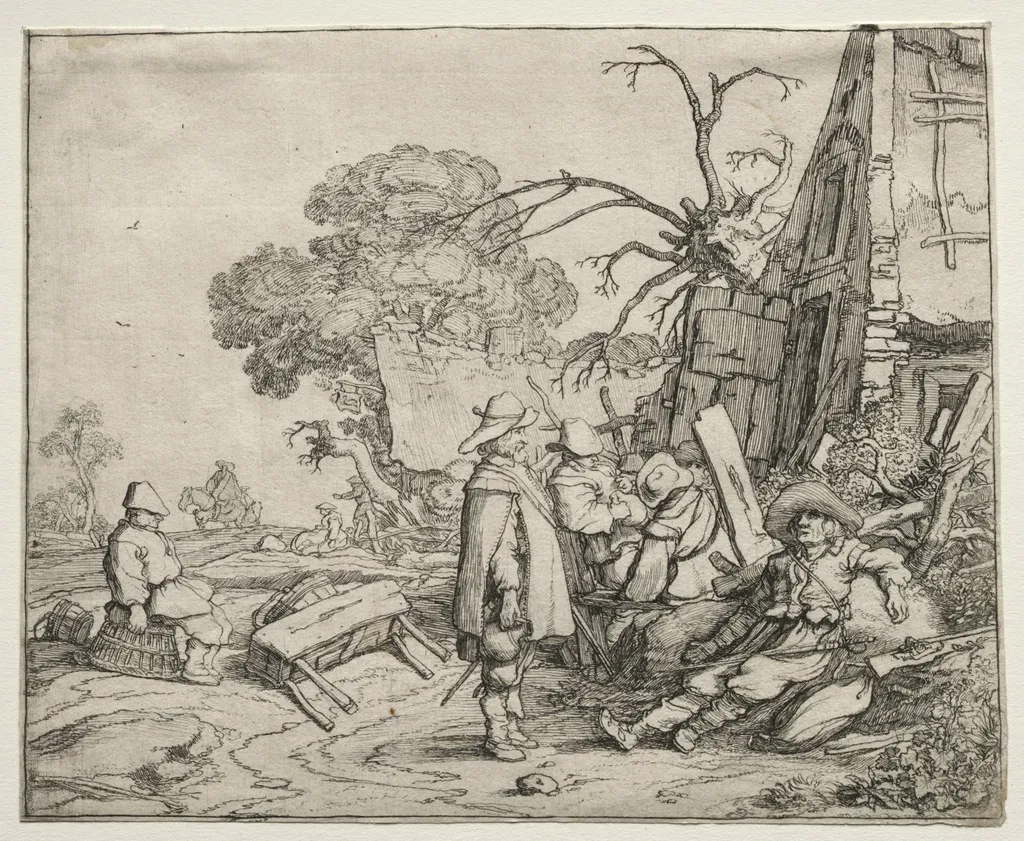
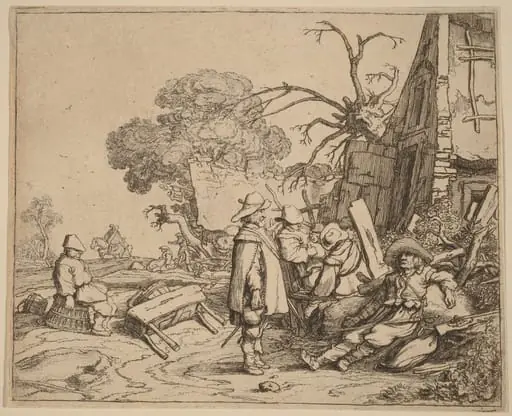
Landscape with Soldiers is a print by the Baroque artist Pieter de Molijn. It dates from 1626 and is held in the collection of the Cleveland Museum of Art. Created in 1626 by Pieter Molyn, this etching is one of several landscape works by the Dutch artist known for his detailed natural scenes.
About this work
Overview
Created in 1626 by Pieter Molyn, this etching is one of several landscape works by the Dutch artist known for his detailed natural scenes.
Created in 1626 by Pieter Molyn, this etching is one of several landscape works by the Dutch artist known for his detailed natural scenes. Born in London to Flemish parents, Molyn trained in the Netherlands and joined the Haarlem Guild of St. Luke in 1616. His prints often blend human activity with rural environments, reflecting the period’s interest in everyday life within nature. The piece is part of The Cleveland Museum of Art’s print collection.
Subject & Meaning
The scene portrays a group of soldiers engaged in laborious tasks within a wooded landscape—resting, climbing, and moving a heavy log. Their presence suggests military transit or temporary encampment, not battle. The focus on mundane activity, rather than heroism, aligns with 17th-century Dutch realism. The soldiers appear as part of the environment, their actions grounded and unglamorized, emphasizing the quiet tension between human effort and natural setting.
Technique & Style
Molyn employed sharp, incised lines and contrasting tones to model form and depth. The dense, gnarled trees are rendered with rough, textured strokes, while the soldiers’ faces and limbs are smoother, creating a visual contrast. A shallow stream at the base guides the eye through the composition. The use of deep shadows enhances the sense of volume and movement, particularly in the steep bank where figures strain against gravity.
History & Provenance
The etching was produced during Molyn’s active period in Haarlem, following his presumed travels to Italy, which influenced his compositional approach. It entered The Cleveland Museum of Art’s collection through documented acquisitions, though its immediate post-creation history remains unclear. As a print, multiple impressions were likely made, but this version retains the clarity and tonal range characteristic of early states.
Context
In early 17th-century Dutch art, landscape prints gained popularity as independent subjects, moving beyond mere backgrounds to standalone narratives. Molyn’s work fits within this trend, alongside artists like Rembrandt and Jan van de Velde. Soldiers in such scenes often symbolized the lingering presence of war in peacetime, reflecting the recent truce in the Eighty Years’ War and the civilian-military overlap in daily life.
Legacy
Molyn’s etchings, though less widely studied than those of his contemporaries, contributed to the development of Dutch landscape printmaking. His integration of human figures into natural settings influenced later genre scenes. While not prolific, his careful draftsmanship and attention to atmospheric detail helped define a quieter, more observational strand of Dutch print culture in the early Baroque period.
Artist & collection
Artist
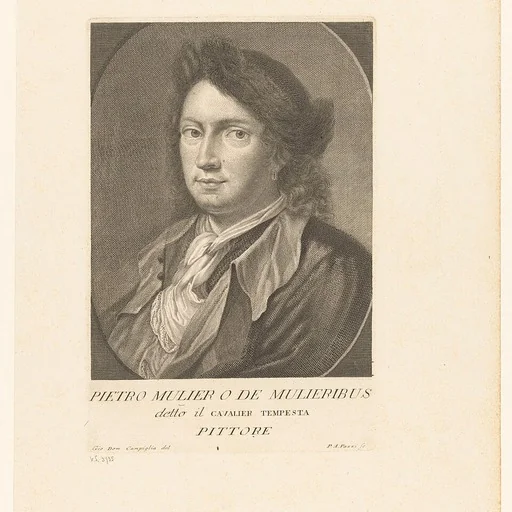
Pieter de Molijn (6 April 1595 in London – 23 March 1661 in Haarlem) was a Dutch Golden Age painter and engraver of English birth and Flemish descent.

 Soldier Receiving an Order from a Sitting Officer
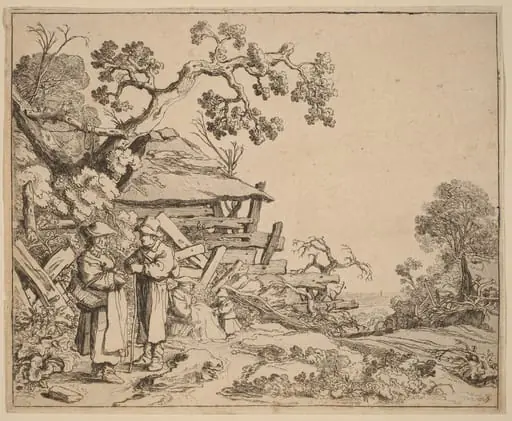 Woman Conversing with a Peasant
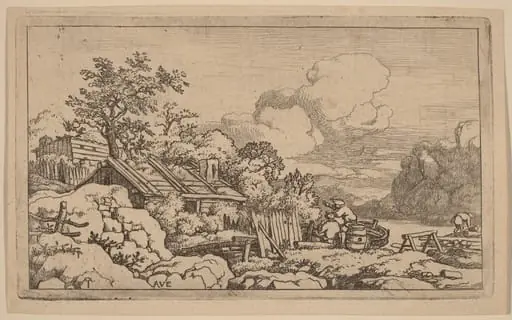 Carpenter's Hut
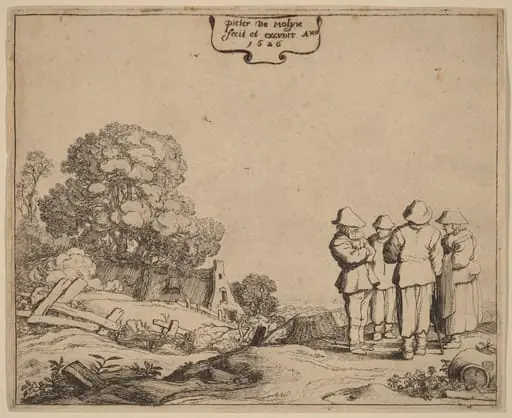 Three Peasants and a Woman
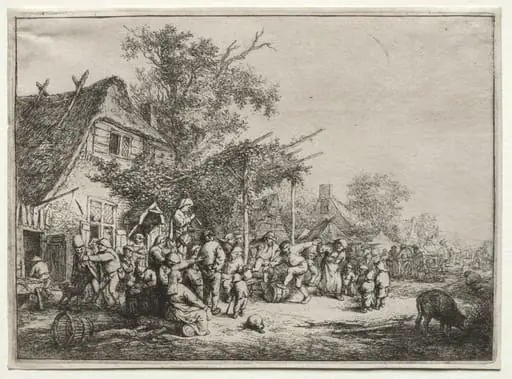 Festival Under the Trellis
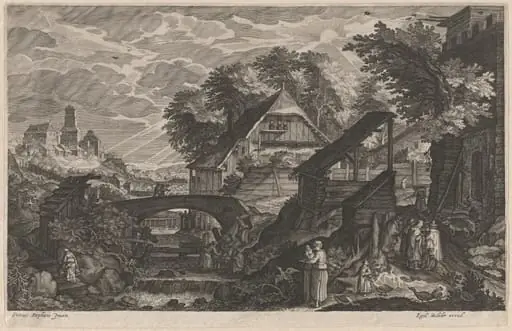 Farm Houses by a River with a City Beyond
 The Outpost
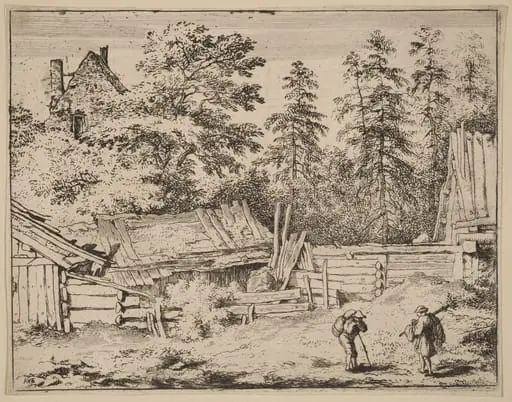 Three Cottages
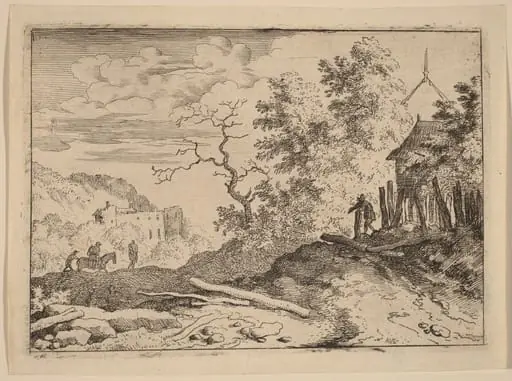 Hut with the Remains of a Hedge
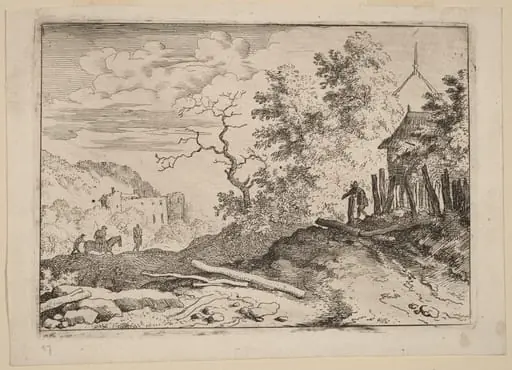 Hut with the Remains of a Hedge
 Two Men in the Doorway of a Hut
 Landscape with Peasants