Artwork
Ferdinand II, Par la Grace de Dieu Emperur des Romains
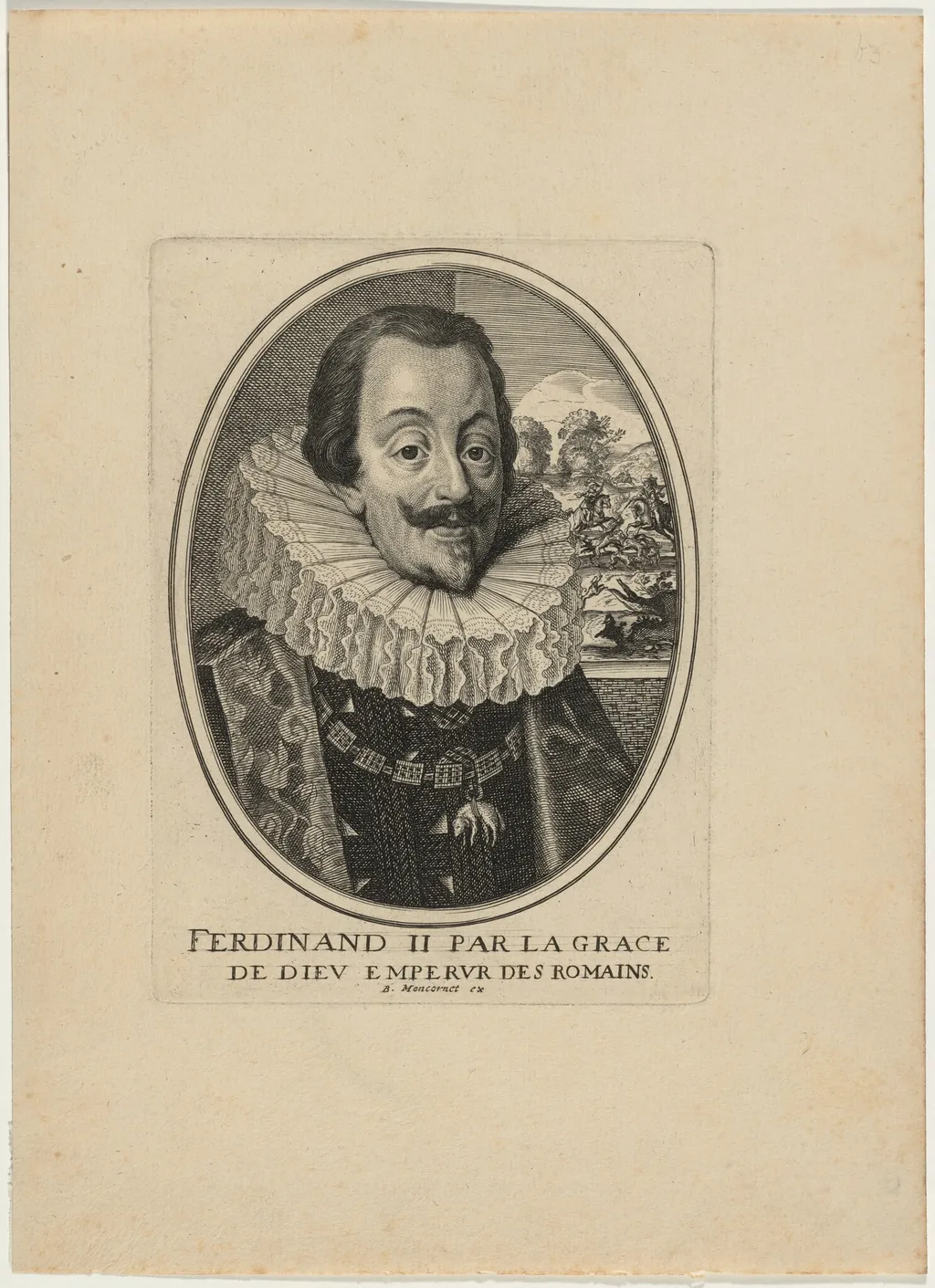
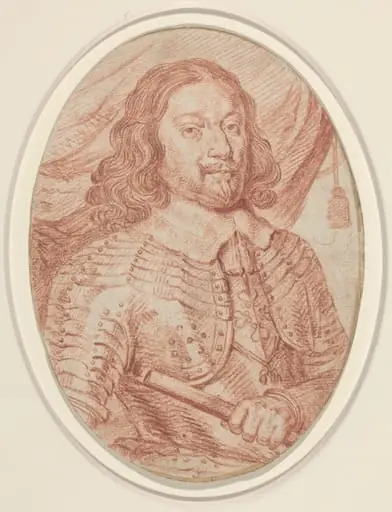
Ferdinand II, Par la Grace de Dieu Emperur des Romains is an ink print by the Baroque artist Balthasar Moncornet. It dates from 1634 and is held in the collection of the National Gallery of Art. This 1634 copper engraving presents Ferdinand II, Holy Roman Emperor, in a formal pose.
About this work
Overview
The inscription reads “Ferdinand II Par la Grace de Dieu Emperur des Romains,” and the artist’s signature appears as B.
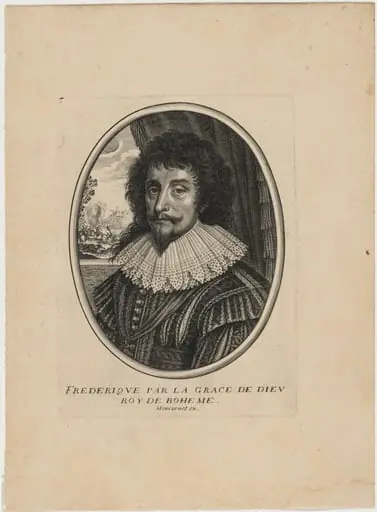
This 1634 copper engraving presents Ferdinand II, Holy Roman Emperor, in a formal pose. Rendered in stark black‑and‑white, the portrait shows the ruler with a moustache, ruffled collar, dark coat and a decorative chain across his chest, set against a modest landscape of trees and a distant building. The inscription reads “Ferdinand II Par la Grace de Dieu Emperur des Romains,” and the artist’s signature appears as B. Moncornet ex.
Subject & Meaning
The image functions as a propagandistic portrait, emphasizing the emperor’s divine right and imperial authority. By foregrounding regal attire and the chain of office, the print conveys status and legitimacy, while the calm background suggests a stable realm under his governance. The Latin legend explicitly ties his rule to divine favor, a common claim among early‑modern sovereigns.
Technique & Style
Executed with fine line work typical of 17th‑century French engraving, the piece relies on cross‑hatching to model light and shadow on the figure’s garments and facial features. The crisp delineation of the ruff and chain demonstrates Moncornet’s skill in rendering texture, while the simplified landscape provides a balanced composition without detracting from the central portrait.
History & Provenance
Balthasar Moncornet, a noted French painter, engraver and tapestry designer, produced the work during a flourishing period for printmaking in France. The engraving was likely intended for circulation among courtly circles, reinforcing Ferdinand II’s image across Europe. Surviving copies are found in several museum collections, attesting to the print’s distribution and preservation since its 1634 issuance.
Context
Created amid the Thirty Years’ War, the portrait reflects the political climate in which Ferdinand II sought to assert his authority over a fragmented Holy Roman Empire. French artists like Moncornet often catered to both domestic and foreign patrons, and this engraving illustrates the cross‑national interest in depicting leading European rulers during a time of religious and territorial conflict.
Artist & collection
Artist
Balthasar Moncornet (1600, Rouen – 1668, Paris) was a French painter, engraver, and tapissier revered for his depictions of around 45 different prominent figures of the 17th century.