Artwork
Polifemo e Palemonio Argonauti condotti da Cerere
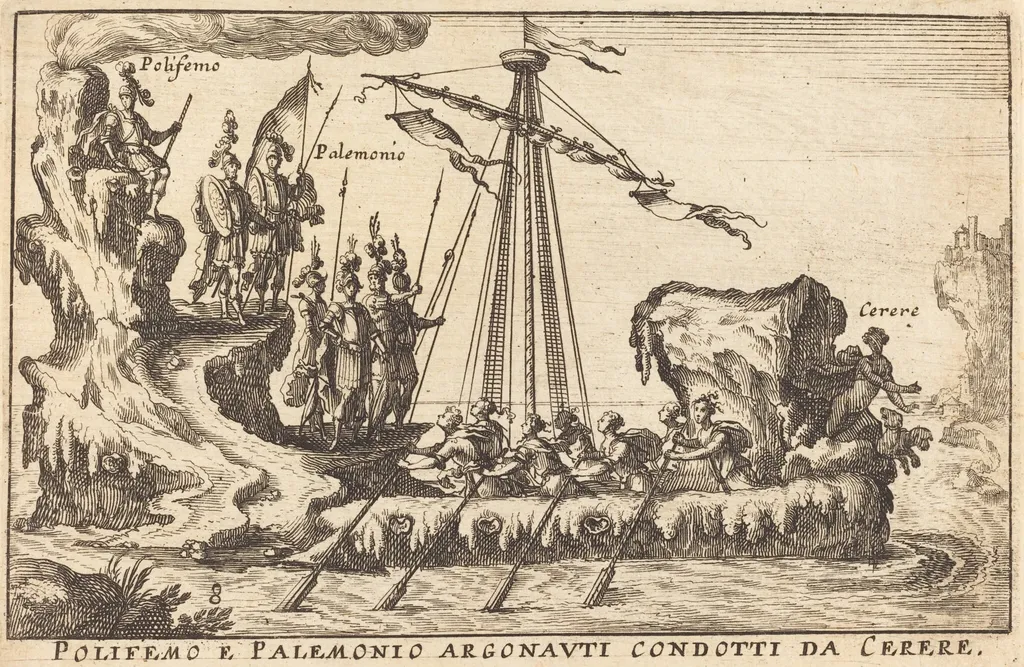
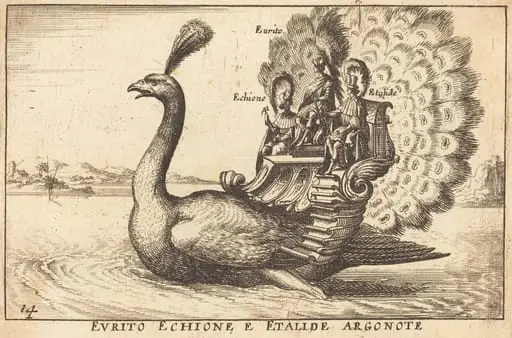
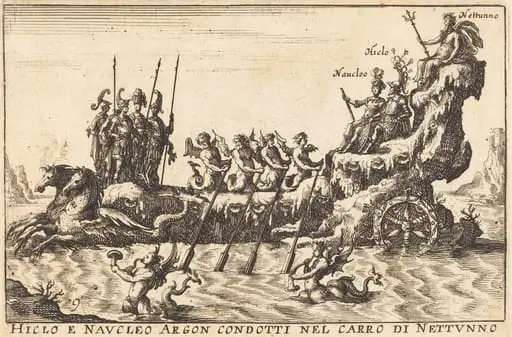
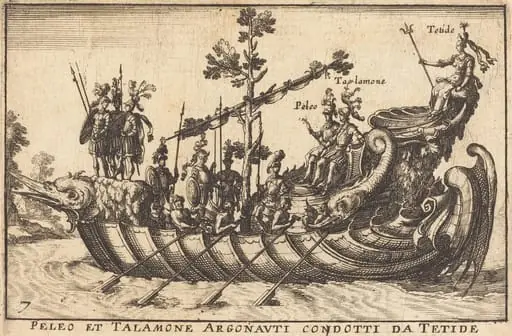
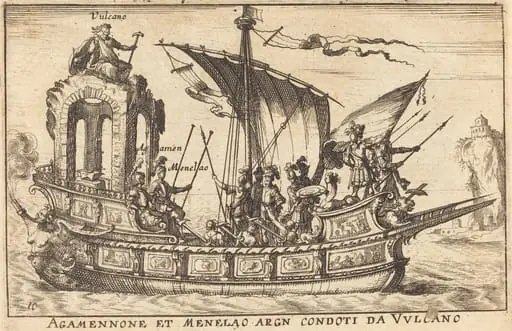
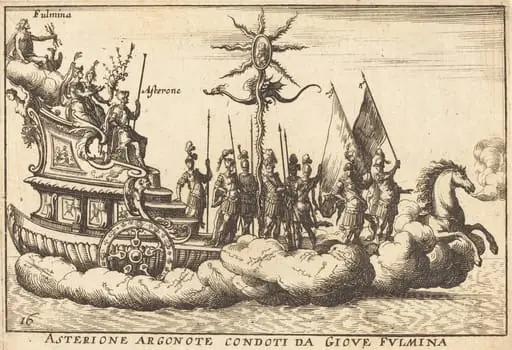
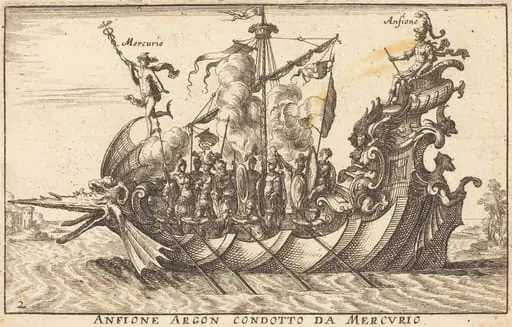
Polifemo e Palemonio Argonauti condotti da Cerere is an ink print by the Baroque artist Balthasar Moncornet. It dates from 1634 and is held in the collection of the National Gallery of Art.
About this work
Overview
Polifemo e Palemonio Argonauti condotti da Cerere is an etching on laid paper created by Balthasar Moncornet in 1634. It is a print depicting a scene from mythology.
Subject & Meaning
The etching shows a rocky island with a giant, labeled 'Cerere', and two figures, 'Polifemo' and 'Palemonio', on a cliff. A ship carrying numerous people sails nearby. The scene appears to be a narrative moment involving mythological or heroic figures, with the giant guiding or interacting with the others.
Technique & Style
The work is characterized by sharp lines that convey action and drama, typical of etching. Moncornet's engravings are known for combining narrative detail with technical precision, reflecting his skill as a printmaker.
History & Provenance
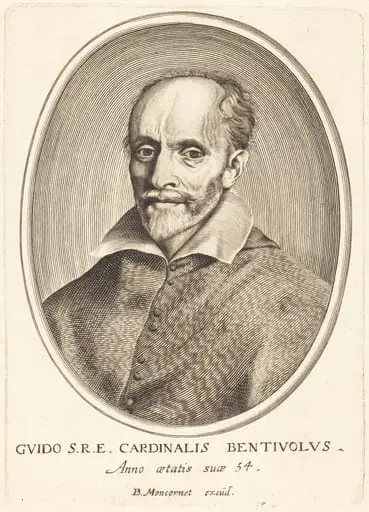
Balthasar Moncornet, a 17th-century French painter and engraver, created the etching in 1634. His work often engaged with historical and classical subjects, and he was known for portraying prominent figures of his time.
Artist & collection
Artist
Balthasar Moncornet (1600, Rouen – 1668, Paris) was a French painter, engraver, and tapissier revered for his depictions of around 45 different prominent figures of the 17th century.