Artwork
Idinone ea Mopso Argonoti guidati da Apollo
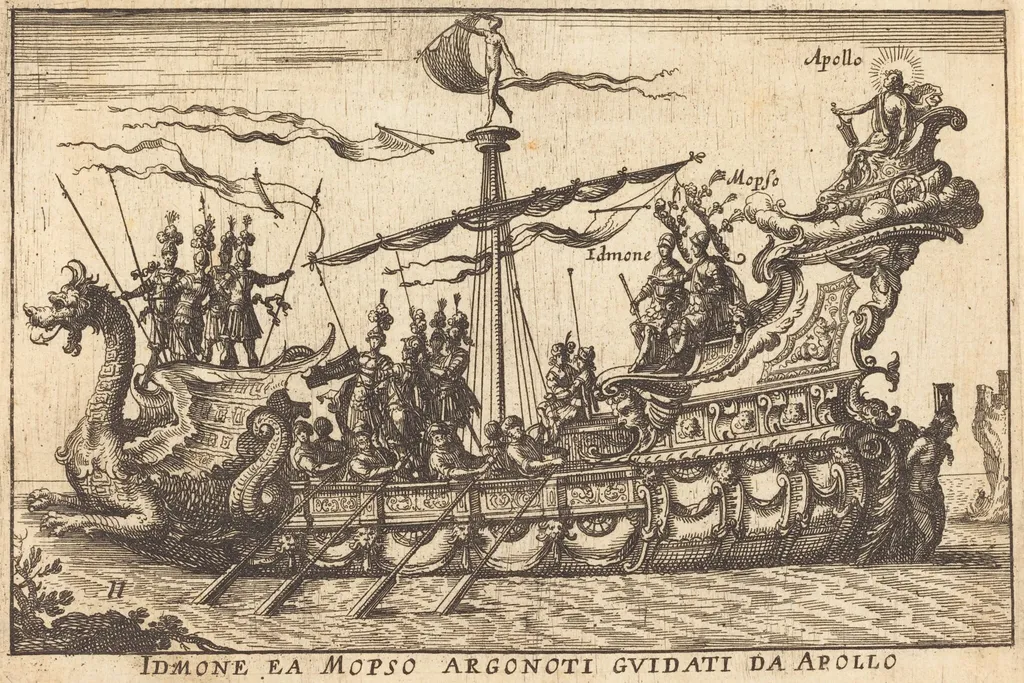
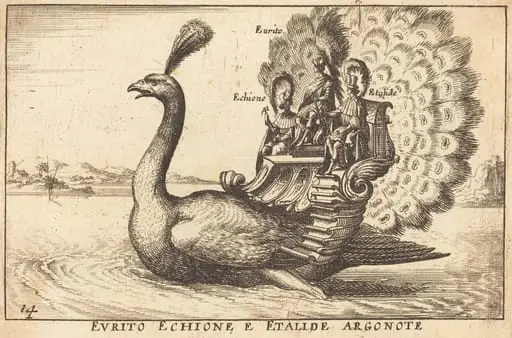
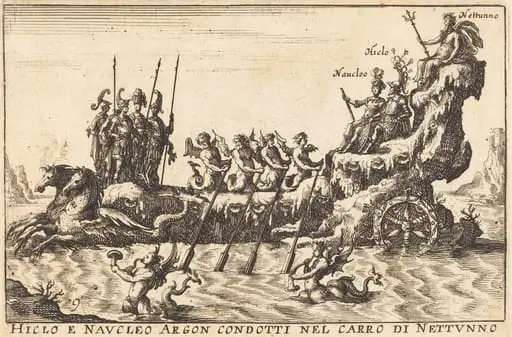
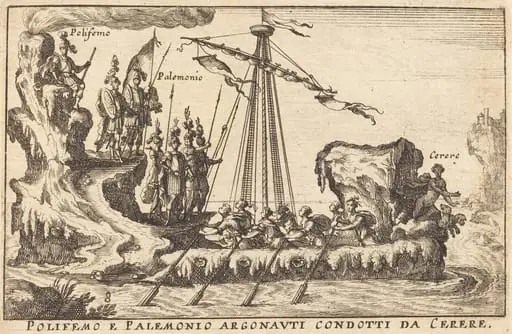
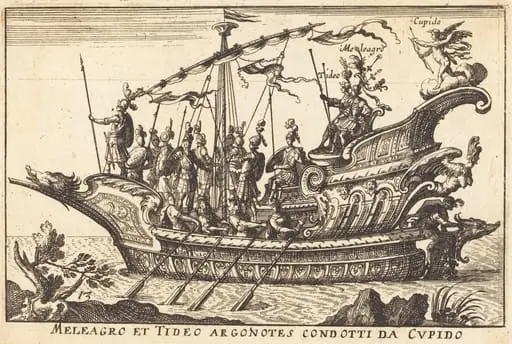
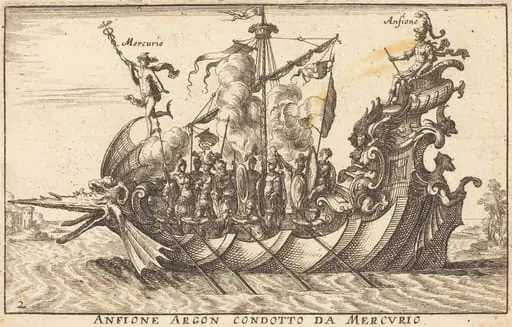
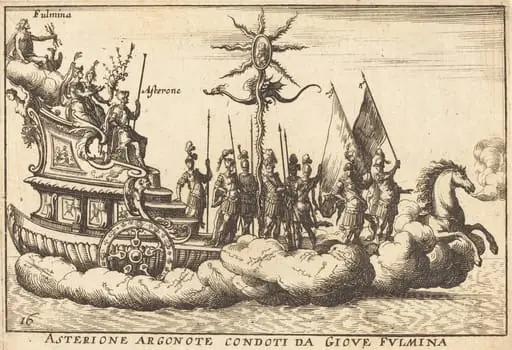
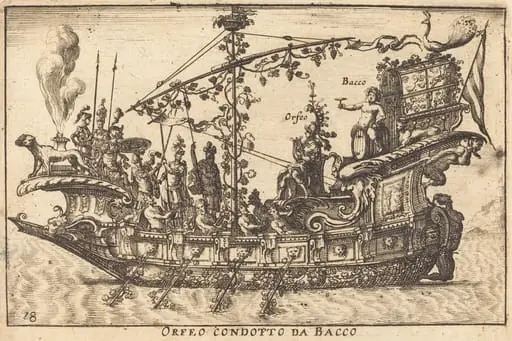
Idinone ea Mopso Argonoti guidati da Apollo is an ink print by the Baroque artist Balthasar Moncornet. It dates from 1634 and is held in the collection of the National Gallery of Art.
About this work
Overview
Balthasar Moncornet’s 1634 etching, executed on laid paper, presents a bustling maritime tableau drawn from Greek mythology.
Balthasar Moncornet’s 1634 etching, executed on laid paper, presents a bustling maritime tableau drawn from Greek mythology. The print captures a densely populated vessel, its deck crowded with sailors, deities, and ornamental details, while a prominent figure—Apollo—stands on an elevated platform brandishing a bow. The composition is framed by swirling clouds and intricate railings, emphasizing the dramatic movement of the scene.
Subject & Meaning
The image references the Argonauts, the legendary band of heroes who sailed with Jason in search of the Golden Fleece. Apollo’s presence as a guiding deity underscores the divine assistance attributed to the expedition. Flags bearing names such as *Mopso* and *Idmone* identify individual participants, reinforcing the narrative of a mythic voyage under celestial patronage.
Technique & Style
Moncornet employed the etching process, incising lines into a copper plate before transferring the image onto laid paper. The fine, cross‑hatched strokes render delicate textures—clouds, water, and fabric—while bold, deeper lines delineate the central figures and architectural elements. The print’s intricate detailing and balanced composition reflect the 17th‑century French penchant for elaborate, narrative-driven prints.
History & Provenance
Created in 1634, the work originates from Moncornet’s productive period as a painter‑engraver in Paris. Though specific ownership records are scarce, the etching circulated among collectors of mythological prints during the early modern era, aligning with contemporary tastes for classical subjects rendered in print form.
Context
The early 1600s witnessed a revival of classical themes in French art, driven by humanist scholarship and courtly patronage. Moncornet’s choice of the Argonautic episode mirrors this cultural climate, where myth served both decorative and didactic purposes, illustrating virtues such as bravery and divine favor within a visually engaging format.
Artist & collection
Artist
Balthasar Moncornet (1600, Rouen – 1668, Paris) was a French painter, engraver, and tapissier revered for his depictions of around 45 different prominent figures of the 17th century.