Artwork
The Penitence of Mary Magdalen
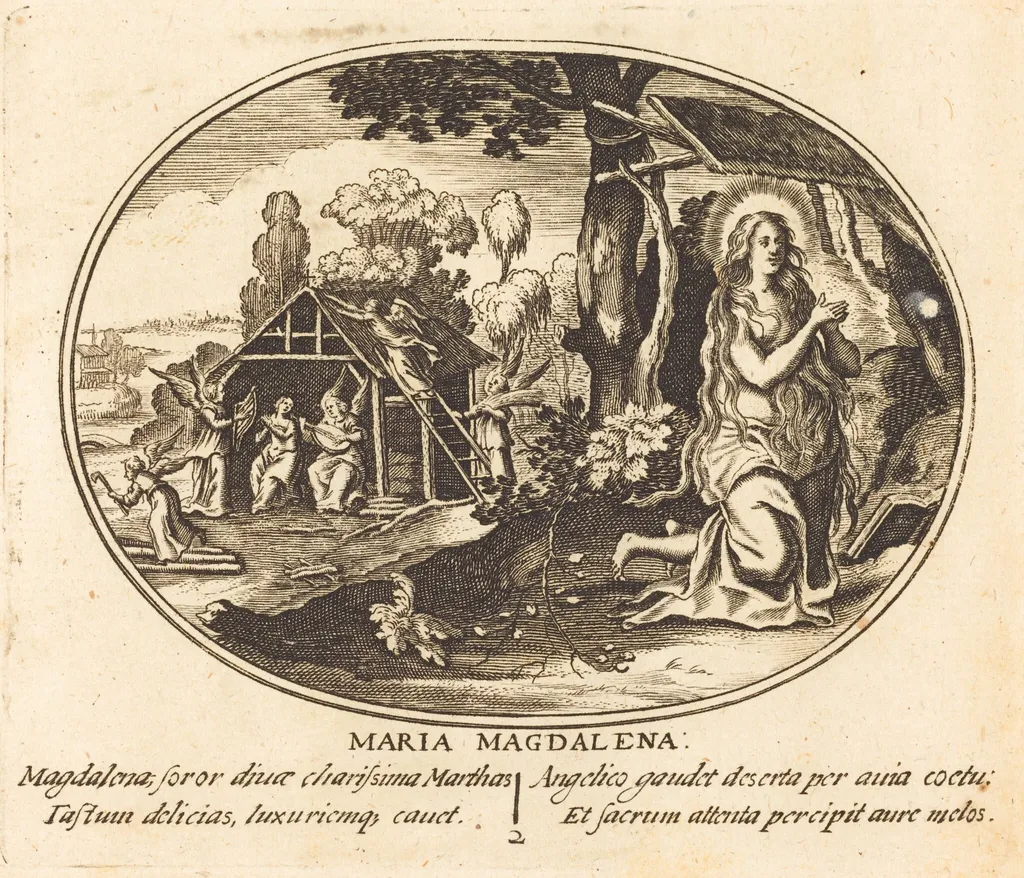
The Penitence of Mary Magdalen is an ink print by the Baroque artist Balthasar Moncornet. It dates from 1634 and is held in the collection of the National Gallery of Art.
About this work
Overview
Known for his portraits of contemporary figures, he turned here to a biblical theme, using the medium of engraving to explore spiritual introspection.
Balthasar Moncornet, a French artist active in the early 17th century, produced this engraving in 1634. Known for his portraits of contemporary figures, he turned here to a biblical theme, using the medium of engraving to explore spiritual introspection. The work belongs to a broader tradition of religious prints circulating in France during the Baroque period, where moral and devotional subjects were widely disseminated.
Subject & Meaning
The image portrays Mary Magdalen in a moment of solitary repentance, her posture and expression conveying humility and sorrow. She is depicted without ornate adornment, surrounded by subtle symbols—such as a skull and an overturned vessel—that reference her former life and the transience of earthly pleasures. This visual narrative aligns with Counter-Reformation ideals that emphasized personal contrition and the possibility of redemption.
Technique & Style
Moncornet employed fine, controlled lines and graded shading to model form and evoke emotional depth. The composition is restrained, focusing attention on the figure’s posture and facial expression. By minimizing background detail, he heightens the psychological intensity of the scene. The technique reflects the precision expected in engraved portraiture, adapted here to convey spiritual stillness rather than physical likeness.
History & Provenance
Created in 1634, the engraving was likely produced for private devotion or educational use among devout audiences. Moncornet’s prints were circulated in Parisian artistic circles and may have been collected by clergy or nobility interested in moral imagery. No definitive early ownership records survive, but its survival in institutional collections suggests continued interest in its devotional content through the centuries.
Context
In mid-17th-century France, religious imagery was shaped by the Catholic Church’s emphasis on personal piety and emotional engagement with sacred stories. Moncornet’s depiction of Mary Magdalen fits within this climate, mirroring sermons and devotional literature that portrayed her as a model of repentance. The quiet, inward focus of the scene contrasts with more dramatic Baroque treatments, reflecting a quieter, more intimate strain of religious expression.
Legacy
While Moncornet is better known for his portraits, this engraving remains a representative example of how religious themes were rendered in print for private contemplation. It contributed to the visual vocabulary of penitence in French art and influenced later depictions of sacred figures in print media. Its endurance in museum collections underscores its role as a quiet but persistent artifact of Baroque spirituality.
Artist & collection
Artist
Balthasar Moncornet (1600, Rouen – 1668, Paris) was a French painter, engraver, and tapissier revered for his depictions of around 45 different prominent figures of the 17th century.

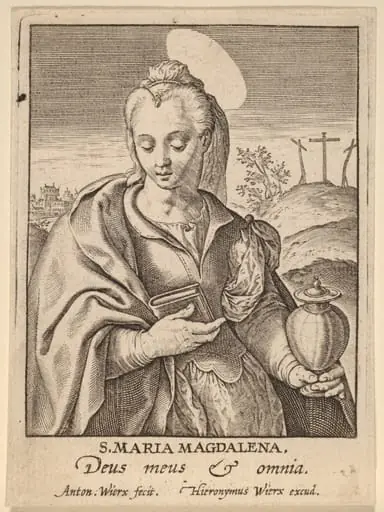 S. Maria Magdalena
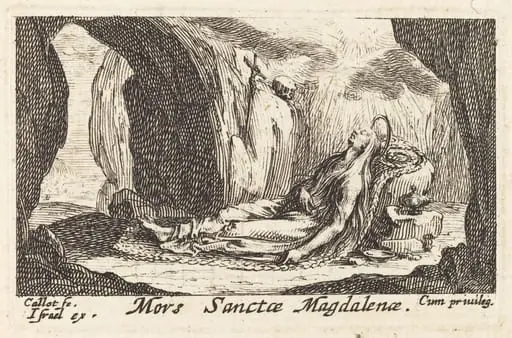 Death of the Magdalene
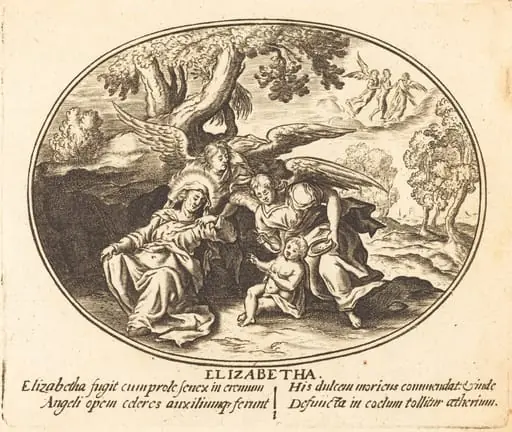 The Flight of Saint Elizabeth with the Infant Saint John
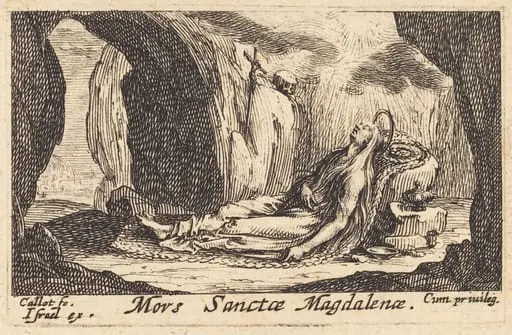 Death of the Magdalene
 The Annunciation
 La Madonna della Casa d' Alba
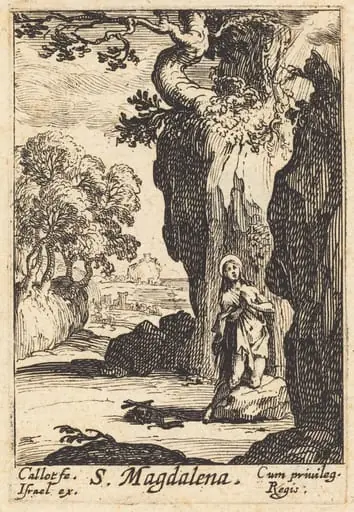 Saint Mary Magdalene
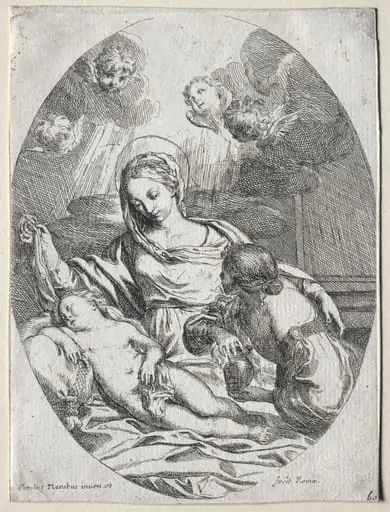 Madonna and Child with the Magdalen
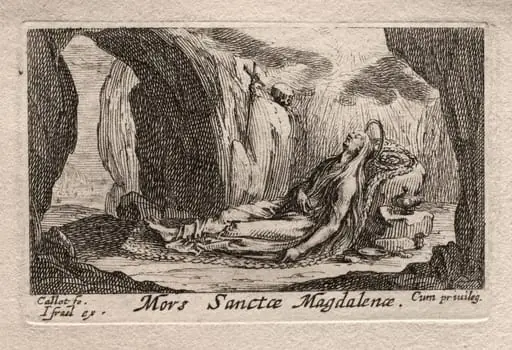 Les Penitents: Mort de Ste. Madeleine
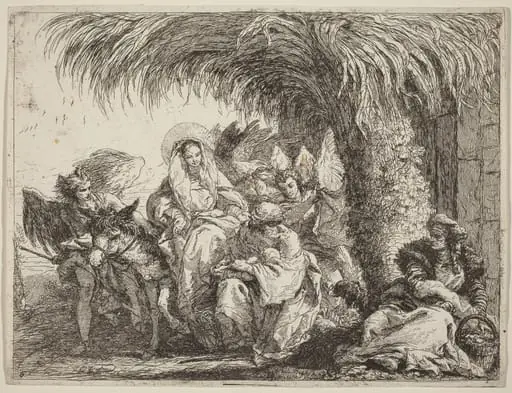 Joseph Kneels with the Child before Mary on the Donkey