Artwork
S. Maria Magdalena
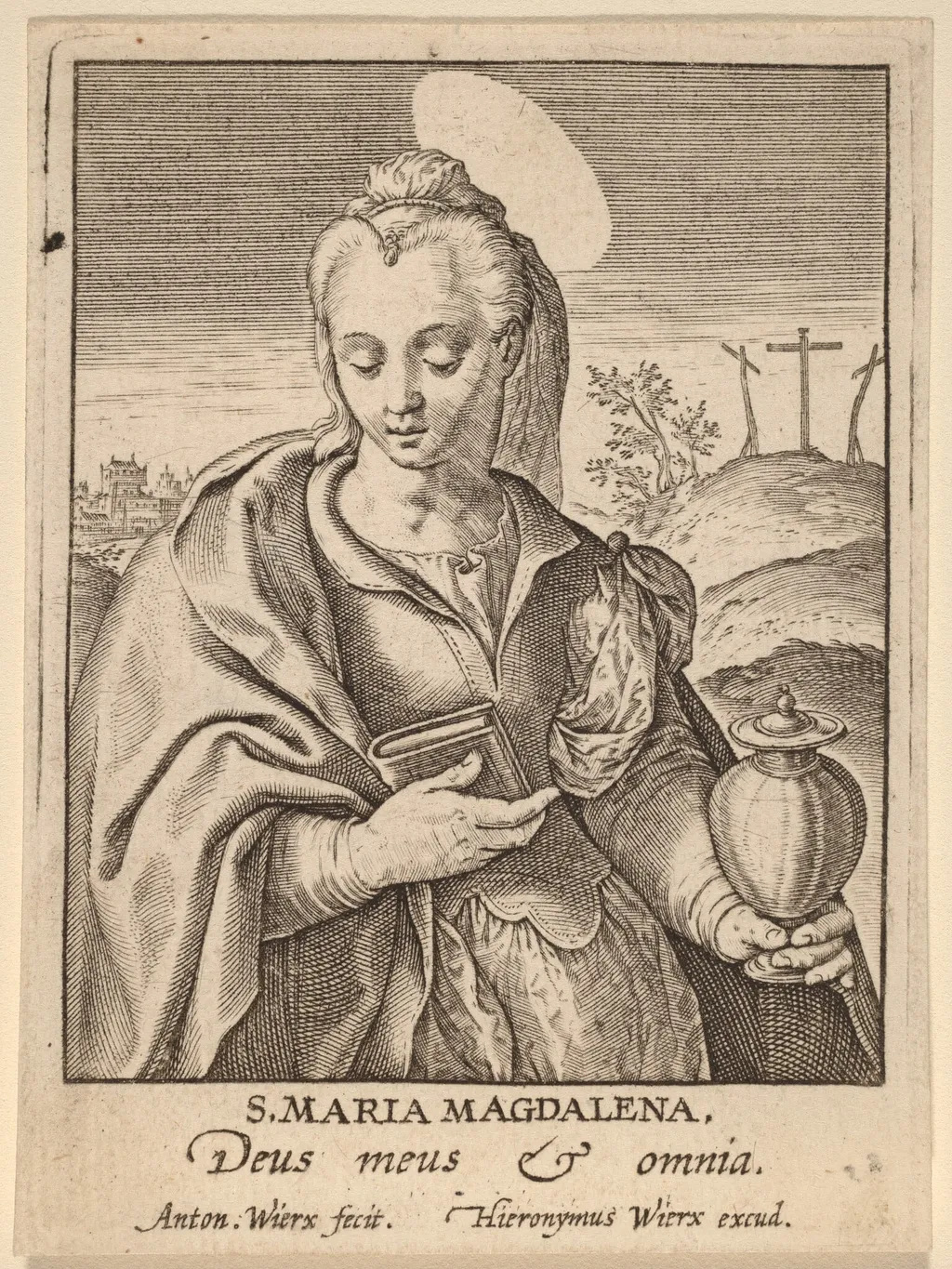
S. Maria Magdalena is an ink print by the Renaissance artist Anton Wierix. It dates from 1588 and is held in the collection of the National Gallery of Art.
About this work
Overview
Anton Wierix’s engraving titled S. Maria Magdalena was produced in 1588. Executed on a copper plate, the print presents a solitary female figure rendered in delicate line work. The composition is modest in scale, typical of devotional prints circulated in the late sixteenth century, and it survives as a representative example of Wierix’s early output.
Subject & Meaning
The image depicts a woman cloaked in a flowing robe, her head inclined upward, clutching a small jar. In early Christian iconography, such a vessel often signifies oil used for anointing, linking the figure to themes of purification and sanctity. The upward gaze may suggest contemplation or divine inspiration, reinforcing the work’s devotional intent.
Technique & Style
Wierix incised the design by hand with fine burins, producing a network of crisp lines and subtle cross‑hatching that model forms through tonal variation. The copper plate, once inked and pressed, transferred these details onto paper, yielding a print notable for its precise rendering and enduring clarity, hallmarks of the Wierix workshop’s craftsmanship.
History & Provenance
Created during the artist’s formative period, the engraving entered the market for private religious images in the Low Countries. Surviving copies have been documented in several European collections, indicating a modest circulation among collectors of devotional prints. No major alterations to the plate are recorded, allowing the original 1588 impression to be studied today.
Artist & collection


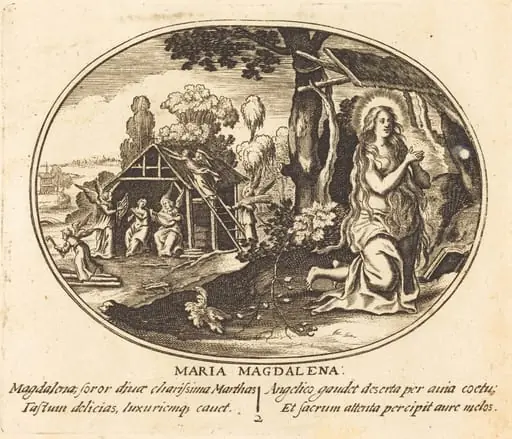 The Penitence of Mary Magdalen
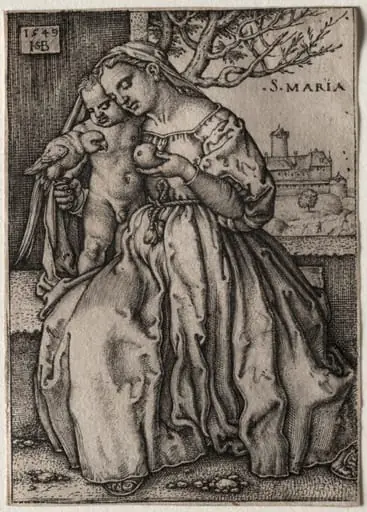 Virgin and Child with Parrot
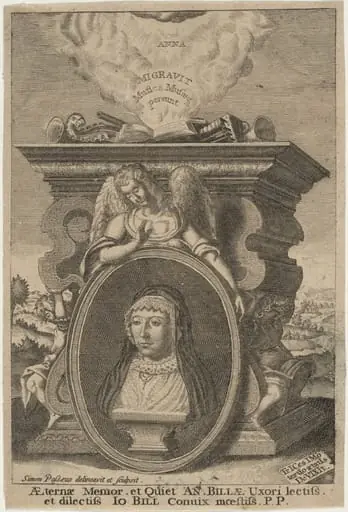 Anne Bill
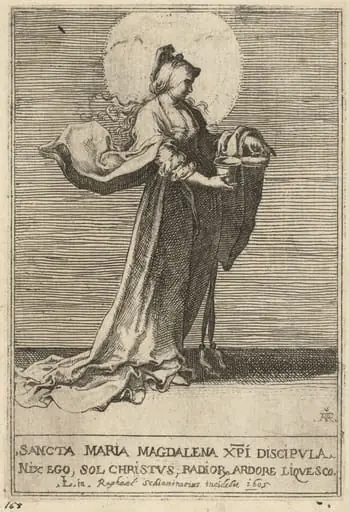 Saint Mary Magdalene
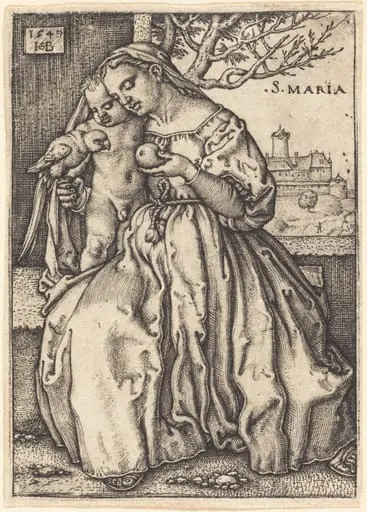 The Virgin and Child with a Parrot
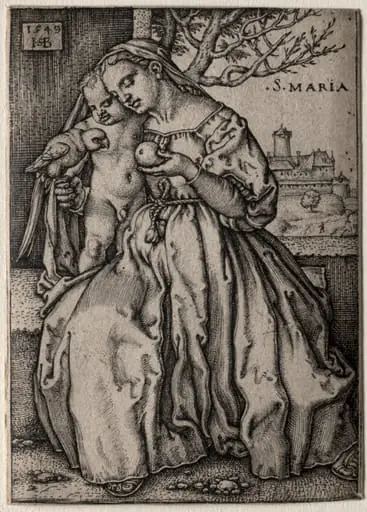 Virgin with the Parrot
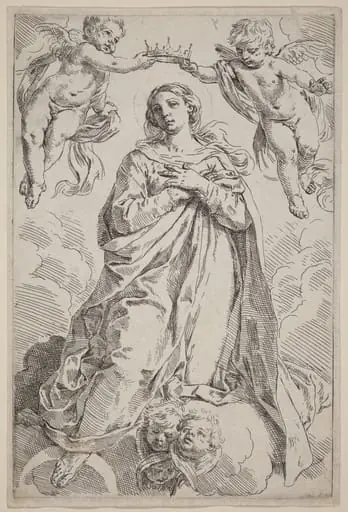 The Coronation of the Virgin
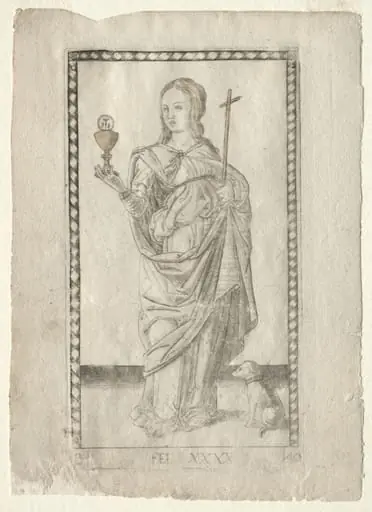 Faith (from the Tarocchi, series B: Cosmic Principles & Virtues, #40)
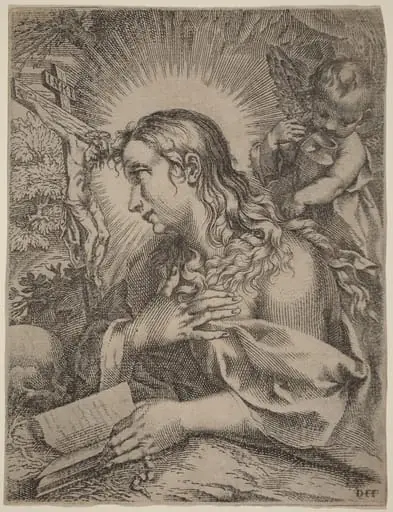 The Penitent Magdalene
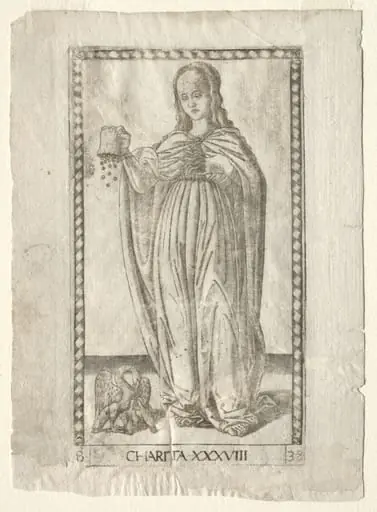 Charity (from the Tarocchi, series B: Cosmic Principles & Virtues, #38)
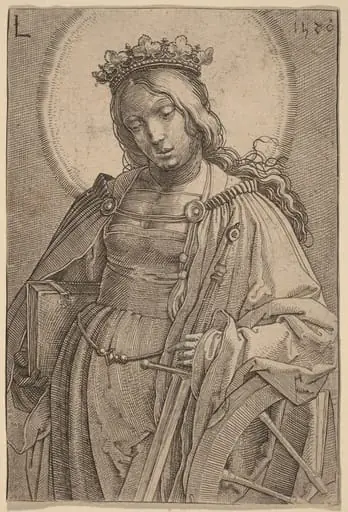 Saint Catherine
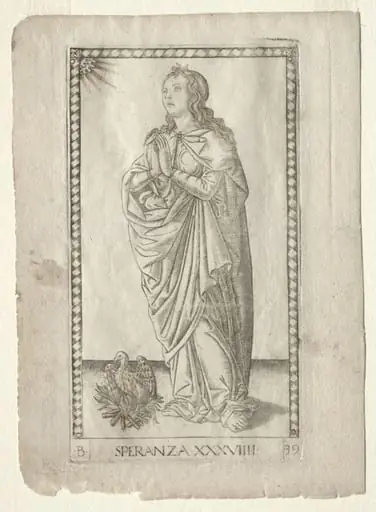 Hope (from the Tarocchi, series B: Cosmic Principles & Virtues, #39)