Artwork
Equestrian Statue of Marcus Aurelius
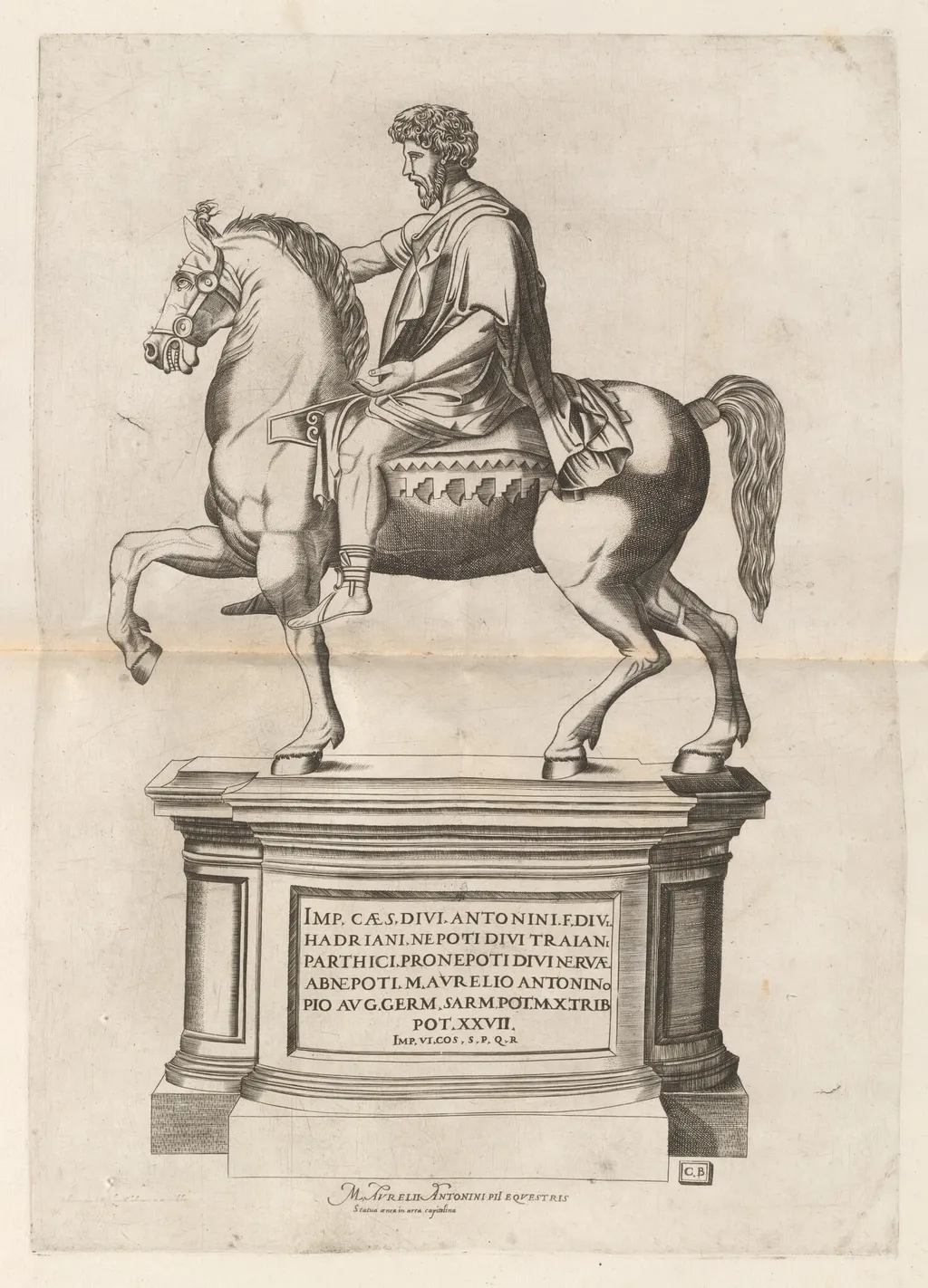
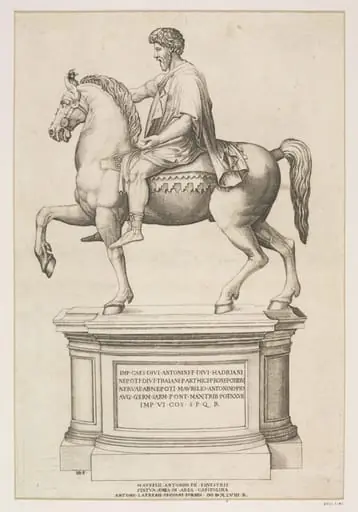
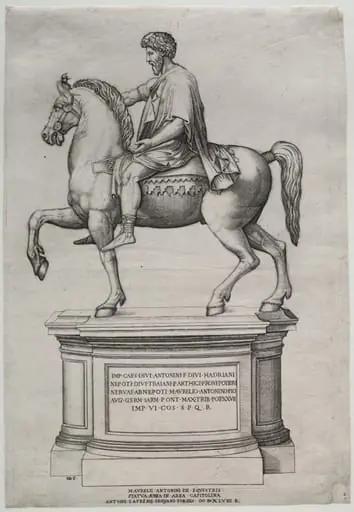
Equestrian Statue of Marcus Aurelius is an ink print by the Renaissance artist Monogrammist CB. It dates from 1548 and is held in the collection of the National Gallery of Art. The work is a copperplate engraving dated 1548, attributed to the anonymous artist known by the monogram CB.
About this work
Overview
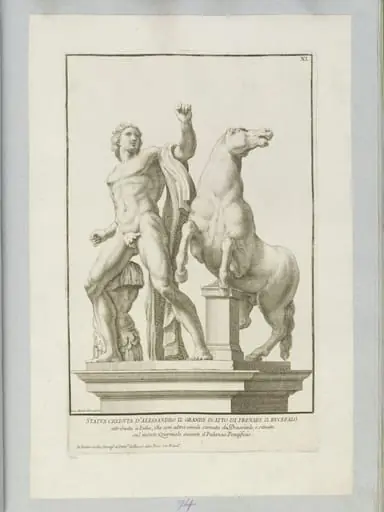
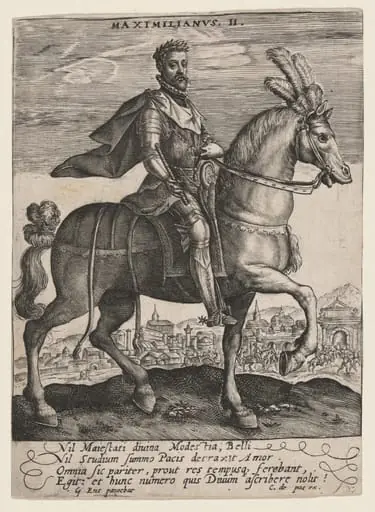
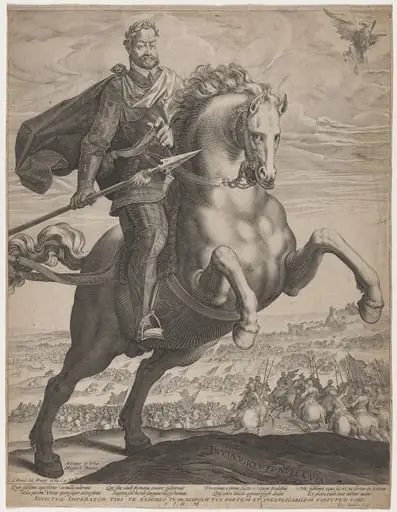
The work is a copperplate engraving dated 1548, attributed to the anonymous artist known by the monogram CB. It reproduces the famed equestrian statue of the Roman emperor Marcus Aurelius, presenting the figure mounted on a horse atop a sculpted pedestal.
Subject & Meaning
The image portrays the emperor in classical armor, a cloak draped over his shoulders, and a composed pose with one hand on the reins and the other on his hip. The composition emphasizes imperial authority and the martial virtues associated with the ruler.
Technique & Style
Executed with fine incised lines, the engraving renders the musculature of the horse and the intricate details of the armor through careful hatching and cross‑hatching. The use of tonal shading creates a sense of depth, while the carved columns and base provide architectural context.
History & Provenance
Created in the mid‑sixteenth century, the print reflects the Renaissance interest in antiquity and the circulation of classical motifs. The monogram CB remains unidentified, and the print’s early ownership records are scarce, though it appears in several contemporary collections of prints documenting Roman sculpture.
Context
During the 1500s, reproductions of ancient statues were popular among scholars and collectors seeking visual references to classical art. This engraving served both as a study tool for artists and as a means of disseminating the image of Marcus Aurelius beyond the original bronze statue in Rome.
Artist & collection