Artwork
Honorine Grimberge, comtesse de Bossu
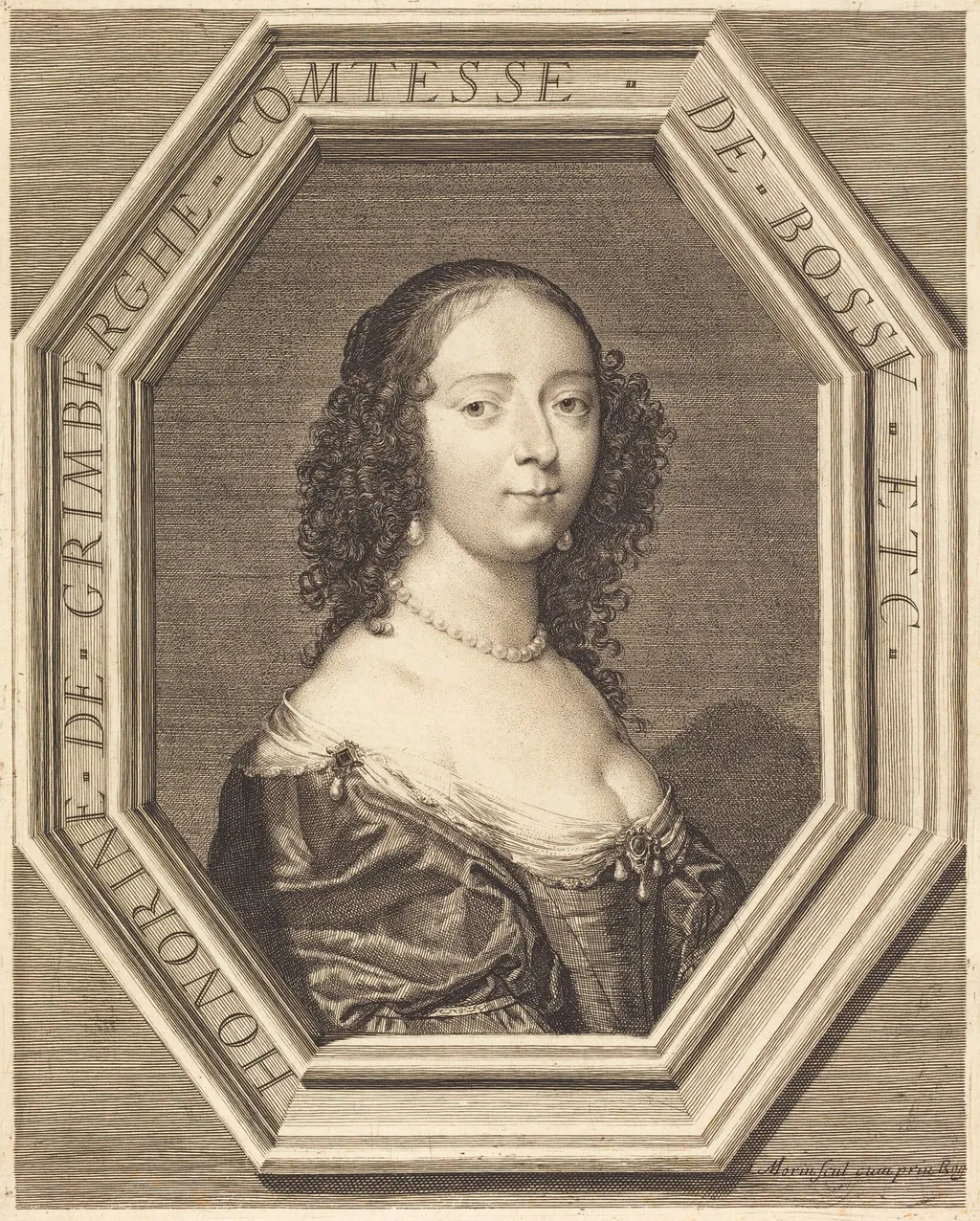
Honorine Grimberge, comtesse de Bossu is an ink print by the Baroque artist Jean Morin. It dates from 1625 and is held in the collection of the National Gallery of Art.
About this work
Overview
The work belongs to a tradition of portrait prints that served both as personal mementos and as markers of social status among European elites.
Created in 1625 by Jean Morin, this print portrays Honorine Grimberge, comtesse de Bossu, using a combination of etching, engraving, and stippling on laid paper. Morin, a French artist active in the early Baroque period, specialized in printmaking and was known for refining intaglio techniques. The work belongs to a tradition of portrait prints that served both as personal mementos and as markers of social status among European elites.
Subject & Meaning
The subject is Honorine Grimberge, a noblewoman of the French aristocracy, depicted in formal attire with a pearl necklace and high white collar. Her composed, frontal gaze and restrained expression reflect the dignity expected of noblewomen in the early 17th century. The portrait does not convey emotion but instead emphasizes lineage, refinement, and social standing through precise rendering of costume and jewelry.
Technique & Style
Morin employed layered intaglio methods—etching for soft tonal gradients, engraving for sharp linear definition, and stippling for subtle texture—to achieve a lifelike representation. The use of laid paper, with its characteristic chain lines, enhances the tactile quality of the image. The technique allows for nuanced modeling of skin and fabric, characteristic of Baroque printmaking’s pursuit of realism without color.
History & Provenance
The print was produced during Morin’s active years in Paris, where he operated as both artist and publisher. While specific early ownership records are sparse, such portraits were often circulated among aristocratic circles or used as diplomatic gifts. The work survives in institutional collections today, preserved as an example of French print culture in the decades before the rise of reproductive engraving.
Context
In early 17th-century France, portrait prints were valued for their ability to disseminate likenesses beyond painted originals. Morin’s work aligns with broader European trends in which printmakers translated portraiture into accessible formats. The emphasis on detail and texture reflects the Baroque era’s fascination with materiality and the human form, even in monochrome media.
Legacy
Jean Morin’s technical experimentation influenced later printmakers in France and the Netherlands. Though not widely known today, his integration of multiple intaglio methods helped expand the expressive range of portrait prints. This work remains a documented example of how aristocratic identity was visually codified and reproduced in print during the Baroque period.
Artist & collection
Artist
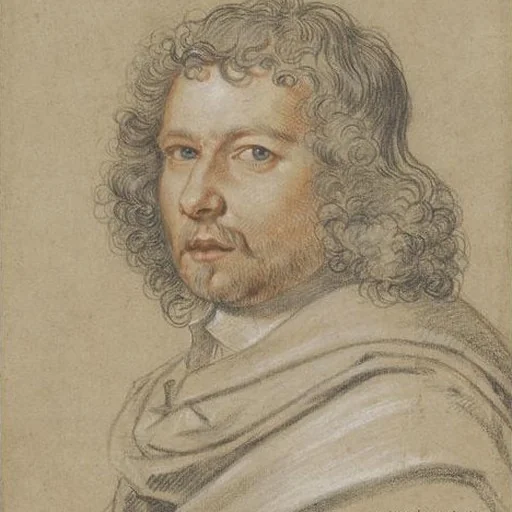
Jean Morin (c.1595 or 1605 – 1650) was a French baroque painter, printmaker, painter, etcher, engraver and publisher.

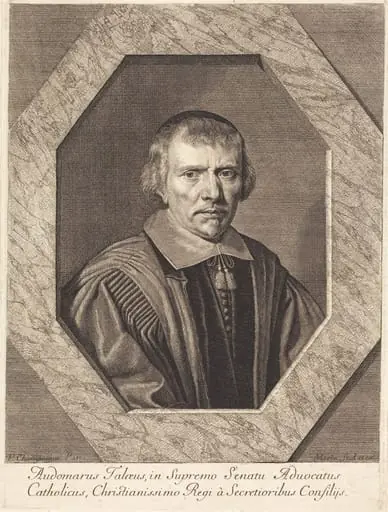
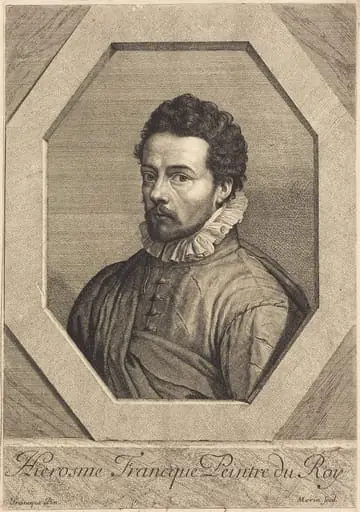
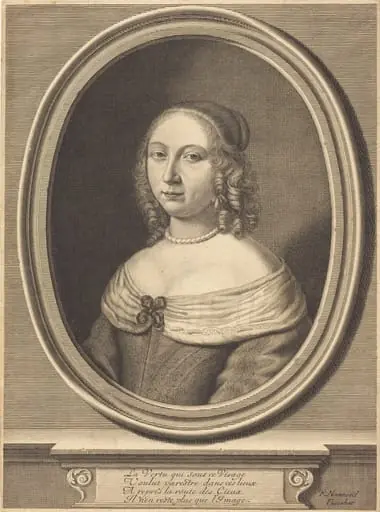 Madame de Gillier
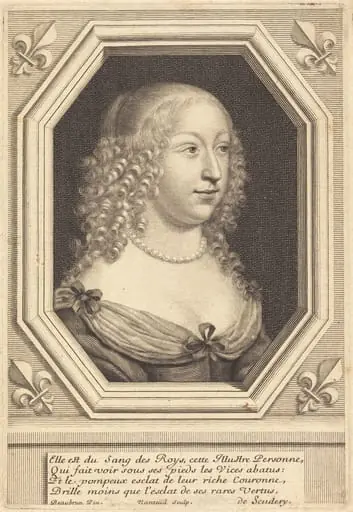 Marie d'Orléans-Longueville, Duchesse de Nemours
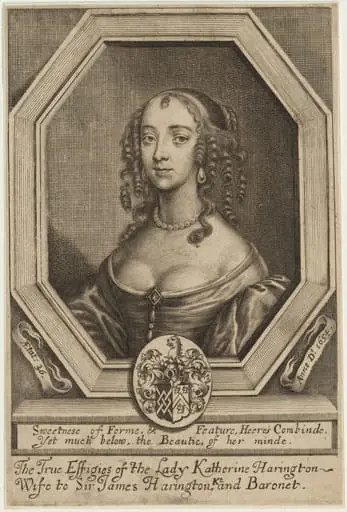 Lady Katherine Harrington
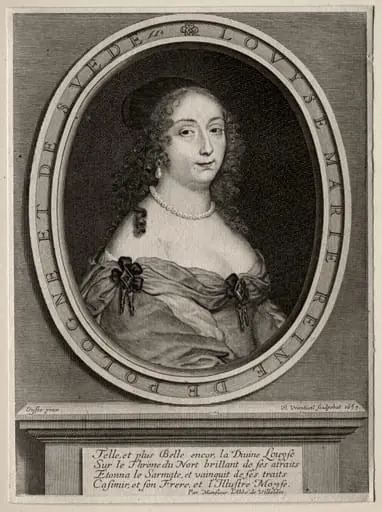 Marie Louise de Gonzague, Reine de Pologne
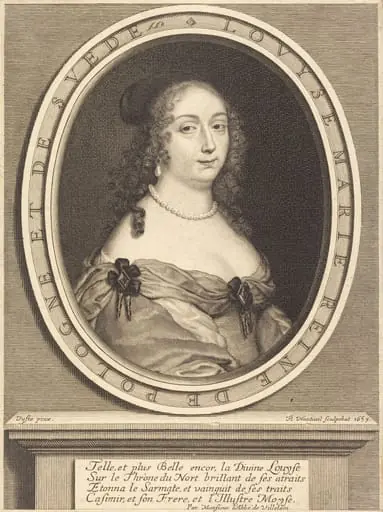 Louis-Marie, Queen of Poland
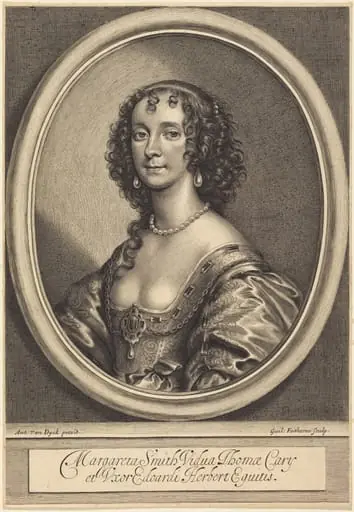 Margaret Smith
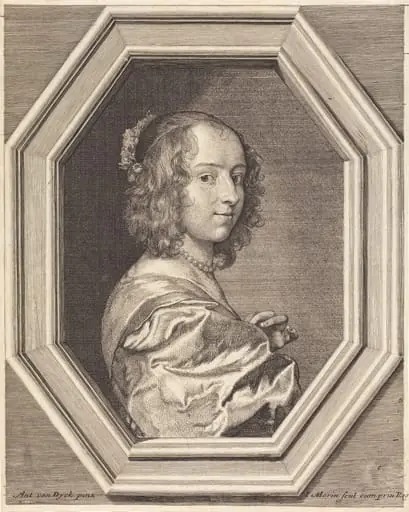 Marguerite Lemon
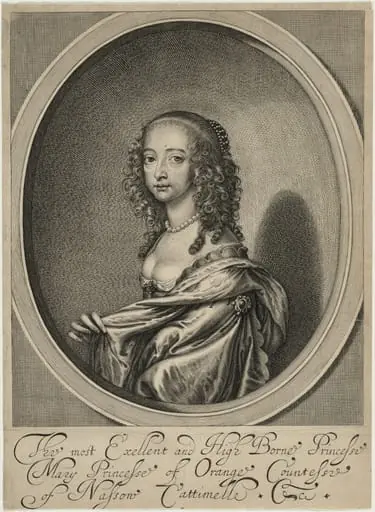 Mary, Princess of Orange
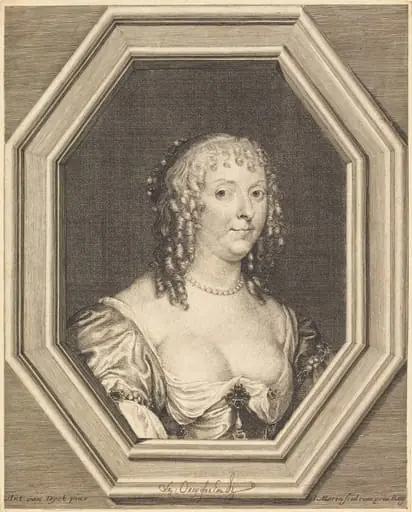 Anne Sophie Herbert, comtesse de Carnarvon
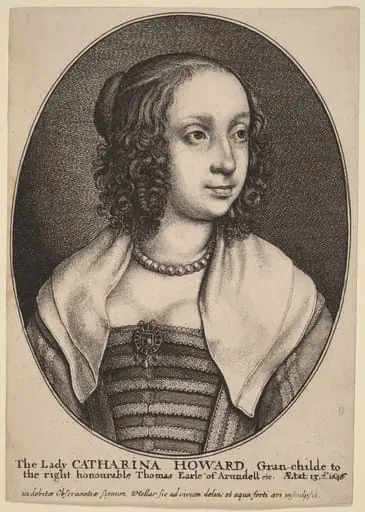 Lady Catherine Howard
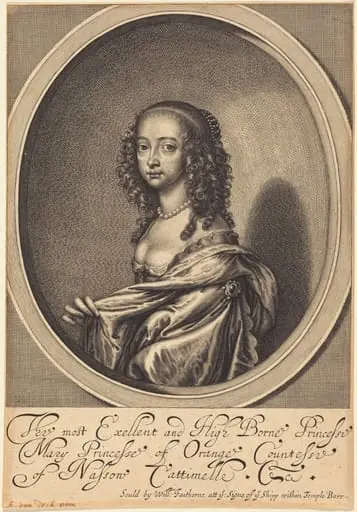 Mary, Princess of Orange
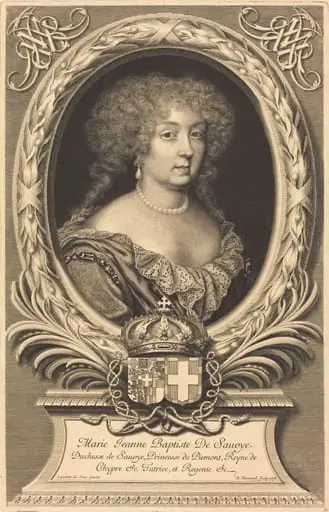 Marie-Jeanne-Baptiste, Duchesse de Savoie