Artwork
Coast Scene
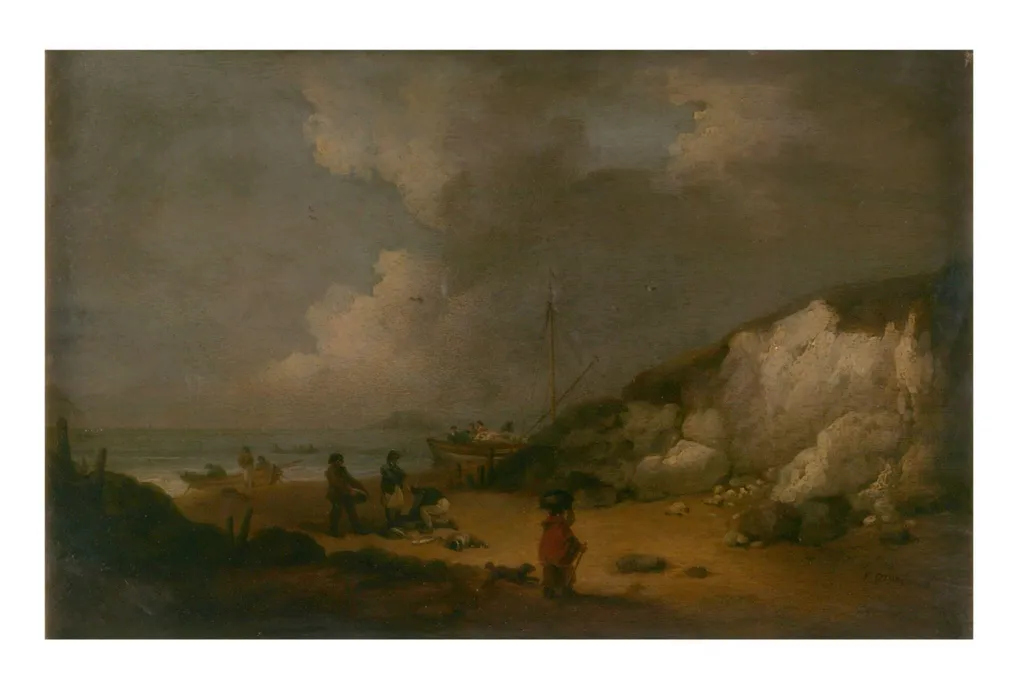
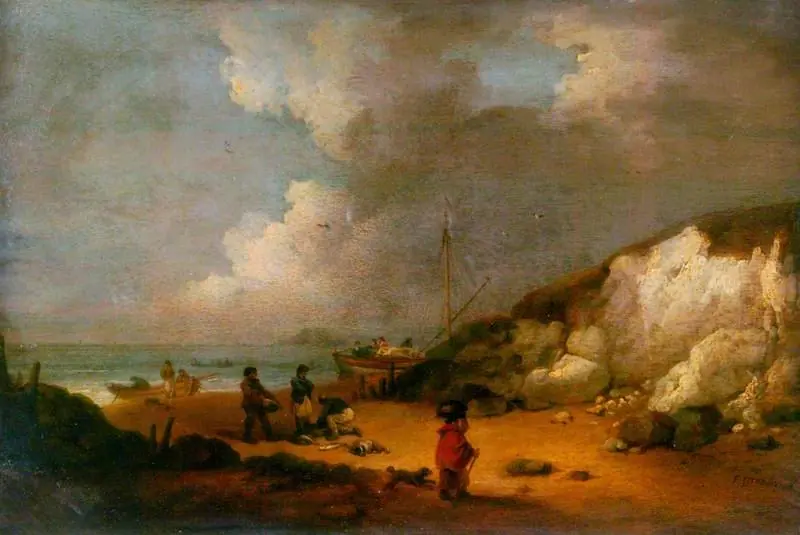
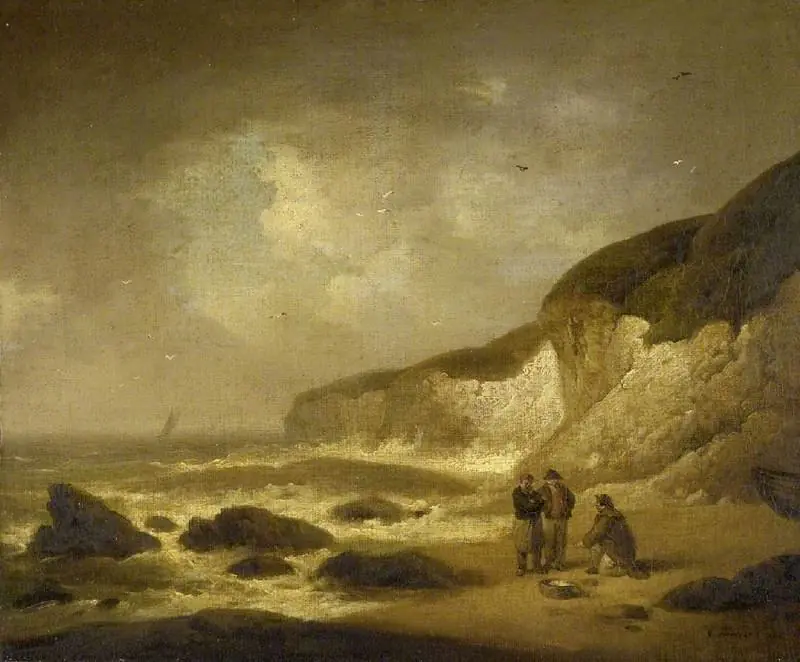
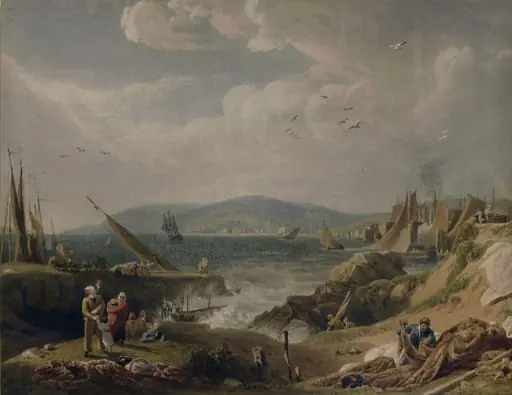
Coast Scene is an oil painting by the British Romanticist artist George Morland. It dates from 1792 and is held in the collection of the Victoria and Albert Museum.
About this work
Overview
Coast Scene is an oil-on-canvas painting created by George Morland in 1792. It represents a shift towards realism in the English genre tradition of the late 18th century, moving away from idealized depictions of rural life.
Subject & Meaning
The painting portrays a rocky, deserted beach with a few figures engaged in everyday activities amidst a stormy atmosphere. The scene conveys a sense of quiet solitude, emphasizing the practical realities of coastal life over romanticization.
Technique & Style
Morland's style in Coast Scene blends contemporary influences with techniques learned from the Dutch School during his apprenticeship under his father. Characteristic soft brushstrokes merge the dark, dramatic sky with the pale, jagged cliffs, while muted colors are warmed by the figures' attire.
History & Provenance
Completed in 1792, Coast Scene reflects Morland's departure from earlier idealized pastoral traditions, instead focusing on unidealized realism. His experience under his father's tutelage is evident in the work's blend of Dutch School techniques with English genre painting.
Context
Coast Scene aligns with the precursor movements to Romanticism, emphasizing mood, everyday life, and the power of nature. It shares thematic and stylistic elements with works that would later be classified under the Romantic movement.
Legacy
While not explicitly categorized as Romantic, Coast Scene's emphasis on emotional atmosphere and realistic depiction of common life contributes to the broader artistic transition towards Romanticism in the early 19th century.
Artist & collection
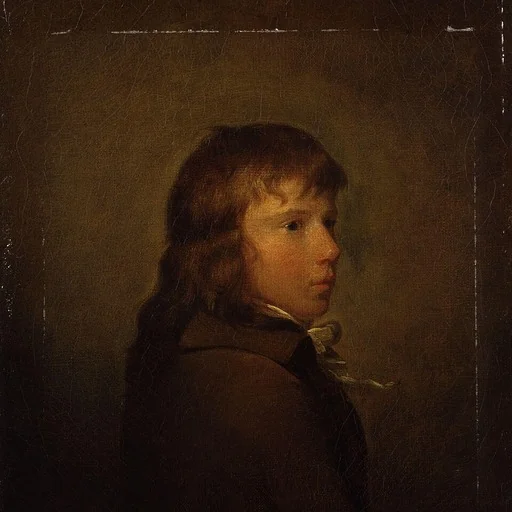
Artist
George Morland (26 June 1763 – 29 October 1804) was an English painter. His early work was influenced by Francis Wheatley, but after the 1790s he came into his own style. His best compositions focus on rustic scenes:…