Artwork
A Peasant from the Bekaa
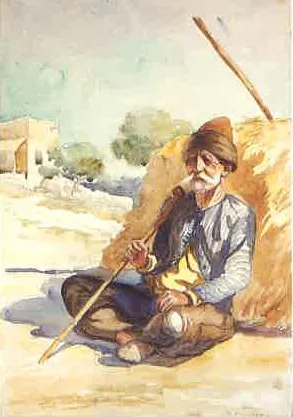
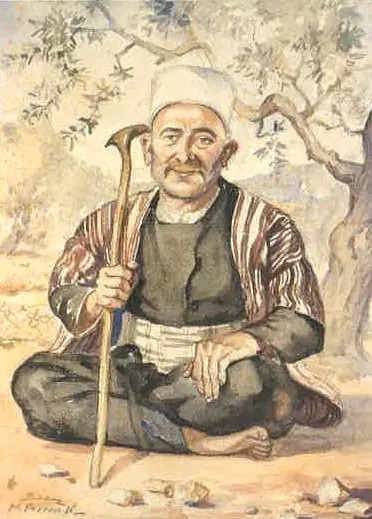
A Peasant from the Bekaa is a watercolor painting by Moustafa Farroukh. It dates from 1939 and is held in the collection of the Sursock Museum.
About this work
Overview
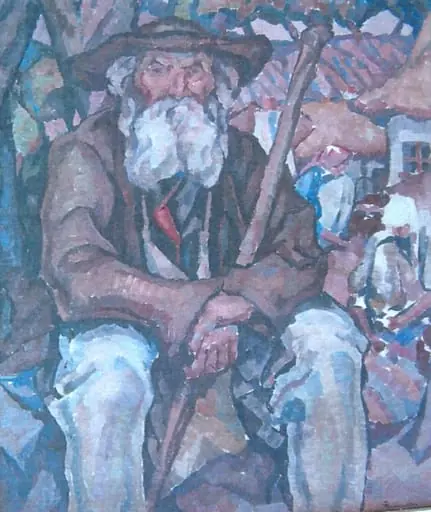
Created circa 1939, this watercolor by Moustafa Farroukh portrays a solitary agricultural worker seated amid a heap of hay, with a modest dwelling and trees receding under a broad sky. The figure, clad in a long‑sleeved shirt, trousers, and a hat, holds a staff in his right hand, his expression calm and contemplative.
Subject & Meaning
The work concentrates on a single peasant from Lebanon’s Bekaa Valley, emphasizing the dignity of rural labor and the quiet rhythms of countryside life. By placing the figure against an expansive sky and simple architecture, Farroukh suggests a harmonious relationship between the individual, the land, and the environment that sustains him.
Technique & Style
Executed in watercolor, the painting employs translucent washes that blend softly, lending a muted, atmospheric quality to the scene. Delicate layering creates depth in the sky and foliage, while the subtle modulation of tones renders the hay and clothing with a gentle realism, reinforcing the work’s tranquil mood.
History & Provenance
Moustafa Farroukh, a prolific Lebanese artist who produced over two thousand works and wrote several books, completed this piece during a period of heightened interest in national subjects. The painting entered the collection of the Sursock Museum, where it remains part of the institution’s representation of early‑20th‑century Lebanese art.
Artist & collection
Artist
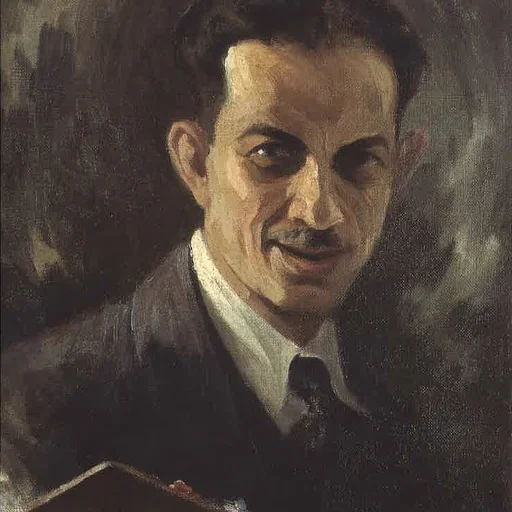
Moustafa Farroukh (Arabic: مصطفى فروخ; 1901 – 1957) was one of Lebanon's most prominent painters of the 20th century.