Artwork
The Village Guard
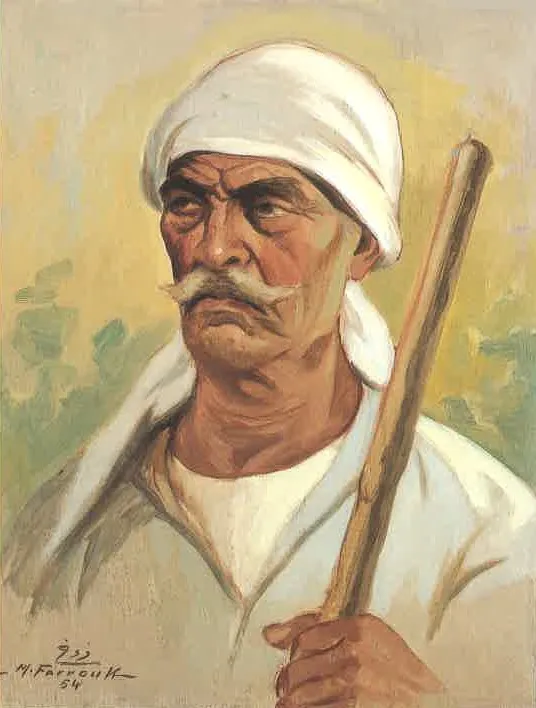
The Village Guard is an oil painting by Moustafa Farroukh. It dates from 1939 and is held in the collection of the Sursock Museum.
About this work
Overview
The Village Guard is a plywood painting created by Lebanese artist Moustafa Farroukh circa 1939. The work is a portrait of a solemn, moustachioed man wearing a white turban and shirt, holding a stick in his right hand, set against a predominantly yellow background with green accents.
Subject & Meaning
The subject, a man of authority implied by his attire and stance, reflects Farroukh's emphasis on figural representation, capturing a figure of potential local significance or archetype.
Technique & Style
Farroukh employed plywood as the painting's base, an unconventional choice for the time. The use of chiaroscuro, a technique emphasizing strong contrasts between light and dark, adds depth to the composition, though specifics of its application in this work are not detailed here.
History & Provenance
Created around 1939, The Village Guard is part of the extensive oeuvre of Moustafa Farroukh, who produced over 2,000 works and authored five books, cementing his prominence in Lebanon's 20th-century art scene. The piece is currently housed in the Sursock Museum's collection.
Context
Within the broader context of Lebanese art in the mid-20th century, The Village Guard represents Farroukh's contribution to the development of modern Lebanese painting, focusing on everyday figures and potentially exploring themes of identity and community.
Legacy
As part of Farroukh's vast body of work, The Village Guard contributes to his legacy as a prolific artist and writer who played a central role in shaping Lebanon's artistic identity during his lifetime.
Artist & collection
Artist
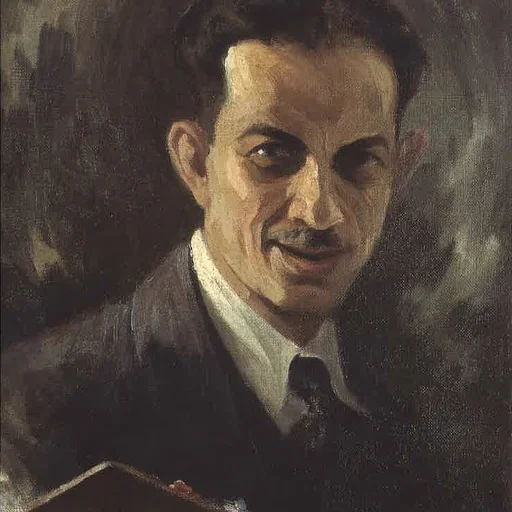
Moustafa Farroukh (Arabic: مصطفى فروخ; 1901 – 1957) was one of Lebanon's most prominent painters of the 20th century.

 Three Paintings of a Muleteer (2)
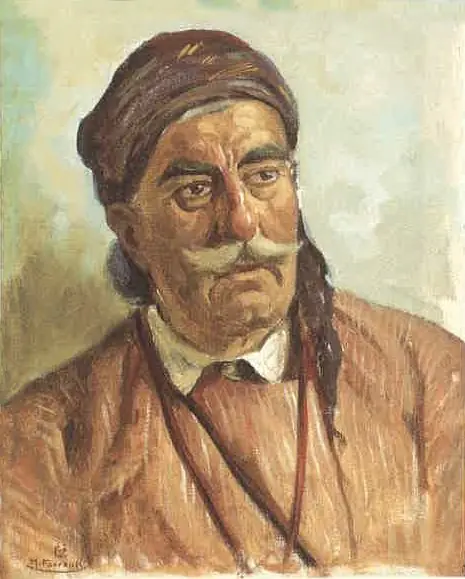 Portrait of a Qawwas
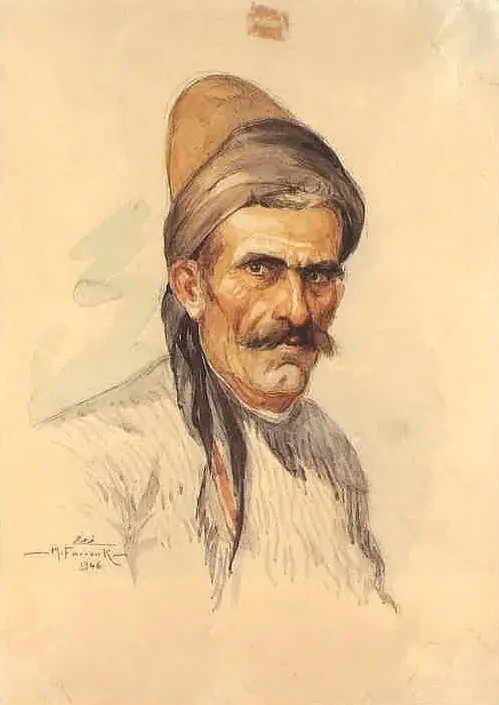 Three Paintings of a Muleteer (1)
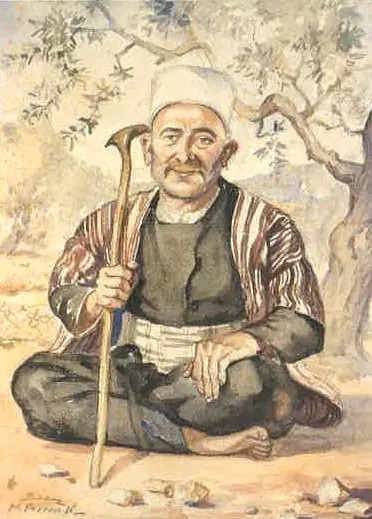 A Druze from the Chouf
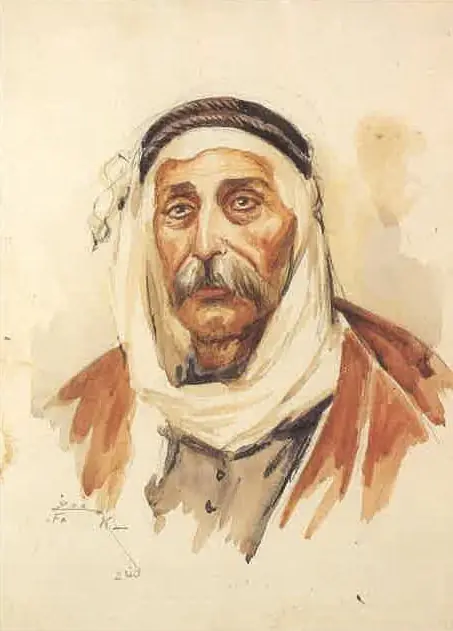 Portrait of Hussein Mahmoud Al-Hajj Darwich
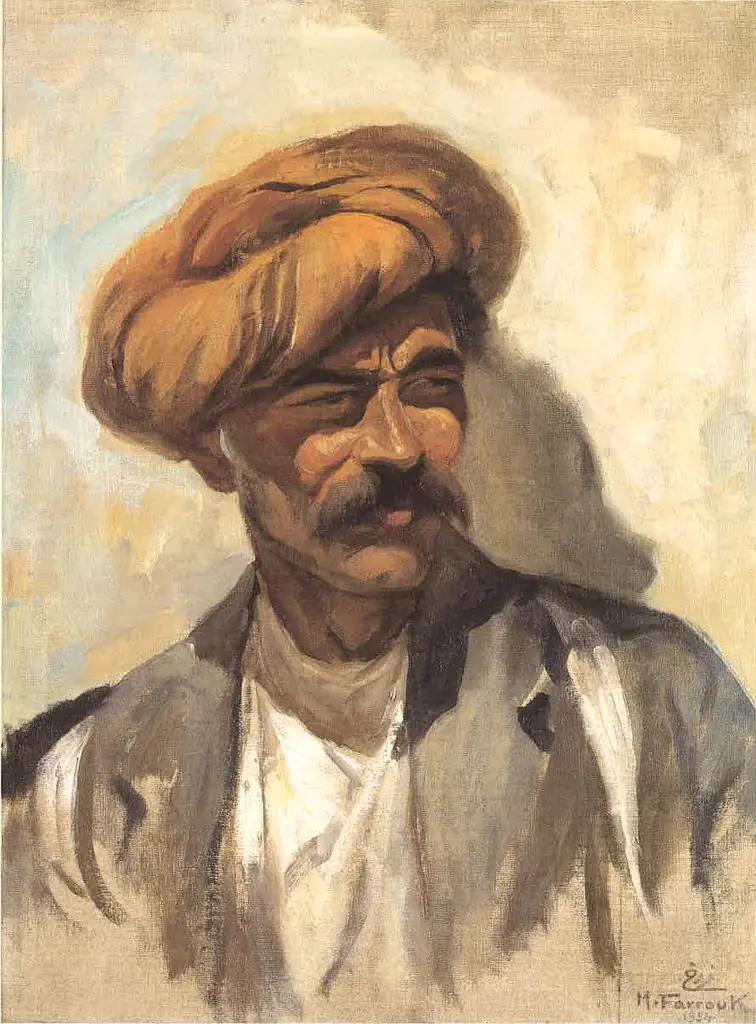 A Kurdish Porter
 A Druze Sheikh
 A Peasant from the Bekaa
 Portrait of a Lebanese Villager
 Three Paintings of a Muleteer (3)
 Portrait of a Bedouin Woman
 The Bohemian