Artwork
Portrait of Amin Pasha Moukhaiech (1905)
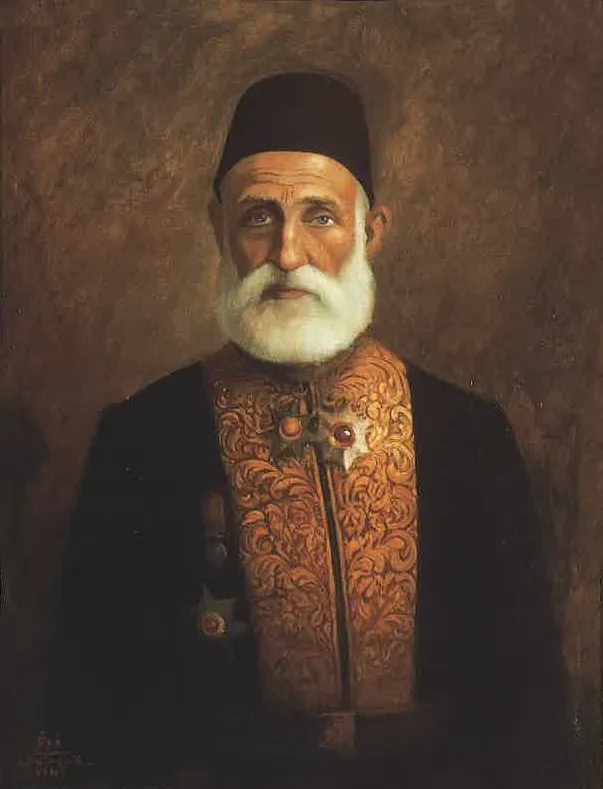
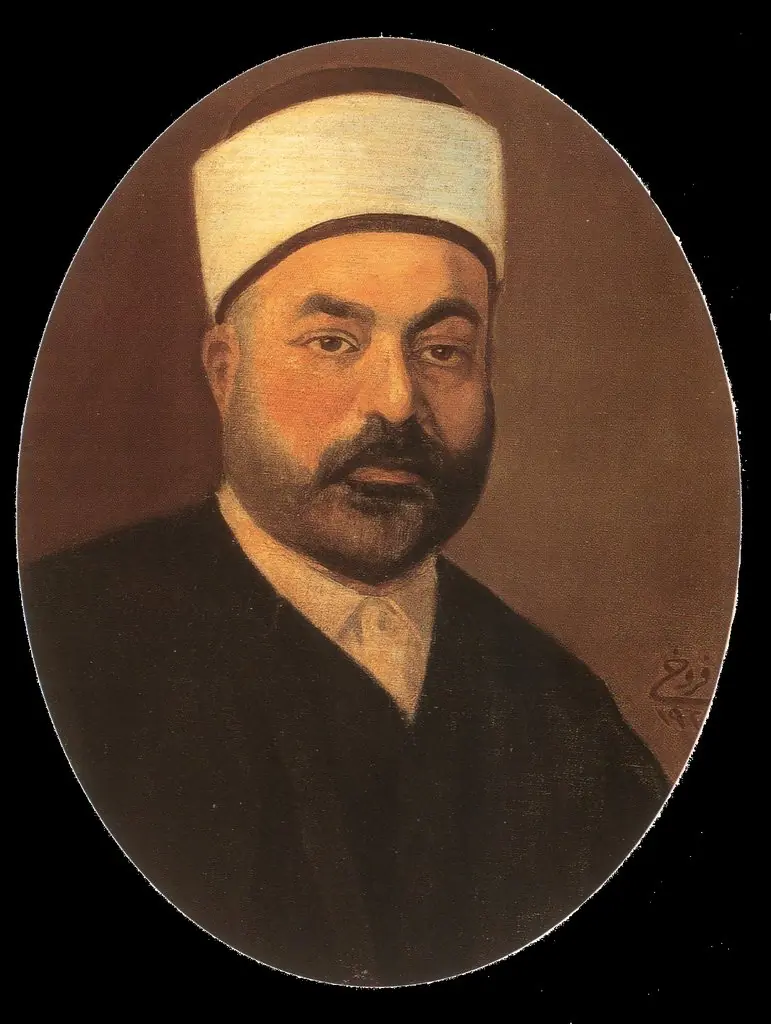
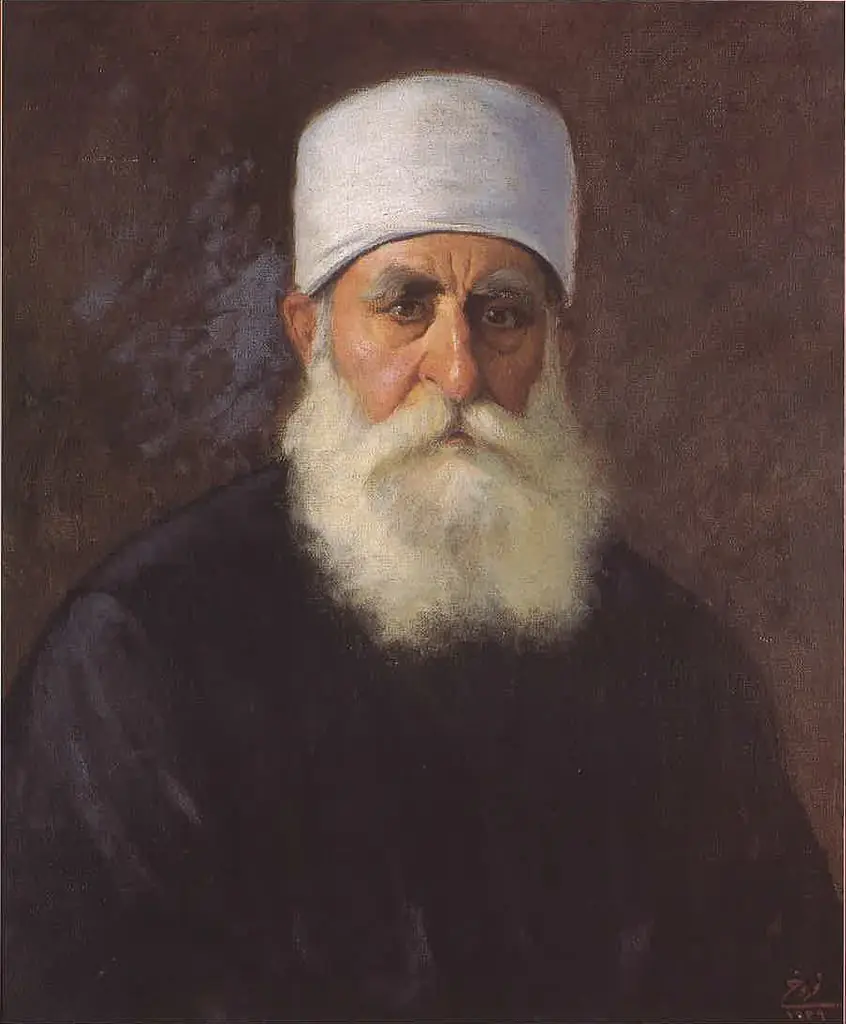
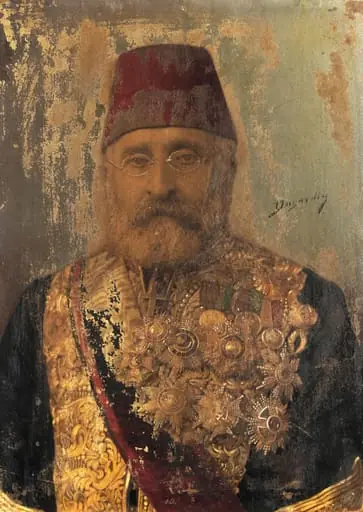
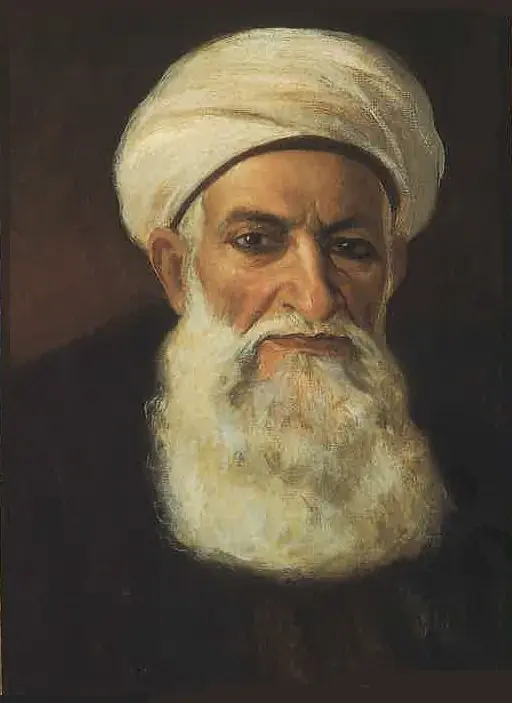
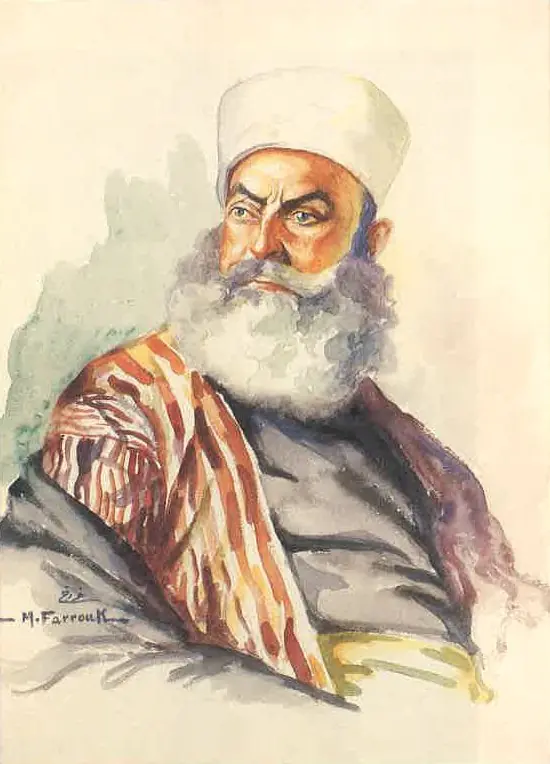
Portrait of Amin Pasha Moukhaiech (1905) is an oil painting by the Orientalist artist Moustafa Farroukh. It dates from 1939 and is held in the collection of the Sursock Museum.
About this work
Overview
Moustafa Farroukh, a prominent Lebanese painter of the twentieth century, executed the oil portrait of Amin Pasha Moukhaiech circa 1939. The work presents the sitter in formal attire, set against a muted brown backdrop that emphasizes his dignified bearing. It resides in the permanent collection of the Sursock Museum in Beirut.
Subject & Meaning
The portrait depicts Amin Pasha Moukhaiech with a white beard and mustache, wearing a black fez, a high‑collared jacket and a gold brooch set with a red stone. His serious expression, deep‑set eyes and prominent nose convey a sense of authority, suggesting an official or ceremonial role.
Technique & Style
Farroukh employs chiaroscuro, contrasting illuminated facial features with the darker clothing and background to model volume and depth. The brushwork is controlled, rendering the textures of fabric and metal with precision, while the overall composition reflects the Orientalist aesthetic prevalent in early‑twentieth‑century Levantine portraiture.
History & Provenance
Created around 1939, the painting entered the Sursock Museum’s holdings, where it remains on display. Farroukh’s extensive oeuvre, exceeding two thousand works, includes this piece as part of his series of portrait commissions for notable Lebanese figures of the era.
Artist & collection
Artist
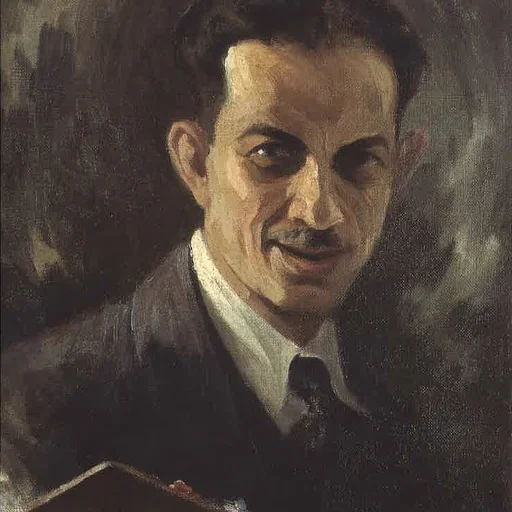
Moustafa Farroukh (Arabic: مصطفى فروخ; 1901 – 1957) was one of Lebanon's most prominent painters of the 20th century.