Artwork
Portrait of Sheikh Saïd Hamdane
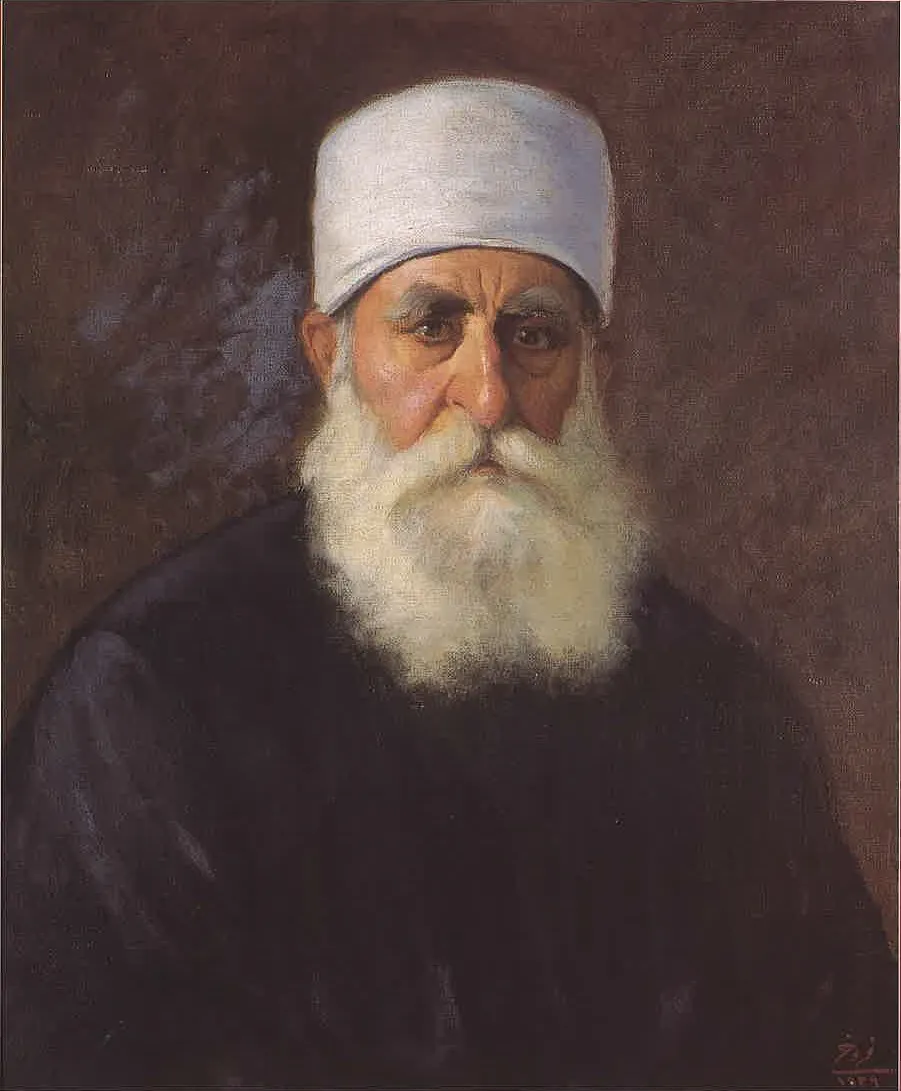
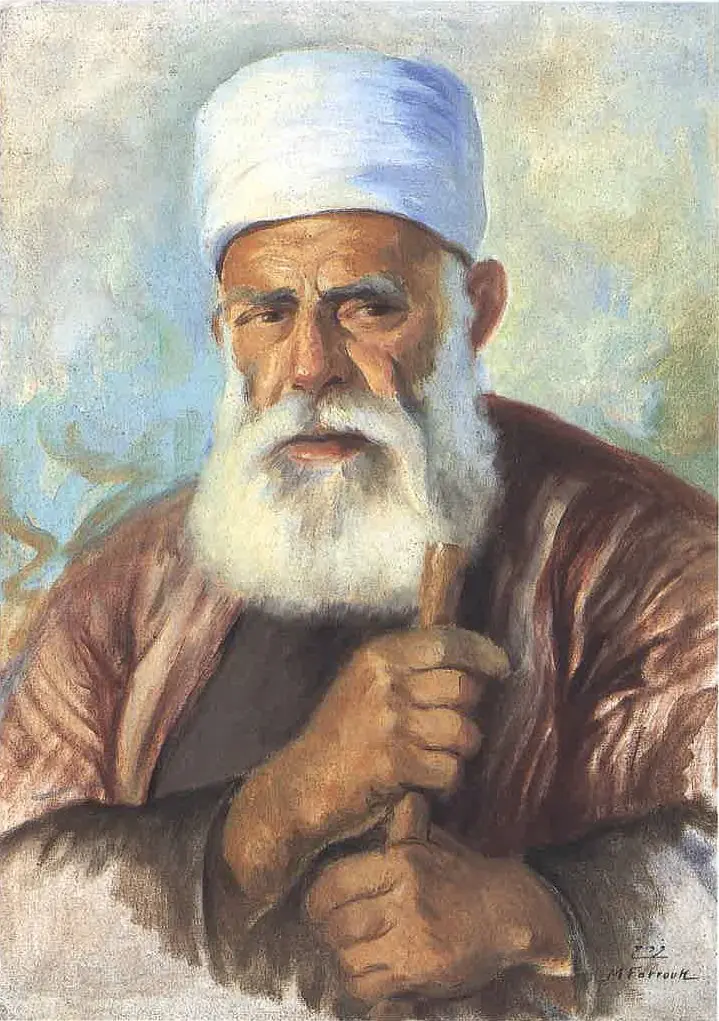
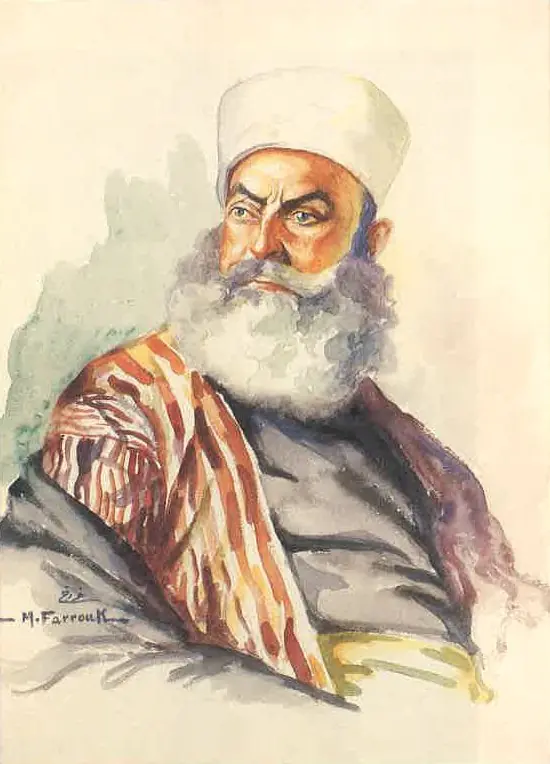
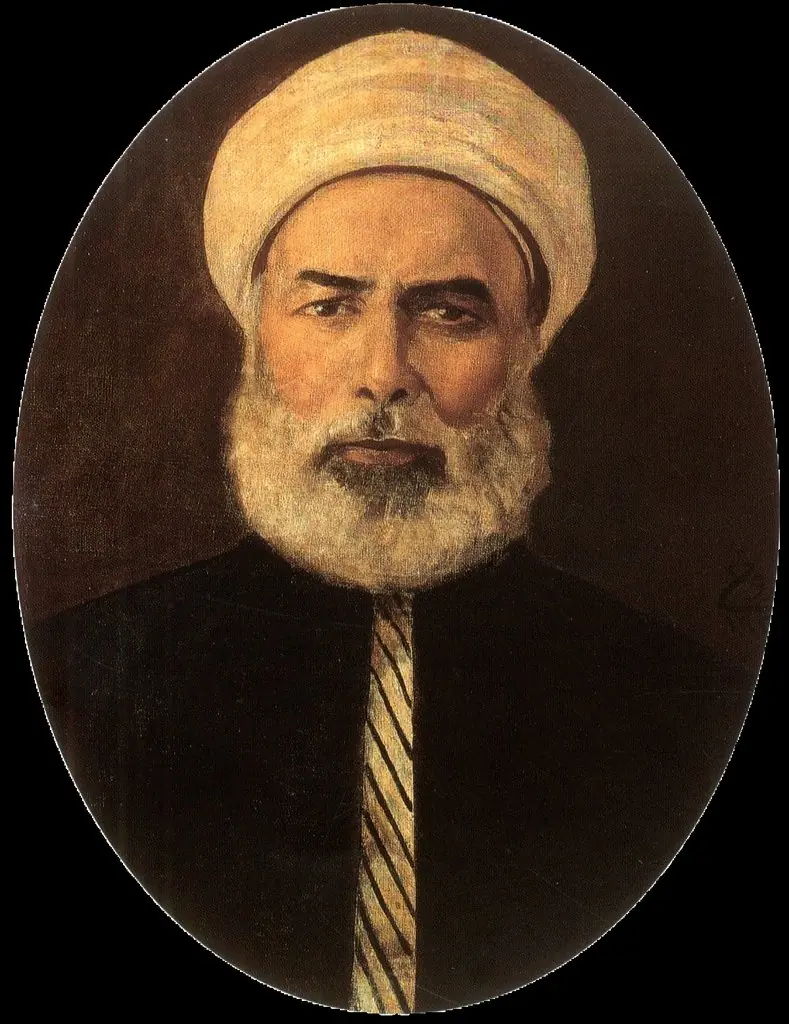
Portrait of Sheikh Saïd Hamdane is an oil painting by the Orientalist artist Moustafa Farroukh. It dates from 1939 and is held in the collection of the Sursock Museum.
About this work
Overview
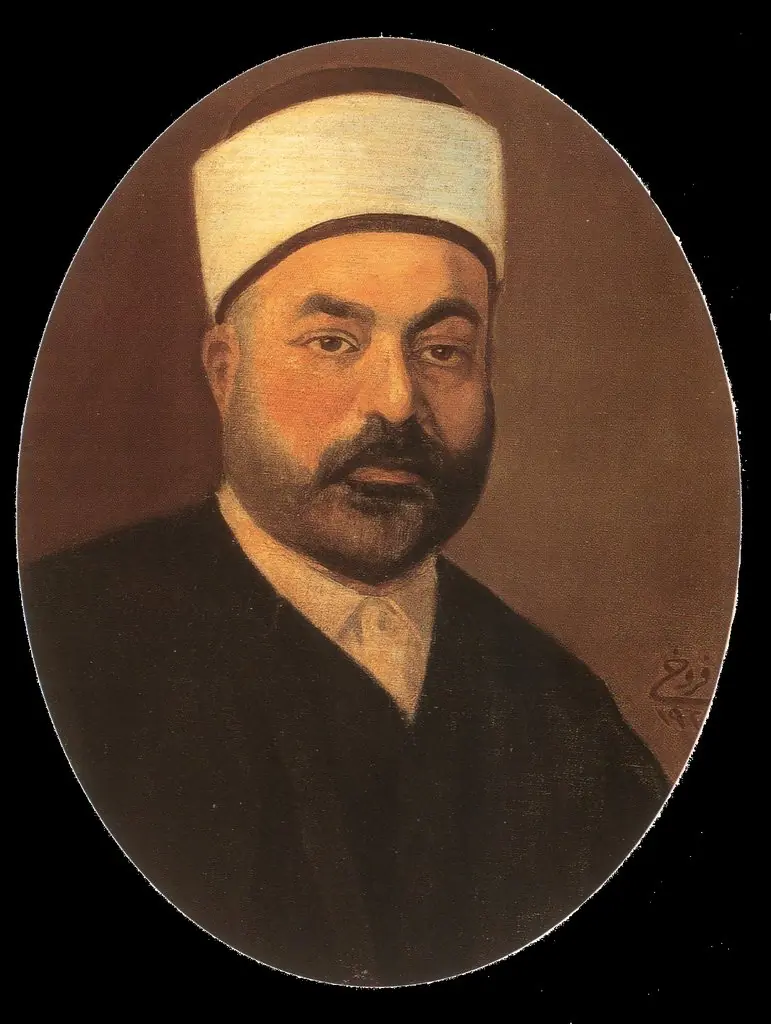
Created in 1939, this oil painting by Lebanese artist Moustafa Farroukh portrays a distinguished sheikh. The figure occupies the central space, his gaze meeting the viewer, while a white turban and long beard frame his face. The composition is anchored by a dark robe, emphasizing the subject’s dignified presence within a restrained, intimate setting.
Subject & Meaning
The work presents a traditional Islamic religious leader, identifiable by his thawb, turban and full white beard. By directing the sitter’s eyes toward the audience, Farroukh invites a personal connection, suggesting respect for the sheikh’s authority and spiritual role. The portrait functions both as a record of an individual and as a broader representation of regional clerical identity.
Technique & Style
Farroukh employs chiaroscuro, lighting the left side of the canvas to model the facial features and create a three‑dimensional effect.
Farroukh employs chiaroscuro, lighting the left side of the canvas to model the facial features and create a three‑dimensional effect. The contrast between illuminated areas and deep shadows enhances the volume of the beard and turban, while the muted palette of blacks and whites underscores the solemn mood. The approach reflects an Orientalist aesthetic common in early twentieth‑century Middle Eastern portraiture.
History & Provenance
Since its completion, the painting has been part of the Sursock Museum’s permanent collection in Beirut. The museum, founded by the prominent Sursock family, acquired the work as part of its effort to preserve key examples of modern Lebanese art, ensuring public access to Farroukh’s contribution to the nation’s visual heritage.
Artist & collection
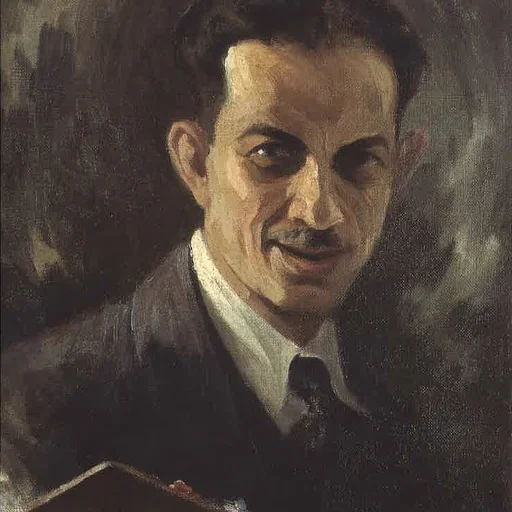
Artist
Moustafa Farroukh (Arabic: مصطفى فروخ; 1901 – 1957) was one of Lebanon's most prominent painters of the 20th century.