Artwork
Demolition of St. James Hall, Interior
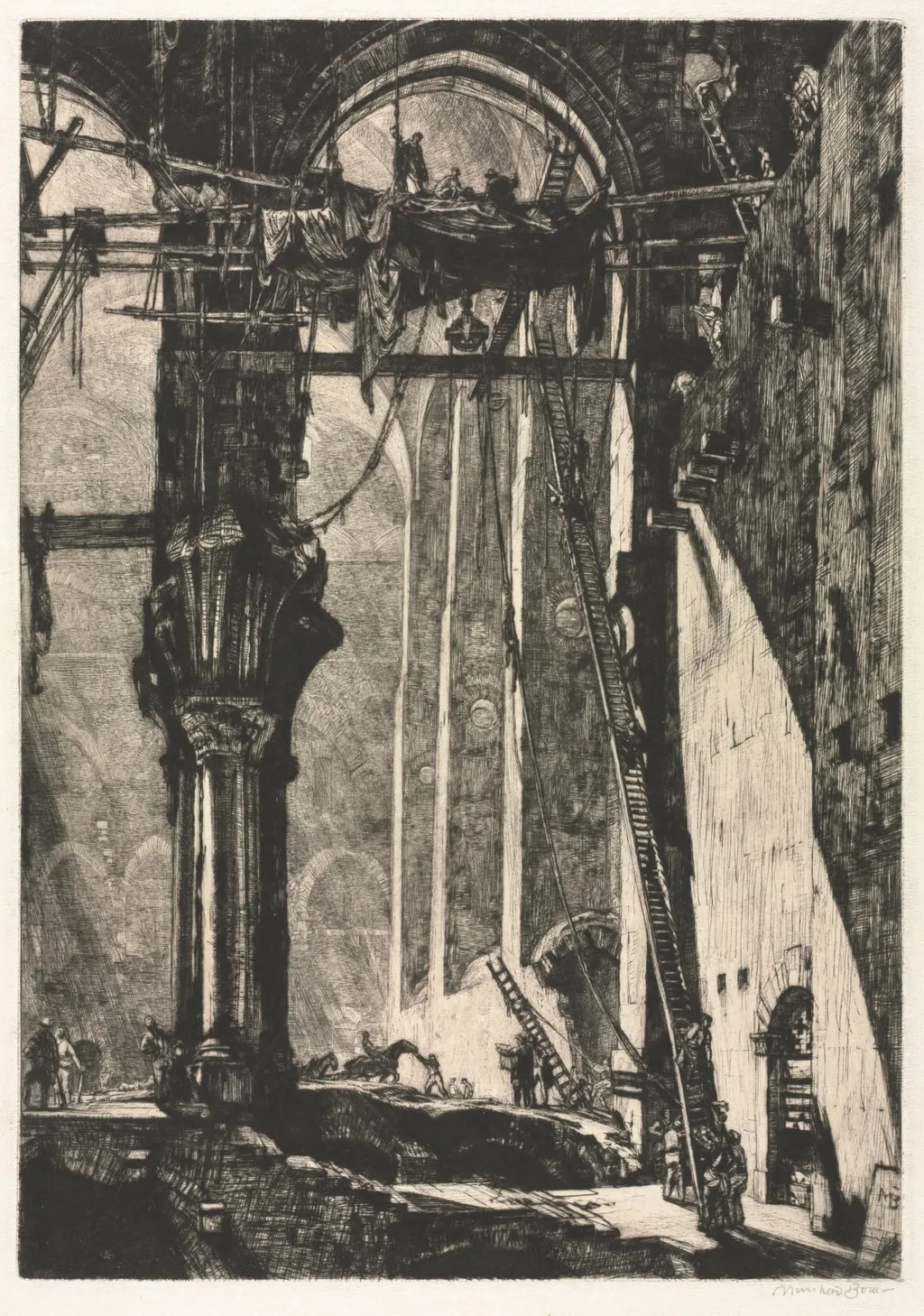
Demolition of St. James Hall, Interior is a print by Muirhead Bone. It dates from 1906 and is held in the collection of the Cleveland Museum of Art. Demolition of St.
About this work
The walls are adorned with intricate carvings and ornate details, while the floor is littered with debris and construction materials.
This painting depicts the interior of St. James Hall during its demolition in 1906. The scene is set in a large, dimly lit room with a high ceiling and tall, arched windows. The walls are adorned with intricate carvings and ornate details, while the floor is littered with debris and construction materials. In the foreground, a group of workers can be seen dismantling the building's structure, their faces illuminated by the faint light filtering through the windows. The overall atmosphere is one of decay and transformation, as the old gives way to the new. If you're interested in learning more about the artist's use of chiaroscuro, check out his other works.
Overview
Demolition of St. James Hall, Interior is a 1906 print by Scottish artist Muirhead Bone, capturing the dismantling of a historic building. The work showcases Bone's penchant for detailed, large-scale architectural subjects.
Subject & Meaning
The print depicts the interior of St. James Hall during demolition, contrasting ornate, carved walls and arched windows with the chaos of debris and construction. This juxtaposition conveys the themes of decay and transformation.
Technique & Style
Bone, a leading figure in the late Etching Revival, employed his characteristic detailed etching technique. The use of chiaroscuro is notable, with faint light through windows illuminating workers' faces amidst the dimly lit, decaying space.
History & Provenance
Created in 1906, the print is part of The Cleveland Museum of Art's collection. Bone's architectural etchings were highly prized by collectors until the market decline in 1929.
Artist & collection
Artist
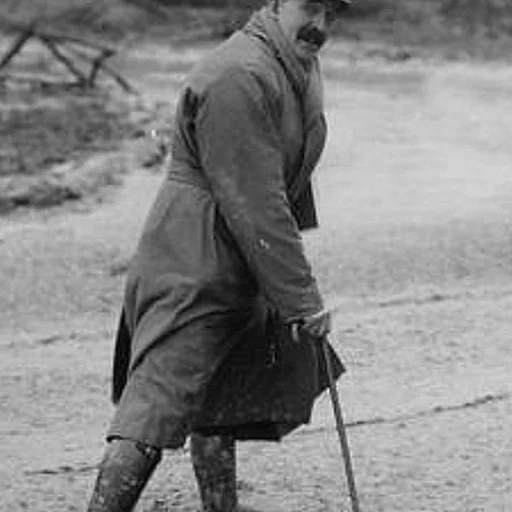
Sir Muirhead Bone (23 March 1876 – 21 October 1953) was a Scottish etcher and watercolourist who became known for his depiction of industrial and architectural subjects and his work as a war artist in both the First and Second World Wars.

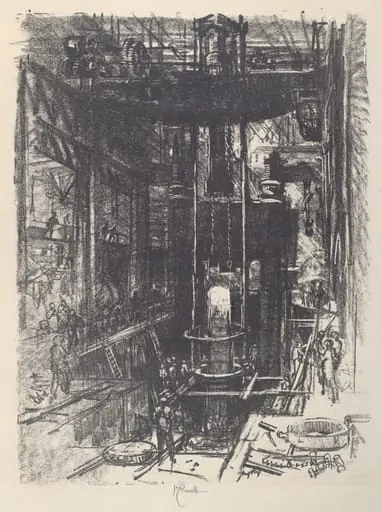 Shaping a Gun from an Ingot
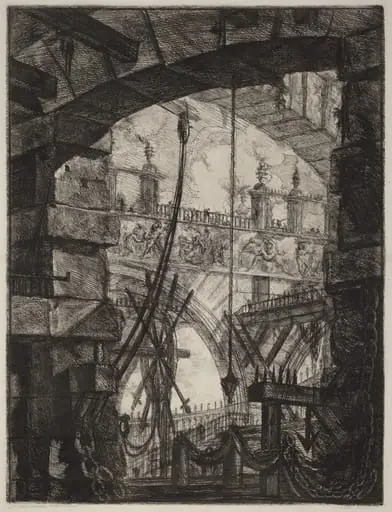 The Grand Piazza
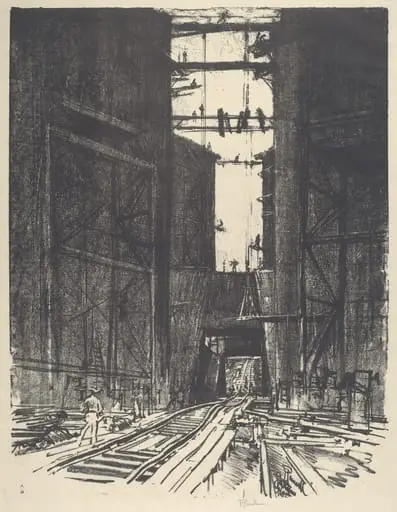 At the Bottom of Gatun Lock
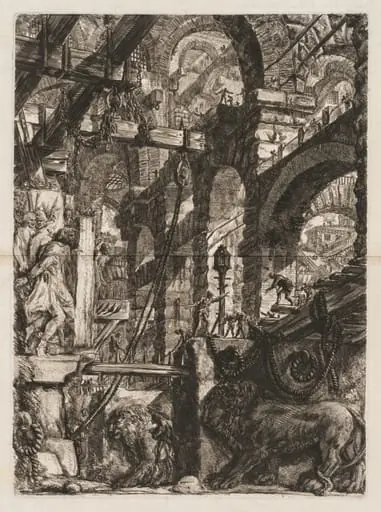 The Prisons: A Perspective of Roman Arches, with Two Lions Carved in Relief on Stone Slabs in the Foreground
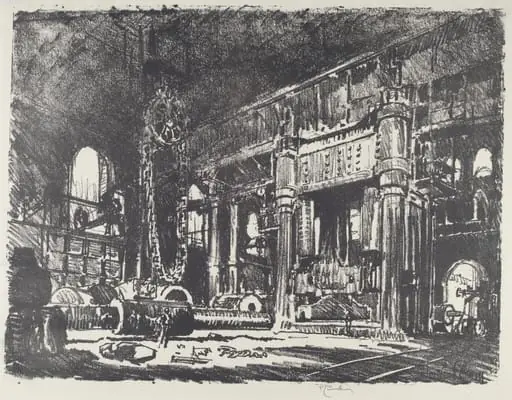 The Gun Forge
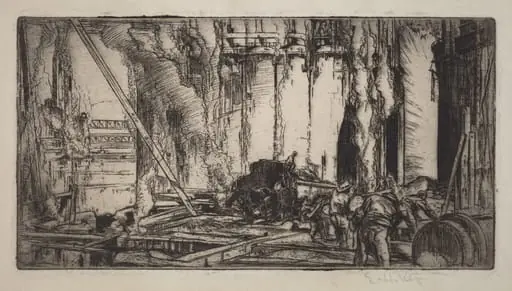 Smelters - Pittsburgh
 Laying the Floor of Pedro Muguel Lock
 The Lion Bas-Reliefs
 Untitled
 English War Work: The Gun Forge
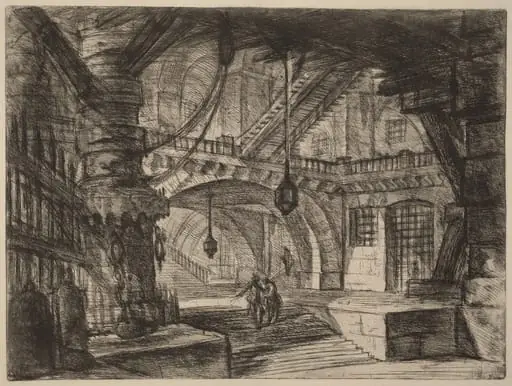 The Pier with Chains
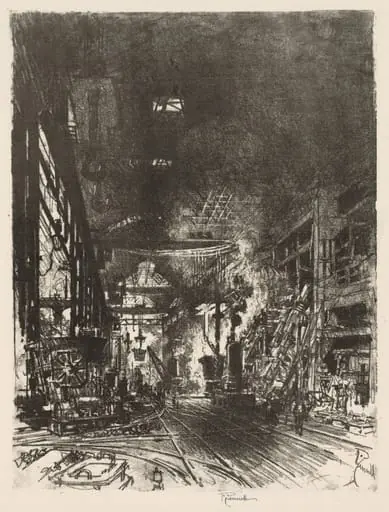 English War Work: Within the Furnaces