Artwork
Landscape
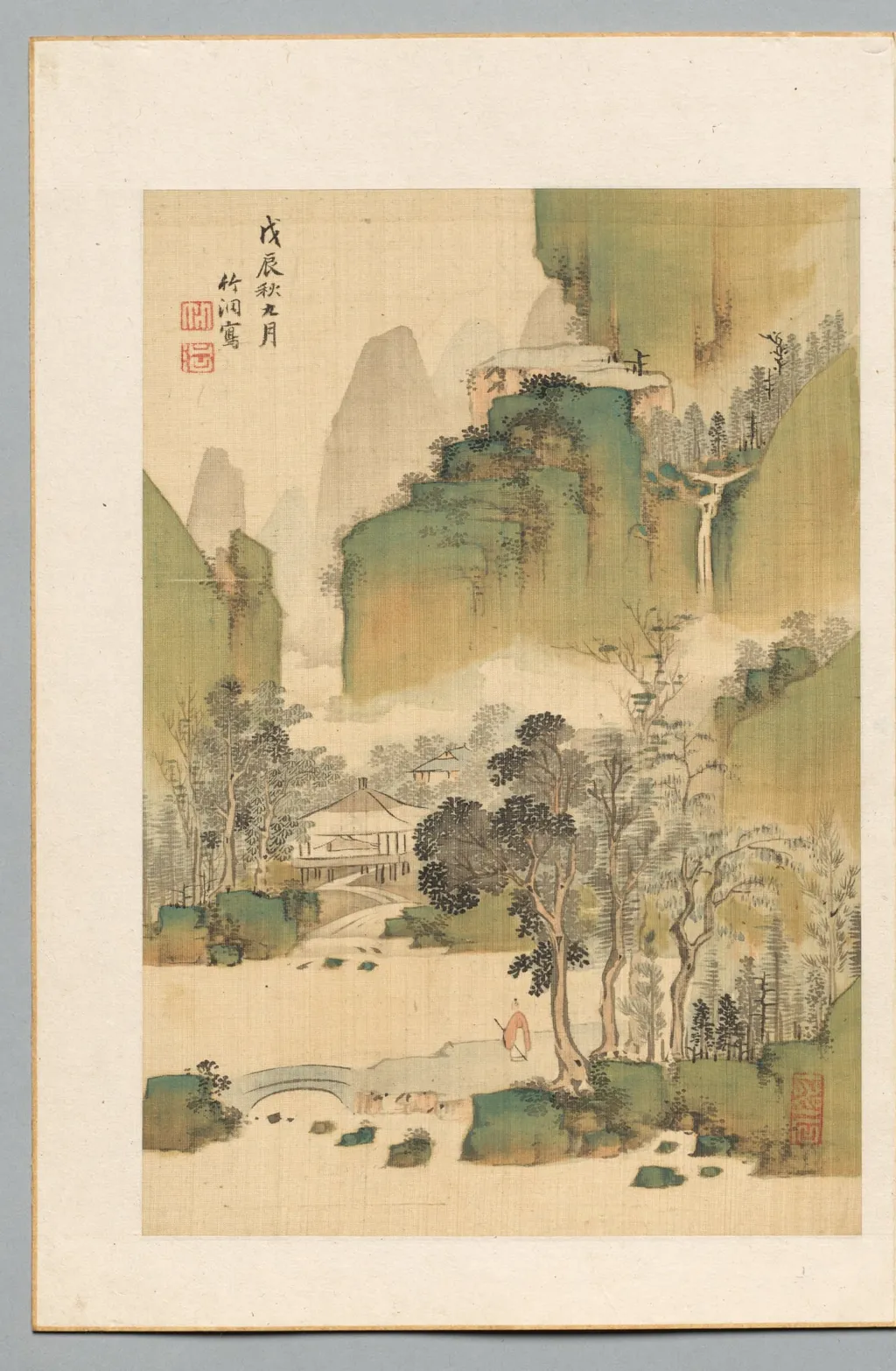
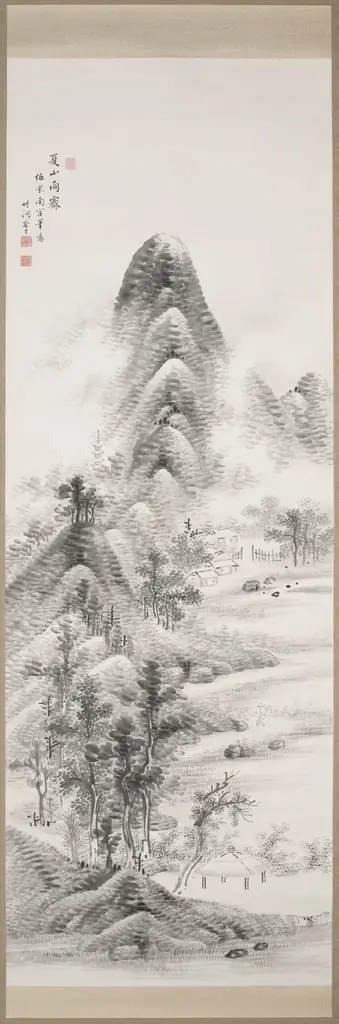
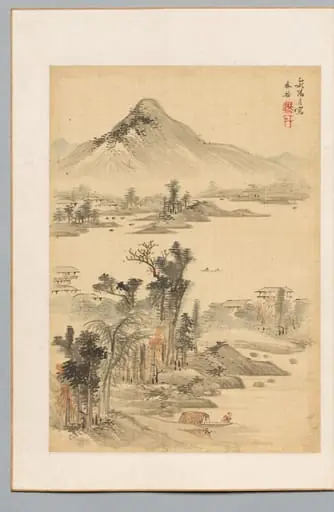
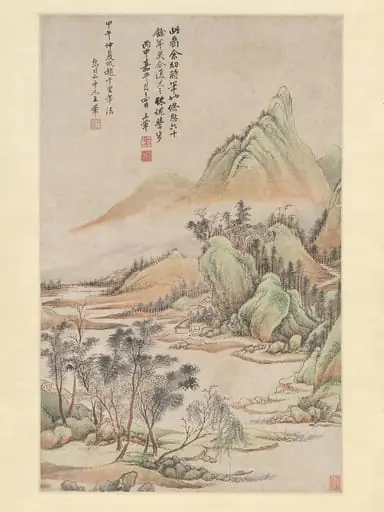
Landscape is a work on paper by the Romanticist artist Nakabayashi Chikutō. It dates from 1808 and is held in the collection of the Cleveland Museum of Art.
About this work
Overview
Created in 1808 by Nakabayashi Chikutō, this ink-and-wash landscape is part of a portfolio of works reflecting the artist’s engagement with traditional East Asian山水 (shanshui) aesthetics. It is held in the collection of The Cleveland Museum of Art, where it exemplifies the quiet, contemplative mode of Japanese literati painting from the late Edo period.
Subject & Meaning
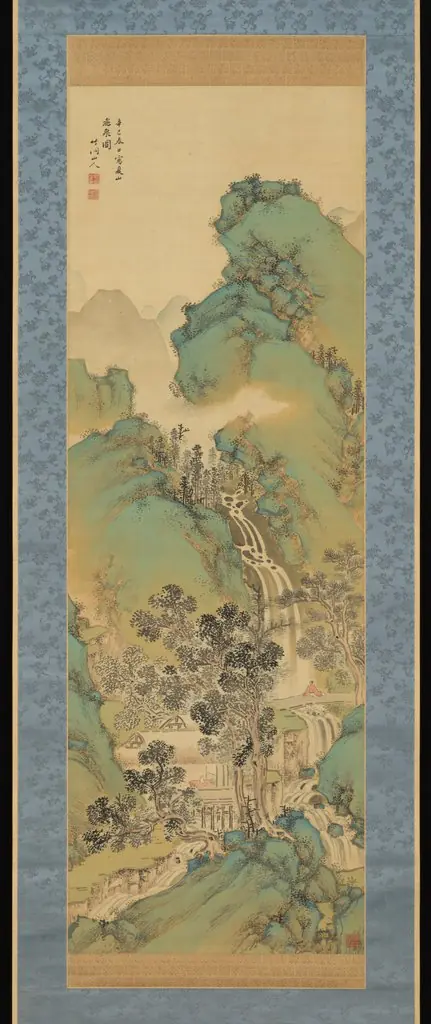
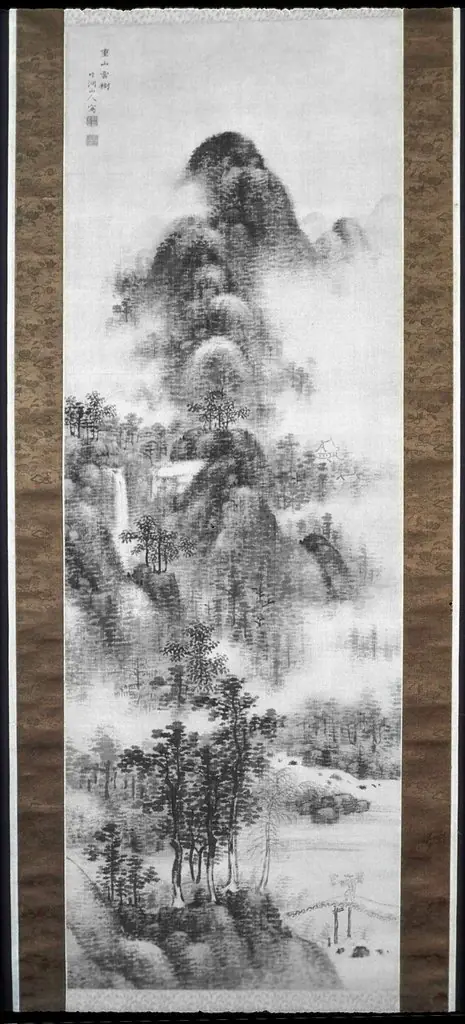
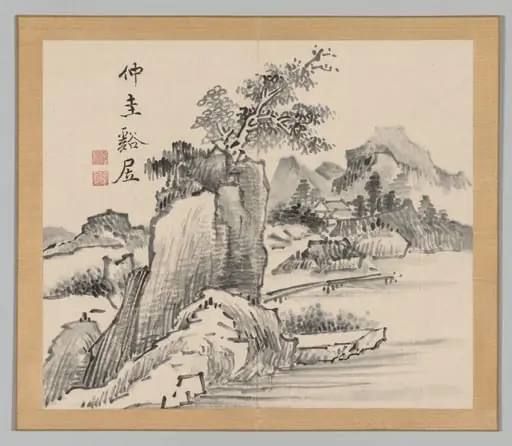
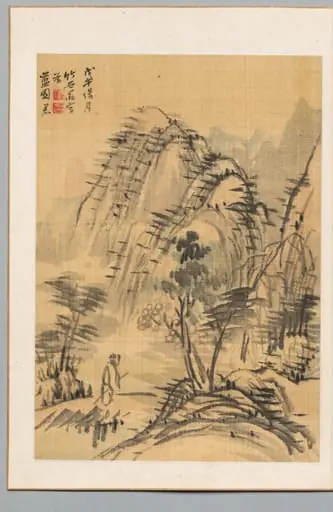
The scene depicts a secluded valley with mist-shrouded peaks, a narrow stream, and a single figure walking along a path beside a small bridge. A modest building with a curved roof is nestled among trees, suggesting a hermit’s retreat. The composition evokes solitude and harmony with nature, aligning with scholarly ideals of withdrawal and quiet reflection common in literati culture.
Technique & Style
Chikutō employed delicate, translucent ink washes and sparse brushwork to suggest depth and atmosphere. Soft gradients of green, brown, and pale blue dominate, with large areas of untouched paper implying mist and distance. The light, almost evaporative strokes create a sense of quiet dissolution, where forms emerge gently from the mist rather than assert themselves.
History & Provenance
The work was produced during Chikutō’s mature period, when he was deeply influenced by Chinese Southern School painting and Japanese literati traditions. It entered The Cleveland Museum of Art’s collection in the 20th century as part of a broader acquisition of East Asian ink paintings, though its earlier ownership history remains undocumented.
Context
In early 19th-century Japan, literati painters like Chikutō sought to express personal introspection through landscape, distancing themselves from commercial art forms. This work reflects the influence of Chinese Song and Yuan dynasty models, adapted through Japanese sensibilities that valued restraint, ambiguity, and the aesthetic of emptiness.
Legacy
Chikutō’s landscape contributes to the enduring tradition of ink-wash painting in Japan, emphasizing emotional resonance over topographical accuracy. While not widely known outside scholarly circles, his works remain important for understanding how Edo-period artists reinterpreted classical Chinese ideals within a distinctly Japanese cultural framework.
Artist & collection


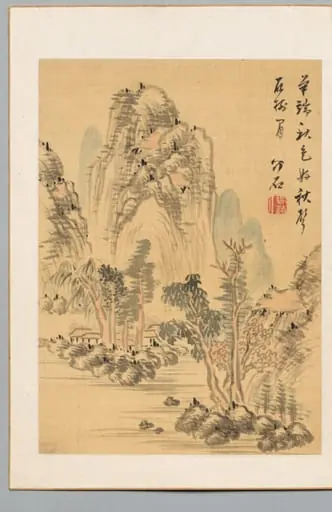 Colors and Sound of Autumn
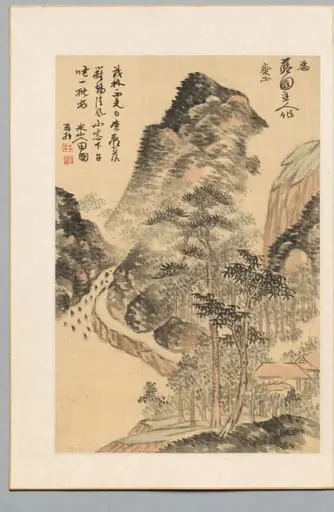 Short Nap on a Long Summer Day
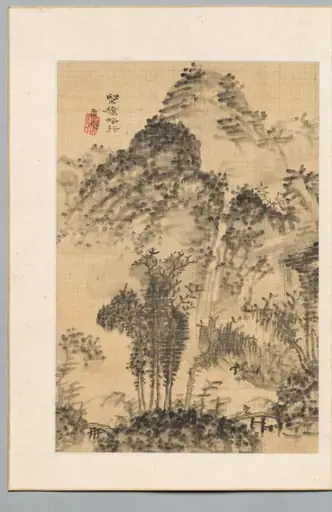 Wild Bridge, Poet's Walk
 Landscape
 Album of Seasonal Landscapes, Leaf D (previous leaf 2)
 Summer Retreat
 Landscape
 Reverberations of Taiga, Volume 2 (leaf 14)
 明仇英秋江待渡 軸
 Untitled
 Landscape
 倣趙伯駒山水圖 軸|Landscape in the Style of Zhao Boju (Fang Zhao Boju shanshui)