Artwork
Landscape
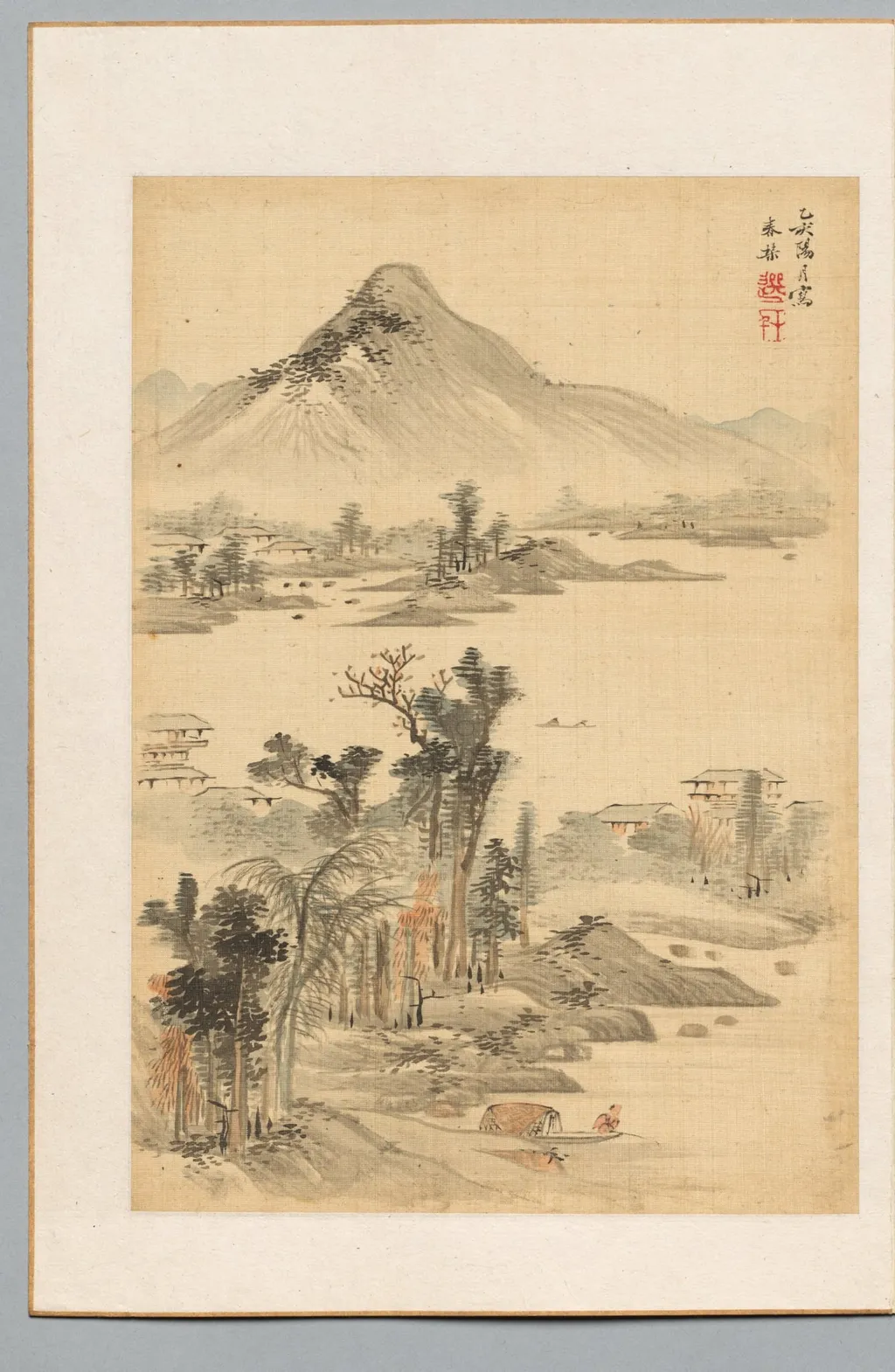
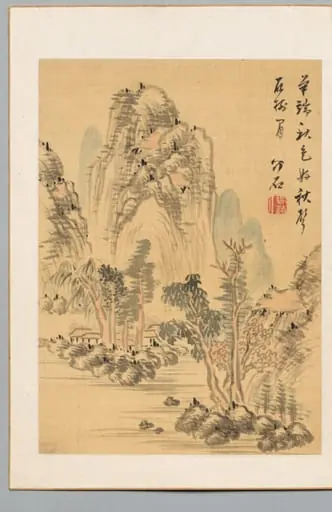
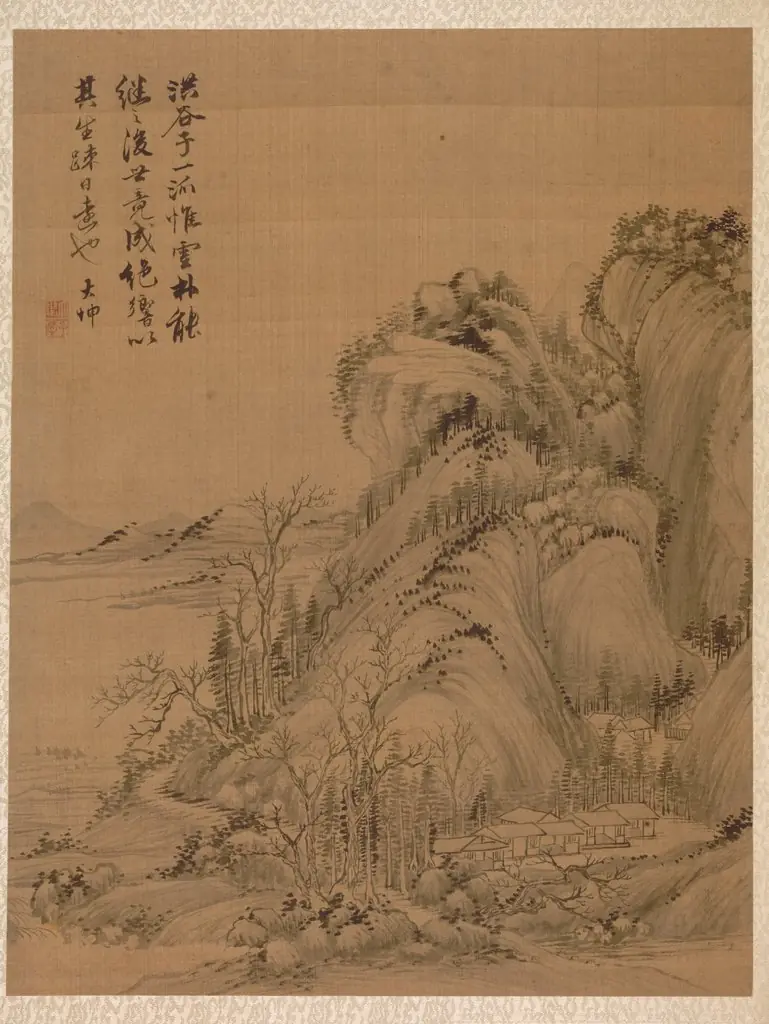
Landscape is a work on paper by the Romanticist artist Uragami Shunkin. It dates from 1815 and is held in the collection of the Cleveland Museum of Art.
About this work
Overview
The piece exemplifies early 19th-century Japanese ink painting traditions, blending observation with poetic suggestion rather than literal representation.
Created in 1815 by Uragami Shunkin, this landscape is part of a portfolio of works reflecting the artist’s engagement with natural scenery. It resides in The Cleveland Museum of Art, where it is recognized for its quiet composition and restrained palette. The piece exemplifies early 19th-century Japanese ink painting traditions, blending observation with poetic suggestion rather than literal representation.
Subject & Meaning
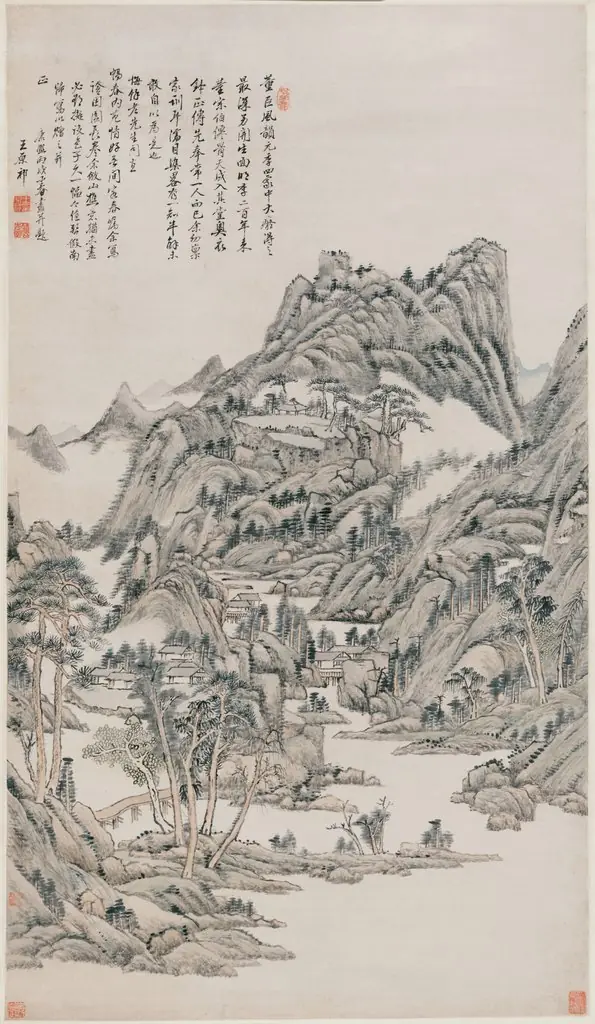
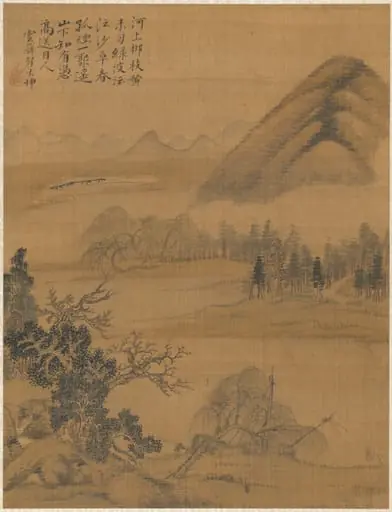
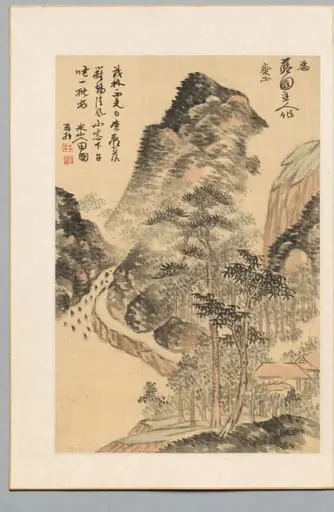
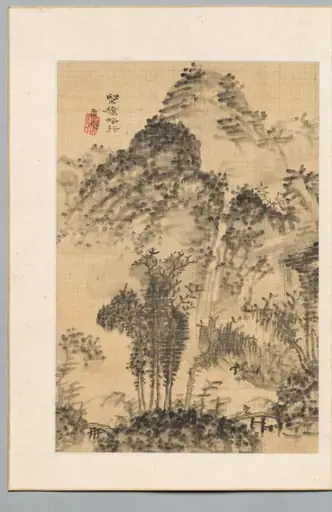
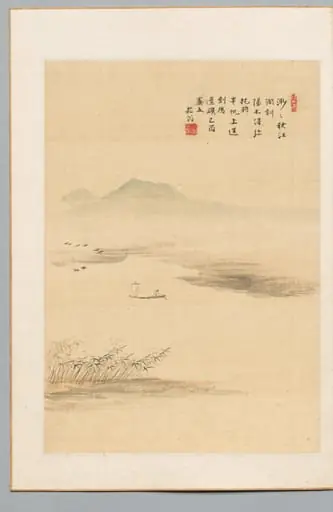
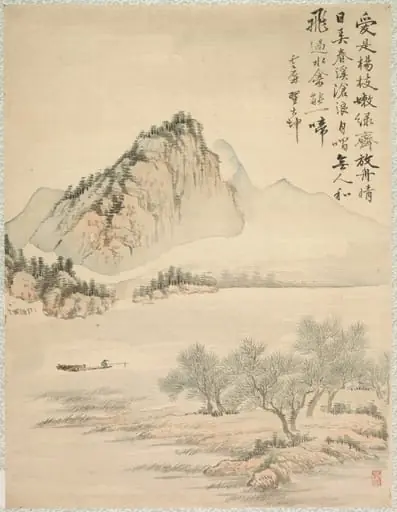
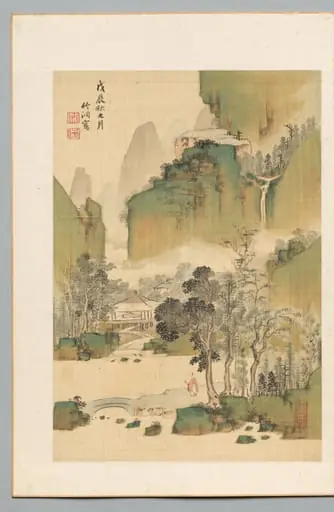
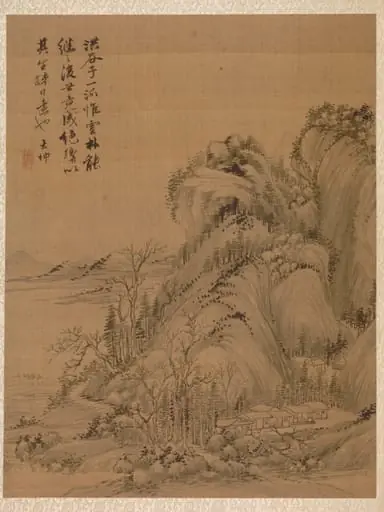
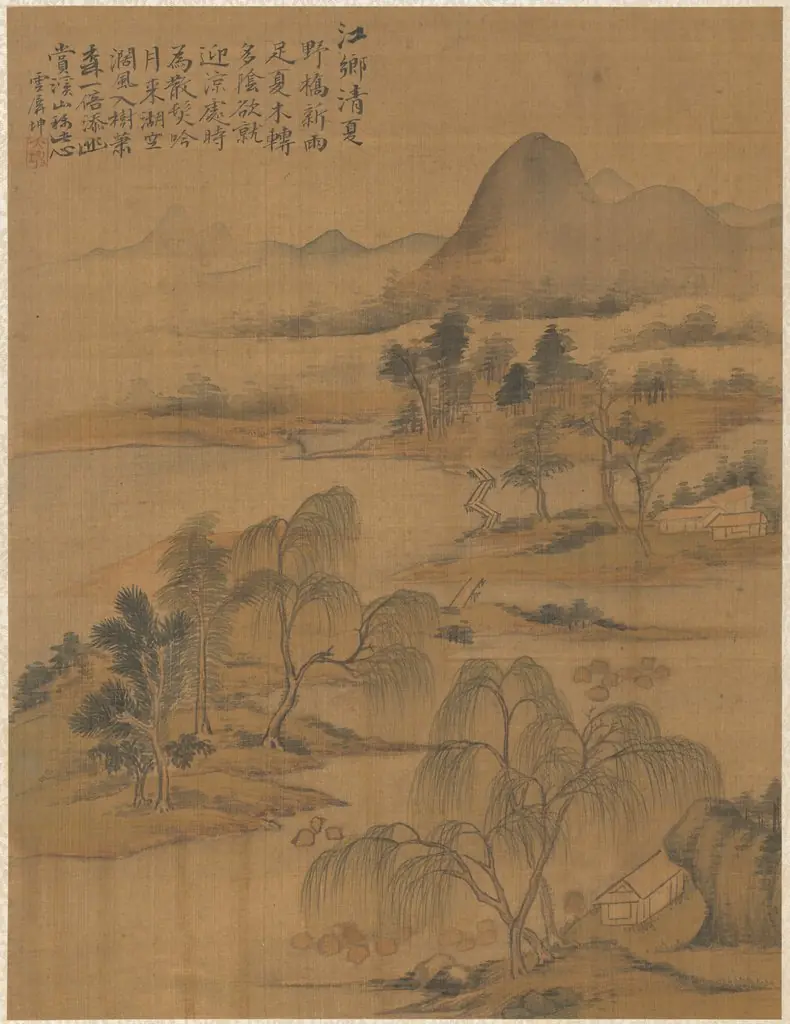
The scene presents a tranquil mountain rising behind a calm body of water, with sparse vegetation and a distant settlement nestled at its base. A faint path winds upward, inviting contemplation rather than narrative. The composition evokes a sense of stillness and harmony, aligning with Zen-influenced aesthetics that value solitude and the impermanence of human presence within nature.
Technique & Style
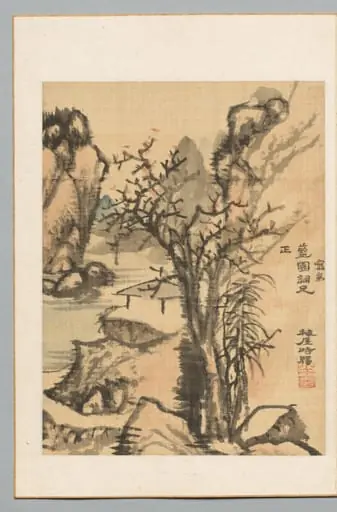
Executed in ink and subtle washes, the painting employs graded tones of gray to suggest form without outline. Soft, layered brushwork creates atmospheric depth, while minimal detail in the foreground contrasts with the hazy mountain mass. The absence of bright color and the deliberate ambiguity of structures reflect a literati approach, prioritizing mood over topographical accuracy.
History & Provenance
The work originated in Japan during the late Edo period, likely produced for private collectors or scholarly circles. It entered the Cleveland Museum of Art’s collection through documented acquisition, preserving its integrity as part of a broader portfolio. Its survival and preservation reflect its status as a thoughtful example of non-commercial Japanese ink painting from the era.
Context
Uragami Shunkin worked within the literati tradition, influenced by Chinese Song and Yuan dynasty painting and Japanese scholarly ideals. His landscapes responded to a cultural shift toward introspection and nature reverence amid urbanization. This piece aligns with contemporaries who favored subdued expression, rejecting ornate decoration in favor of spiritual resonance through minimal means.
Legacy
Though not widely exhibited outside Japan during his lifetime, Shunkin’s works like this one have since contributed to Western understanding of Edo-period ink painting. The Cleveland Museum’s preservation ensures continued study of his restrained aesthetic, offering insight into how Japanese artists conveyed depth and emotion through understated technique.
Artist & collection