Artwork
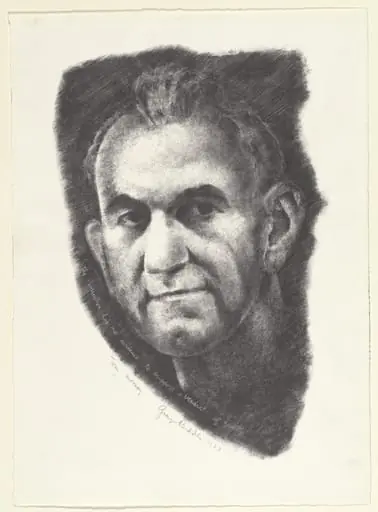
Grafică, portretul lui Nicolae Ceaușescu, semnat stânga jos Nanni Tedeschi, nedatat. Oferit de delegația italiană condusă de Benito Craxi cu ocazia vizitei în România. București, noiembrie 1978.
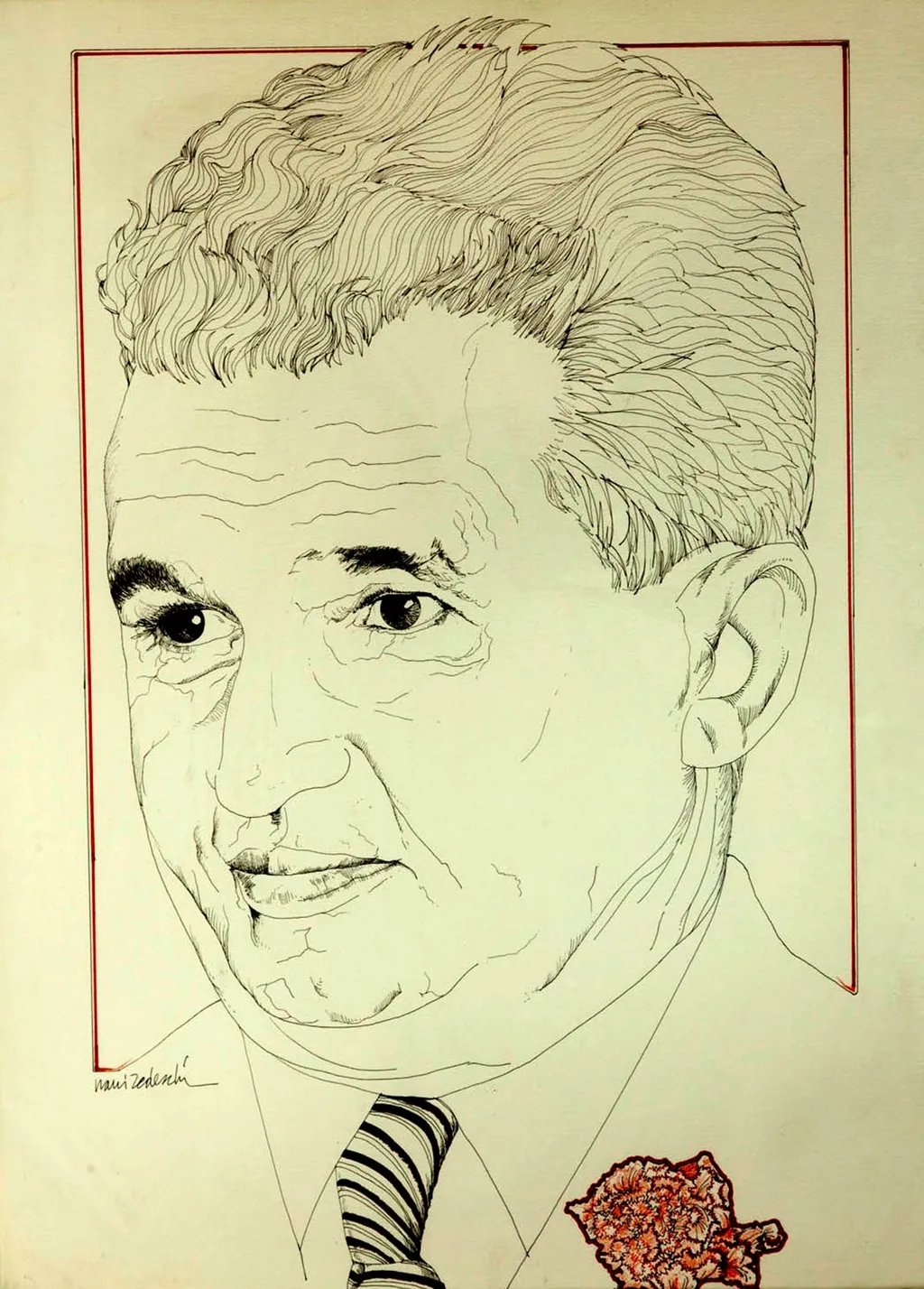
Grafică, portretul lui Nicolae Ceaușescu, semnat stânga jos Nanni Tedeschi, nedatat. Oferit de delegația italiană condusă de Benito Craxi cu ocazia vizitei în România. București, noiembrie 1978. is a print by Nanni Tedeschi. It is held in the collection of the National Museum of Romanian History.
About this work
Overview
Executed as a graphic print, it captures Ceaușescu in formal attire against a neutral background, emphasizing restraint and precision in its execution.
A black-and-white portrait print of Nicolae Ceaușescu, signed by Italian artist Nanni Tedeschi in the lower left corner, was presented to Romania in November 1978 by an official Italian delegation led by Benito Craxi. The work is undated but corresponds to a diplomatic visit during the Cold War. Executed as a graphic print, it captures Ceaușescu in formal attire against a neutral background, emphasizing restraint and precision in its execution.
Subject & Meaning
The portrait depicts Nicolae Ceaușescu, then leader of Romania, with short wavy hair and a composed, serious gaze. Dressed in a suit and tie, he is rendered without embellishment, reflecting the formal expectations of state portraiture. The image functions as a diplomatic gift, intended to convey respect and political alignment between Italy and Romania during a period of strained East-West relations.
Technique & Style
Tedeschi employed linear engraving and tonal shading to model the face with subtle gradations, avoiding overt realism in favor of controlled elegance. The background is uniformly beige, isolating the figure and enhancing focus on facial structure. The print’s simplicity—minimal detail, no color, no ornamentation—reflects a modernist graphic sensibility, aligning with mid-century European portraiture traditions.
History & Provenance
The portrait was presented during the November 1978 visit of the Italian delegation, headed by Prime Minister Benito Craxi, as a gesture of diplomatic goodwill. Its origin in Italy and signature by Tedeschi suggest it was commissioned or selected by Italian officials. The work entered Romanian state collections following the visit, though its subsequent institutional history remains undocumented in public records.
Context
In 1978, Romania maintained a semi-independent stance within the Eastern Bloc, cultivating selective ties with Western nations. The gift of a portrait by an Italian artist signaled Romania’s openness to cultural exchange, even as its domestic regime grew increasingly authoritarian. Such gestures were part of a broader strategy to legitimize Ceaușescu’s rule internationally through symbolic diplomacy.
Legacy
The portrait remains a quiet artifact of Cold War cultural diplomacy, notable for its understated aesthetic amid the often bombastic imagery of communist leadership. Unlike state-produced propaganda, Tedeschi’s version avoids heroization, offering instead a restrained, humanized depiction. Its survival in Romanian archives underscores the role of art in navigating political tensions without overt ideological messaging.
Artist & collection
Artist
That Italian diplomat’s kid grew up in Bucharest, where the Party’s portraits were everywhere, so he learned to draw them too.

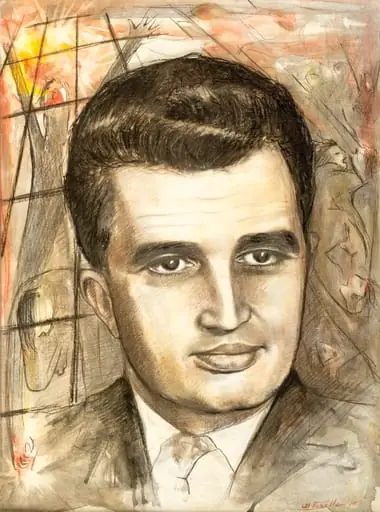 Portret Nicolae Ceaușescu, tablou realixat prin tehnică mixtă, semnat Al. Torella și datat 1975 în partea dreaptă jos.A fost oferit lui Nicolae Ceaușescu de delegația italiană condusă de Benito Craxi cu ocazia vizitei în România din noiembrie 1978
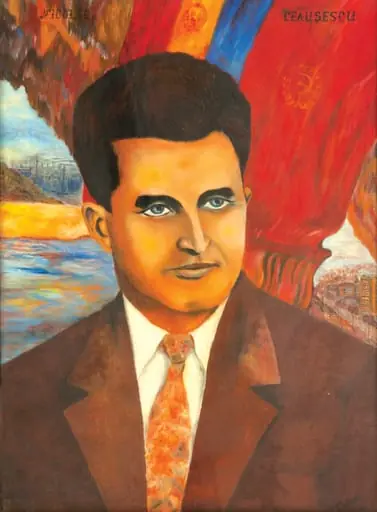 Tablou, ulei pe pânză, ”Portret Nicolae Ceaușescu”, nesemnat, atribuit lui Teodor Istrati. Portret Nicolae Ceaușescu pe fundal steagul cu stema R.S.R. și steagul cu sigla P.C.R., elemente de peisaj urban, inscripție cu majuscule în partea de sus ”NICOLAE CEAUȘESCU”. Oferit de autor lui Nicolae Ceaușescu, București, 25 iunie 1971.
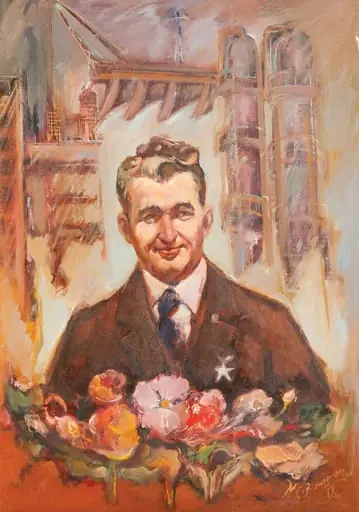 Tablou, ulei pe pânză, „Portret Nicolae Ceaușescu”, semnat C. Radovan și datat în partea dreaptă jos 1978. Nicolae Ceaușescu este reprezentat înt-o atitudine jovială, în piept are însemnul ”Erou al Republicii Socialiste România”. Pe fundal realizări ale regimului comunist. Oferit de Comitetul Județean de Partid Timiș, 22 ianuarie 1978.
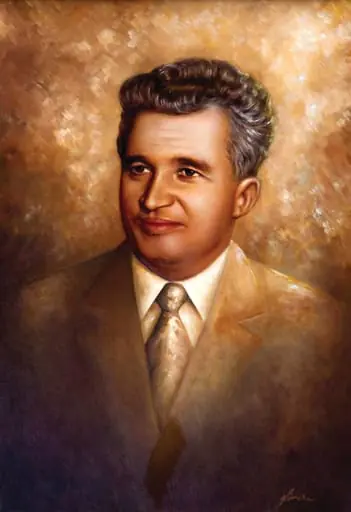 Tablou ulei pe pânză, portret Nicolae Ceaușescu semnat Gheorghe Pîrvu si datat în partea dreaptă jos. Comandat de Comitetul Municipal de Partid Călărași (1982).
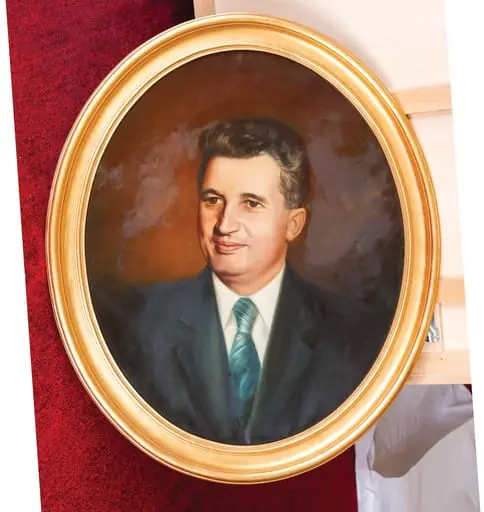 Tablou, ulei pe pânză, portret Nicolae Ceaușescu, atribuit Corneliu Brudașcu. Oferit de Uniunea Artiștilor Plastici (1979).
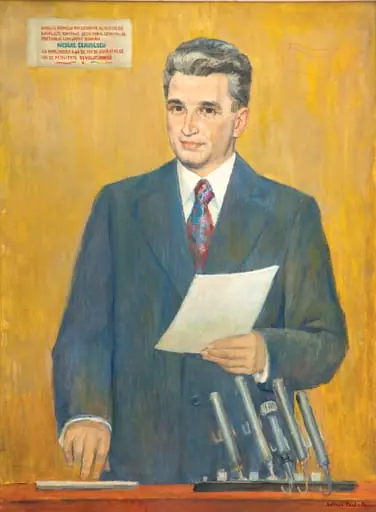 Tablou reprerzentându-l pe Nicolae Ceauțescu ținând un discurs. Semnat în partea dreaptă jos ”Adina Paula Moscu”. Oferit cadou lui Nicolae Ceaușescu pe 26 ianuarie 1978 cu ocazia aniversării vârstei de 60 de ani. În stânga sus dedicație ”Omagiu primului președinte al Republicii Socialiste România, secretar general al Partidului Comunist Român, Nicolae Ceaușescu, la împlinirea a 60 de ani de viață și 45 de ani de activitate revoluționară.”
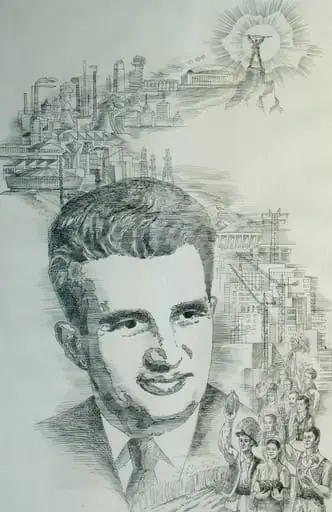 Tablou, desen cu tuș, portret Nicolae Ceaușescu pe fundal industrial, nesemnat, nedatat; atribuit lui Levente Csutak. Fundalul industrial este prezentat sub forma unui drum al realizărilor socialismului - la baza drumului stau oamenii muncii, continuă cu realizările: fabrici, uzine, combinate, hidrocentrala de la Porțile de Fier, clădirea Circului de Stat, Sala Palatului, statuia lui Prometeu de la Barajul Vidraru este luminată de un soare în formă de harta RSR. Deși nu este o realizare a socialismului este reprezentată și Coloana Infinitului a lui Brâncuși. Oferit de Comitetul Județean de Partid Brașov (1983).
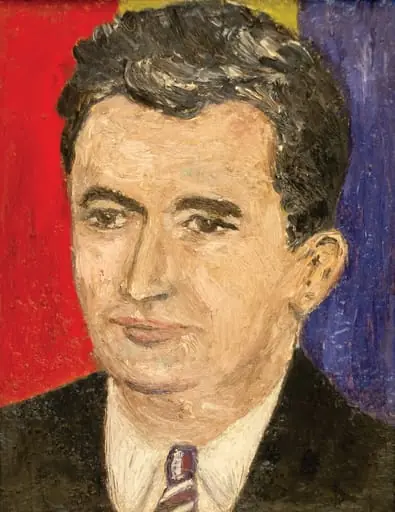 Pablou, ulei pe carton, portret Nicolae Ceaușescu. Oferit lui Nicolae Ceaușescu de Aurica Pânzaru, prof. de matematică fizică din Dorohoi, 23 ianuarie 1978.
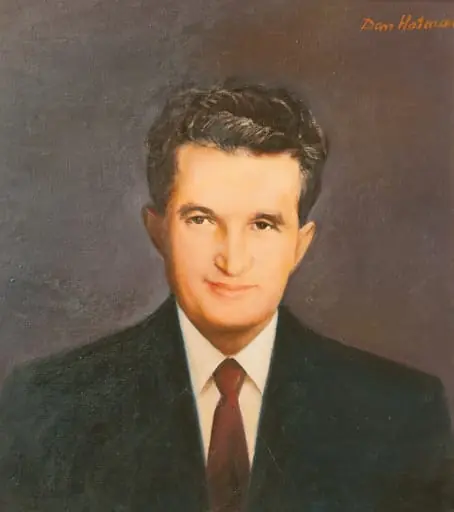 Tablou ulei pe pânză, „Nicolae Ceaușescu” semnat Dan Hatmanu în partea dreaptă sus, nedatat. Comandat de Consiliul Național al Femeilor și oferit cu ocazia aniversării zilei de naștere (ianuarie 1989).
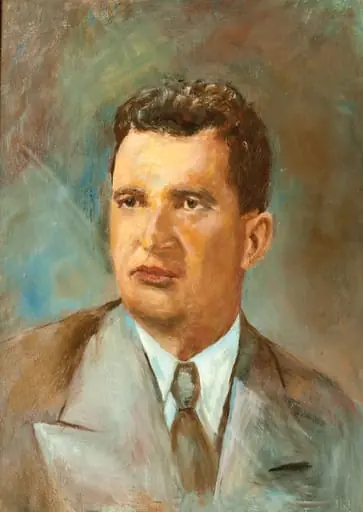 Tablou, pictură pe șevalet, ”Nicolae Ceaușescu”, nesemnat, atribuit Elena Popovici Brăila. Tablou realizat după primul portret oficial a lui Nicolae Ceaușescu. Oferit cadou de autoare, Elena Popovici Brăila din Câmpulung Muscel, lui Nicolae Ceaușescu cu ocazia aniversării zilei de naștere, ianuarie 1978.
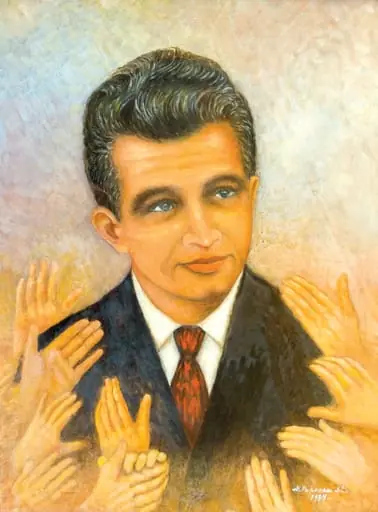 Tablou, pictură pe carton, ”Nicolae Ceaușescu”, semnat M. Popescu-Stănești și datat 1974 în partea dreaptă jos . Nicolae Ceaușescu este reprezentat înconjurat de mâini care aplaudă, îl ating și care par că vor să-l prindă. Oferit cadou lui Nicolae Ceaușescu de către autor, București, 1974.
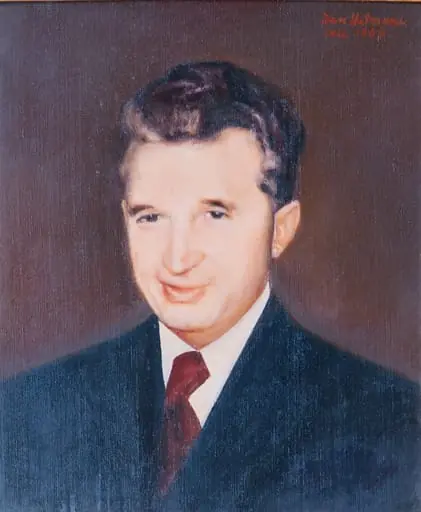 Tablou reprezentându-l pe Nicolae Ceaușescu, semnat Dan Hatmanu. Comandat de Comitetul Județean de Partid Iași și oferit cu ocazia zilei de naștere a președintelui RSR (ianuarie 1989).
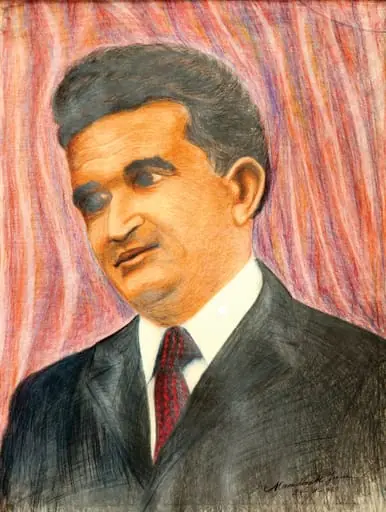 Tablou, desen pe carton, ”Nicolae Ceaușescu”, semnat cu tuș negru Jeana Macedonschi și datat 24.IX.1974, în partea dreaptă jos. Tablou oferit lui Nicolae Ceaușescu de către autor.
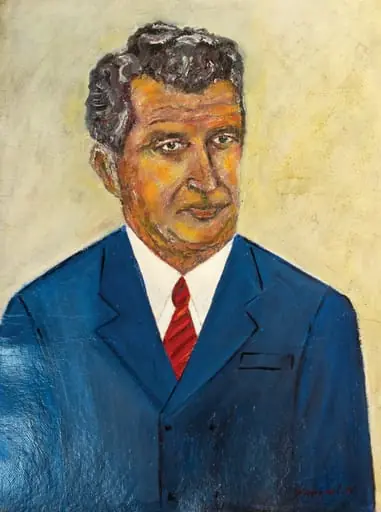 Tablou, ulei pe carton,”Nicolae Ceaușescu”, semnat în pertea dreaptă jos Savopol N., nedatat. Oferit cadou de autor, Nicola Savopol, lui Nicolae Ceaușescu cu ocazia zilei de naștere, București.
 Untitled
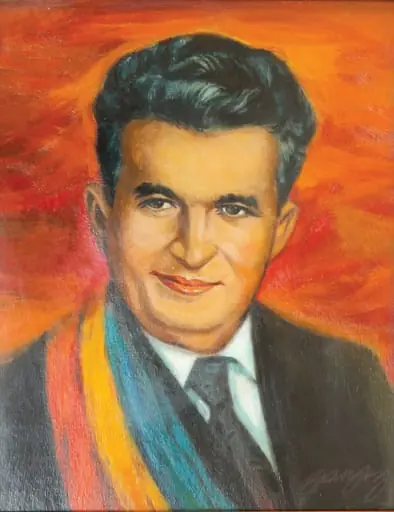 Tablou, „Portret Nicolae Ceaușescu”, semnat Barany în partea dreaptă jos, nedatat. Tabloul prezintă portretul lui Nicolae Caușescu cu banderolă tricoloră pe un fundal roșu - oranj. Comandat și oferit de Comitetul Județean de Partid Arad cu ocazia unei aniverări.