Artwork
The Woman Behind the Mask
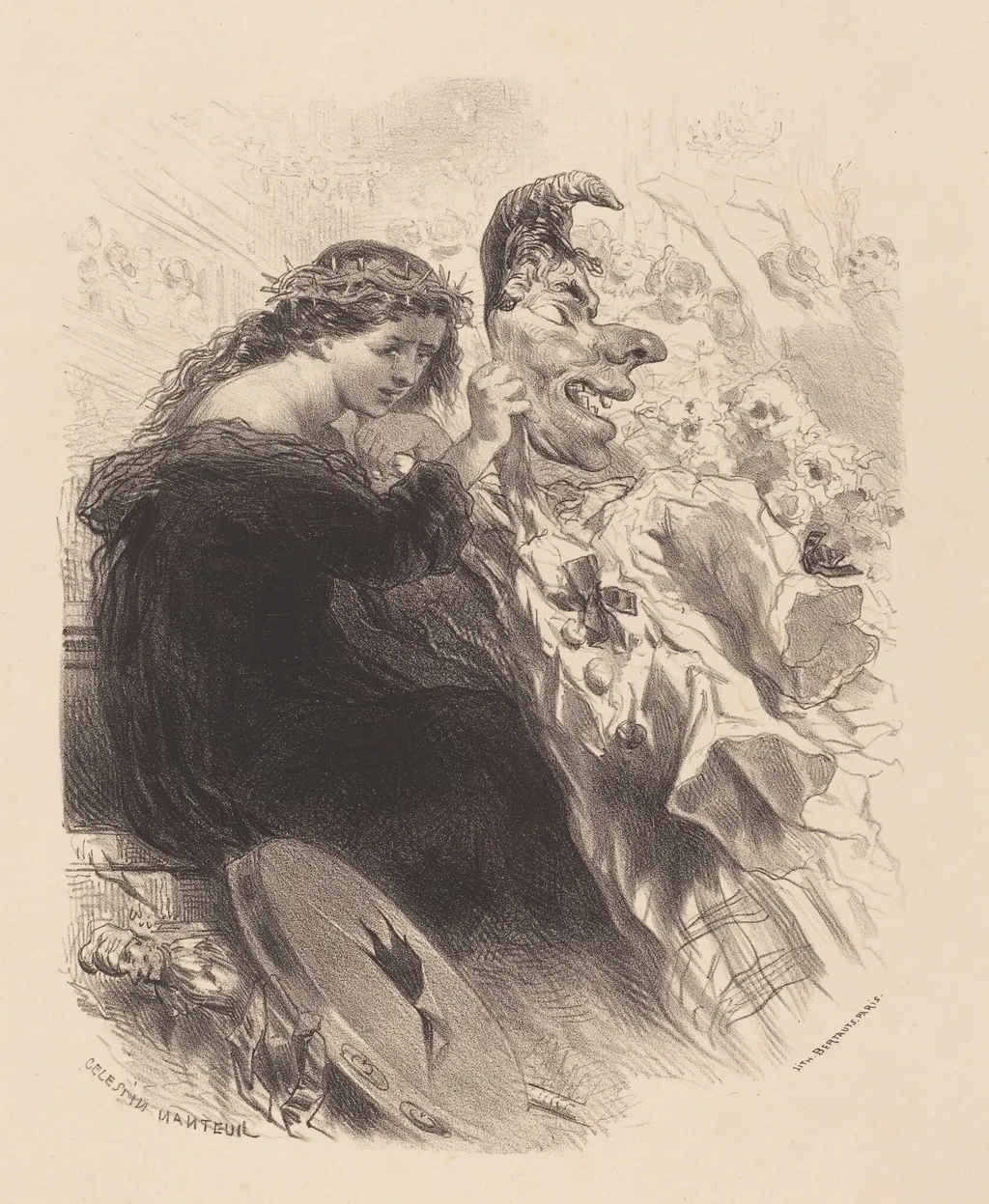
The Woman Behind the Mask is an ink print by the Romanticist artist Célestin Nanteuil. It dates from 1834 and is held in the collection of the National Gallery of Art.
About this work
Overview
The Woman Behind the Mask is a lithograph on buff chine collé created by Célestin Nanteuil around 1834. It is a print that showcases Nanteuil's skill as a French painter, engraver, and illustrator associated with the Romantic movement.
Subject & Meaning
The print depicts a woman and a masked man in profile. The woman appears calm, wearing a dark dress and a wreath, while the man's features are exaggerated and expressive, with a mask covering most of his face. The contrast between their representations may suggest a commentary on the relationship between truth and deception.
Technique & Style
Nanteuil employed loose, sketchy lines to convey movement and emotion in the figures. The woman's face is rendered smoothly, while the man's features are more distorted, highlighting the expressive potential of lithography.
History & Provenance
Célestin Nanteuil was born in Rome to French parents and studied at the École des Beaux-Arts and in Dominique Ingres's studio. His work reflects the influences of Romanticism, emphasizing emotion and individualism.
Artist & collection
Artist
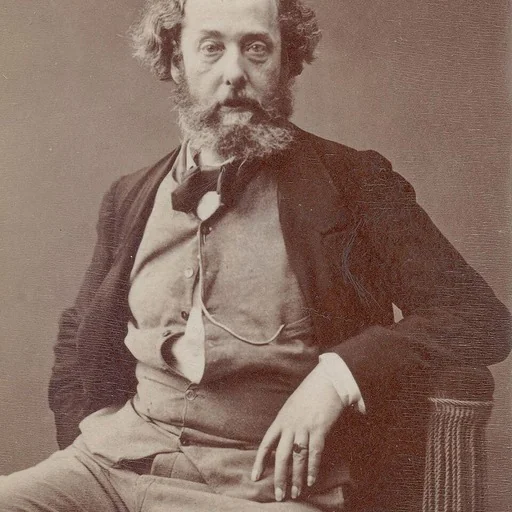
Célestin-François Nanteuil-Lebœuf, known as Célestin Nanteuil (French pronunciation: ; 11 July 1813 – 6 September 1873), was a French painter, engraver and illustrator closely tied to the Romantic movement in France.

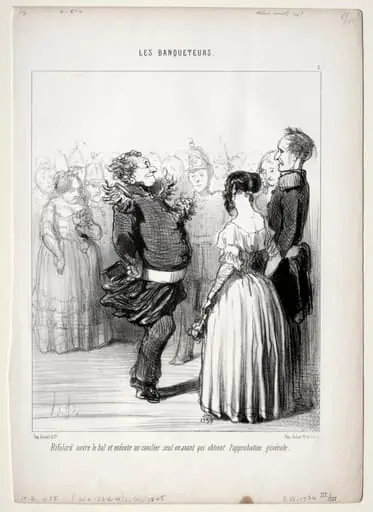 Rifolard opens the ball...
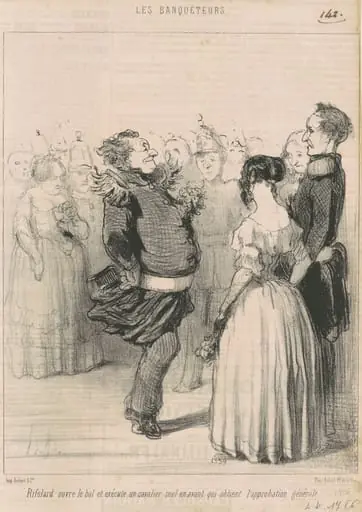 Rifolard ouvre le bal ...
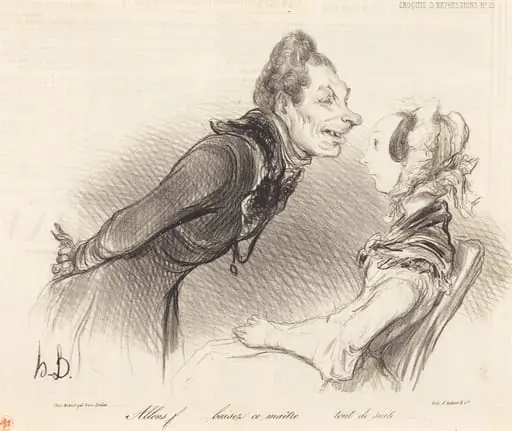 Allons... baisez ce maitre... tout de suite...
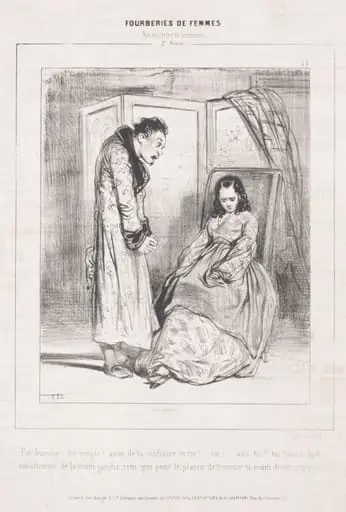 Fourberies de Femmes: En matière de sentiment
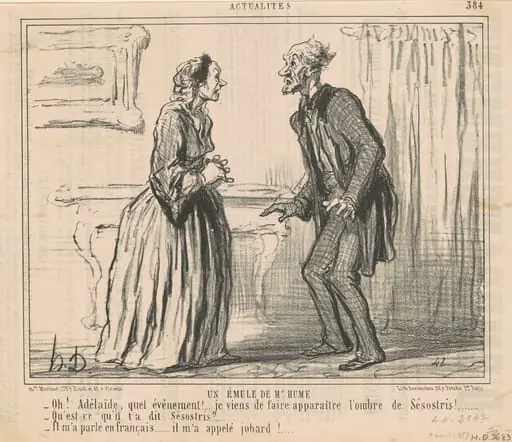 Un émule de Mr Hume
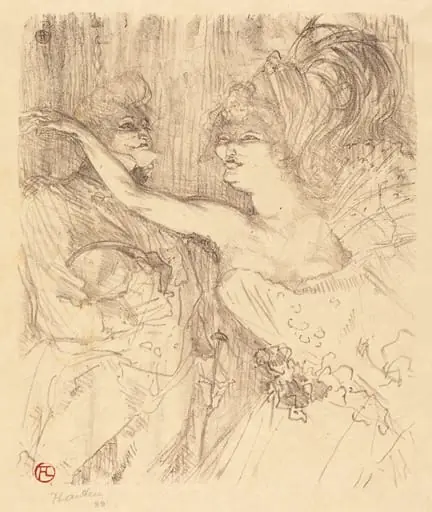 Guy and Mealy in "Paris qui marche" (Guy et Mealy dans "Paris qui marche")
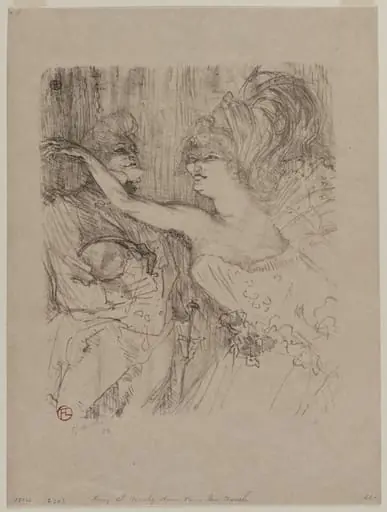 Guy and Mealy, in "Paris qui Marche"
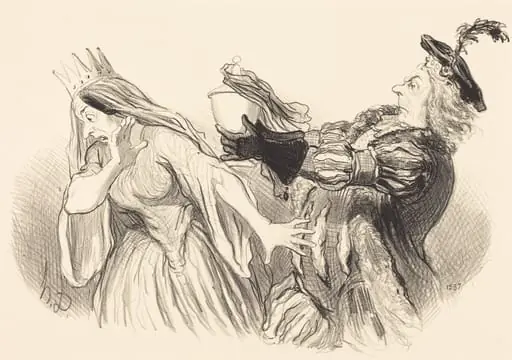 Hamlet
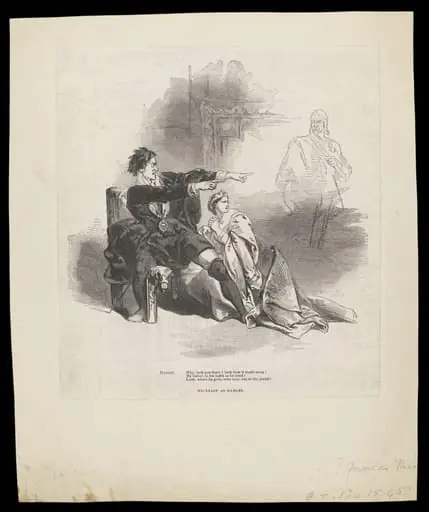 H Beard Print Collection
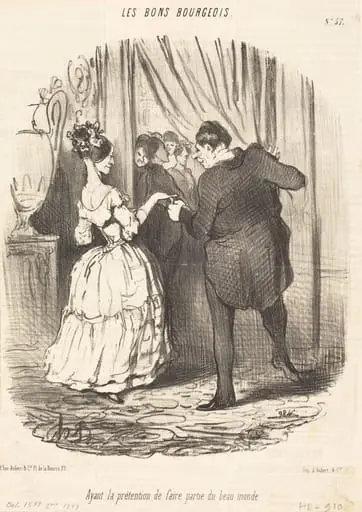 Ayant la prétention de faire partie du beau monde
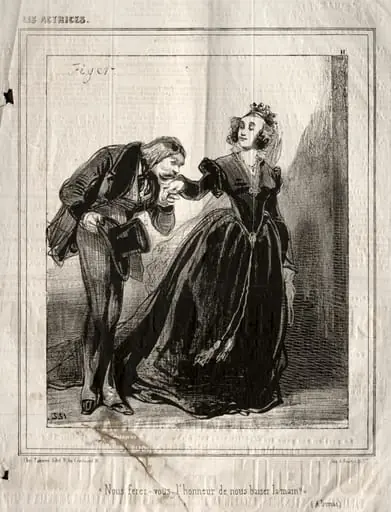 Les Actrices: Nous ferez-vous l'hommeur de nous baiser le main?
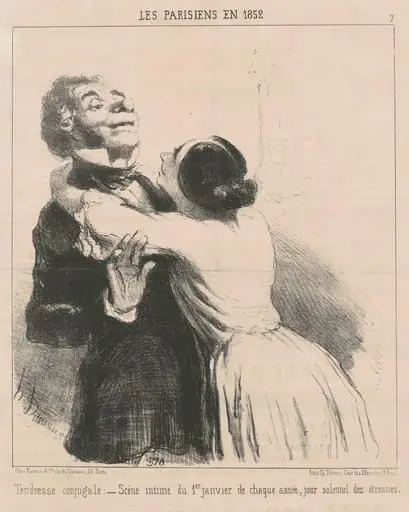 Tendresse conjugale