Artwork
Bookplate: Coat of Arms with Ezekiel Price inscribed
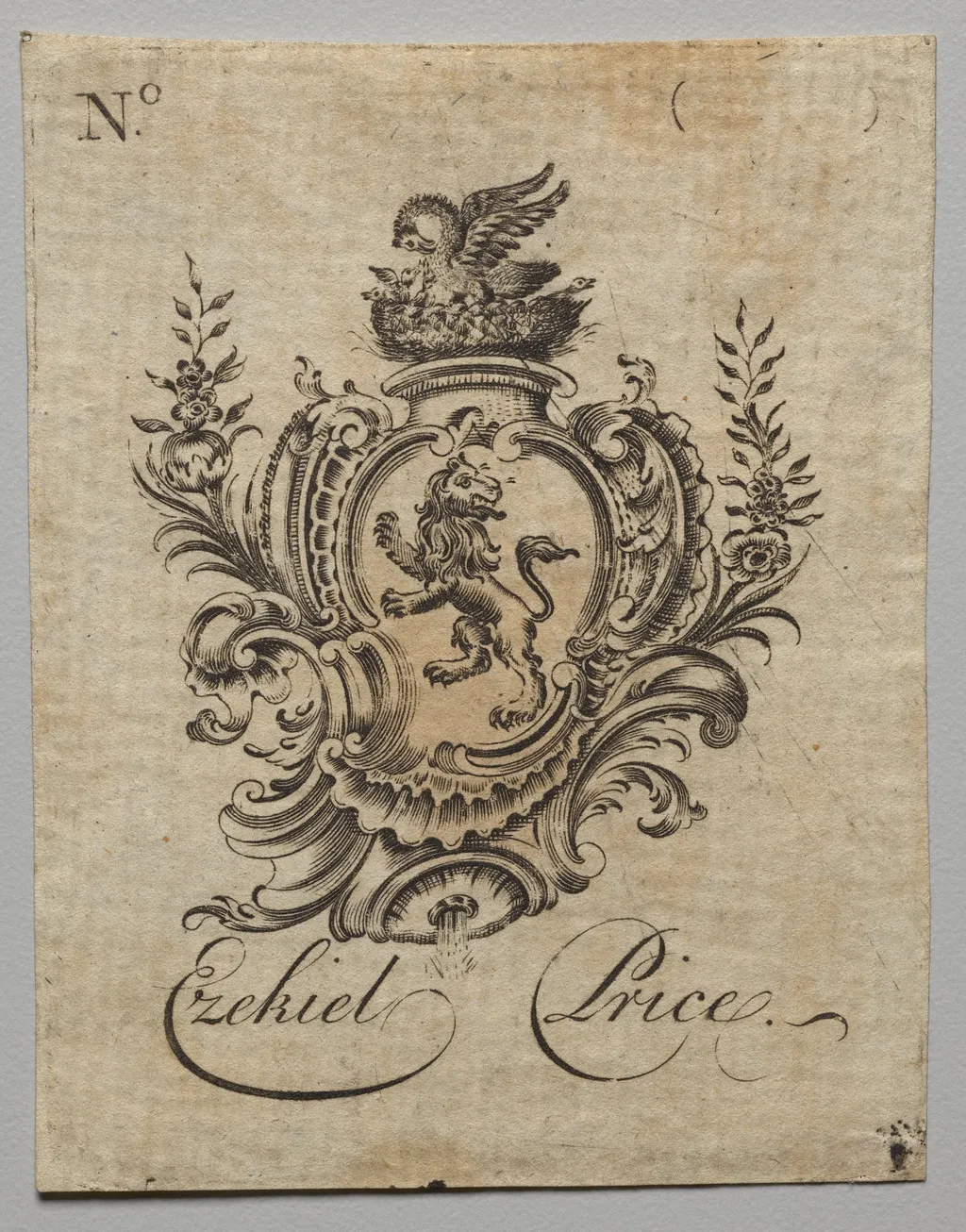
Bookplate: Coat of Arms with Ezekiel Price inscribed is a print by Nathaniel Hurd. It dates from 1764 and is held in the collection of the Cleveland Museum of Art.
About this work
Overview
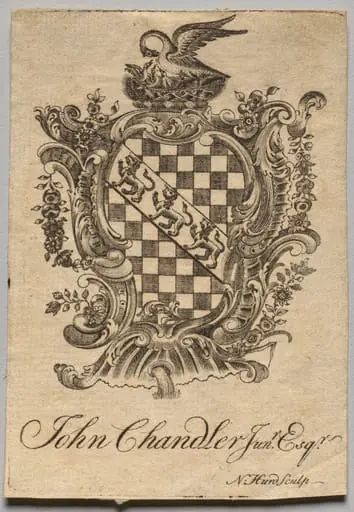
Created around 1764 by Nathaniel Hurd, this printed bookplate features a heraldic design bearing the name Ezekiel Price. Executed in the colonial American tradition, it served as a personal identifier for book ownership. The composition blends ornamental engraving with symbolic elements typical of aristocratic heraldry, adapted for a merchant class clientele in pre-Revolutionary New England.
Subject & Meaning
The surrounding floral and scrollwork motifs reflect contemporary decorative tastes, while the inclusion of the owner’s name personalizes the emblem.
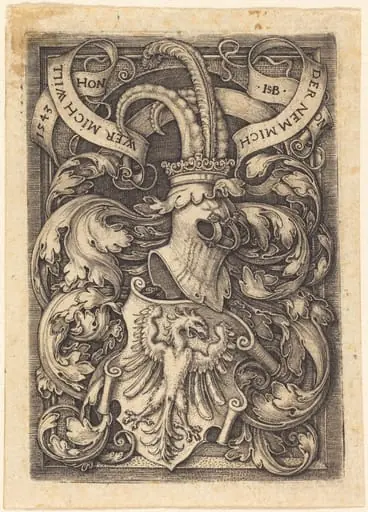
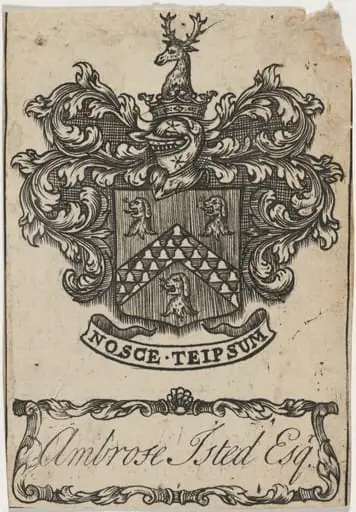
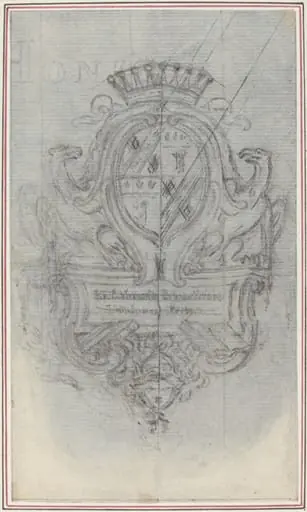
At the center, a lion supports a shield, conveying strength and vigilance. Above it, a crown flanked by two birds suggests elevated status or familial distinction. The surrounding floral and scrollwork motifs reflect contemporary decorative tastes, while the inclusion of the owner’s name personalizes the emblem. Though not a noble coat of arms, it emulates aristocratic conventions to signal social aspiration and lineage.
Technique & Style
Hurd employed fine-line engraving to achieve intricate detail, characteristic of his work as a silversmith and printmaker. The design is symmetrical and densely ornamented, with precise cross-hatching defining texture in the lion’s mane and foliage. The script lettering of 'Ezekiel Price' is elegantly curved, integrating seamlessly into the lower border, demonstrating Hurd’s skill in combining typography with visual symbolism.
History & Provenance
The bookplate was likely commissioned by Ezekiel Price, a Boston merchant and civic figure, to mark his personal library. It entered the collection of The Cleveland Museum of Art through documented acquisitions of colonial American prints. Its preservation reflects growing 20th-century interest in early American material culture and the role of personal insignia in defining identity beyond aristocratic lines.
Context
In mid-18th-century America, bookplates were increasingly common among educated elites and prosperous merchants seeking to assert cultural refinement. Though lacking royal authorization, such designs borrowed European heraldic forms to project legitimacy and continuity. Hurd’s work exemplifies how colonial artisans adapted Old World traditions to suit new social hierarchies in a rapidly commercializing society.
Legacy
Hurd’s bookplate remains a representative example of colonial American printmaking and personal heraldry. It contributes to scholarly understanding of how identity was visually constructed outside formal nobility. Today, it is studied for its craftsmanship and as evidence of the cultural aspirations of America’s emerging merchant class in the decades before independence.
Artist & collection

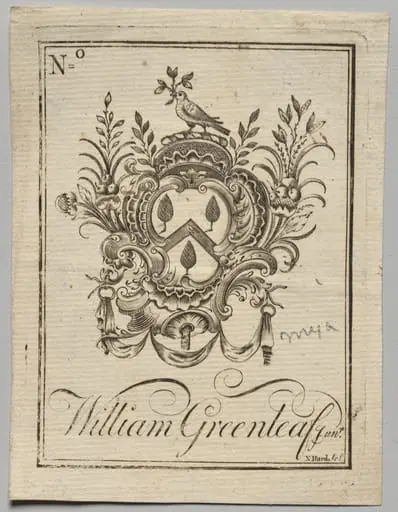 Bookplate: Coat of Arms with William Greenleaf Jun.r inscribed
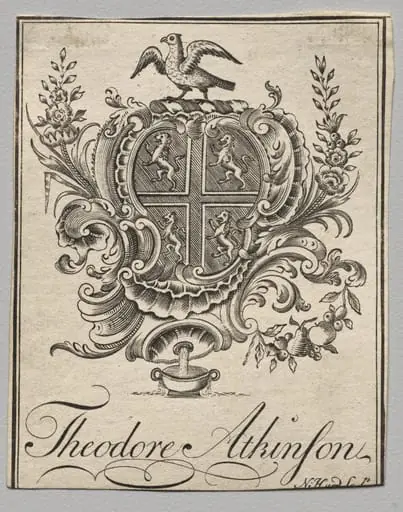 Bookplate: Coat of Arms with Theodore Atkinson inscribed
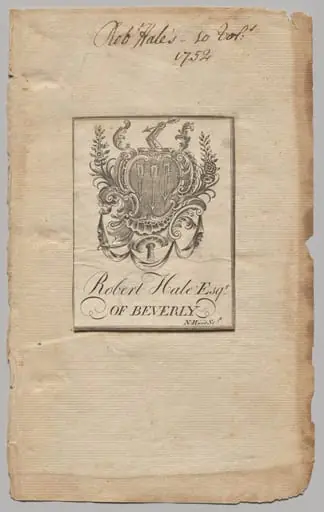 Bookplate: Coat of Arms with Robert Hale, Esq. inscribed
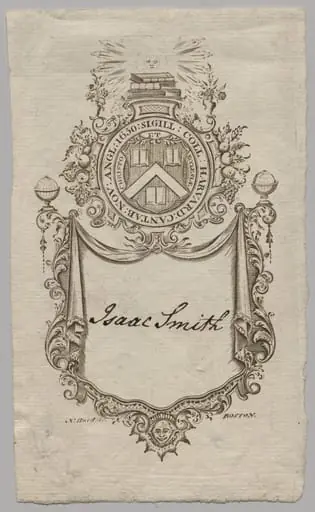 Bookplate: Coat of Arms with Isaac Smith inscribed
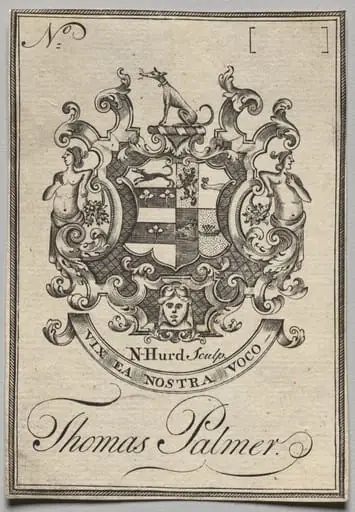 Bookplate: Coat of Arms with Thomas Palmer inscribed
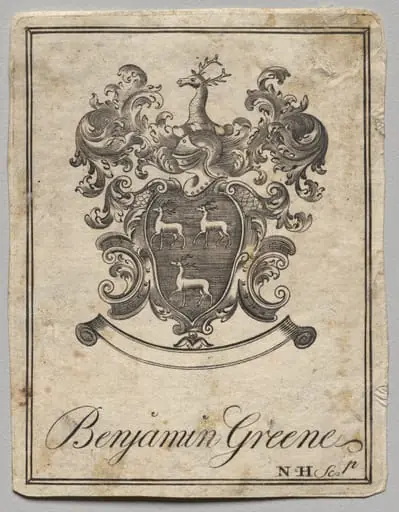 Bookplate: Coat of Arms with Benjamin Greene inscribed
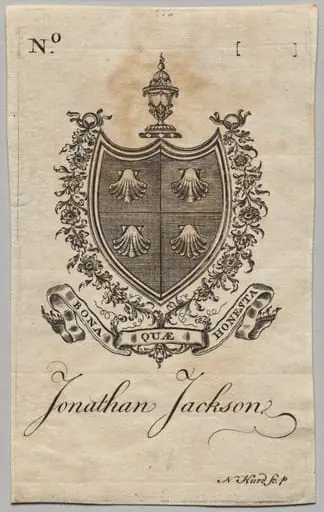 Bookplate: Coat of Arms with Jonathan Jackson inscribed
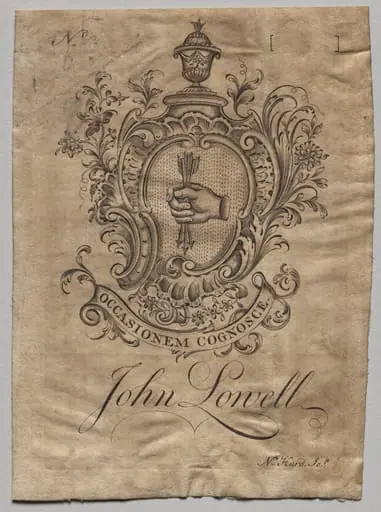 Bookplate: Coat of Arms with John Lowell inscribed