Artwork
Design for a City Gate in Trier
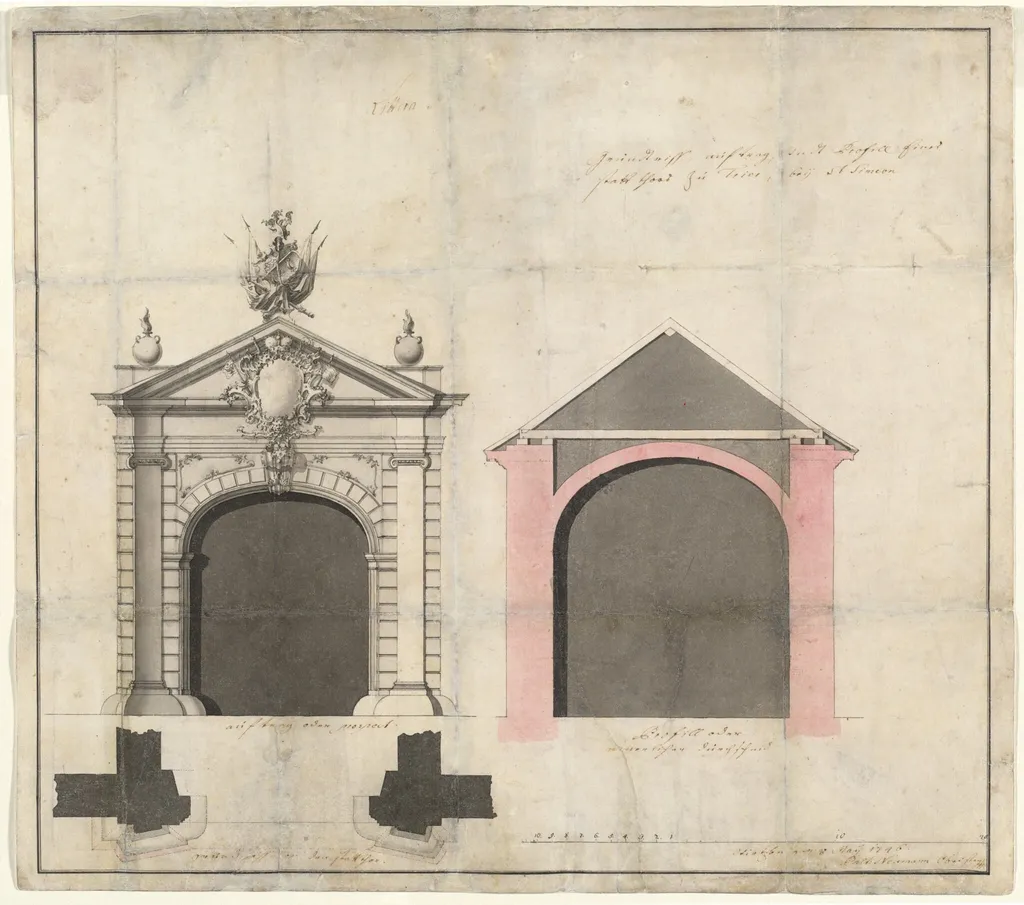
Design for a City Gate in Trier is an ink drawing by the Baroque artist Balthasar Neumann. It dates from 1746 and is held in the collection of the National Gallery of Art.
About this work
Overview
This 1746 drawing, executed in pen and ink with gray wash and watercolor on laid paper, presents a design for a city gate intended for Trier. Attributed to Balthasar Neumann, it reflects Baroque architectural tendencies.
Subject & Meaning
The subject is a proposed city gate for Trier, emphasizing grandeur and functionality, typical of Baroque civic architecture. The design may symbolize the city's prosperity and security.
Technique & Style
Neumann employed a combination of media: pen and black ink for outlines, gray wash for shading, and watercolor for coloring, over initial graphite sketches. This layered technique is characteristic of detailed Baroque architectural drawings.
History & Provenance
Created in 1746, the drawing's provenance is not fully detailed here, but its existence suggests Neumann's involvement in Trier's urban development plans during the mid-18th century.
Context
Commissioned during the Baroque period, this gate design would have been part of Trier's architectural renewal, influenced by European Baroque styles emphasizing drama and monumentality in public buildings.
Legacy
While the gate's construction status is unclear, the drawing remains a significant example of Baroque architectural planning, showcasing Neumann's design approach and the era's aesthetic values.
Artist & collection


 Untitled
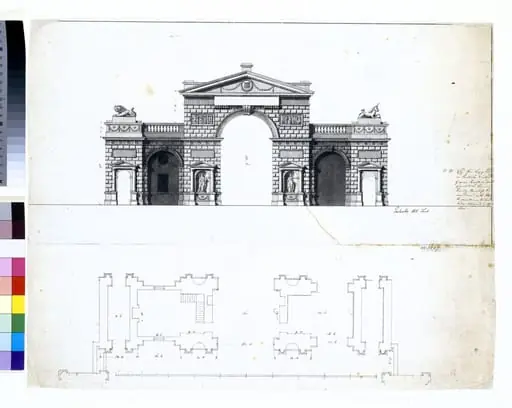 Triumphal Gateway at Hyde Park Corner
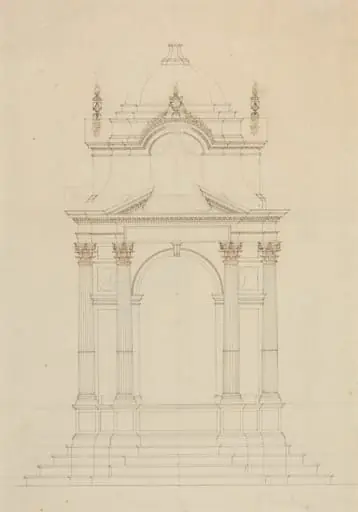 Design for a Baldaquin
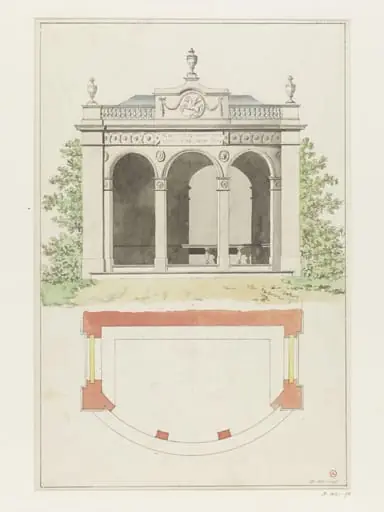 Drawing of a pavilion
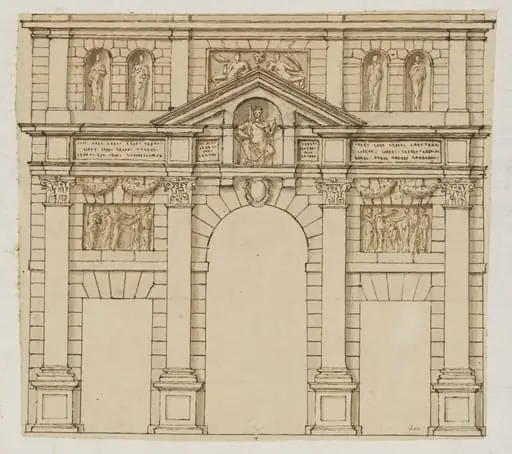 Study for a gateway
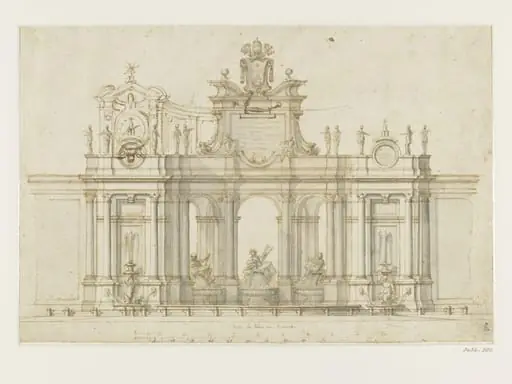 Drawing of a Roman fountain
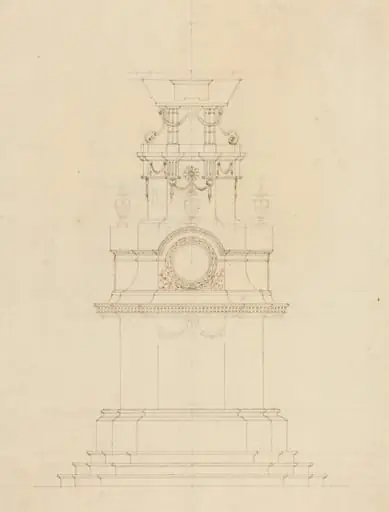 Design for a Catafalque
 Longitudinal section through Pantheon portico
 Sepulcher for the Kings of France
 Untitled
 Elevation of the Church of the Holy Sepulchre
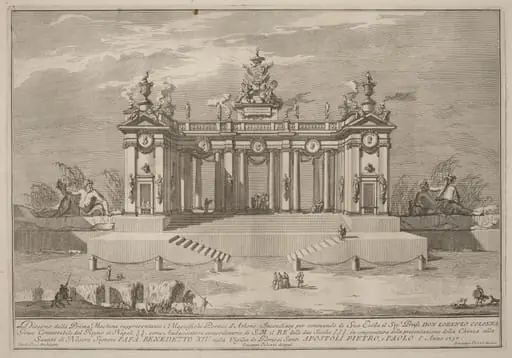 The Prima Macchina for the Chinea of 1757: The Colonnade of the Athenian Lyceum