Artwork
The Prima Macchina for the Chinea of 1757: The Colonnade of the Athenian Lyceum
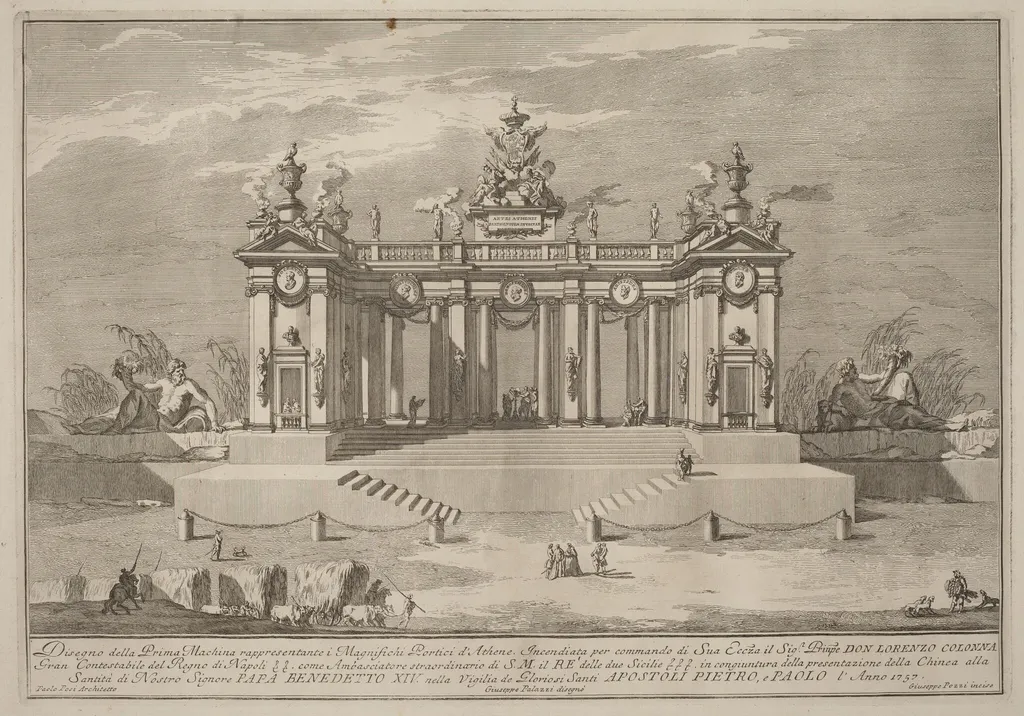
The Prima Macchina for the Chinea of 1757: The Colonnade of the Athenian Lyceum is an ink print by the Romanticist artist Giuseppe Pozzi. It dates from 1757 and is held in the collection of the National Gallery of Art.
About this work
In front, two figures sit on rocks by the water, while others work on a ship below.
This image shows a grand, imaginary building with tall columns and statues on top. In front, two figures sit on rocks by the water, while others work on a ship below. The sky is light with soft clouds, and the whole scene looks like a stage set.
The text at the bottom names it a "machine" built for a special event in 1757. It’s a drawing, not a photo, made by pressing ink into paper.
Next, look up etching to see how artists like this made detailed prints.
Overview
This etching on laid paper, titled The Prima Macchina for the Chinea of 1757: The Colonnade of the Athenian Lyceum, is a print created by Giuseppe Pozzi in 1757. It depicts a fantastical architectural scene with a colonnade, statues, and figures in the foreground.
Subject & Meaning
The print shows an imaginary building with tall columns and statues, accompanied by figures engaged in various activities, including working on a ship. The scene is set against a serene sky with soft clouds, evoking a sense of a theatrical setting.
Technique & Style
The image was produced using the etching technique, where a design is incised into a metal plate, allowing for detailed and intricate prints to be made. The use of laid paper as the medium adds to the texture of the work.
History & Provenance
The Prima Macchina for the Chinea of 1757 was created for a special event, as indicated by the text at the bottom of the print. The 'Chinea' was a significant occasion, and this print documents the 'machine' or structure built for it.
Artist & collection


 The Prima Macchina for the Chinea of 1757: The Colonnade of the Athenian Lyceum
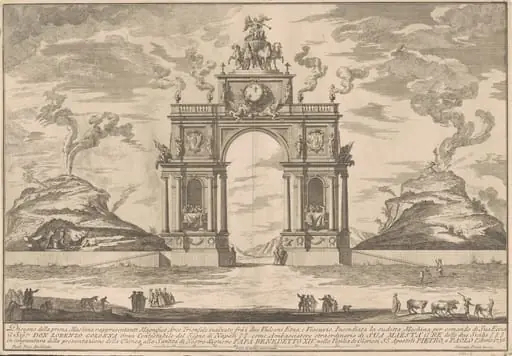 The Prima Macchina for the Chinea of 1756: A Triumphal Arch between Mount Etna and Mount Vesuvius
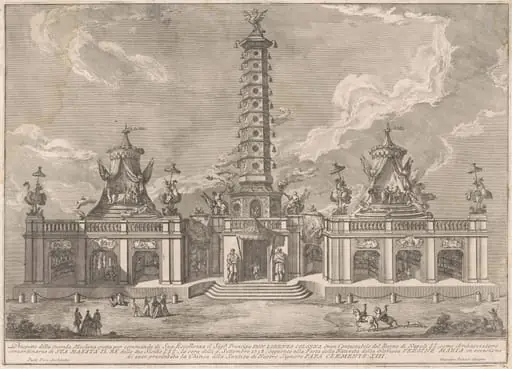 The Seconda Macchina for the Chinea of 1758: The Porcelain Tower of Nanjing
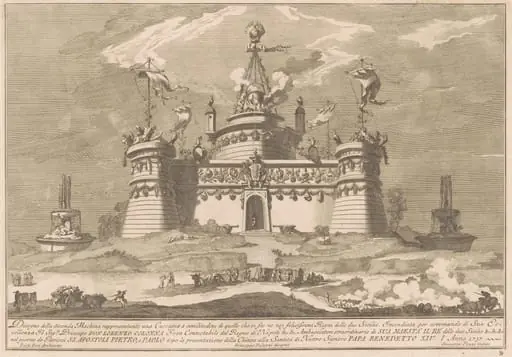 The Seconda Macchina for the Chinea of 1757: The Fortress of Cockaigne
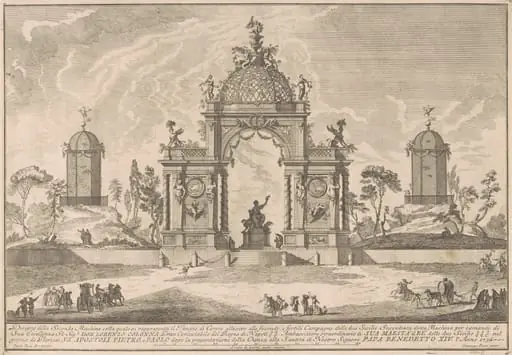 The Seconda Macchina for the Chinea of 1756: The Temple of Ceres
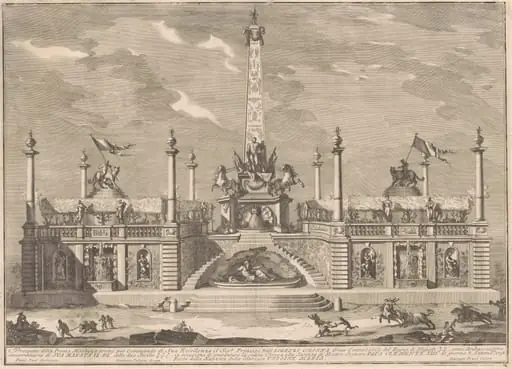 The Prima Macchina for the Chinea of 1758: A "Deliziosa" with Hanging Gardens
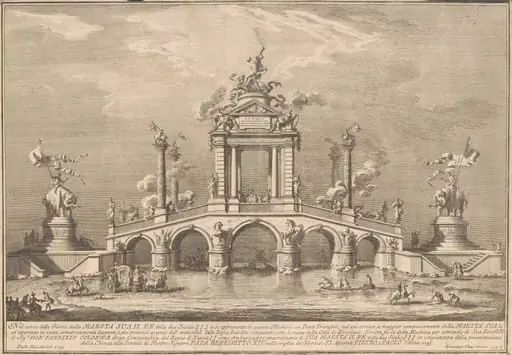 The Prima Macchina for the Chinea of 1755: A Triumphal Bridge with Antiquities from Herculaneum
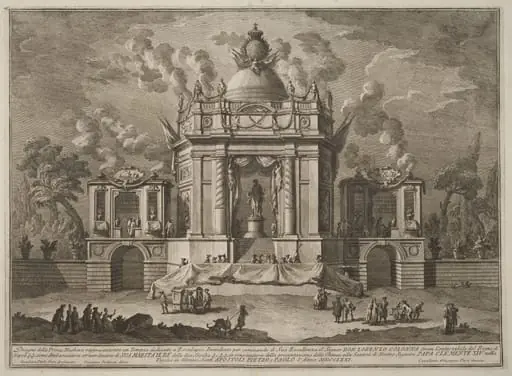 The Prima Macchina for the Chinea of 1771: The Temple of Asclepius
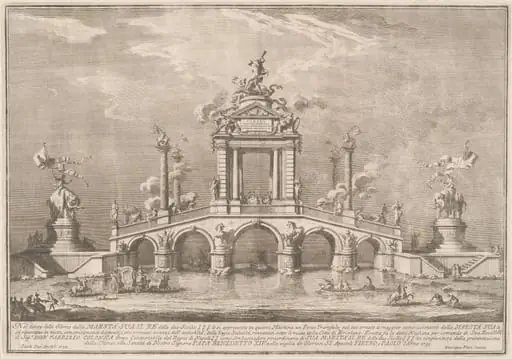 The Prima Macchina for the Chinea of 1755: A Triumphal Bridge with Antiquities from Herculaneum
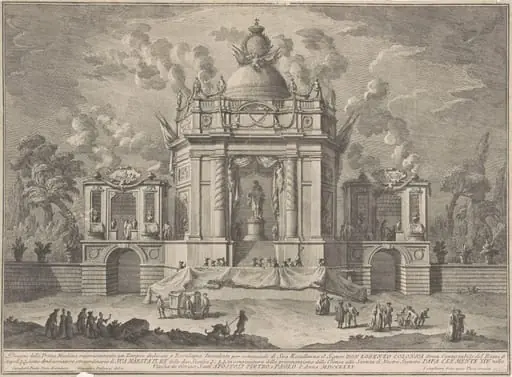 The Prima Macchina for the Chinea of 1771: The Temple of Asclepius
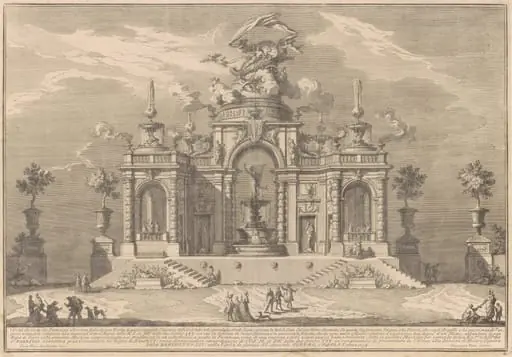 The Prima Macchina for the Chinea of 1754: The Palace of Venus in Cyprus
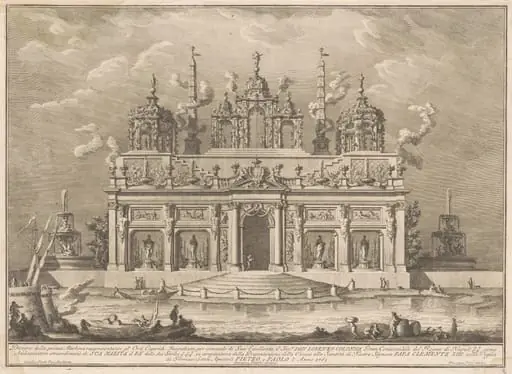 The Prima Macchina for the Chinea of 1765: The Garden of the Hesperides
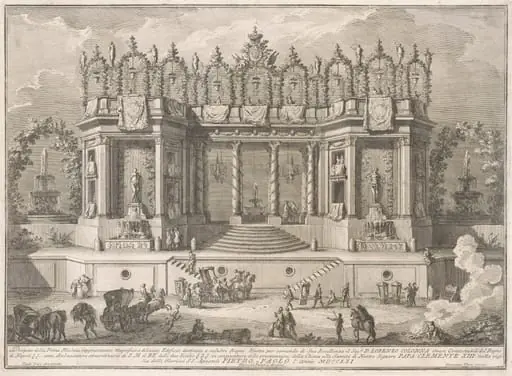 The Prima Macchina for the Chinea of 1761: The Salubrious Baths
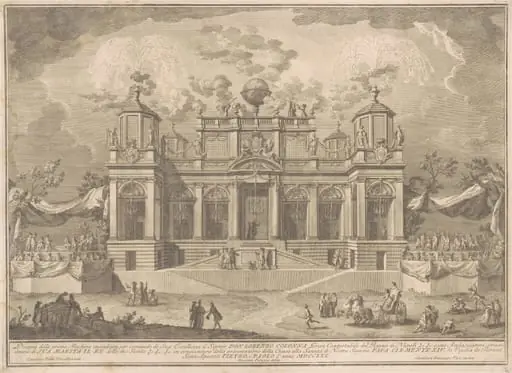 The Prima Macchina for the Chinea of 1770: An Roman Building for Commerce
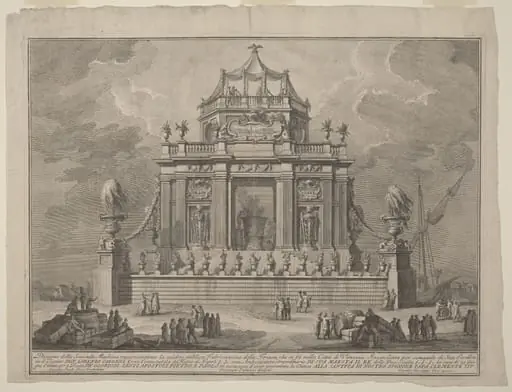 The Seconda Macchina for the Chinea of 1773: The Preparation of Theriac in Venice