Artwork
Eberhard (1445-96), Duke of Würtemberg, as a Pilgrim in the Holy Land
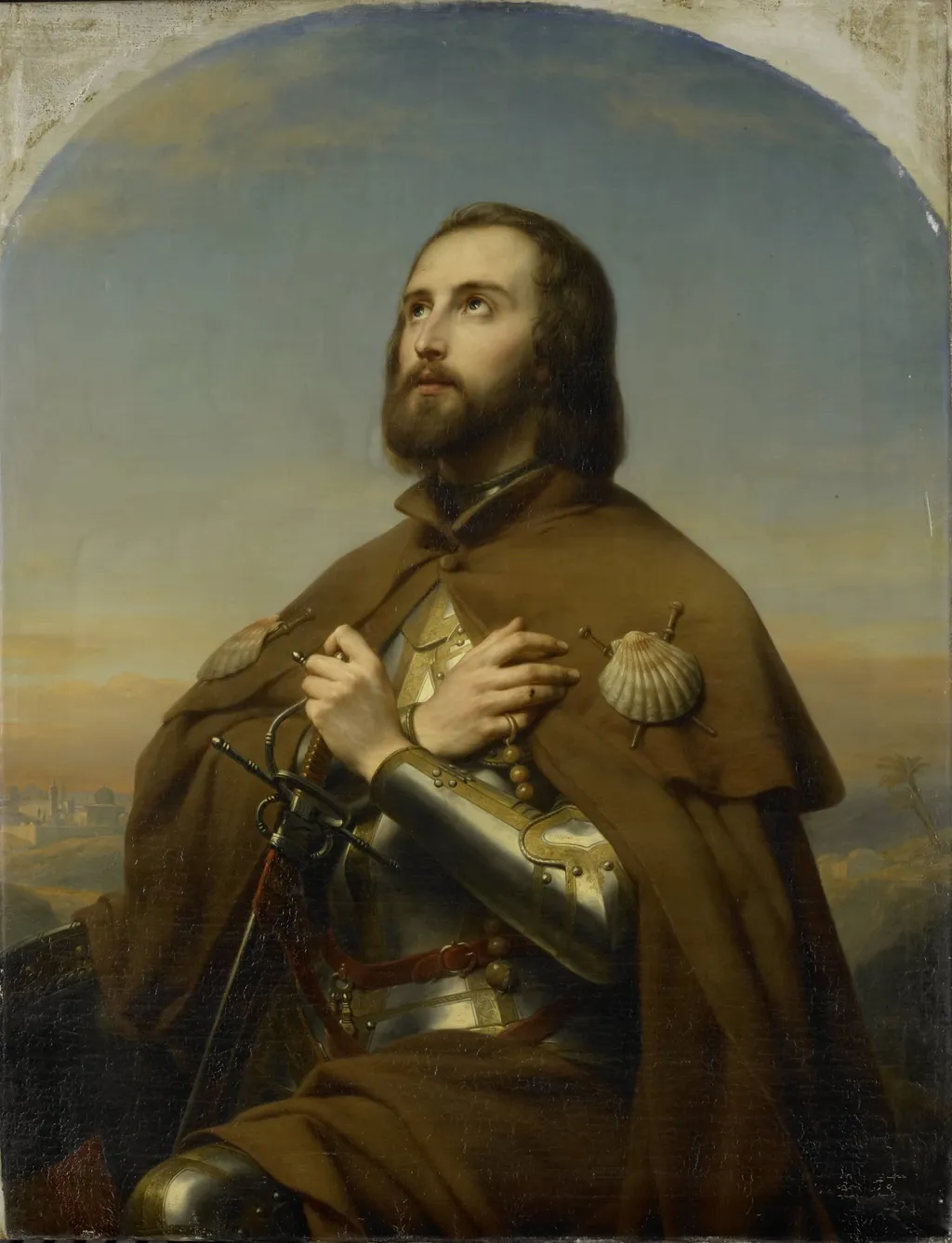
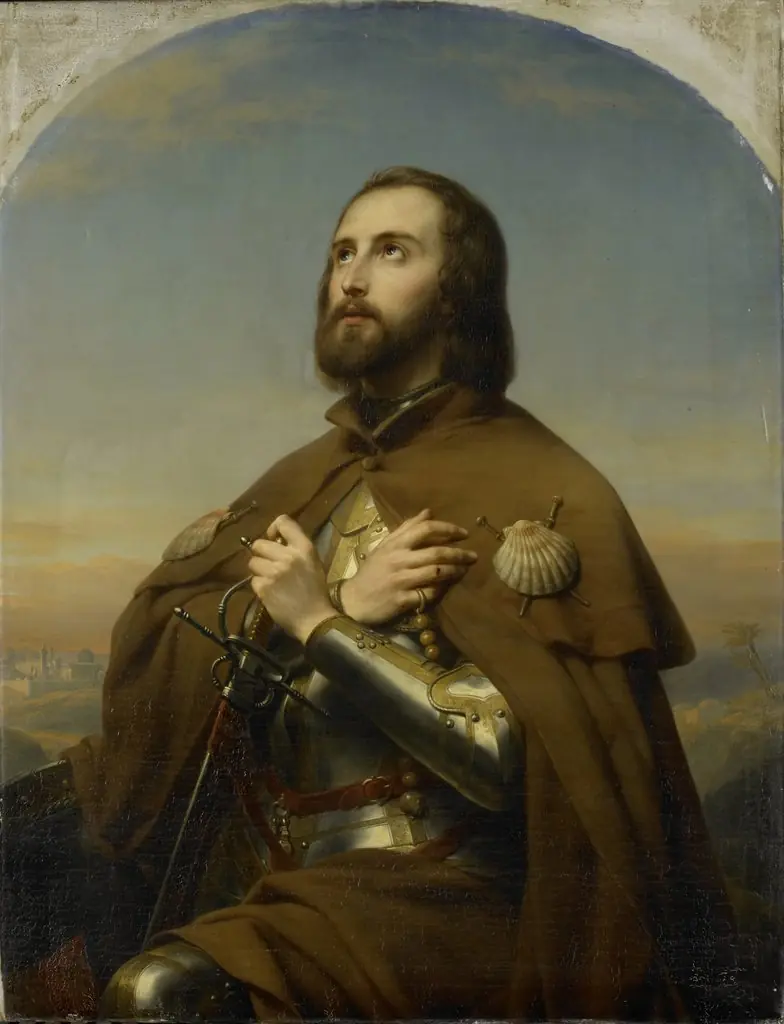
Eberhard (1445-96), Duke of Würtemberg, as a Pilgrim in the Holy Land is an unspecified painting by Nicaise De Keyser. It dates from 1846 and is held in the collection of the Rijksmuseum. The work portrays Eberhard (1445‑96), Duke of Württemberg, rendered as a pilgrim kneeling on a rocky terrain.
About this work
The artist tried to imagine what the journey looked like, even though they never saw it.
A man in shiny armor kneels on rocky ground, hands crossed over his chest. His sword rests in his right hand, eyes turned upward. Behind him, a city with domes and walls glows in the distance.
This painting shows Eberhard, a German duke, dressed as a pilgrim visiting Jerusalem. It was made in 1846—hundreds of years after Eberhard’s actual trip. The artist tried to imagine what the journey looked like, even though they never saw it. The armor and distant city feel like a storybook scene.
To see more paintings of knights and distant lands, visit the Rijksmuseum.
Overview
The work portrays Eberhard (1445‑96), Duke of Württemberg, rendered as a pilgrim kneeling on a rocky terrain. He is clad in full plate armor, his hands crossed over his chest, a sword held in his right hand, and his gaze lifted upward toward a distant cityscape that suggests Jerusalem.
Subject & Meaning
The composition juxtaposes the martial identity of the duke with the devotional posture of a pilgrim, reflecting the medieval ideal of the warrior‑pilgrim who undertook holy journeys. The upward glance and the distant, domed skyline evoke a spiritual aspiration toward the sacred city.
Technique & Style
Executed in the mid‑19th century, the painting employs a detailed, almost illustrative approach to the armor’s reflective surfaces and the atmospheric background. The contrast between the bright metal and the muted, hazy horizon creates a narrative depth typical of historicist genre works of the period.
History & Provenance
Although Eberhard lived in the 15th century, the image was created in 1846, long after his actual pilgrimage. The artist, working without contemporary visual sources, imagined the scene based on historical descriptions and the romantic fascination with crusader motifs prevalent in 19th‑century art.
Context
The painting reflects the 19th‑century revival of interest in medieval chivalry and pilgrimage, a time when European artists often reconstructed historical episodes from textual accounts. It aligns with the broader trend of romantic historicism that sought to dramatize the past for contemporary audiences.
Artist & collection
Artist
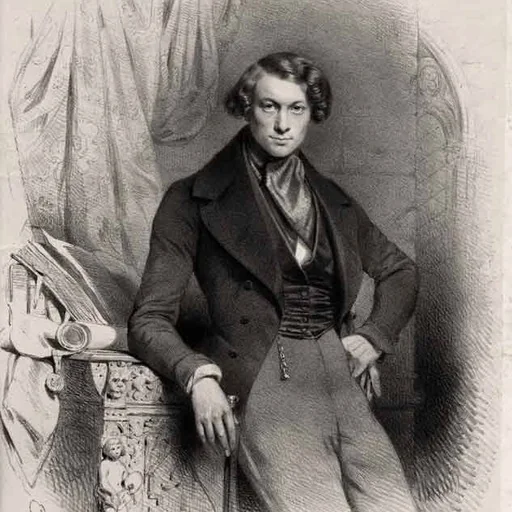
Nicaise de Keyser (alternative first names: Nicaas, Nikaas of Nicasius; 26 August 1813, Zandvliet – 17 July 1887, Antwerp) was a Belgian painter of mainly history paintings and portraits who was one of the key figures…

 Portrait of Grand Princess Anna Pavlovna
 Eberhard (1445-96), Duke of Würtemberg, as a Pilgrim in the Holy Land
 Self Portrait
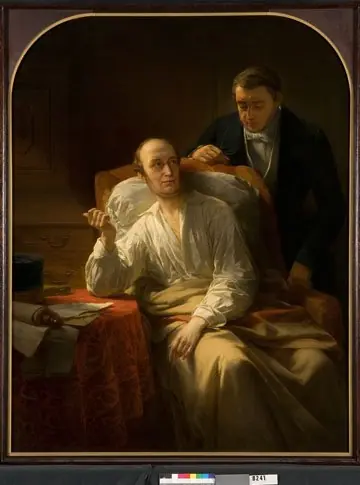 King Willem II Making his Last Will
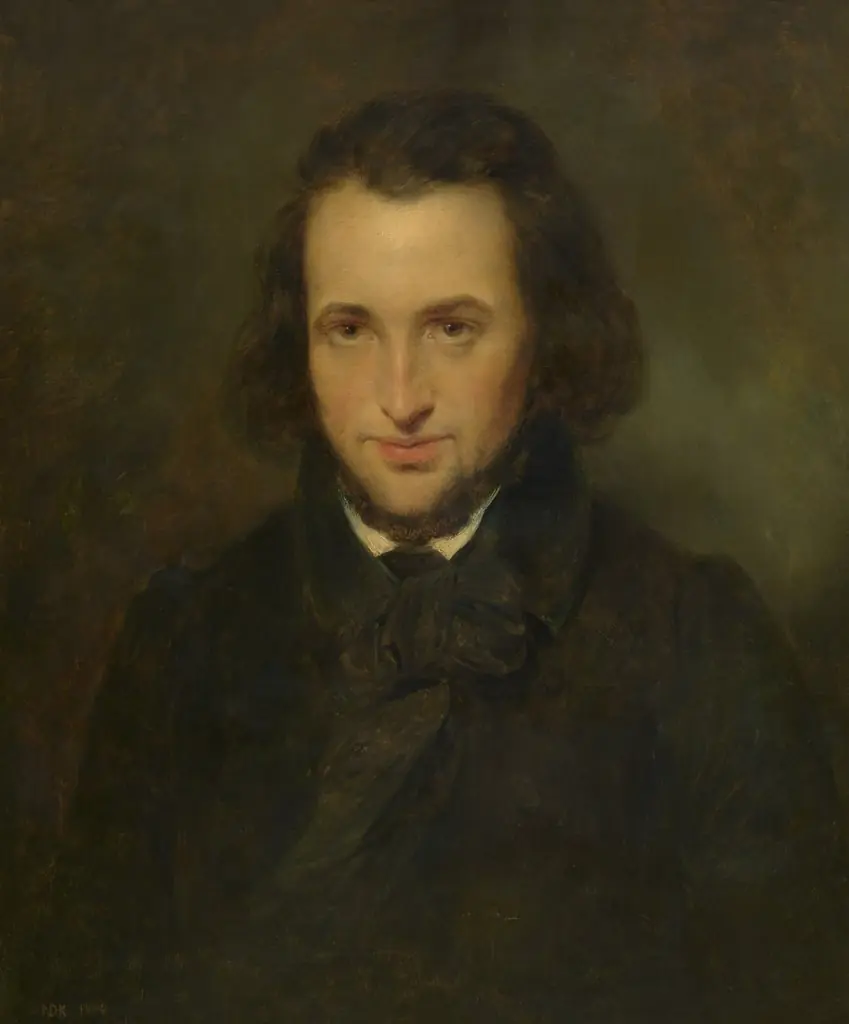 The Printer-Publisher Jozef-Ernest Buschmann
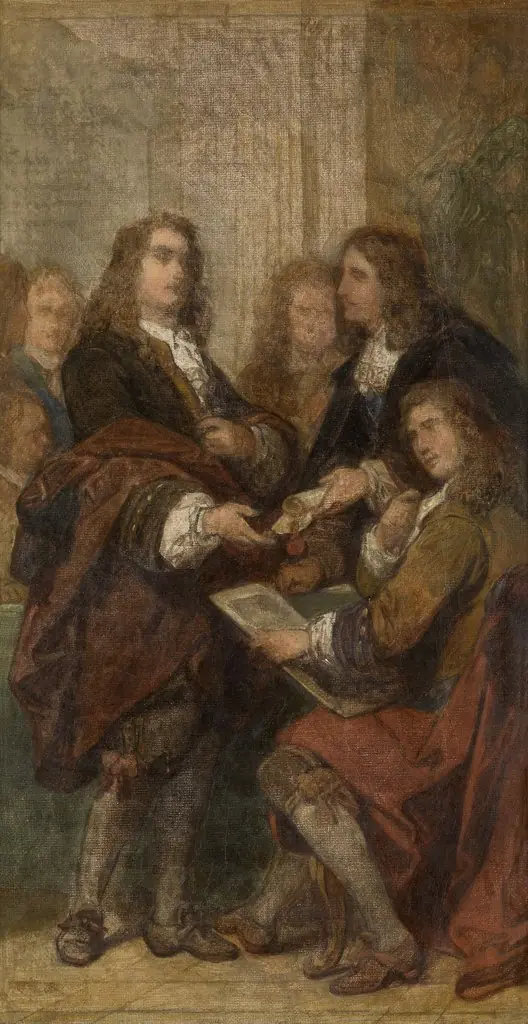 The Engraver Gerard Edelinck in Paris
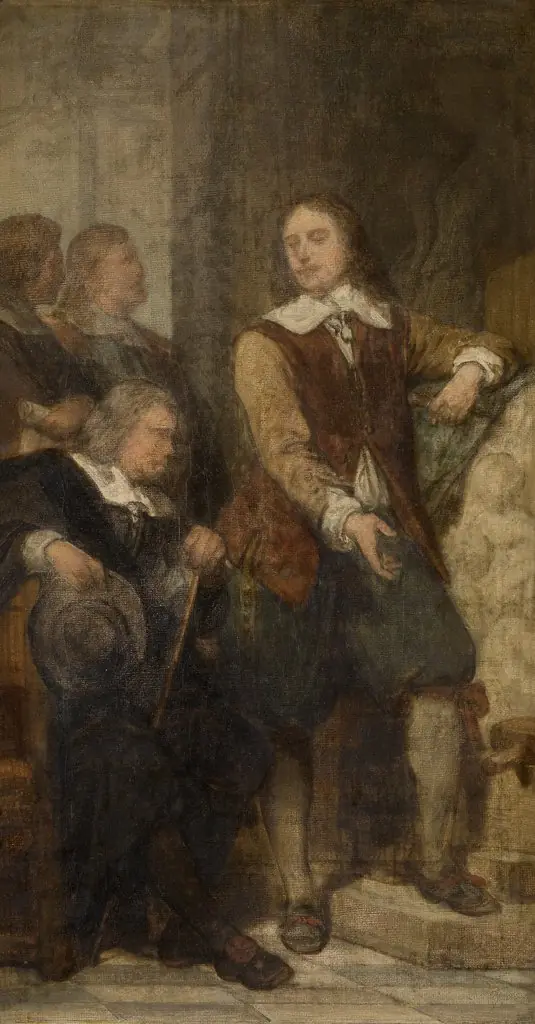 The Sculptor Artus Quellinus I in Amsterdam
 Madame Mols-de Brialmont