Artwork
Art of the Lithograph: Albanian, Plate XVIII
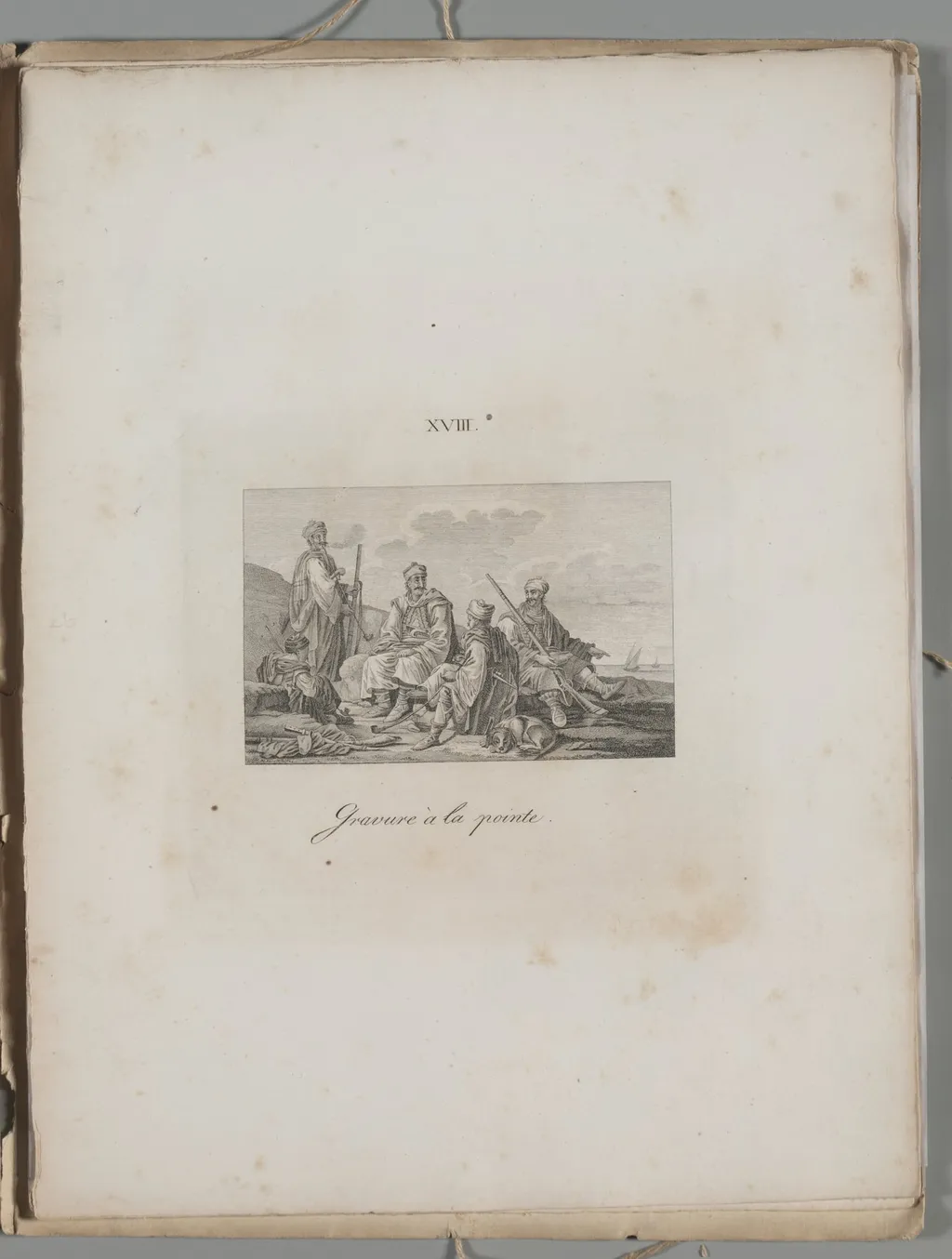
Art of the Lithograph: Albanian, Plate XVIII is a work on paper by the Romanticist artist Alois Senefelder. It dates from 1819 and is held in the collection of the Cleveland Museum of Art.
About this work
Overview
This lithographic plate, numbered XVIII, is part of a portfolio titled Art of the Lithograph, produced by Alois Senefelder in 1819.
This lithographic plate, numbered XVIII, is part of a portfolio titled Art of the Lithograph, produced by Alois Senefelder in 1819. It originates from the earliest phase of lithographic printing, a technique Senefelder himself invented. The plate is held in the collection of The Cleveland Museum of Art and represents one of the foundational publications demonstrating the potential of stone-based printmaking for reproducing detailed imagery and text.
Subject & Meaning
The image depicts four figures in traditional robes, arranged in a relaxed, narrative grouping on a grassy slope. One man holds a rifle, another lies recumbent, and a fourth stands behind the group, suggesting a moment of rest or vigilance. The scene, set against a hazy landscape, evokes a sense of quiet observation rather than action, possibly illustrating a cultural or military encounter in the Balkans, though no specific event is identified.
Technique & Style
Executed in monochrome, the plate uses fine linear engraving to model form and texture, with delicate hatching defining fabric, terrain, and atmosphere. The term 'Gravure à la pointe' indicates the use of a pointed tool to draw directly on the stone, a method Senefelder refined to achieve tonal subtlety. The style aligns with early 19th-century Romantic sensibilities, emphasizing naturalism and emotional restraint over dramatic flourish.
History & Provenance
Created in 1819, this plate was part of Senefelder’s effort to document and promote lithography as a viable artistic medium. The portfolio was distributed to artists and printers across Europe to demonstrate the technique’s versatility. The Cleveland Museum of Art acquired the work through documented institutional collections, preserving its original condition with visible aging, including edge wear and tonal fading consistent with 19th-century paper.
Context
In the early 1800s, lithography emerged as a revolutionary alternative to engraving and etching, allowing artists to draw directly on stone with greasy materials. Senefelder’s portfolio served both educational and commercial aims, bridging technical innovation with artistic expression. The depiction of Albanian figures reflects European interest in regional cultures during the Romantic era, often framed through ethnographic curiosity rather than deep cultural engagement.
Legacy
Senefelder’s portfolio established lithography as a legitimate medium for fine art reproduction, influencing generations of printmakers. This plate, among others in the series, preserved early examples of lithographic nuance and helped standardize its use in illustrated books. While the specific imagery may now seem dated, its technical contribution to print history remains foundational and widely studied in museum and academic contexts.
Artist & collection

Artist
Johann Alois Senefelder was a German actor and playwright who invented the printing technique of lithography in the 1790s.

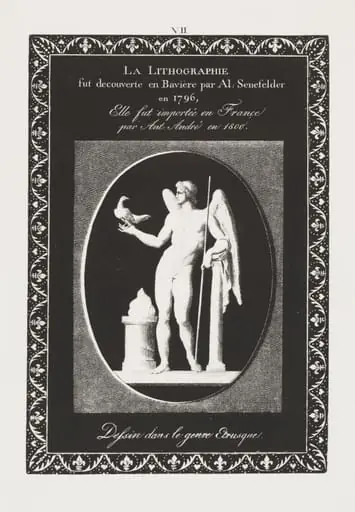 Art of the Lithograph: Dedication Sheet, Plate VII
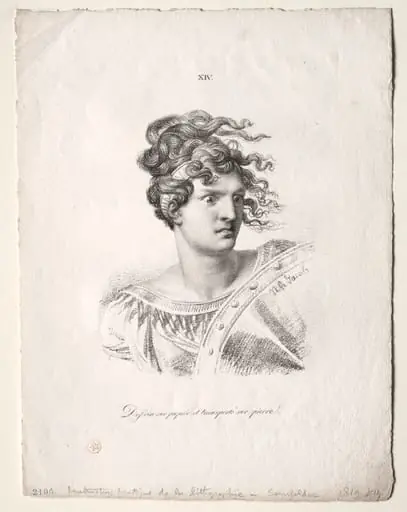 L'art de la lithographie: Head of an Amazon
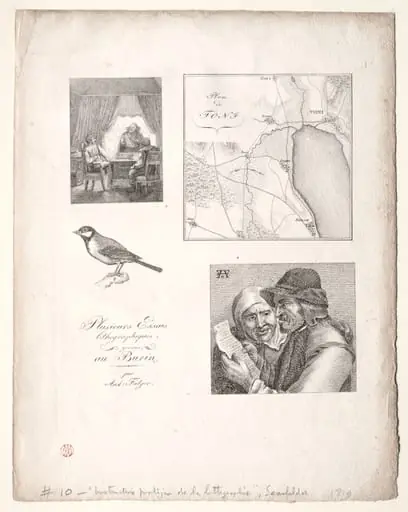 L'art de la litographie:Four Subjects after Falger
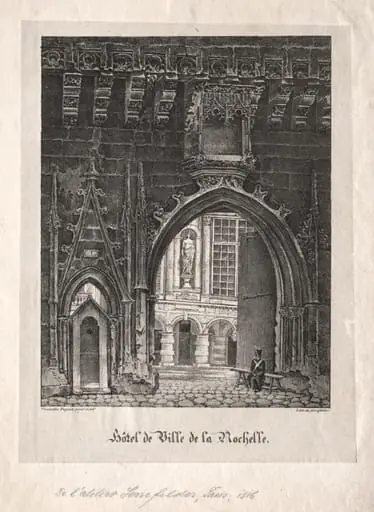 Hotel da Ville de la Rochelle, France
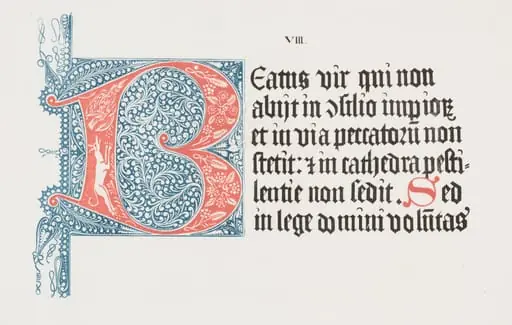 Art of the Lithograph: Psalter- Initial B, Plate VIII
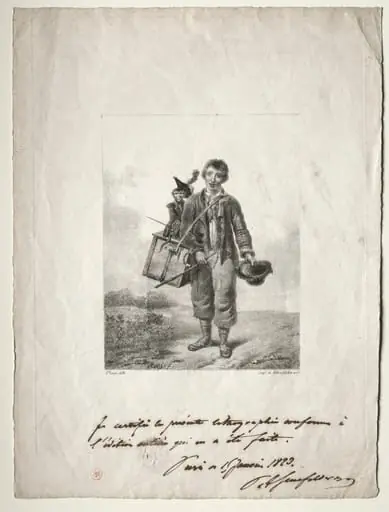 Organ-Grinder Boy
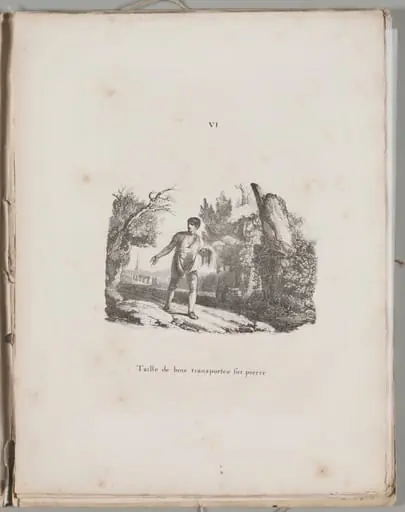 Art of the Lithograph: Transfer of a Wood Engraving, Plate VI
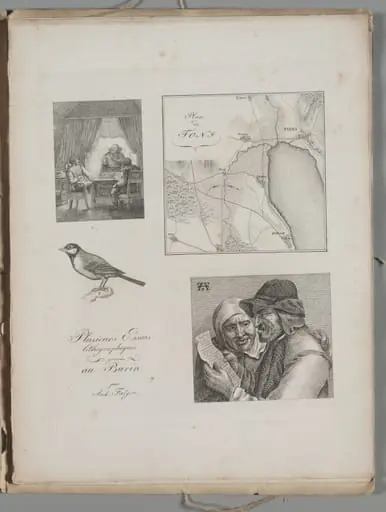 Art of the Lithograph: Four Engraving Samples, War Tent, Map of Toni, Bird, Dutch Farmer and Woman
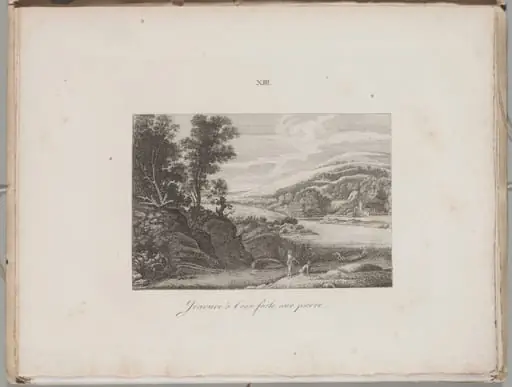 Art of the Lithograph: River Landscape, Plate XIII
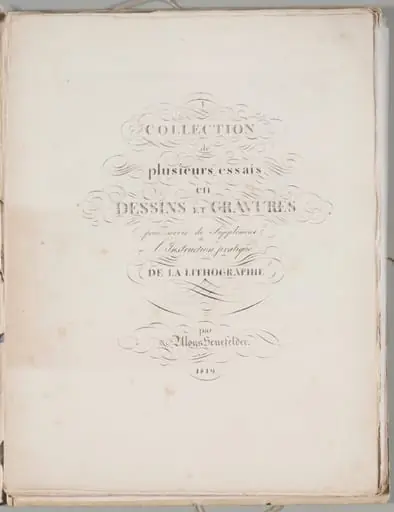 Art of the Lithograph: Title Page, Plate I
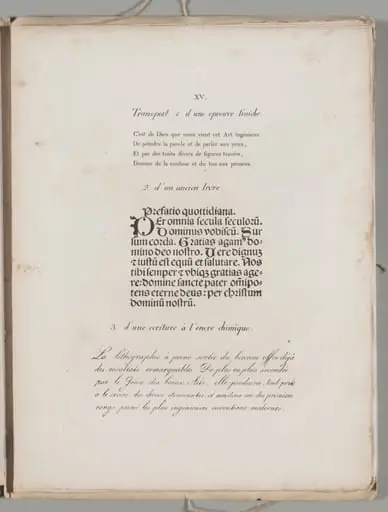 Art of the Lithograph: Printing Letters, Plate XV
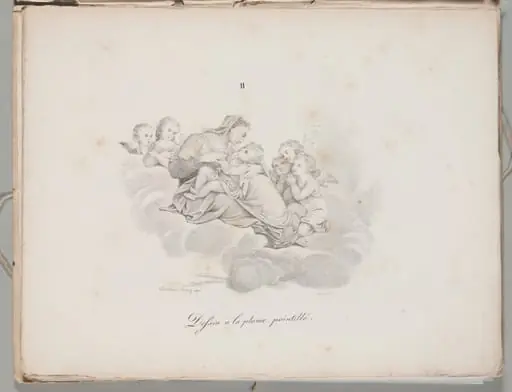 Art of the Lithograph: Madonna and Child on the Clouds, Plate II
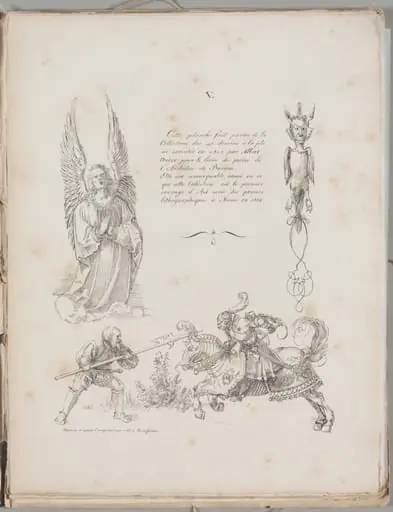 Art of the Lithograph: Three Designs from Dürer’s Prayer Book, Plate V
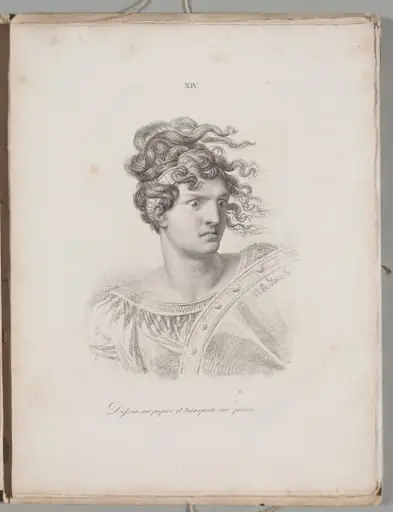 Art of the Lithograph: Head of an Amazon, Plate XIV