Artwork
La Décoration et du Feu d'Artifice... la Naissance de Monseigneur le Daufin (Fireworks Celebrating the Birth of the Dauphin)
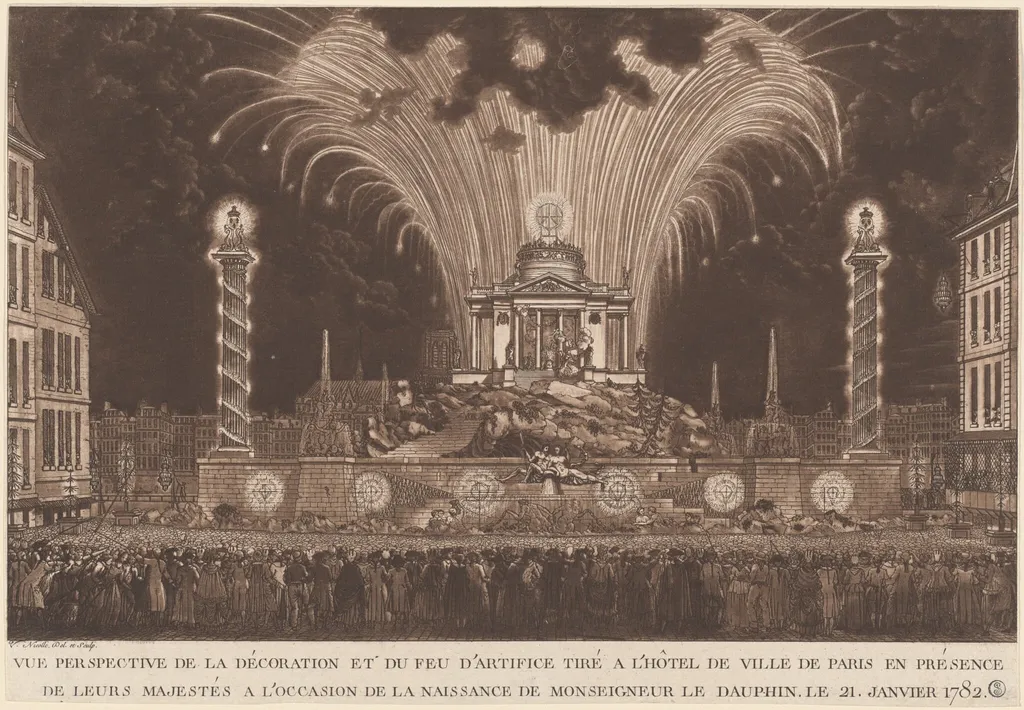
La Décoration et du Feu d'Artifice... la Naissance de Monseigneur le Daufin (Fireworks Celebrating the Birth of the Dauphin) is an ink print by the Romanticist artist Victor Jean Nicolle. It dates from 1782 and is held in the collection of the National Gallery of Art. La Décoration et du Feu d'Artifice.
About this work
At the center, a temporary stage holds a small temple-like structure with statues and a fountain.
This print shows a grand fireworks display lighting up a dark night sky over a city street. At the center, a temporary stage holds a small temple-like structure with statues and a fountain. Crowds of people stand below, watching the show. The fireworks burst in swirling patterns, casting bright spots on the buildings and stage.
The title tells us this celebrates a royal birth in 1782. The artist used a mix of etching and wash techniques to create the dramatic lighting effects.
Next, look up etching to see how artists like Nicolle made detailed prints.
Overview
La Décoration et du Feu d'Artifice... la Naissance de Monseigneur le Daufin is an 1782 etching by Victor Jean Nicolle, commemorating the birth of the Dauphin through a depiction of a nighttime fireworks celebration in a city setting.
Subject & Meaning
The print captures the spectacle of fireworks illuminating a dark sky over a city, with a central temporary stage featuring a temple-like structure, statues, and a fountain. The scene conveys public jubilation at the royal birth, emphasizing communal celebration of a significant monarchical event.
Technique & Style
Nicolle employed a combination of etching and wash manner with roulette, printed in brown on laid paper, to achieve dramatic lighting effects. This technical approach allowed for the expressive rendering of swirling fireworks and their bright reflections on buildings and the stage.
History & Provenance
Created in 1782 to mark the birth of the Dauphin, the etching's provenance details are not provided in the available information, focusing instead on its creation context as a commemorative work.
Context
Commissioned to celebrate a royal event, the work reflects 18th-century European traditions of public displays for monarchical milestones. The use of temporary architectural elements and fireworks underscores the ephemeral nature of such celebrations.
Legacy
While specific legacy details of this etching are not provided, it contributes to the broader historical record of commemorative art for royal events in late 18th-century Europe, and demonstrates Nicolle's technical skill in capturing dynamic scenes through etching techniques.
Artist & collection


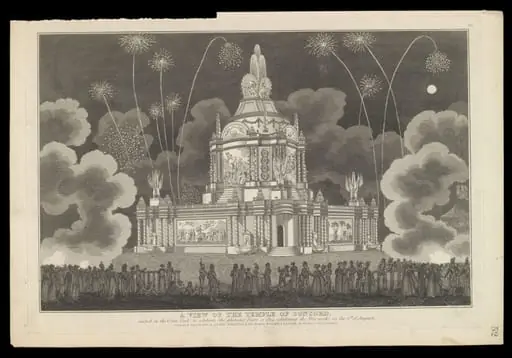 H Beard Print Collection
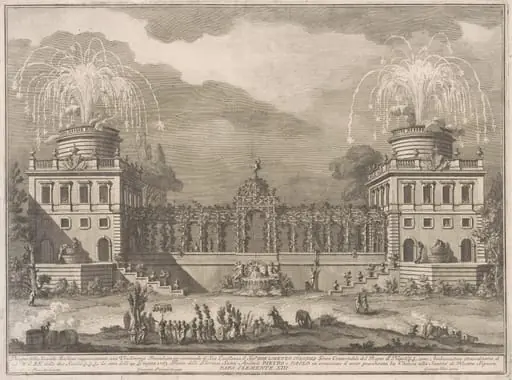 The Seconda Macchina for the Chinea of 1763: The Grape Harvest
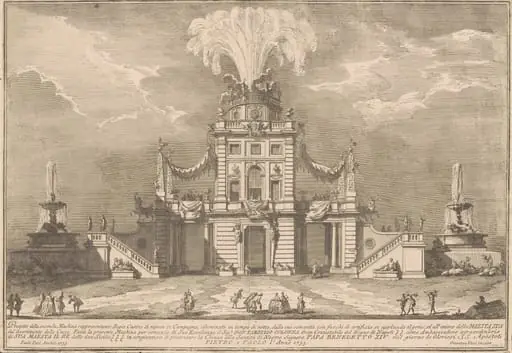 The Seconda Macchina for the Chinea of 1755: A Royal Hunting Lodge
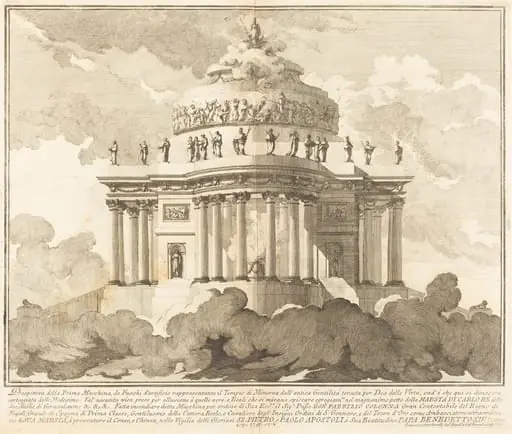 The Prima Macchina for the Chinea of 1746: The Temple of Minerva
 The Prince of Tuscany, His Horse Troops and Carriages around Mount Atlas
 The Seconda Macchina for the Chinea of 1755: A Royal Hunting Lodge
 The Prima Macchina for the Chinea of 1767: A Triumphal Arch with the Farnese Hercules
 Fireworks on the Arno, Florence
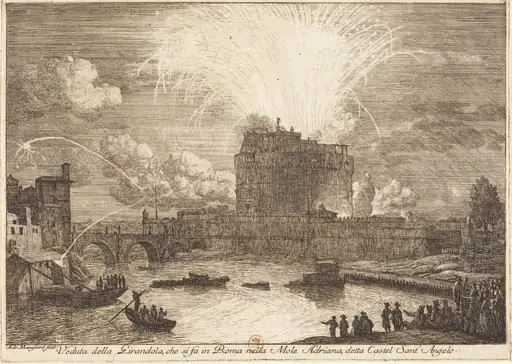 Veduta della Girandola a Castel Sant'Angelo (Fireworks Display over the Castle Sant'Angelo)
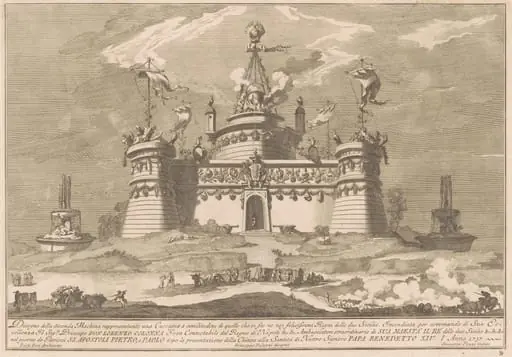 The Seconda Macchina for the Chinea of 1757: The Fortress of Cockaigne
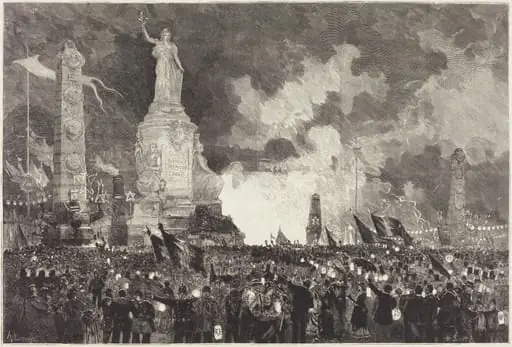 14 Juillet. Illumination de la Place de la République
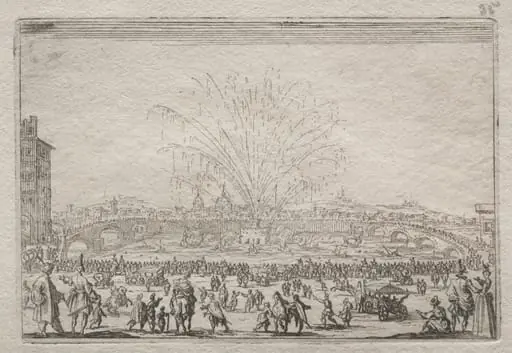 Fireworks on the Arno