Artwork
The Seconda Macchina for the Chinea of 1755: A Royal Hunting Lodge
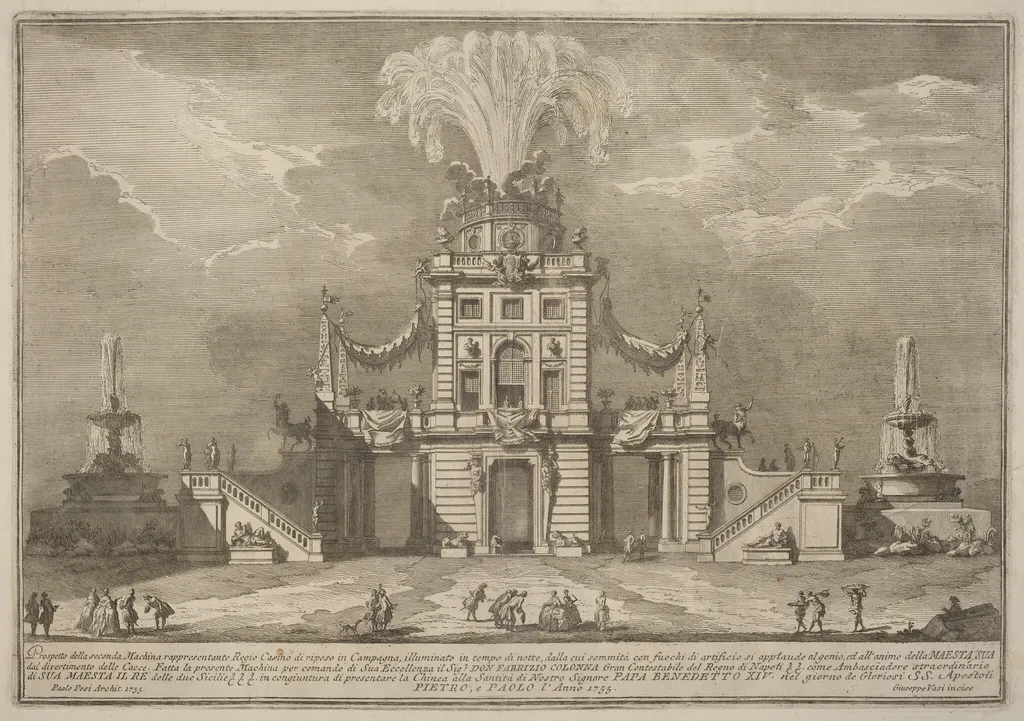
The Seconda Macchina for the Chinea of 1755: A Royal Hunting Lodge is an ink print by the Romanticist artist Giuseppe Vasi. It dates from 1755 and is held in the collection of the National Gallery of Art.
About this work
Smoke or fireworks rise from the top, and people in old-fashioned clothes stand around it, some watching from below.
This drawing shows a grand, temporary stage set up to look like a fancy hunting lodge. It has tall columns, steps, and flags hanging everywhere. Smoke or fireworks rise from the top, and people in old-fashioned clothes stand around it, some watching from below. The scene looks like it’s at night, with lights glowing on the structure.
The text at the bottom says this was built for a special event in 1755. It’s not a real building—just a decorated stage meant to impress visitors.
If you like this kind of detailed drawing, look up etching to see how artists like this made precise prints.
Overview
Giuseppe Vasi’s 1755 etching records a temporary theatrical structure erected for the Chinea ceremony of that year. Rendered on laid paper, the print captures a lavish, makeshift hunting lodge, complete with towering columns, stairways, and an abundance of flags, illuminated against a nocturnal backdrop.
Subject & Meaning
The composition presents a staged façade designed to awe spectators, featuring simulated smoke or fireworks rising from its summit and figures in period dress gathered around the scene. Though presented as a hunting lodge, the structure serves a ceremonial purpose, embodying the pageantry of the royal celebration rather than an actual architectural work.
Technique & Style
Executed in fine etching, Vasi employs delicate line work to delineate architectural details and the play of light on the structure’s surfaces. The contrast between darkened sky and the glowing interior highlights the artist’s skill in rendering atmospheric effects and the transient nature of the spectacle.
History & Provenance
Created specifically for the 1755 Chinea—a diplomatic tribute involving a ceremonial horse—this print documents the elaborate temporary set that accompanied the event. The work remains a primary visual source for understanding the visual culture of mid‑eighteenth‑century Roman festivities.
Context
The Chinea ceremony, a yearly homage to the Pope by the Kingdom of Naples, often featured extravagant temporary constructions. Vasi’s depiction aligns with the broader tradition of baroque spectacle, where architecture, performance, and civic ritual merged to reinforce political and religious hierarchies.
Artist & collection

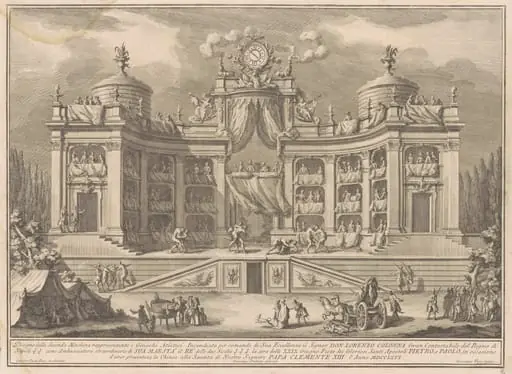 The Seconda Macchina for the Chinea of 1766: A Theater for Athletic Games
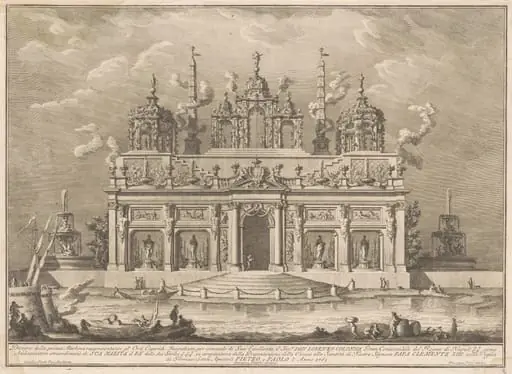 The Prima Macchina for the Chinea of 1765: The Garden of the Hesperides
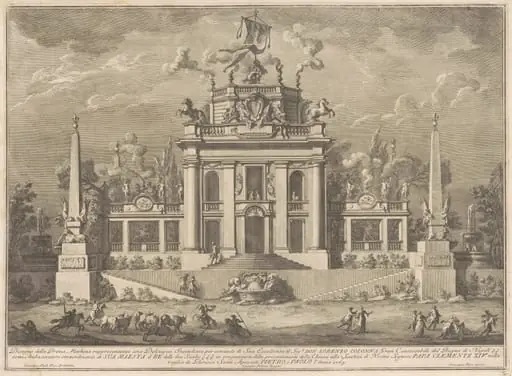 The Prima Macchina for the Chinea of 1769: A "Deliziosa"
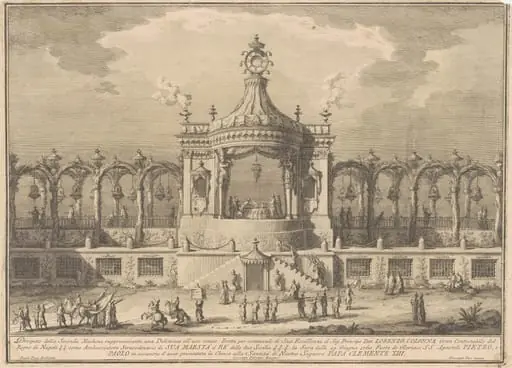 The Seconda Macchina for the Chinea of 1760: A Chinoiserie Pavilion
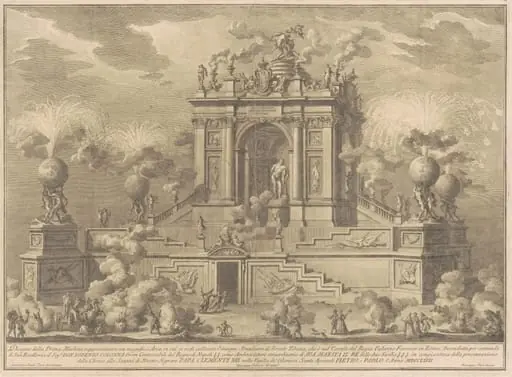 The Prima Macchina for the Chinea of 1767: A Triumphal Arch with the Farnese Hercules
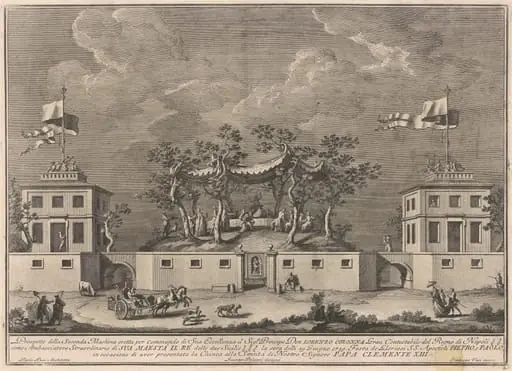 The Seconda Macchina for the Chinea of 1759: A "Deliziosa" with a Bacchanal
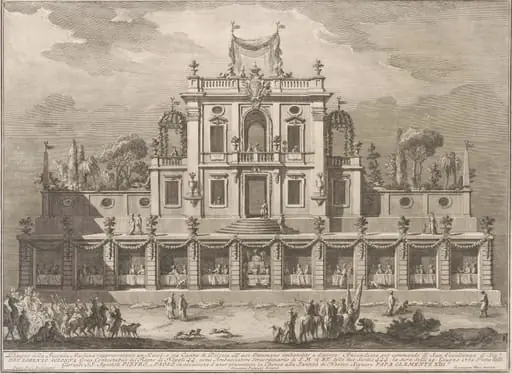 The Seconda Macchina for the Chinea of 1762: A Kiosk, or Pleasure-House in Ottoman Style
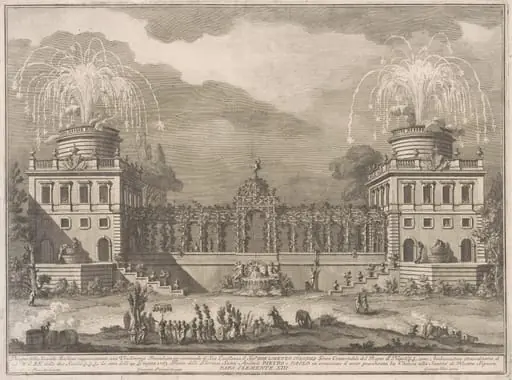 The Seconda Macchina for the Chinea of 1763: The Grape Harvest
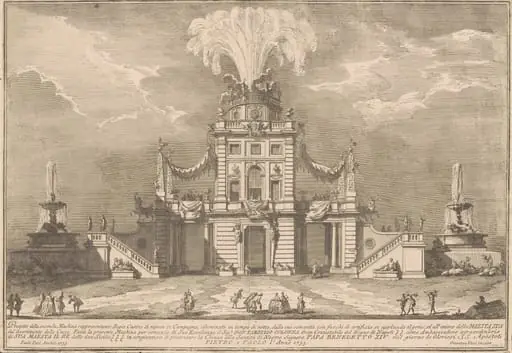 The Seconda Macchina for the Chinea of 1755: A Royal Hunting Lodge
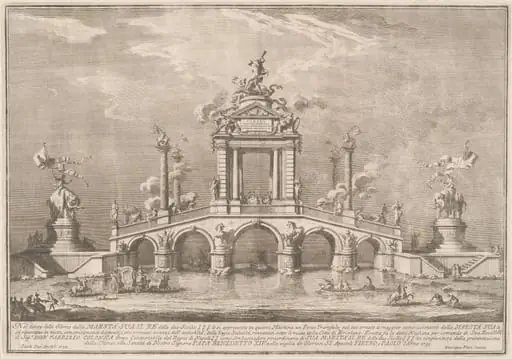 The Prima Macchina for the Chinea of 1755: A Triumphal Bridge with Antiquities from Herculaneum
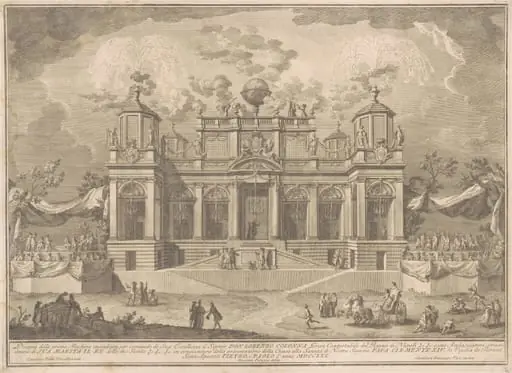 The Prima Macchina for the Chinea of 1770: An Roman Building for Commerce
 The Seconda Macchina for the Chinea of 1771: A Pleasure Palace Dedicated to Bacchus
 The Prima Macchina for the Chinea of 1755: A Triumphal Bridge with Antiquities from Herculaneum
 The Prima Macchina for the Chinea of 1771: The Temple of Asclepius
 The Prima Macchina for the Chinea of 1771: The Temple of Asclepius
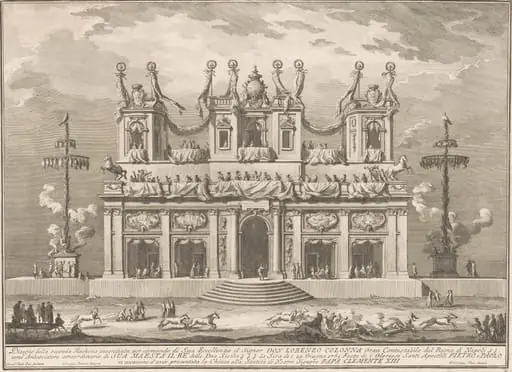 The Seconda Macchina for the Chinea of 1765: A Decorated Building with Cockaigne Poles
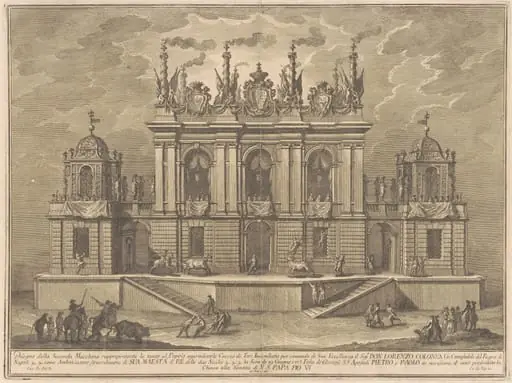 The Seconda Macchina for the Chinea of 1775: A Bull-fight
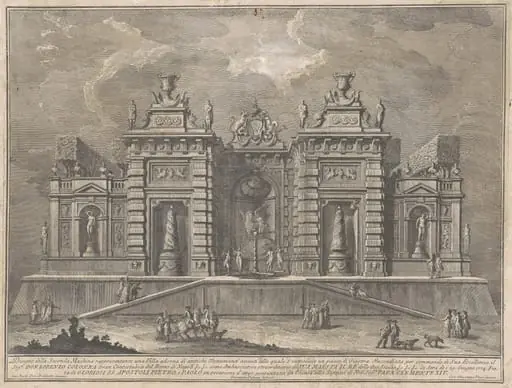 The Seconda Macchina for the Chinea of 1774: A Villa with Ancient Monuments and a Game of "Giostra"