Artwork
The Prima Macchina for the Chinea of 1767: A Triumphal Arch with the Farnese Hercules
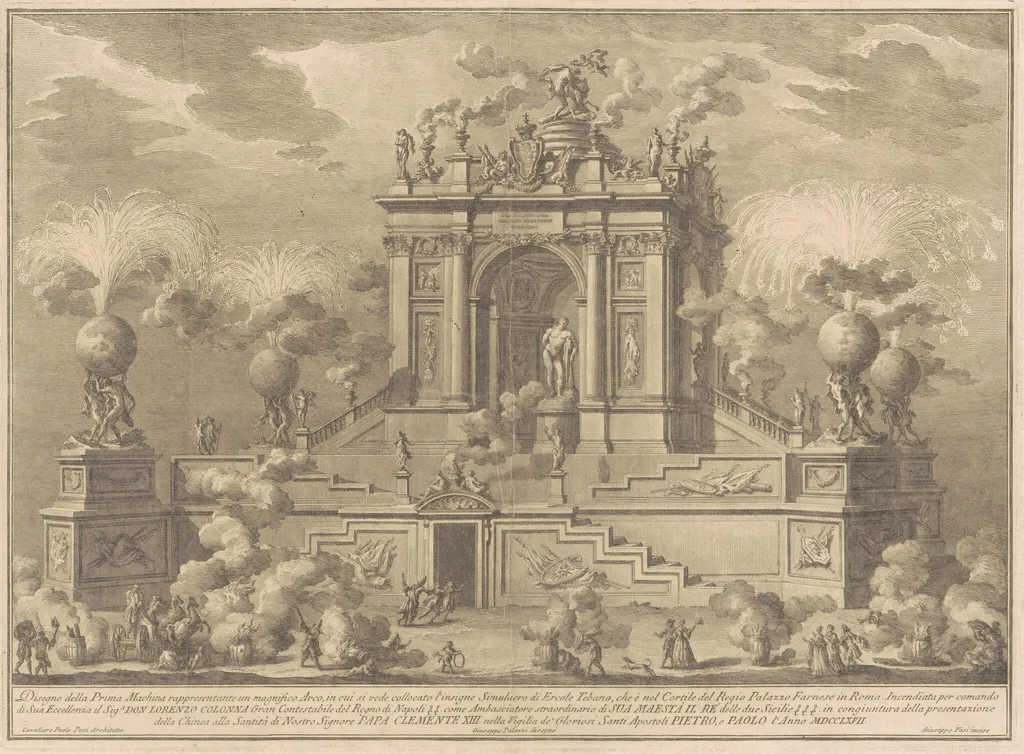
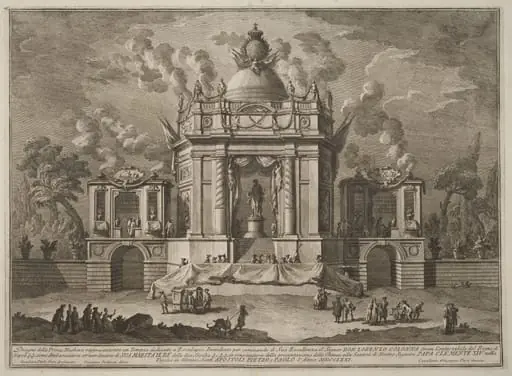
The Prima Macchina for the Chinea of 1767: A Triumphal Arch with the Farnese Hercules is an ink print by the Romanticist artist Giuseppe Vasi. It dates from 1767 and is held in the collection of the National Gallery of Art.
About this work
Below, people in old-fashioned clothes walk around a garden with fountains and clouds floating in the sky.
This drawing shows a huge, fancy archway with stairs and statues. At the top, there’s a sculpture of a muscular man holding something over his head. Below, people in old-fashioned clothes walk around a garden with fountains and clouds floating in the sky. The whole scene looks like a stage set for a big event.
The text at the bottom says this was made for a special parade in Rome in 1767. It’s not a real place—it’s a design for a temporary structure, like a giant float.
Want to know more? Look up etching to see how artists like Giuseppe Vasi made prints like this.
Overview
Giuseppe Vasi’s 1767 etching, titled *Prima Macchina for the Chinea of 1767: A Triumphal Arch with the Farnese Hercules*, presents a detailed design for a temporary triumphal structure intended for the annual Chinea procession in Rome. The print records the imagined architecture, decorative program and surrounding landscape of the proposed arch.
Subject & Meaning
The central motif is a monumental arch crowned by a statue of the Farnese Hercules, a celebrated ancient sculpture of a muscular hero. Below, figures in period costume move through a garden setting with fountains and clouds, suggesting a ceremonial procession that blends mythic strength with civic celebration.
Technique & Style
Executed as a fine copperplate etching, Vasi employs precise line work to render architectural depth, ornamental detail, and atmospheric elements such as clouds and water. The composition balances linear perspective with a theatrical staging, characteristic of eighteenth‑century print design for public spectacles.
History & Provenance
Created specifically for the 1767 Chinea—a diplomatic gift from the Kingdom of Naples to the Pope—the print functioned as a visual proposal for the temporary arch that would be erected for the parade. Its survival in museum collections attests to its role as both a work of art and a historical document of Roman festal architecture.
Context
The Chinea procession, a yearly display of Neapolitan tribute, often featured elaborate temporary structures. Vasi, renowned for his vedute of Rome, contributed designs that merged classical references, such as the Farnese Hercules, with contemporary celebratory architecture, reflecting the city’s baroque penchant for grand public pageantry.
Legacy
While the actual arch no longer exists, Vasi’s etching preserves the visual language of eighteenth‑century Roman festivity and informs modern scholarship on temporary urban architecture and the interplay between print media and public ceremony.
Artist & collection

 The Seconda Macchina for the Chinea of 1766: A Theater for Athletic Games
 The Prima Macchina for the Chinea of 1765: The Garden of the Hesperides
 The Prima Macchina for the Chinea of 1769: A "Deliziosa"
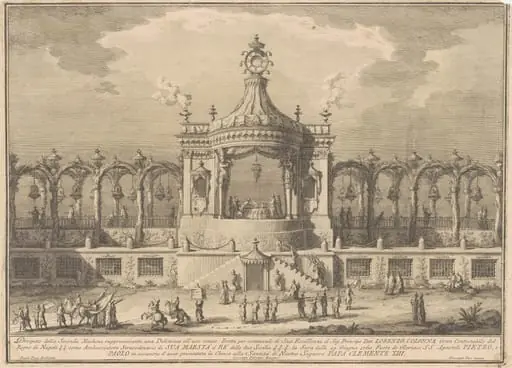 The Seconda Macchina for the Chinea of 1760: A Chinoiserie Pavilion
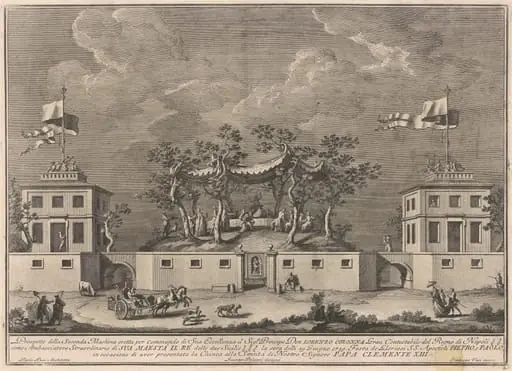 The Seconda Macchina for the Chinea of 1759: A "Deliziosa" with a Bacchanal
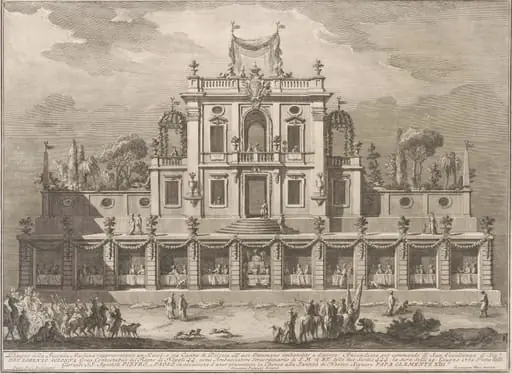 The Seconda Macchina for the Chinea of 1762: A Kiosk, or Pleasure-House in Ottoman Style
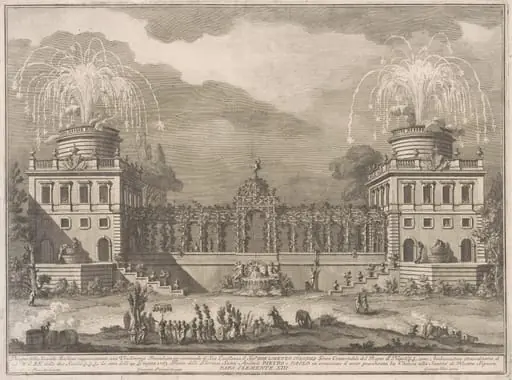 The Seconda Macchina for the Chinea of 1763: The Grape Harvest
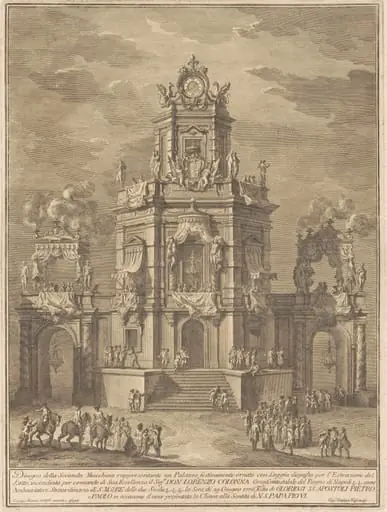 The Seconda Macchina for the Chinea of 1776: A Palace with a Loggia for the Lottery Draw
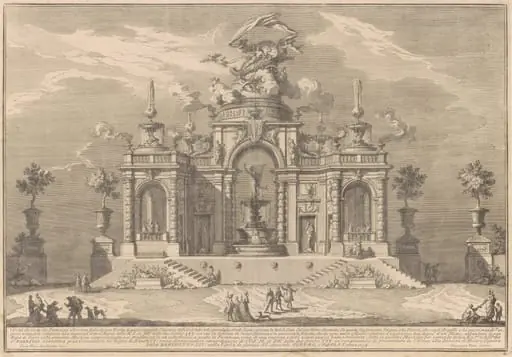 The Prima Macchina for the Chinea of 1754: The Palace of Venus in Cyprus
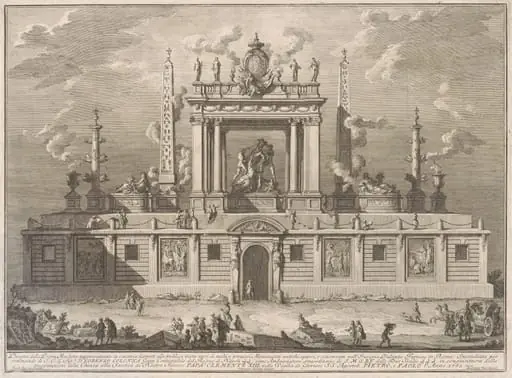 The Prima Macchina for the Chinea of 1762: The Farnese Bull and Other Antiquities from Palazzo Farnese
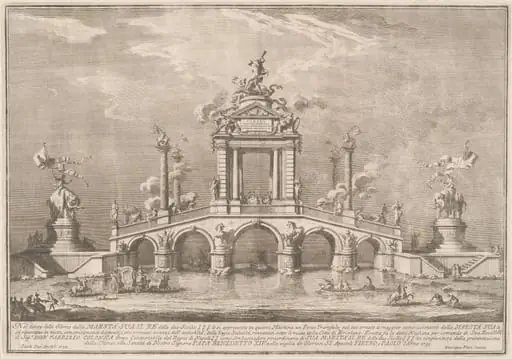 The Prima Macchina for the Chinea of 1755: A Triumphal Bridge with Antiquities from Herculaneum
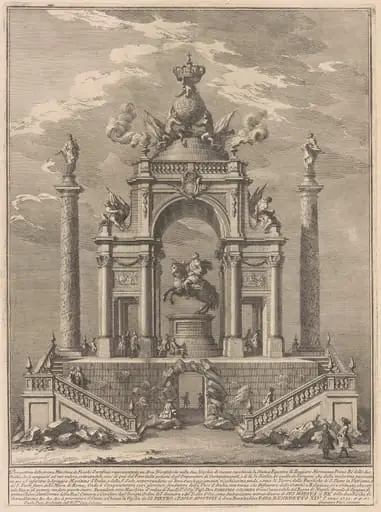 The Prima Macchina for the Chinea of 1751: Triumphal Arch for Roger I of Sicily
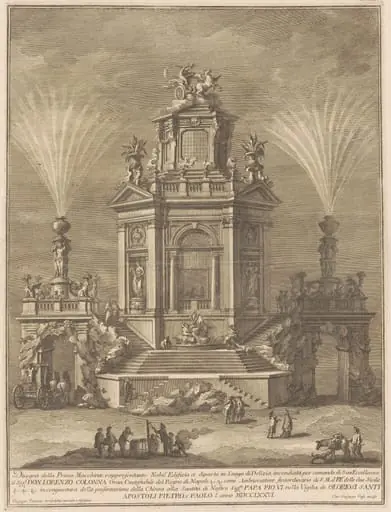 The Prima Macchina for the Chinea of 1776: A Pleasure Palace
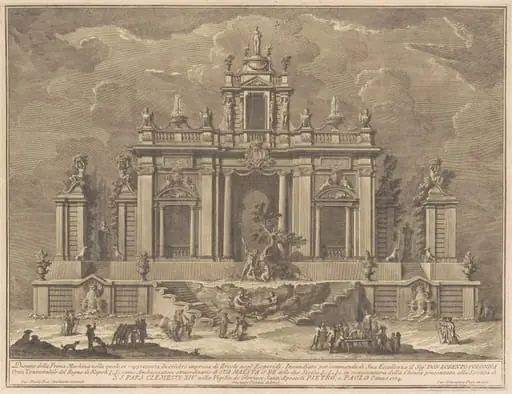 The Prima Macchina for the Chinea of 1774: Hercules and the Dragon in the Garden of the Hesperides
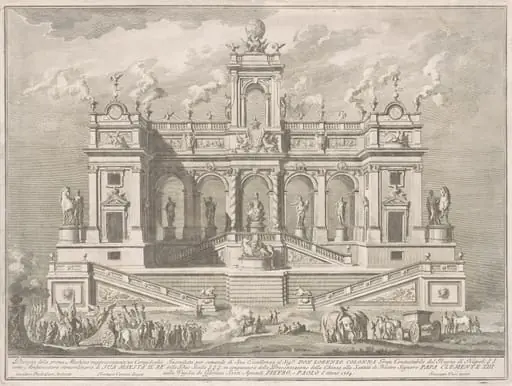 The Prima Macchina for the Chinea of 1764: A Capitol Building
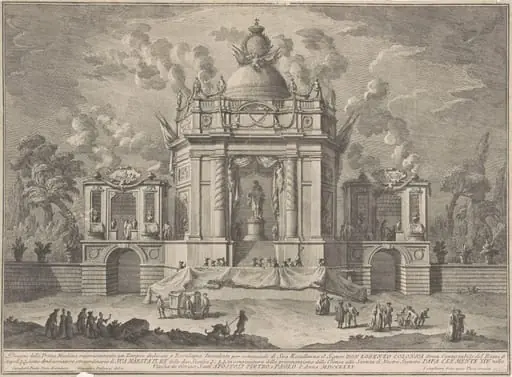 The Prima Macchina for the Chinea of 1771: The Temple of Asclepius
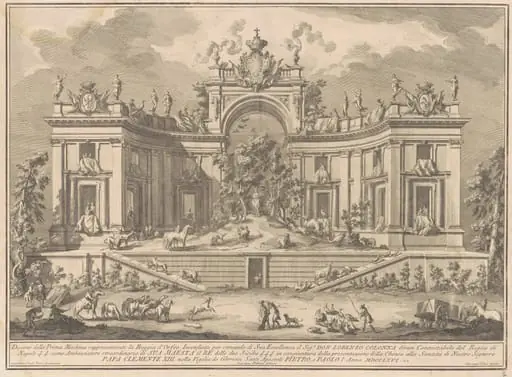 The Prima Macchina for the Chinea of 1766: The Palace of Orpheus
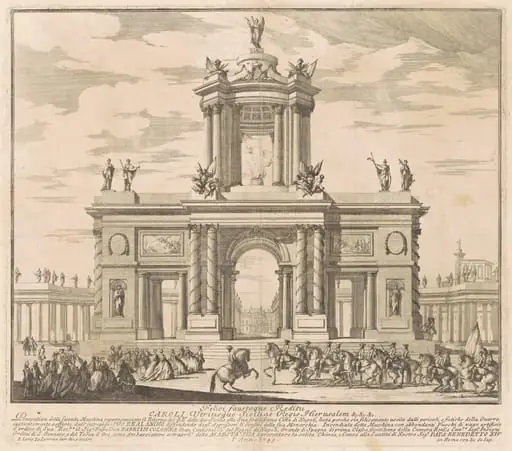 The Seconda Macchina for the Chinea of 1745: Triumphal Arch for the Return of King Charles of Bourbon to Naples
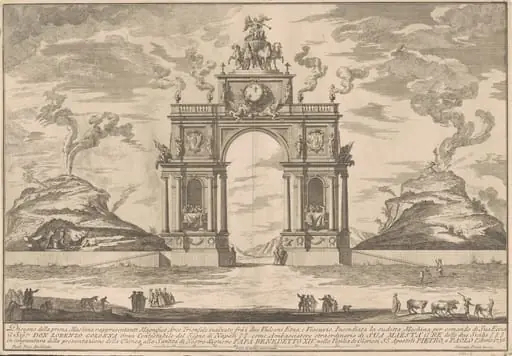 The Prima Macchina for the Chinea of 1756: A Triumphal Arch between Mount Etna and Mount Vesuvius
 The Prima Macchina for the Chinea of 1771: The Temple of Asclepius