Artwork
Belshazzar's Feast
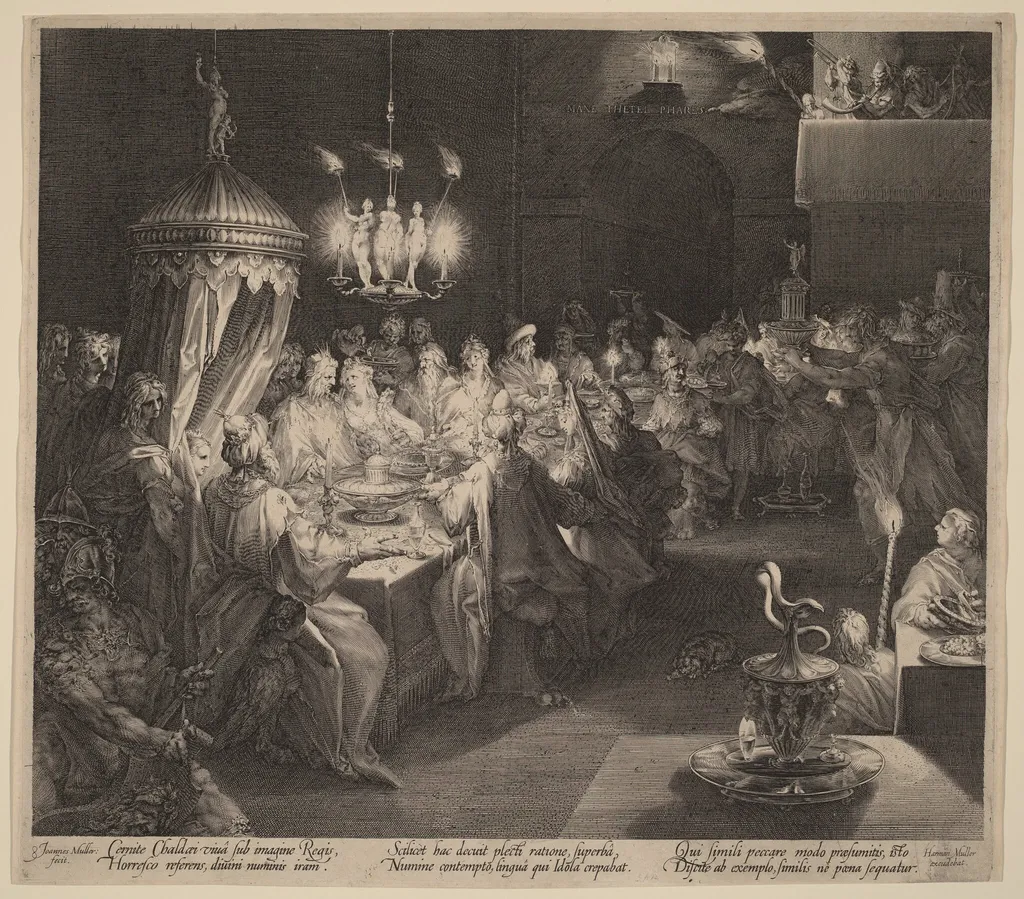
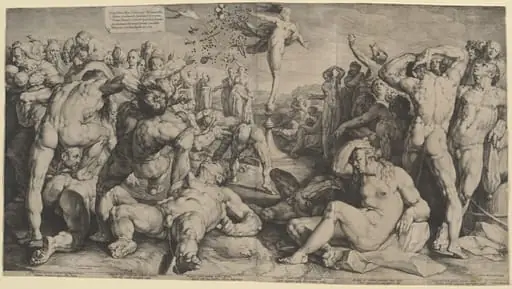
Belshazzar's Feast is an ink print by the Renaissance artist Jan Muller. It dates from 1598 and is held in the collection of the National Gallery of Art.
About this work
Overview
Belshazzar's Feast is an engraving on laid paper created by Jan Harmensz. Muller around 1598. The work depicts a pivotal biblical scene from the Book of Daniel, where the Babylonian king Belshazzar witnesses a divine hand writing on the wall during a grand feast.
Subject & Meaning
The engraving captures the moment of divine intervention in Belshazzar's feast, as the king and his attendees react to the ominous writing on the wall. The scene contrasts chaos with the focal, serene divine message, highlighting the biblical narrative's themes of power and prophecy.
Technique & Style
Muller employed fine lines to achieve deep shadows and textured details, lending drama to the crowded composition. His technique, influenced by family training in engraving and time spent in Italy, balances intricate rendering of the feast's opulence with the stark, attention-grabbing divine element.
History & Provenance
Created circa 1598, the engraving was produced during Muller's active period in both engraving and painting, following his inheritance of the family's printing and publishing business in Amsterdam.
Context
Belshazzar's Feast reflects Muller's dual influences: the technical precision of Dutch engraving traditions and the artistic sensibilities gained during his time in Italy, combining to interpret a well-known biblical subject.
Artist & collection

Artist
Jan Harmensz. Muller (1571–1628) was a Dutch engraver and painter. Muller was born in Amsterdam. His father was a book printer, engraver and publisher. He learned the engraving trade while working in the family…