Artwork
Untitled
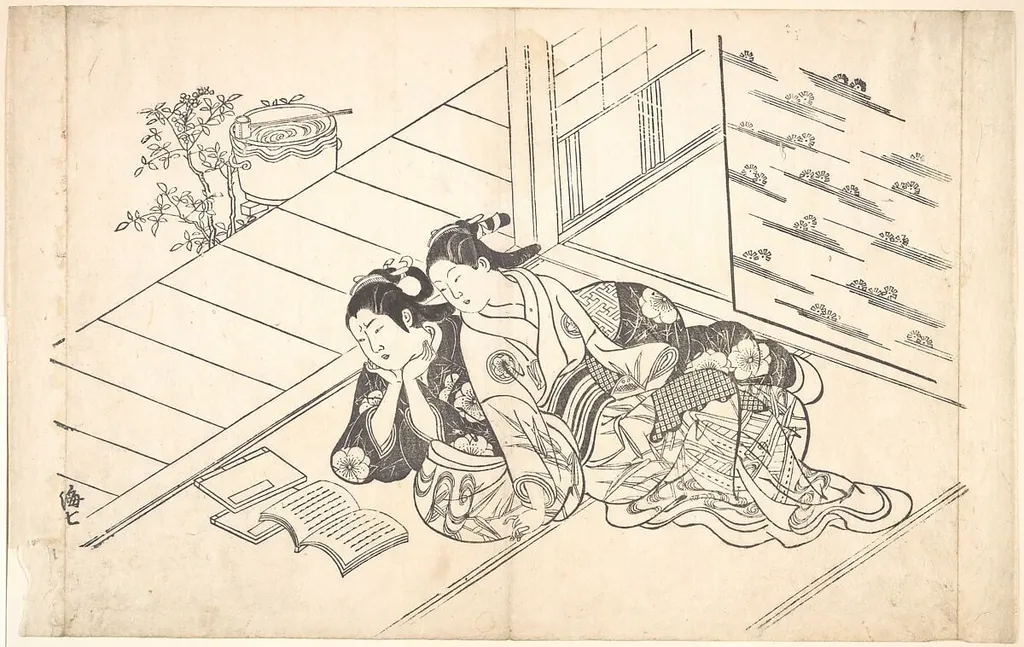
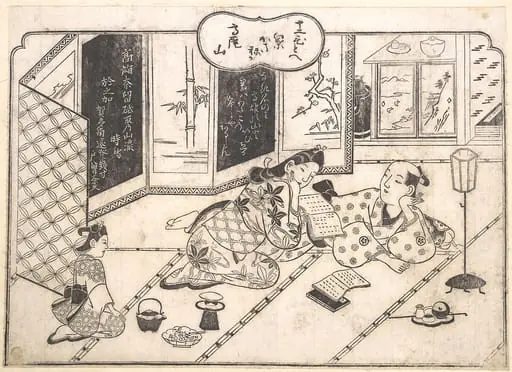
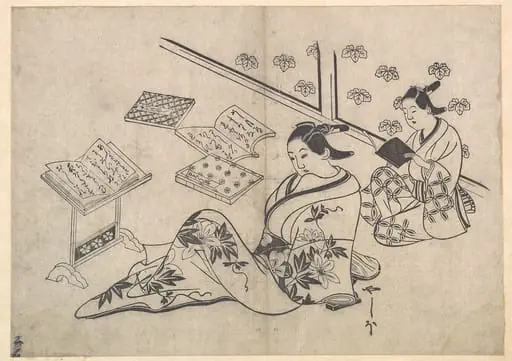
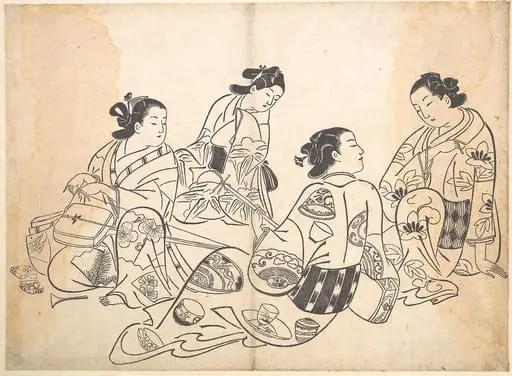
Untitled is an ink print by the Baroque artist Nishikawa Sukenobu. It dates from 1730 and is held in the collection of the Metropolitan Museum of Art.
About this work
Overview
This monochrome woodblock print, dated around 1730, is attributed to Nishikawa Sukenobu and resides in The Metropolitan Museum of Art’s collection.
This monochrome woodblock print, dated around 1730, is attributed to Nishikawa Sukenobu and resides in The Metropolitan Museum of Art’s collection. Executed in ink on paper, it belongs to the ukiyo-e tradition of Japanese printmaking. The composition captures a quiet interior moment, rendered without color but with nuanced tonal variation through fine line work. Its simplicity and attention to domestic detail reflect the genre’s focus on everyday life.
Subject & Meaning
Two women are depicted in a modest interior: one seated with an open book in her lap, the other standing near a screen, gazing away. The scene suggests a moment of contemplation or quiet companionship, common in domestic ukiyo-e. The book implies literacy and private leisure, while the distant gaze introduces a sense of introspection. No narrative climax is offered; instead, the print invites quiet observation of ordinary behavior.
Technique & Style
The artist employs fine, crisscrossed ink lines to model form and suggest texture, particularly in fabric and shadow. This cross-hatching creates subtle gradations of tone, giving the room a sense of depth despite its flat plane. The slanted walls and simplified window frame introduce spatial ambiguity, while the exterior trees and fence are rendered with swift, economical strokes. The absence of color emphasizes line and structure over decorative detail.
History & Provenance
Created in the early 18th century during the Edo period, the print was likely produced for a broad urban audience interested in scenes of daily life. It entered The Metropolitan Museum of Art’s collection as part of its broader acquisition of Japanese prints in the 20th century. Its attribution to Sukenobu is based on stylistic analysis and historical records of his genre scenes, though no documented provenance predates its museum acquisition.
Context
Sukenobu was known for depicting women in intimate settings, often engaged in reading, sewing, or quiet reflection. His work emerged during a time when urban culture in Edo fostered interest in private, non-noble life. Unlike grand historical or theatrical prints, this piece aligns with a growing market for modest, relatable imagery. The use of monochrome ink reflects both aesthetic preference and the practicalities of print production for a wider audience.
Legacy
This print exemplifies the quiet realism that characterized Sukenobu’s contribution to ukiyo-e. While less celebrated than later artists like Hiroshige or Hokusai, his focus on domestic interiors influenced the development of genre scenes in Japanese printmaking. Its preservation in a major Western museum underscores its role in shaping international understanding of Edo-period visual culture beyond spectacle and romance.
Artist & collection

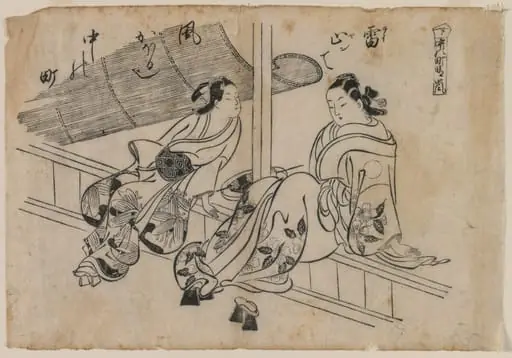 Twilight at Nakanocho
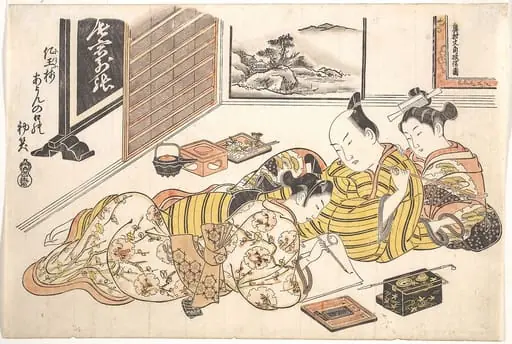 『閨の雛形』 正月|Plate from the Erotic Book Mounds of Dyed Colors: A Pattern Book for the Boudoir (Someiro no yama neya no hinagata), First Month
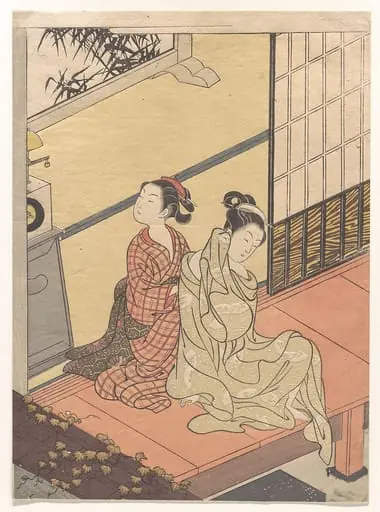 鈴木春信画 坐鋪八景 とけひの晩鐘|Evening Chime of the Clock (Tokei no banshō), from the series “Eight Parlor Views” (Zashiki hakkei)
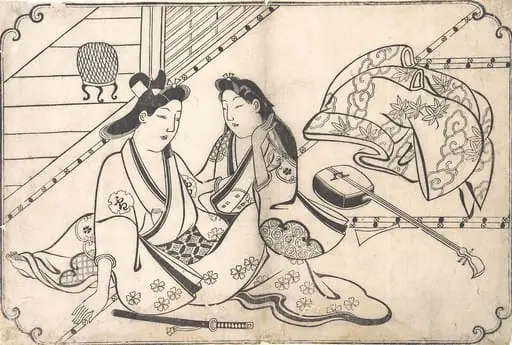 Untitled
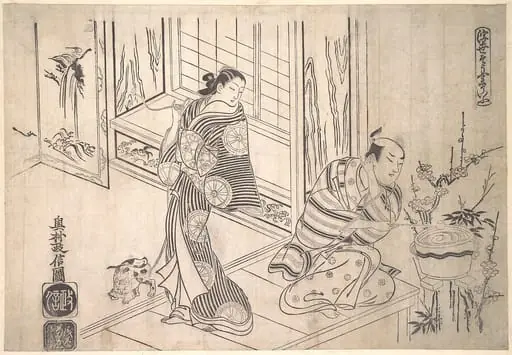 Untitled
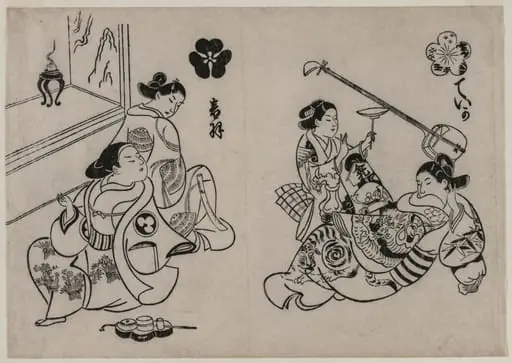 Three Courtesans with a Client
 Untitled
 Untitled
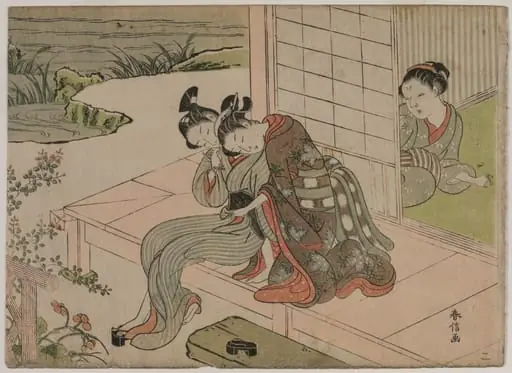 Woman Watching Young Couple Embrace on a Veranda
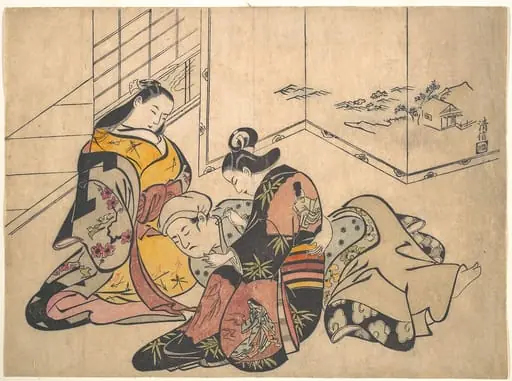 Untitled
 Untitled
 喜多川歌麿画 『男踏歌』 鶯の餌すり|“Preparing Food for the Warbler,” from the album Men’s Stamping Dance (Otoko dōka, uguisu no esa suri)